
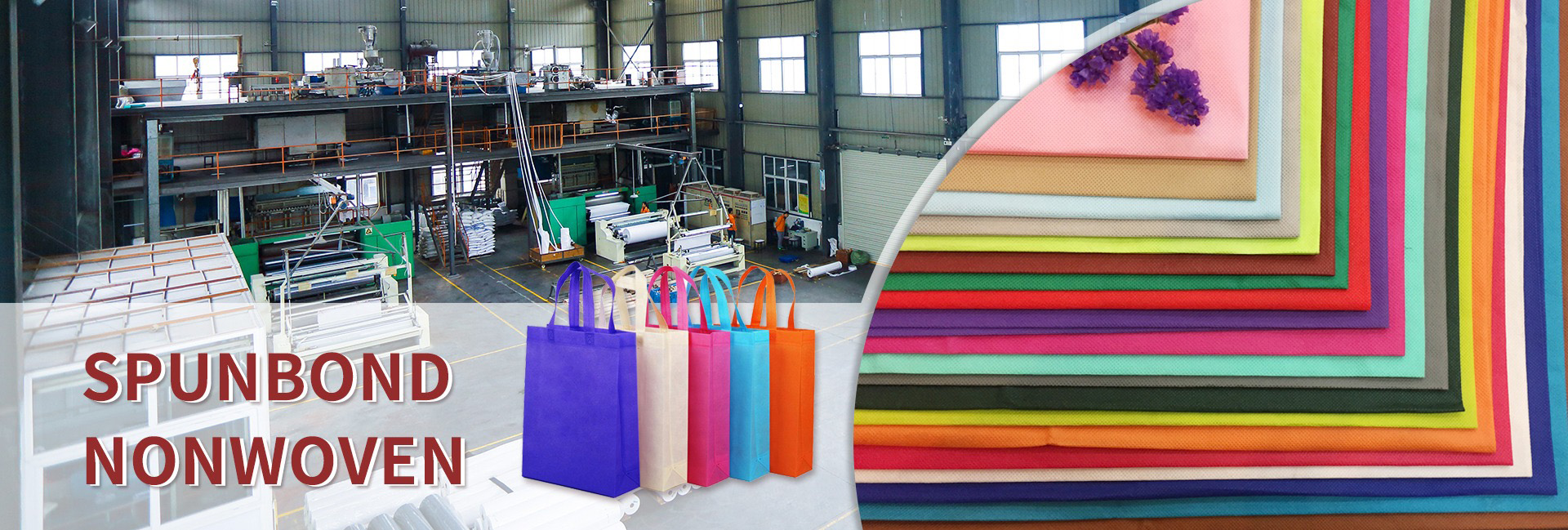
Have you ever thought about a question – the masks you grab before going out every day, the wet wipes you use to wipe your mouth after meals, the non-woven bags you bring back from the supermarket, and even the diapers on your baby’s buttocks… these seemingly unrelated things actually hide a common “behind the scenes boss”?
That’s right, it’s PP non-woven fabric
Don’t be scared by this cold chemical term. Secretly tell you, PP is polypropylene, in other words, a type of plastic. And what about non-woven fabric? It is not a traditional “cloth”, it does not require a single yarn or textile, but purely relies on physical or chemical methods to “stick” fibers together. For example, traditional fabrics are like carefully woven sweaters with distinct stitches and interlocking loops; And non-woven fabric is more like a bed of compacted cotton wool, with fibers tangled together in a mess, but unexpectedly firmly fixed in use.
Today, let’s take a closer look at how powerful this low-key yet ubiquitous magical material really is.
The sandwich inside the mask, it stands at position C
First of all, who can’t live without PP non-woven fabric in the past two years – masks.
If you open a medical surgical mask and take a look, you will find that it looks like a sandwich with three layers inside and outside. The outermost layer is splash proof, the innermost layer is attached to your face to absorb moisture, and there is also a layer of meltblown cloth in the middle to filter viruses. Among these three layers, except for meltblown fabric, both the inner and outer layers are dominated by PP non-woven fabric.
The outer layer of PP non-woven fabric should block other people’s saliva droplets and be wear-resistant and durable; The inner layer of PP non-woven fabric should be soft and skin friendly, without leaving two red marks on your face. You also need to absorb the moisture you exhale, otherwise wearing a mask for half an hour will turn you into a “sauna room”.
Have you noticed that the design of PP nonwoven fabric is quite fragmented? It needs to be both tough and gentle, waterproof and moisture absorbing. But this is precisely its unique skill – by adjusting the process, a piece of plastic cloth can play with flowers. Hydrophobic, hydrophilic, soft, and firm, come any way you want.
If you have worn that kind of hard and stuffy low-quality mask that makes your cheeks hurt, don’t doubt it, it’s because you didn’t choose the right grade of PP non-woven fabric.
What is the ‘soulmate’ of wet wipes better than tissue paper?
Let’s talk about wet wipes. Have you ever used wet wipes that break easily with a single puff or become pilly with just two wipes? That’s most likely due to cutting corners and using ordinary adhesive fibers.
The main material for practical and easy-to-use wet wipes is still PP non-woven fabric. Because it has high wet strength – ordinary paper rots when it comes into contact with water, while PP nonwoven fabric is made of plastic and can’t be torn apart even after soaking in water for a day. That’s also why wet wipes can freely add liquid, wipe tables, hands, and phones without any residue, no matter how they are ravaged.
And PP non-woven fabric can be made very soft. Do you think ‘Bu’ is wiping your face? No, it’s countless PP fibers that are so thin that they can’t be seen by the naked eye gently brushing across your skin. The high-end hydroentangled non-woven wet wipes have a touch similar to silk, and even high-end skincare products are willing to use them to apply to their faces.
However, there is a piece of cold knowledge to tell you: PP non-woven fabric itself does not absorb water. What? Do wet wipes not absorb water? Yes, you heard it right. Pure PP is hydrophobic, so the liquid in the wet wipes can only be “hung” on it by adding hydrophilic agents or mixing with other absorbent fibers. Next time you buy wet wipes, don’t just look at the cheap price. If the craftsmanship is not up to par, the liquid won’t be able to absorb it at all and will be filled with water when squeezed.
Not only masks and wipes, it has almost “invaded” every corner of your life
Do you think PP non-woven fabric only has this ability? I’m naive.
Going to the supermarket to buy things, those so-called ‘environmentally friendly non-woven bags’ are also it. Although it may pill and become thinner over time, it is cheap and can be reused repeatedly. The key is that it can be degraded and recycled, which is slightly more considerate than pure plastic bags.
The disposable tablecloths at home, disposable bed sheets in beauty salons, dust-proof films for decoration, bottom fabrics for car interiors, and even some of the “pure cotton” face towels you buy (carefully look at the ingredients, many of which are PP blends) are all made of this PP non-woven fabric to create a sense of presence.
Even the insulation blankets covered in agricultural greenhouses and the “root protection cloth” wrapped around tree roots to keep them moist during tree planting cannot do without it. The combination of cheap, durable, and customizable words is the passport for PP non-woven fabric to dominate the world.
Friends who keep cats are more familiar with it – the rough cloth on the outside of the cat scratching board is a variant of PP non-woven fabric. Your cat owner makes a rustling sound every day when he grinds his paws, which is actually a competition with plastic.
How to deal with the double-edged sword of environmental protection?
When it comes to plastics, the topic of environmental protection cannot be avoided. PP non-woven fabric does have the word “plastic” on it, but it is slightly better than ordinary plastic bags: it can be recycled. Many PP non-woven fabric products are printed with a “5″ triangle symbol, representing polypropylene, which is a relatively mature recycling system.
Of course, the original sin of disposable products is not so easily whitewashed. Masks, wet wipes, and face towels can be discarded after use, and even if they are recyclable, they cannot withstand excessive usage. So now the industry is also tinkering with various tricks: adding biodegradable additives, replacing with plant fibers, developing water-soluble non-woven fabrics
But to be fair, no one has yet been able to match PP non-woven fabric in terms of cost-effectiveness. It’s like that honest person who works silently and never complains, you enjoy its convenience but rarely look at it directly.
In conclusion
Next time you put on a mask or take out a wet wipe, you can say hello to PP non-woven fabric in your heart. This thing was invented in the 1940s and is now ubiquitous all over the world, relying not on fancy tricks, but on its ability to solve practical problems.
It’s not sexy, not high-end, and even its name carries a straight male vibe of a chemical factory. But it is this ordinary ‘plastic cloth’ that supports countless’ easy to use ‘small joys in modern life.
Easy to use, not expensive, and I won’t compete with you for cotton. This kind of material deserves its fire.
What other inconspicuous but everyday things do you have around you? Let’s chat in the comment section, maybe I’ll dig it up in the next issue.
Dongguan Liansheng Non woven Technology Co., Ltd. was established in May 2020. It is a large-scale non-woven fabric production enterprise integrating research and development, production, and sales. It can produce various colors of PP spunbond non-woven fabrics with a width of less than 3.2 meters from 9 grams to 300 grams.
Post time: Jun-03-2026