
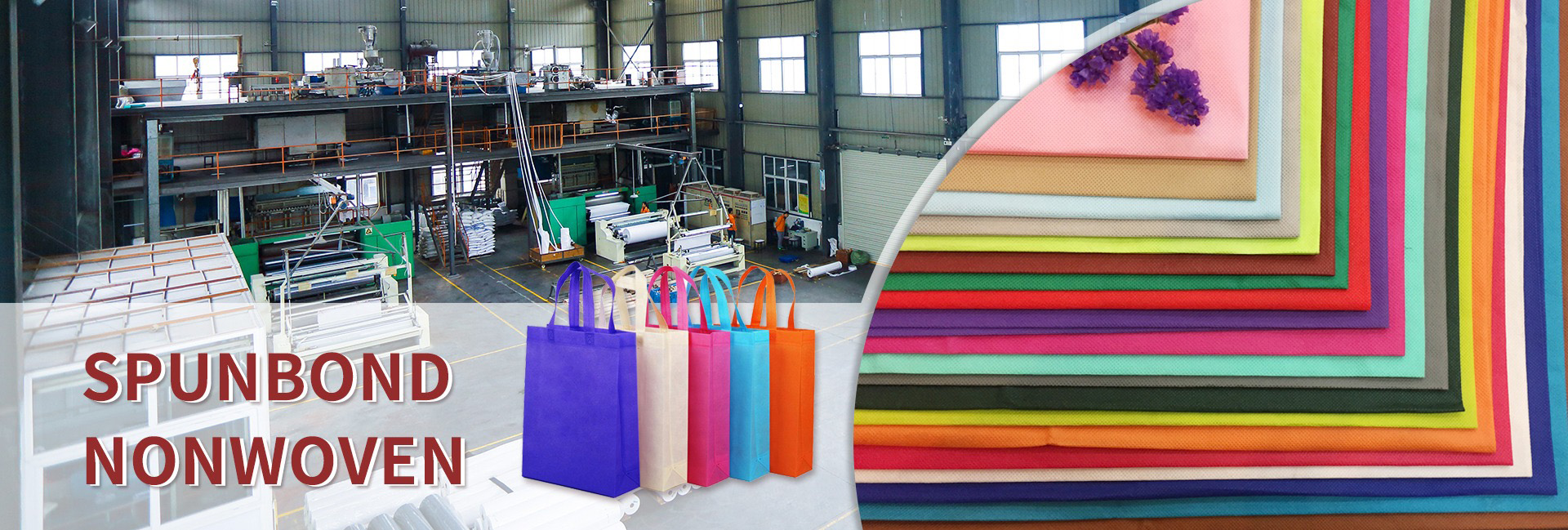
Since the comprehensive implementation of the “plastic ban”, non degradable plastic bags have gradually withdrawn from supermarkets, food delivery and other scenarios. Non woven shopping bags, with the label of “environmentally friendly bags”, have quickly become the preferred alternative for the public. Non woven shopping bags with various slogans printed on them can be seen everywhere in supermarkets, in front of takeaway cabinets, and during promotional activities of merchants. Many people assume that they are the savior of “white pollution” and pick them up easily and use them with confidence.
But with the popularization of usage scenarios, a thought-provoking question gradually emerges: Is the non-woven shopping bag we pursue really as environmentally friendly as advertised? Is it a powerful assistant to the “plastic ban” or a new pollution caused by a new “cloth bag” coat? The truth behind it is far more complex than we imagine, and it is worth everyone’s vigilance.
Non woven fabric=environmental protection? The ‘trap’ in the name misleads people
Many people’s “environmental awareness” of non-woven shopping bags mostly stems from its name – “non-woven” with the word “cloth” in it, subconsciously equating it with natural environmentally friendly materials such as cotton and canvas, believing that it is more biodegradable and lower carbon than plastic bags. But in fact, this is just a cognitive misconception brought about by a name.
According to industry experts, more than 90% of non-woven shopping bags on the market are made of polypropylene (PP), which is essentially a plastic product and belongs to the “plastic family” like the disposable plastic bags we once resisted. The only difference is the processing technology, presenting a fabric like texture. More importantly, this polypropylene material is extremely difficult to degrade in natural environments, even more difficult than ordinary disposable plastic bags. The natural degradation cycle can last for several years, and once discarded casually, it will still become a member of the “white pollution”.
It is worth noting that many businesses produce non-woven shopping bags with thin thickness and poor toughness in order to reduce costs. These bags often become torn and damaged after a few uses, forcing consumers to replace them frequently and dispose of them casually. However, most people are not aware that the production process of non-woven shopping bags already carries significant environmental burdens – their production requires a large amount of non renewable resources such as oil, and their energy consumption and greenhouse gas emissions far exceed those of disposable plastic bags.
Whether it is environmentally friendly or not depends on the number of uses
It cannot be denied that non-woven shopping bags are not without environmental value, but their environmental friendliness has never been “innate”, but depends on the way and frequency of use. There is a clear consensus in the industry that non-woven shopping bags need to be reused at least 11 times to compensate for the pollution generated during production and disposal, and their environmental value can surpass that of disposable plastic bags.
The Degradable Plastics Professional Committee of the China Plastics Association once provided a shocking set of data: if non-woven bags are used only once, the energy consumption of a single bag is 17.8 times that of disposable plastic bags, the greenhouse gas emissions are 16.7 times that of disposable plastic bags, and the solid waste generated far exceeds the latter. This means that non-woven shopping bags that we discard after using them once are even less environmentally friendly than disposable plastic bags and can be called “invisible pollution killers”.
On the other hand, in reality, many people’s usage habits actually violate this environmental premise. According to a survey by the Shanghai Consumer Protection Commission, 76.4% of respondents have non-woven shopping bags at home, but 42.6% do not reuse them due to poor quality or unattractive appearance. About 30% of respondents will use them as disposable garbage bags, and 23.4% will dispose of them directly. In the takeout scene, about 15% of businesses use non-woven fabric to pack meal boxes, and most consumers throw them away after picking up their meals. These “disposable” non-woven bags are becoming a new environmental burden.
Why has non-woven fabric become a “borderline” of the “plastic ban”?
The core intention of the “plastic ban” was to restrict the use of non degradable plastic products and promote truly environmentally friendly alternative products, but non-woven shopping bags unexpectedly became a “loophole” due to their “ambiguous identity”.
According to relevant national policies, the “plastic ban” mainly restricts non degradable plastic shopping bags, while non-woven shopping bags belong to the textile industry and are subject to textile industry standards rather than plastic chemical industry standards, temporarily in a blind spot in plastic regulation. More importantly, the “environmentally friendly cloth bags” mentioned in the policy are explicitly required to be non plastic products, while non-woven shopping bags made of polypropylene do not actually meet this standard, but are packaged by businesses as “environmentally friendly alternatives”, playing a “borderline” role in the policy.
The promotion strategy of merchants further exacerbates this cognitive bias. Many businesses use non-woven bags as promotional gifts and print brand slogans, which not only reduces the impact of the “plastic ban” but also serves as a promotional tool; At the same time, the label of “eco-friendly bags” creates psychological identification among consumers, who are willing to accept and use them, but ignore their inherent plastic properties and potential pollution risks.
In addition, the recycling system for non-woven shopping bags is also extremely imperfect. Unlike recyclable plastics, the recycling of non-woven fabrics is difficult and costly, and most recycling institutions are unwilling to accept them, resulting in a large number of discarded non-woven shopping bags being disposed of through landfilling and incineration – landfilling can pollute soil and groundwater for a long time, while incineration can produce harmful gases, further exacerbating environmental pressure.
True environmental protection is never as simple as “changing bags”
The controversy over non-woven shopping bags essentially reflects our cognitive bias towards “environmental protection” and exposes loopholes in the implementation of the “plastic ban”. Many people think that replacing plastic bags with non-woven bags is environmentally friendly, but the truth is that without proper use and disposal methods, any substitute product may become a new source of pollution.
From the perspective of consumers, we need to break the misconception that “non-woven fabric equals environmental protection” and establish a core awareness of “reuse”. Non woven shopping bags accumulated at home should be reused as much as possible to avoid being discarded at once; When buying groceries or shopping, prioritize carrying reusable canvas bags and cotton cloth bags to reduce the use of non-woven bags from the source; For non-woven shopping bags that are damaged and unusable, they should be sorted and placed to assist in subsequent recycling and disposal.
From the perspective of businesses, they should take responsibility for environmental protection, reduce the production and distribution of lightweight and fragile non-woven shopping bags, and instead promote more durable and reusable eco-friendly bags; At the same time, actively educate consumers about the true properties of non-woven fabrics to avoid misleading the public.
From a regulatory perspective, it is necessary to improve relevant standards, include non-woven shopping bags that do not meet environmental requirements in the scope of the “plastic ban” regulation, clarify production standards and recycling requirements, and fill regulatory blind spots; At the same time, we will increase our efforts in science popularization and publicity, so that the public can truly understand the environmental shortcomings of non-woven fabrics, and guide everyone to establish the correct environmental protection concept.
Ultimately, the core of the “plastic ban” is not to “ban a certain type of bag”, but to advocate for a green, low-carbon, and circular lifestyle. The non-woven shopping bag itself is not right or wrong, the key is how we use it and dispose of it.
When we no longer blindly pursue “environmental labels”, but truly practice the concept of “reuse, reduce waste”, whether it is non-woven bags, canvas bags, or biodegradable plastic bags, we can truly realize the value of environmental protection. Otherwise, if we drive away the old pollution of “disposable plastic bags”, we may face a new problem of “disposable non-woven shopping bags” – this is the most thought-provoking issue under the “plastic ban”.
Dongguan Liansheng Non woven Technology Co., Ltd. was established in May 2020. It is a large-scale non-woven fabric production enterprise integrating research and development, production, and sales. It can produce various colors of PP spunbond non-woven fabrics with a width of less than 3.2 meters from 9 grams to 300 grams.
Post time: May-10-2026