
In outdoor scenes, we often see awkward situations such as PP non-woven sunshade nets that have just been laid becoming brittle and easy to break, insulation non-woven fabrics for agricultural greenhouses powdering and falling off in just a few months, and geotextiles on construction sites losing their toughness and breaking easily after being exposed to sunlight and rain. Many people wonder why PP non-woven fabric, which is highly practical, becomes so fragile when outdoors?
The answer is simple: ordinary PP non-woven fabric is naturally “afraid of light and heat”, making it difficult to resist the erosion of complex outdoor environments. However, with the popularization of anti-aging master batch technology, this pain point has been completely broken – just add a small amount of anti-aging master batch in the production process, the outdoor service life of PP non-woven fabric can soar from just three months to more than two years, or even longer, completely rewriting the application limitations of outdoor PP non-woven fabric.
Why can’t ordinary PP non-woven fabric endure outdoor for 3 months?
PP non-woven fabric, also known as polypropylene non-woven fabric, is widely used in various fields such as agriculture, construction, outdoor leisure, packaging, etc. due to its advantages of lightweight, breathability, low cost, and easy processing. But its “congenital defects” are also very obvious: its molecular structure is unstable and extremely sensitive to light and heat, which is also the core reason for its short outdoor lifespan.
From a scientific perspective, PP molecular chains contain a large number of tertiary carbon atoms, which are highly sensitive to ultraviolet radiation. The ultraviolet energy in outdoor sunlight is extremely high, which can directly cut off the PP molecular chain, triggering a “photo induced degradation” reaction, causing non-woven fabrics to gradually lose their toughness and become brittle and white; The high temperature environment will accelerate this degradation, while triggering “thermal oxidation”, resulting in cracks and pulverization on the surface of non-woven fabrics, ultimately losing their practical value.
More intuitively, the data in practical application scenarios shows that in areas with high temperatures and strong ultraviolet radiation in summer, ordinary PP non-woven fabrics will become significantly brittle after one month of outdoor exposure, locally damaged after two months, and extensively powdered and broken after about three months, making them unusable. For example, ordinary grass proof cloth in the agricultural field often needs to be replaced just after covering a season of crops; Temporary protective non-woven fabrics in the construction field will become ineffective due to aging in less than six months, which not only increases the cost of use, but may also pose safety hazards due to inadequate protection.
In addition, the humid and hot outdoor environment, as well as pollutants in the air, will further accelerate the aging of ordinary PP non-woven fabrics, making their “outdoor survival ability” even worse. This inherent vulnerability has long limited the deep application of PP non-woven fabric in outdoor scenes.
Anti-aging master batch, wear “protective armor” to PP non woven fabric
Since the aging root of ordinary PP non-woven fabric is the erosion of light and heat, the key to solving the problem is to find a “protective agent” that can effectively resist ultraviolet rays and delay thermal oxygen oxidation – anti-aging master batch, which is such a targeted solution.
The anti-aging master batch is not a single component, but a high concentration functional master batch made of functional components such as antioxidants, light stabilizers, ultraviolet absorbers, etc., and PP carrier resin through twin-screw extruder. Its core function is to build a comprehensive “protective network” for PP non-woven fabric through “molecular level fusion”, blocking the erosion of light and heat from the root.
Its working principle is very clear: in the production process of PP non-woven fabric, anti-aging masterbatch is mixed with PP substrate chips in a certain proportion (usually 5% -20%). After spinning, drafting, netting, hot rolling and other processes, anti-aging ingredients will be evenly dispersed inside the fiber, forming physical entanglement or weak chemical bond with the PP molecular chain to achieve comprehensive protection from the core to the surface of the fiber. Among them, light stabilizers can capture ultraviolet energy and convert it into harmless heat energy, ultraviolet absorbers can directly absorb ultraviolet light, and antioxidants can block the chain reaction of thermal oxidation. The synergistic effect of the three completely delays the degradation rate of PP molecular chains.
It is worth mentioning that this “master batch addition method” has more obvious advantages than traditional finishing processes (such as spraying, dip rolling anti-aging liquid). The finishing process can only form a thin protective layer on the fiber surface, which is easy to fall off, uneven, and has obvious local protection blind spots. The anti-aging master batch can achieve uniform molecular dispersion, with the dispersed particle size ≤ 5 microns, without local protection dead angle, and the protection effect is more durable and stable. According to the test, for PP non-woven fabric added with anti-aging master batch, in the QUV aging test, the difference in the retention rate of breaking strength in different areas is ≤ 3%, while for the products with post-treatment process, the concentration deviation of local anti-aging components can reach 30% -50%, which is prone to local embrittlement.
From 3 months to 2 years, practical verification of doubling the lifespan by 8 times
The effect of anti-aging masterbatch is never empty talk at the theoretical level, but a “hard strength” that has been verified by a large number of outdoor measurements and industrial applications – the outdoor life of ordinary PP non-woven fabrics is 3 months. After the anti-aging masterbatch is added, the life is directly extended to more than 2 years, and some high-quality products can even reach 3-5 years, with the life more than 8 times.
In the actual measurement of Kunming outdoor aging field in Yunnan, 40g black grass proof cloth with 4% anti-aging masterbatch was added. After two years of natural exposure, it still maintained good toughness and protective performance, without obvious pulverization and fracture, fully meeting the long-term outdoor use needs; However, the same straw proof cloth without anti-aging masterbatch will be completely powdery in only 3 months.
The application in the agricultural field is more intuitive. In the vegetable greenhouses in Shouguang, Shandong Province, the PP non-woven thermal insulation quilt with anti-aging masterbatch added is still intact after two years of outdoor use, and the light transmittance retention rate has increased to 89%, effectively reducing the incidence of grass damage. The ordinary thermal insulation quilt needs to be replaced 2-3 times every year, which not only increases the manpower and cost of farmers, but also affects the thermal insulation effect of greenhouses. In Xinjiang cotton fields, the film added with anti-aging masterbatch has not become brittle after 3 years of outdoor use, and its service life is 3 times longer than that of traditional products. At the same time, the plastic residue in soil is reduced, realizing a win-win situation of environmental protection and practicality.
The application in the field of architecture is equally impressive. PP geotextile used for dam protection and roof thermal insulation, with anti-aging masterbatch added, can have an outdoor service life of 2-4 years, can resist long-term sun, rain and high temperature erosion, and effectively prevent water and soil loss; However, ordinary geotextile will become brittle and fail in less than six months, which may cause safety hazards such as local collapse.
In addition, LS-133W weather resistant masterbatch developed domestically has better anti-aging performance than imported products under the same addition amount and experimental conditions, which can completely realize import substitution, further reduce the cost of anti-aging PP non-woven fabric, and is more suitable for large-scale promotion and application.
Anti-aging masterbatch, unlocking the new scene of outdoor application of PP non-woven fabric
The popularity of anti-aging masterbatch not only solves the pain point of “fear of light and heat” of ordinary PP non-woven fabrics, but also unlocks more possibilities of PP non-woven fabrics in outdoor scenes, bringing significant economic and environmental value.
From an economic perspective, the extension of lifespan directly reduces the cost of use. Take the outdoor sunshade as an example. The ordinary sunshade is replaced once every three months and needs to be replaced four times a year. The sunshade with anti-aging masterbatch is replaced once every two years and only needs to be replaced 0.5 times a year, reducing the comprehensive cost by more than 60%. For industries such as agriculture and construction that use PP non-woven fabric on a large scale, this cost saving effect is particularly significant, which can effectively reduce the burden on enterprises and farmers.
From an environmental perspective, the extended service life of PP non-woven fabric means a significant reduction in waste volume. Ordinary PP non-woven fabric is a difficult to degrade material, and a large amount of waste can cause serious environmental pollution; The service life of anti-aging PP non-woven fabric is extended by 8 times, and the waste amount is reduced by more than 80%, which can not only reduce plastic pollution, but also save PP raw materials, in line with the trend of green and sustainable development.
Today, with the continuous upgrading of anti-aging master batch technology, its application scenarios are still expanding – from outdoor sunshade, agricultural film, construction geotextile, to outdoor seats, tents, environmental bags, etc., anti-aging PP non-woven fabric is gradually replacing ordinary PP non-woven fabric and becoming the preferred material for outdoor scenes by virtue of the advantages of “low cost, long life, easy processing”.
Conclusion: The era of “fear of light and heat” of ordinary PP non-woven fabrics has already ended with the emergence of anti-aging master batch. The seemingly simple leap in lifespan from 3 months to 2 years is driven by advances in material technology and a precise response to practical needs. In the future, with the continuous optimization of anti-aging technology, it is believed that PP non-woven fabric will play a greater role in the outdoor field, not only to meet the needs of people, but also to achieve a win-win situation of environmental protection and economy.
Interactive question: Have you ever encountered the problem of aging and brittleness when using PP non-woven fabric? What scenes do you think anti-aging PP non-woven fabric can be used in? Welcome to leave a comment and discuss in the comment section~
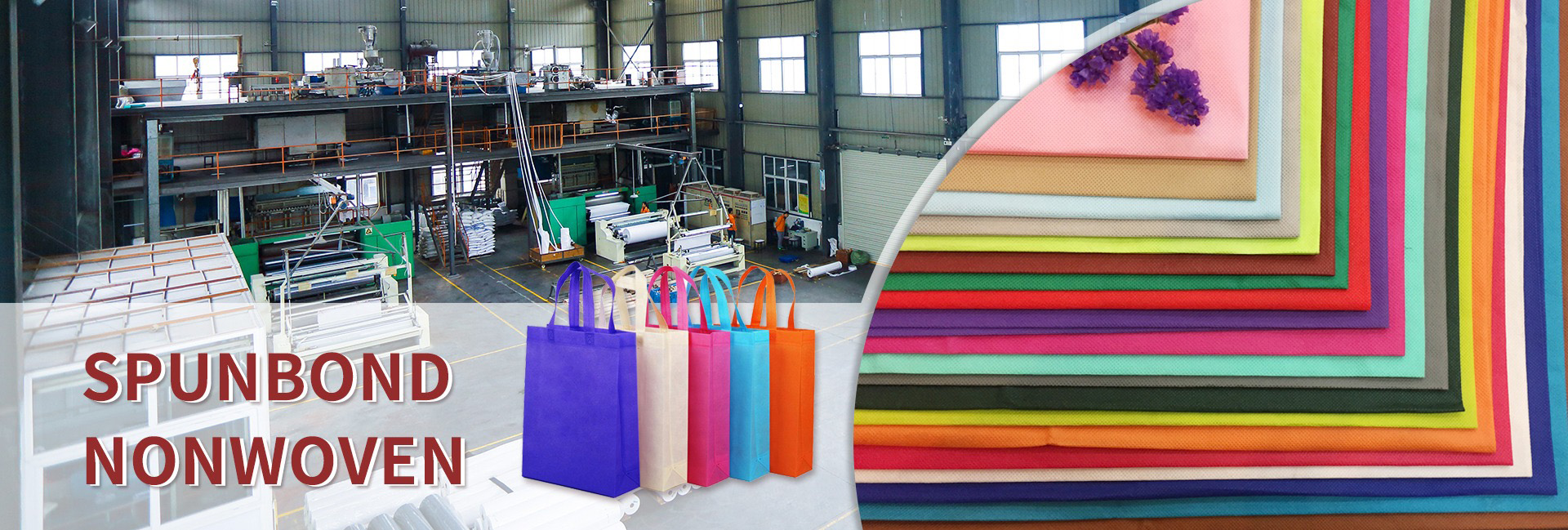
Dongguan Liansheng Non woven Technology Co., Ltd. was established in May 2020. It is a large-scale non-woven fabric production enterprise integrating research and development, production, and sales. It can produce various colors of PP spunbond non-woven fabrics with a width of less than 3.2 meters from 9 grams to 300 grams.
Post time: May-19-2026