
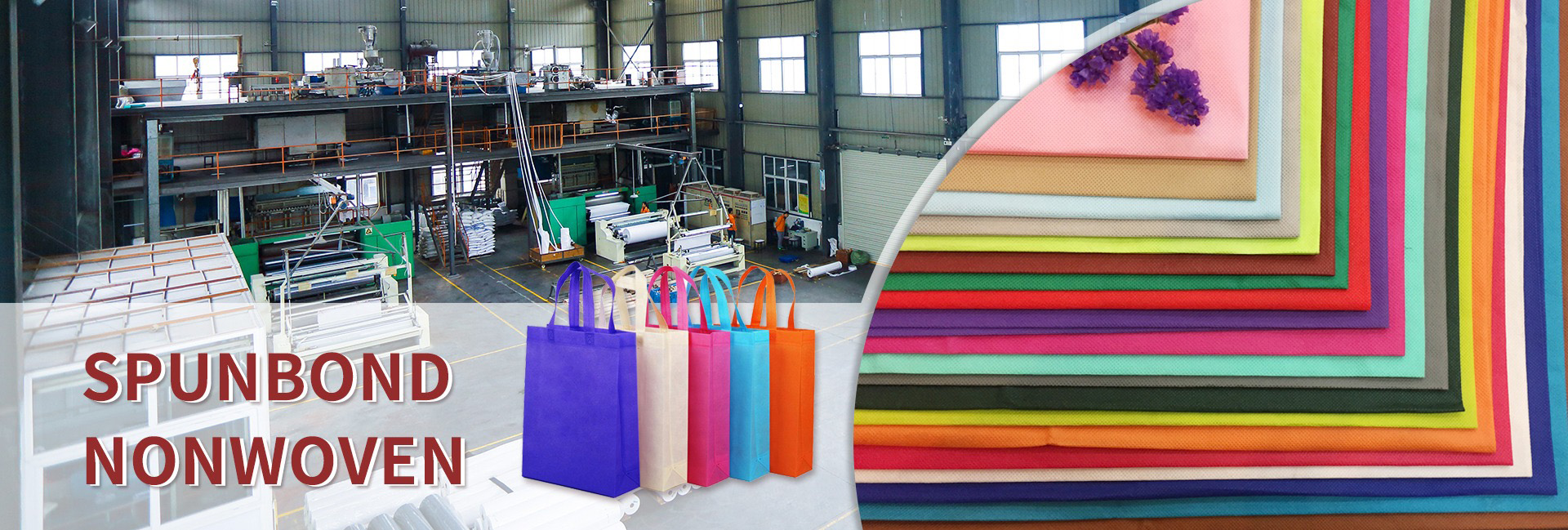
Every day when I go to the market and supermarket to buy groceries, the free “eco-friendly bags” handed over by merchants have almost become standard. Printed with bright patterns, it feels soft and sticky to the touch, and looks like cloth but not cloth. Many people subconsciously think that it is made of non-woven fabric, which is much more environmentally friendly than disposable plastic bags and safe for storing vegetables.
But is the truth really like this? Today, let’s uncover the tricks behind the “eco-friendly bags” that are given as gifts when buying groceries – they are mostly made of non-woven fabric, but “non-woven fabric” does not mean “environmental protection” or “safety”. Many people have not understood these two misconceptions from beginning to end, and even misuse them every day. The full text is about 1500 words, combined with practical identification methods and usage taboos. After reading it, I will never be fooled by merchants again!
Non woven fabric=natural fabric? Completely wrong, it is essentially plastic
Firstly, let’s clarify a core conclusion: the free “eco-friendly bags” that come with grocery shopping are over 90% made of non-woven fabric, but they have nothing to do with natural fabrics such as cotton, linen, and silk that we remember. Essentially, they are a type of plastic product.
Many people are misled by the name ‘non-woven fabric’, thinking that with the word ‘cloth’, it must be a natural material, but in fact, it is not. Non woven fabric, also known as pp nonwoven fabric, does not belong to traditional textile fabrics. Its production process is completely different from weaving – it does not require spinning or weaving. Instead, plastic fibers (mainly polypropylene PP) are directly pressed into a cloth shape through hot pressing and bonding, so it feels like a cloth to the touch, but does not have the textile patterns of traditional fabrics. When gently pulled by hand, fine fiber pores can be seen.
From the perspective of composition, the core material of this type of non-woven bag is polypropylene (PP), accounting for up to 60% -70%, while the remaining components are mostly polyester (PET), which is a typical petroleum based plastic. Many of the plastic lunch boxes and water bottles we use in our daily lives are made of polypropylene material, which is characterized by being lightweight, tough, and waterproof. It is just suitable for making simple shopping bags, and the cost is also extremely low – the production cost of an ordinary non-woven bag is less than 10 cents, which is also the key reason why merchants are willing to give it away for free.
It is important to distinguish clearly that non-woven fabric is a “process”, not a “material”. It can be made of plastic fibers or natural fibers (cotton, linen), but the free bags that come with buying groceries almost never use natural fibers – the cost of natural fiber non-woven fabric is 5-10 times that of plastic non-woven fabric, and businesses will not engage in unprofitable transactions.
Non woven fabric=environmentally friendly and biodegradable? The degradation cycle is comparable to that of plastic bags
This is the most easily fooled point: businesses repeatedly emphasize the concept of “non-woven eco-friendly bags”, leading people to mistakenly believe that they can naturally degrade and do not pollute the environment, but in reality, the opposite is true.
Ordinary polypropylene nonwoven bags have a very slow degradation rate, and it takes 2-3 years or even longer to gradually decompose when buried in soil, which is similar to the degradation cycle of disposable plastic bags; Only non-woven bags with specific degradation agents can accelerate the degradation rate, and can decompose in natural environments in about 90 days to 1 year. However, the cost of this biodegradable non-woven fabric is higher, and the free vegetable bags given by merchants are almost never used.
More importantly, many people casually discard non-woven bags after using them once, making them lose the environmental significance of being “reusable”. It should be noted that the environmental friendliness of non-woven bags is only reflected in their “reuse” – a non-woven bag can be reused at least 10 times, replacing 10 disposable plastic bags and reducing plastic waste generation; But if it is discarded only once, its environmental value is completely zero, and even because it degrades slowly, its pollution to the environment is more persistent than disposable plastic bags.
Another easily overlooked point is that non-woven bags belong to the category of “non recyclable plastics”. Because it is made by hot pressing plastic fibers, it is difficult to separate during recycling, and most recycling stations do not accept it. In the end, it will still be buried or burned, causing environmental pollution.
Free nonwoven bags must not be used in these three situations
In addition to environmental misconceptions, the non-woven bags given as gifts when buying groceries also pose significant safety hazards, especially when used to store food. It is important to avoid these three situations as they may pose a risk to health.
The first option is to avoid serving hot or greasy food. Most cheap non-woven cloth bags are added with recycled plastic particles, dyes and plasticizers. These chemicals are easy to penetrate into food when exposed to high temperature (such as steamed stuffed buns and deep-fried dough sticks just out of the pot) or greasy food (such as meat and fried food). Long term consumption may affect gastrointestinal health, or even ingest harmful ingredients.
The second type is food that is not directly consumed. The production process of many non-woven bags is not up to standard, and the edges of the bags are prone to shedding small plastic fibers. If these fibers stick to directly ingested foods such as vegetables and fruits, they can stimulate the stomach and cause discomfort if ingested by mistake. If you really need it, it is recommended to put a clean food bag inside the bag.
The third option is to discard damaged or moldy bags directly. After repeated use, non-woven bags are prone to breakage and mold growth. The fibers will fall off after breakage, and mold will breed bacteria. Continuing to use them is not only unhygienic, but may also contaminate food. At this time, it is necessary to dispose of them in a timely manner and not force them to use.
3 small methods to quickly distinguish the quality of non-woven bags
When buying groceries in daily life, we can quickly distinguish whether the non-woven bags gifted by merchants are qualified through three simple methods, avoiding the use of inferior bags.
Firstly, feel the texture. Qualified non-woven bags have a soft and thick feel, without obvious plastic particles, and have good toughness when pulled and not easily damaged; Poor quality bags have a hard and brittle texture, and are easy to break with just one pull. Even small plastic impurities can be felt.
Secondly, look at the labels. Legitimate non-woven bags will have material instructions printed on the corners or inside, labeled with words such as “non-woven fabric”, “Non woven”, “material: PP”, etc; If there are no labels or if the material is not clearly marked on the label, it is likely to be made of inferior recycled plastic and not recommended for use.
Thirdly, look at the appearance. Qualified non-woven bags have uniform color, no color difference or stains, clear pattern printing, and no fading phenomenon; Poor quality bags have dark colors, obvious color differences, blurry printed patterns, and can fade or even stick to hands when wiped.
The truly environmentally friendly choice is actually quite simple
Having recognized the truth behind the “eco-friendly bags” that come with grocery shopping, we should understand that true environmental protection does not rely on non-woven bags gifted by businesses, but rather on developing the habit of bringing our own shopping bags.
It is recommended that everyone bring their own cotton cloth bag, canvas bag, or reusable thick plastic bag when going out to buy groceries or shopping. Cotton bags and canvas bags are made of natural fibers, which are biodegradable, pollution-free, and more sturdy. They can be reused hundreds of times, truly achieving carbon reduction and environmental protection; Thick plastic bags are also more durable than non-woven bags, can be reused after cleaning, and have a higher recycling rate.
If you occasionally forget to bring your own bag and have to use the non-woven bag gifted by the merchant, please remember to reuse it as much as possible, do not use it to hold food, and dispose of it properly to reduce environmental pollution.
Finally, I would like to say that merchants giving away “eco-friendly bags” is more of a marketing tactic than a real environmental measure. We don’t need to be fooled by the labels of “non-woven fabric” and “environmental protection”. We should rationally view its essence and develop the habit of bringing our own shopping bags in order to truly achieve green shopping and protect the environment – this is the most practical way to protect the environment.
Dongguan Liansheng Non woven Technology Co., Ltd. was established in May 2020. It is a large-scale non-woven fabric production enterprise integrating research and development, production, and sales. It can produce various colors of PP spunbond non-woven fabrics with a width of less than 3.2 meters from 9 grams to 300 grams.
Post time: May-03-2026