
Have you ever noticed that a drawer at home is unknowingly filled with white bags with logos printed on them – delivered by ordering takeout, brought by grocery shopping platforms, or bought clothes smoothly, and you can easily stock up on more than ten in a month. They feel like cloth to the touch, with “eco-friendly bags” and “reusable” printed on them, making you feel like throwing them away is a pity, and you don’t know what to keep them for.
But what you may not know is that these “eco-friendly bags” are likely to be even less environmentally friendly than the plastic bags you imagine.
Today, let’s talk about how the “protagonist” under the plastic restriction order – non-woven bags – went from being an “environmental celebrity” to a “controversial topic”. What is the truth behind environmentalists’ statement that ‘reusable non-woven bags are truly environmentally friendly’?
Misunderstanding in name: It’s not even ‘cloth’ at all
Let’s start with a heart wrenching fact: non-woven bags are not “cloth”.
Many people, upon hearing the term ‘non-woven fabric‘ and its soft texture, instinctively assume that it is made of cotton, linen, or some natural fiber. Wrong. Its scientific name is “non-woven fabric”, but its main component is polypropylene (PP) – which is commonly known as plastic. Polypropylene, like polyethylene, belongs to the five major common plastic varieties and is still produced using petroleum.
The word ‘bu’ is purely a name misunderstanding.
Why is it getting more and more under the plastic limit order? The reason is simple: the policy aims to ban “non degradable plastic bags”, but these non-woven bags are defined as “durable goods” rather than “disposable goods” due to their sufficient thickness, perfectly bypassing the restrictions of the plastic ban. So, businesses have all switched to this’ new protagonist ‘.
The truth behind the lack of environmental protection in ‘eco-friendly bags’
Okay, now it’s time for the most disruptive part of cognition.
If you think non-woven bags are inherently environmentally friendly, then let’s take a look at a set of data: The amount of plastic used in a single non-woven bag is more than 10 times that of ordinary plastic bags . That is to say, although it “banned” plastic bags, it actually used more plastic.
More heart wrenching is behind. Research shows that if used only once, the energy consumption of a single non-woven bag is 17.8 times that of a disposable plastic bag, and the carbon emissions are 16.7 times that of a disposable plastic bag. How to understand? For example, if you use a non-woven bag once and throw it away, it is equivalent to creating nearly 18 times more pollution than traditional plastic bags for the sake of “environmental protection”. This is not environmental protection, it’s simply a ‘reverse operation’.
That’s why environmentalists repeatedly emphasize that only by repeatedly using non-woven bags can they pay off the “carbon debt” they owed when they were “born”. The data shows that this threshold is approximately 11 times or more , and some studies even calculate it as 50 times or more to achieve true environmental advantages.
Does it sound easy to use one bag 11 times? But reality is cruel.
A survey conducted by the Shanghai Municipal Consumer Protection Commission revealed that over 40% of respondents are unwilling to reuse non-woven bags due to poor quality or unattractive appearance. Nearly 30% of people directly use them as garbage bags and discard them after one use. Ironically, 42.6% of people stated that they would never reuse these bags outdoors.
Think about it – you hoarded more than ten non-woven bags in a month, each used once and thrown them away as garbage bags. In this situation, not only did you not reduce plastic pollution, but you also sent more plastic into the landfill. A non-woven bag made of polypropylene material may take up to 8 years or even longer to degrade in natural environments.
Why is it difficult for us to ‘reuse’? The helplessness behind hoarding
Why can’t we do it repeatedly? Is everyone intentionally not environmentally friendly?
The problem is not that simple.
On the one hand, the bag came too easily. The fresh food platform has a high repurchase rate, and you can easily stock up on more than ten items in a month. When moving, you can even save up hundreds of items. The drawers at home are filled with white bags printed with different logos, and I don’t know which one to use first.
On the other hand, these bags are also not easy to use. Some of the quality is too poor, they become fuzzy, fade, and even have a pungent ink smell when lifted twice; Some are too “specialized” – printed with the logo of a certain platform, you always feel like you’re advertising it when you carry it to buy groceries. Over time, the bags piled up in the corner and fell into dust, ultimately settling in the garbage bags.
The original intention of environmental protection and practical usage habits have formed a contradiction of left and right struggle here.
Paper bags, biodegradable bags, cotton bags, who will take over?
That’s the question: if you don’t need non-woven bags, what should you use? Which is truly environmentally friendly, paper bags, biodegradable bags, or cotton bags?
The truth may make you even more confused.
Let’s talk about paper bags first. The energy consumption of producing a paper bag is N times that of a non-woven bag. During the production and transportation process, a large amount of wood and water resources are consumed, and the load-bearing capacity drops by 90% when it gets damp. Moreover, it is used to store fresh food and cannot be used without two layers. From the perspective of environmental impact alone, paper bags are actually more carbon intensive than many other options.
Speaking of biodegradable plastic bags (PLA/PBAT). It sounds beautiful, but the degradation conditions are extremely harsh – it requires high temperatures above 58 ℃ and a specific microbial community, and its degradation rate in ordinary soil is not much different from traditional plastics. Only about 17% of industrial composting facilities worldwide can truly process this material. The “biodegradable bag” you throw into the trash can is most likely to lie obediently in the landfill.
Finally, let’s talk about cotton bags. It is a real ‘cloth’, but the cost is also high – producing a cotton bag requires repeated use 131 times or even thousands of times to ‘recoup’ the carbon emissions. The production process of pure cotton also consumes a lot of water and energy. By the time you actually use a cotton bag 131 times, the bag itself may have already worn out.
You see, every material has its own ‘original sin’. No bag is born perfect.
The essence of environmental protection: repeated use is the key
After going through such a big circle, the conclusion is actually incredibly simple: the essence of environmental protection lies in reducing usage, not replacing materials.
The consensus among environmentalists for non-woven bags that are already in hand is: don’t throw them away, make the most of them. Every time I buy groceries, go to the supermarket, or go out to bring food, I try to bring the stored bags with me. Even if it’s just an extra use, it’s a real reduction in burden. If there are too many at home, you can share them with neighbors, friends, or use them as dry garbage bags or storage bags to continue using their waste heat.
For businesses, the strategy should not be to simply replace plastic bags with non-woven bags. Many scholars and environmental organizations suggest that the real direction is to vigorously promote truly reusable and durable bags, establish an effective recycling system, rather than replacing plastic bags with a large number of disposable “fake environmentally friendly bags”, causing new pollution floods.
For platforms, reducing non essential delivery packaging and encouraging users to bring their own shopping bags are the fundamental solutions. Instead of giving consumers a dozen free non-woven bags every month, it’s better to think about how to truly reduce the “carbon footprint” behind these bags.
An environmental expert explained very thoroughly: “Plastic shopping bags are not the real culprit behind environmental pollution. The fundamental reason for ‘white pollution’ is the lack of good consumption concepts and outdated waste management and disposal methods among citizens
I deeply believe so.
Write at the end
Whether it’s the “plastic restriction order” or the “plastic ban order”, its original intention is to change our consumption habits. And changing habits is never something that can be achieved by simply changing the packaging bag.
I strongly agree with the statement of environmentalists that ‘reusable non-woven bags are truly environmentally friendly’. It is not aimed at non-woven bags themselves, but points out an essence: even the most environmentally friendly material, if it is used as disposable, it is not environmentally friendly. Even the most ordinary material, if it can be reused repeatedly, it is environmentally friendly.
The best eco-friendly bag is always the one you already have at home. Take it with you and use it a few more times. This is the simplest and most powerful thing you can do for the Earth.
How many “eco-friendly bags” have you stocked up at home? How many times do you usually use it before throwing it away? Welcome to the comment section to discuss your ‘Bag Redemption Plan’.
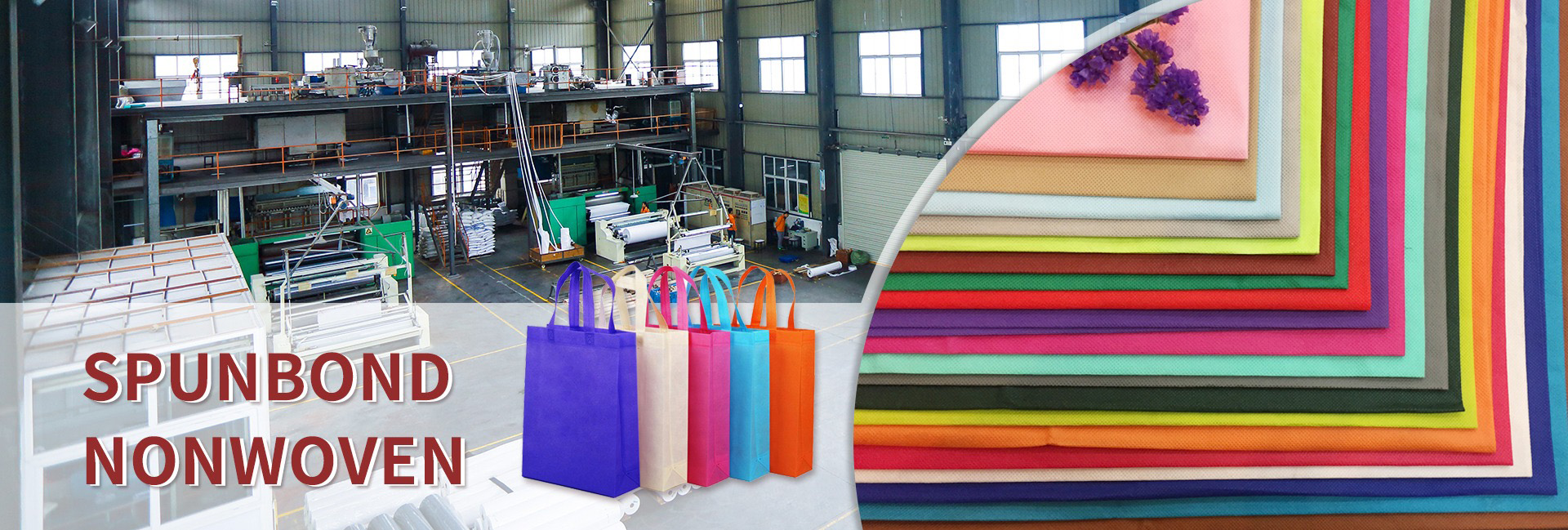
Dongguan Liansheng Non woven Technology Co., Ltd. was established in May 2020. It is a large-scale non-woven fabric production enterprise integrating research and development, production, and sales. It can produce various colors of PP spunbond non-woven fabrics with a width of less than 3.2 meters from 9 grams to 300 grams.
Post time: May-27-2026