
Industrial liquid primary filtration serves as the “first line of defense” throughout the entire production process. Its core objective is to efficiently intercept large particulate impurities (such as sediment, metal debris, and suspended particulate matter) with a diameter of ≥1μm in the liquid, thereby protecting subsequent precision filtration equipment (ultrafiltration membranes, reverse osmosis membranes, etc.). Additionally, it must balance the requirements of cost controllability, strong adaptability, and convenient operation and maintenance.
Among various filter materials, spunbond nonwoven fabrics have emerged as the preferred choice in industries such as chemical processing, water treatment, mechanical processing, and food processing, owing to their comprehensive advantages of “meeting performance standards, optimizing costs, and exhibiting broad adaptability”. Their core competitiveness stems from the synergistic empowerment of three dimensions: filtration performance, cost control, and practical adaptability, perfectly aligning with the cost-effective orientation of industrial primary filtration.
The filtration performance meets the initial efficiency requirements, establishing the first protective barrier
The filtration performance of spunbond nonwoven fabric precisely matches the core indicators of initial filtration for industrial liquids. There is no need to excessively pursue the fine filtration capabilities of high-end filter materials, as it can stably complete the task of impurity interception while balancing flux and service life, avoiding issues of “performance redundancy” or “insufficient protection”.
1. Three-dimensional pore structure, achieving efficient multiple interception
Spunbond nonwoven fabric is made from polypropylene (PP) or polyester (PET) through melt spinning, web laying, and thermal bonding, forming a three-dimensional interlaced fiber structure with pores. The pore size can be precisely controlled between 5~20μm, covering the required precision range of 1~200μm for initial filtration of industrial liquids. It can efficiently intercept large particulate impurities while allowing liquids to pass smoothly, avoiding pressure loss due to excessive clogging. Its interception mode is compound interception, where larger particles are trapped on the fiber surface and fine particles are captured deep within the filter material. The filtration efficiency for impurities above 1μm can reach 95%~99%, fully meeting the core requirements of initial filtration and effectively preventing large particulate impurities from scratching and wearing subsequent precision filter materials, thereby extending the service life of the entire filtration system.
2. Large dust holding capacity, extending replacement cycle
Compared to paper filters and knitted filters, spunbond nonwoven fabrics have a higher degree of fiber layer fluffiness, with a porosity rate of up to 70% to 90%. They possess an extremely strong dust holding capacity, able to accommodate impurities several times their own weight without significant clogging. In conventional industrial liquid filtration scenarios, their service life can reach 3 to 6 months, far exceeding the 1 to 2 months of paper filter cartridges. This reduces the frequency of filter material replacement, thereby shortening downtime for maintenance and indirectly reducing operational and maintenance labor costs. They are particularly suitable for scenarios involving industrial wastewater with high impurity content, machining coolants, and the like.
3. Strong resistance to working conditions, suitable for complex liquid environments
Industrial liquids often contain acidic and alkaline components, oil contaminants, or are exposed to high and low temperatures. Spunbond nonwoven fabrics, leveraging their raw material characteristics and process advantages, exhibit excellent chemical resistance and temperature tolerance. PP material can withstand acidic and alkaline liquids with pH values ranging from 1 to 14, while PET material can withstand temperatures up to 150°C. It is suitable for various complex working conditions such as chemical acid-base wastewater, high-temperature cooling fluids, and food processing liquids. It will not be damaged or degraded due to liquid corrosion or temperature changes, ensuring filtration stability. Additionally, it has strong moisture resistance, and is not prone to softening or delamination after immersion. Compared to fiberglass filter materials, which are easily damaged by moisture, it is more suitable for long-term liquid filtration scenarios.
Optimal life cycle cost, highlighting the core advantage of cost-effectiveness
The cost-effectiveness of spunbond nonwoven fabric is not solely reflected in its low unit price, but rather in its lowest comprehensive cost throughout the entire lifecycle (procurement, processing, operation and maintenance, and disposal). Compared to similar primary efficiency filter materials, it can significantly reduce the cost investment in the filtration process for enterprises, especially meeting the cost control needs of batch industrial production.
1. Low procurement costs and significant advantages in mass production
The spunbond process boasts extremely high production efficiency, enabling continuous large-scale mass production without requiring complex secondary processing, significantly reducing production energy consumption and labor costs. Meanwhile, the core raw materials, PP and PET, are both industrialized mass production materials, offering low prices and stable supply. Notably, PP raw materials can be recycled and reused, further reducing raw material costs. Currently, the procurement unit price of mainstream spunbond nonwoven fabrics in the industry is only 0.8~2.5 yuan/m², far lower than that of PTFE-coated filter materials (5~12 yuan/m²), aramid filter materials (8~15 yuan/m²), and even fiberglass filter materials (3~5 yuan/m²). When purchasing in bulk, a 10%~15% discount can be obtained through negotiation, controlling procurement costs at the source.
2. Convenient processing, compatible with multiple filtration forms
Spunbond nonwoven fabric is flexible and can be easily cut, folded, and heat-sealed. It can be processed into various forms such as filter bags, filter cartridges, filter plates, and filter cloths, suitable for various industrial filtration equipment such as plate and frame filters, bag filters, and self-cleaning filters. No special processing technology is required, and the processing cost is 20% to 30% lower than that of knitted filter materials and fiberglass filter materials. For irregular filtration equipment, the size and shape can be flexibly customized without additional mold costs. It has strong adaptability and convenient processing, greatly improving the efficiency of building filtration systems.
3. Operational and maintenance costs are controllable, and waste disposal is environmentally friendly
On the one hand, it boasts a long replacement cycle and convenient operation, allowing ordinary workers to complete the replacement without professional training. The labor cost per maintenance session is 40% lower than that of flange-type metal end cap filter cartridges, minimizing the impact of downtime maintenance on production progress. On the other hand, spunbond nonwoven fabrics are free of chemical adhesive residues (some processes can achieve glue-free bonding), making them recyclable after disposal. The PP material is also biodegradable, eliminating the need to bear high hazardous waste disposal costs. Compared to traditional glue-containing filter materials and fiberglass filter materials, it saves 20% to 30% in environmental disposal costs and avoids the risk of environmental compliance penalties.
Wide adaptability + mature technology, balancing practicality and stability
The initial filtration scenarios for industrial liquids are diverse, demanding high adaptability and stability from filter materials. Spunbond nonwoven fabrics, with their mature technology and wide adaptability, can meet the filtration needs of multiple industries and working conditions, making them the most versatile initial filter materials.
1. Multi-industry adaptability, strong universality
Whether it’s acid-base wastewater pretreatment in the chemical industry, cutting fluid filtration in mechanical processing, raw water initial filtration in the water treatment industry, or liquid impurity interception in food processing, spunbond nonwoven fabrics can be precisely adapted without the need to customize special formulas or specifications for different industries. Simply select PP or PET material based on the liquid characteristics – PP material is suitable for acid-base environments, while PET material is suitable for high temperature and high strength requirements. Its versatility far exceeds that of filter materials that are only suitable for a single working condition, helping enterprises reduce the types of filter material reserves and simplify material management processes.
2. Mature process, stable and controllable quality
Spunbond nonwoven fabric is one of the earliest applied filter materials, and its production technology has reached a high level of maturity. By adjusting process parameters such as spinning temperature, draft ratio, and hydroentanglement pressure, the fineness of fibers, pore size, and distribution can be precisely controlled, ensuring uniform and stable filter material quality and avoiding filtration failure caused by quality fluctuations. Meanwhile, the industry has well-established production standards, and most products can pass relevant quality certifications. The controllability of quality far exceeds that of some niche filter materials, providing enterprises with stable filtration guarantees and reducing production failures caused by filter material quality issues.
3. It can be upgraded and combined, expanding its applicable scenarios
Spunbond nonwoven fabrics can be compounded with meltblown nonwoven fabrics, hydroentangled nonwoven fabrics, etc., to form a “spunbond + meltblown” composite filter material. This material combines initial and medium filtration capabilities, enhancing filtration precision without the need to replace filtration equipment, and flexibly adapts to production process upgrade requirements. At the same time, by adding additives such as antibacterial agents and antistatic agents, additional functions such as antibacterial and antistatic properties can be achieved, making it suitable for food, electronics, and other scenarios with higher requirements for the filtration environment. This expands the scope of application without significantly increasing costs.
Comparison with similar filter materials, highlighting irreplaceable comprehensive advantages
Compared to commonly used industrial liquid primary filters such as fiberglass filter materials, paper filter materials, and meltblown PP cotton, spunbond nonwoven fabrics offer an absolute advantage in terms of comprehensive cost-effectiveness. The specific comparison is as follows:
1. Comparison with fiberglass filter material
Glass fiber filter materials have high filtration accuracy, but they are brittle and prone to damage. After soaking, they are prone to thread detachment, which may lead to secondary contamination of impurities. Additionally, their procurement and disposal costs are high. Spunbond nonwoven fabrics are impact-resistant, less prone to damage, and have no risk of thread detachment. Their procurement cost is only 1/2 to 1/3 of that of glass fiber filter materials. At the same time, they are easier to maintain and operate, making them suitable for long-term liquid filtration. The overall cost is reduced by more than 40%.
2. Comparison with paper filter material
Paper filter media has the lowest unit price, but it has a small dust holding capacity, is prone to softening due to moisture, and requires frequent replacement (every 1-2 months). This results in high long-term operational and maintenance costs and is only suitable for liquid applications with high cleanliness. Spunbond nonwoven fabric has a large dust holding capacity and strong moisture resistance, extending the replacement cycle by 2-3 times. Although its unit price is slightly higher, the total life cycle cost is lower. It is suitable for complex applications with high impurities and moisture, offering greater practicality.
3. Comparison with melt-blown PP cotton
Meltblown PP cotton has high filtration accuracy and is suitable for medium-efficiency filtration. However, due to its fine fibers, low porosity, small liquid flux, susceptibility to clogging, low mechanical strength, and vulnerability to damage, it is not suitable for high-flow initial-efficiency filtration. Spunbond nonwoven fabric has a higher flux and mechanical strength. Although its filtration accuracy is slightly lower, it precisely meets the needs of initial-efficiency filtration. Additionally, it has lower cost and longer service life, making it more suitable for industrial high-flow liquid filtration scenarios.
Summary: Optimal choice under cost-effectiveness orientation
The core requirement for industrial liquid primary filtration is to “achieve effective protection at the lowest cost.” Spunbond nonwoven fabric perfectly aligns with this orientation – its filtration performance precisely matches the primary filtration needs, enabling it to stably intercept large particulate impurities and protect subsequent equipment. Its total lifecycle cost is controllable, with significant cost advantages from procurement, processing, to operation and maintenance, and disposal. With its wide adaptability and mature technology, it can meet the filtration needs of multiple industries and operating conditions, and can be flexibly compounded and upgraded to accommodate production upgrade requirements.
Compared to similar filter materials, spunbond nonwoven fabric neither incurs cost waste due to performance redundancy nor poses protection risks due to insufficient performance. It achieves a triple balance of “performance compliance, cost optimization, and practical convenience,” making it the king of cost-effectiveness and the preferred medium for industrial liquid primary filtration among numerous enterprises. As the spunbond process continues to upgrade, its optimization in filtration precision and resistance to operating conditions will further consolidate its core position in the industrial filtration field, adapting to the primary filtration needs of more high-end industrial scenarios.
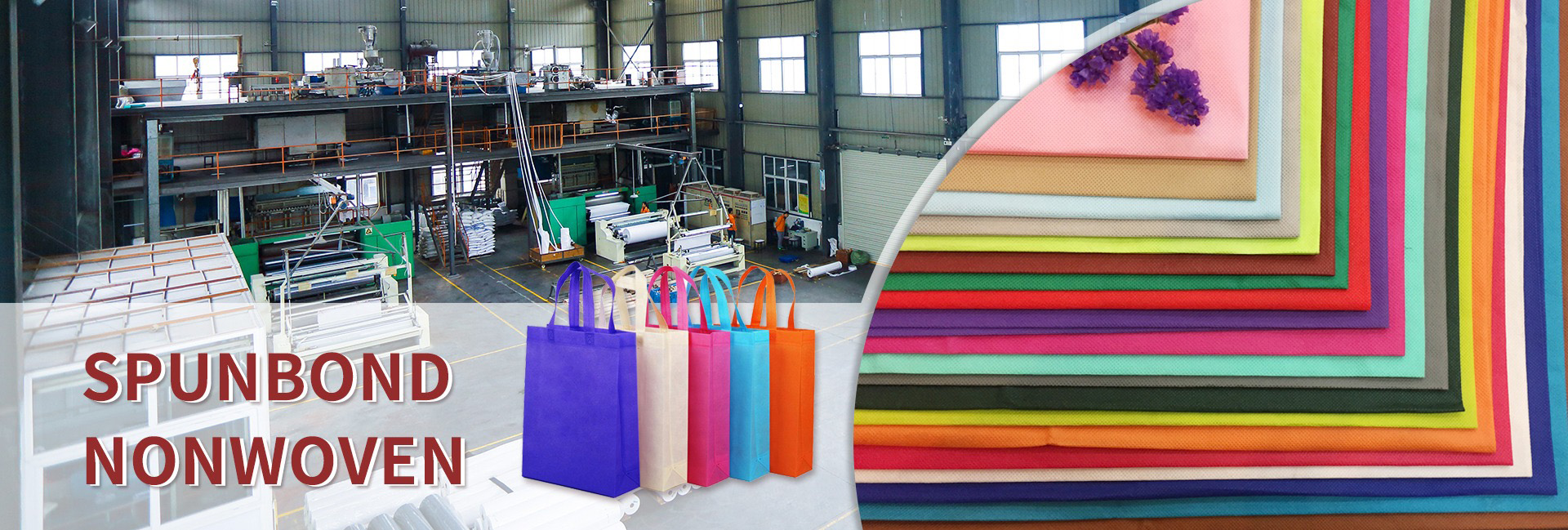
Dongguan Liansheng Non woven Technology Co., Ltd. was established in May 2020. It is a large-scale non-woven fabric production enterprise integrating research and development, production, and sales. It can produce various colors of PP spunbond non-woven fabrics with a width of less than 3.2 meters from 9 grams to 300 grams.
Post time: Feb-22-2026