
In the field of non-woven materials, there has long been a deep-rooted belief that the thinner and lighter the material, the worse its mechanical properties will inevitably be. This rule of thumb does hold true in many traditional materials, and there seems to be an insurmountable gap between weight and strength. However, technological advancements in PP spunbond nonwoven fabrics are breaking this deadlock.
When people receive a PP spunbond fabric with a weight of only 8 grams per square meter or even lower, their first reaction is often to doubt whether it will break with just one pull. But the actual test data gave completely opposite answers. The optimized low weight spunbond fabric has sufficient longitudinal and transverse tensile strength to meet the specific strength requirements of applications such as protective clothing, medical wrapping, and hygiene product base films. This is not magic behind it, but a product of a series of highly sophisticated materials science and process control technologies. Lightweight and high-strength are moving from contradiction to unity in the field of PP spunbond fabric.
Why is the paradox of high porosity stronger with more holes
The traditional intuition is that the more pores in a material, the looser and more fragile the structure becomes. PP spunbond fabric has taken the opposite path. The spunbond process forms a three-dimensional network structure composed of randomly interwoven continuous filaments through melt extrusion, high-speed airflow stretching, mesh laying, and hot rolling consolidation. It is this structure that endows the material with extremely high porosity. Experimental data shows that the porosity of high-quality PP spunbond nonwoven fabric can reach over 80%. These micrometer sized pores are not defects in the material, but functional design products.
The key reason why high porosity does not weaken strength is that the mechanism of force transmission has undergone fundamental changes. In traditional dense thin films, external forces are directly applied to the continuous matrix material. Once a crack appears at a certain point, the crack will quickly penetrate the entire cross-section. In a high porosity fiber network, external forces are first dispersed onto thousands of independent fibers, each of which bears a portion of the load. When a fiber breaks, the surrounding fibers quickly take up the load, and the crack cannot propagate in a straight line like in dense materials. This mechanism of “fiber network collaborative load-bearing” enables PP spunbond fabric to maintain sufficiently high fracture strength and tear toughness even at extremely low weight. In fact, experimental studies have shown that the weight, thickness, and structural characteristics of spunbond nonwoven fabrics have a significant impact on their mechanical properties. By optimizing structural parameters, excellent mechanical performance can be achieved under low weight conditions.
The finer the two fibers, the stronger the micrometer scale password
To make thin and tough a reality, the microscopic strength of fibers themselves is the first hurdle. One of the core technologies of PP spunbond fabric is to stretch the molten polymer by high-speed airflow, compressing the fiber diameter to the micrometer level. In industrial grade spunbond equipment, the airflow speed can reach 1000 to 2000 meters per minute. Under such extreme stretching conditions, PP polymer chains are highly oriented and arranged along the fiber axis, and the fiber fineness can be reduced from the conventional level to 1 to 3 decitex. This process not only leads to fiber thinning, but also a molecular level reconstruction.
The high-speed airflow stretching simultaneously triggers the orientation crystallization of PP material. The crystallinity of non oriented PP is about 10%, and after sufficient stretching, the crystallinity can be increased to 30% to 40%. High orientation means that the secondary bonding forces between molecular chains are significantly enhanced, and the fiber’s own fracture strength can be increased by 2 to 3 times. That is to say, the same PP fiber becomes finer after being stretched at a high magnification, but the tensile strength of each fiber is much higher than that of the unstretched coarse fiber. This counterintuitive phenomenon is precisely the micro code of ‘finer, stronger’. At the molecular level, as the orientation degree of macromolecules increases, the fracture strength of spunbond nonwoven fabrics will also increase. Moreover, as the fiber fineness decreases, the texture of the fabric will become softer. The seemingly contradictory characteristics of fineness, strength, and softness have been unified under high orientation spinning technology.
How to use point connection surface in the exquisite hot rolling process of three consolidation technology
After the fibers are laid into a mesh, they need to be consolidated into a complete cloth. The contribution of this stage to the final strength is often underestimated. The mainstream method of consolidating PP spunbond fabric is hot rolling bonding, which uses a pair of heated patterned rollers to melt and bond the fibers in the fiber web together at a certain temperature and pressure. The core parameters of hot rolling process include roll temperature, roll pressure, and rolling mill speed, among which the influence of hot rolling temperature on strength is the most significant.
Research has found that increasing the hot rolling temperature can improve the melting effect on the fiber surface, increase the number of bonding points and bonding strength between fibers, and significantly enhance the fracture strength of non-woven fabrics. But the higher the temperature, the better. Excessive temperature can lead to excessive melting or even brittleness of fibers, which can actually damage the overall mechanical properties. The optimal process conditions usually require precise control within a relatively narrow window, such as achieving optimal strength performance at a hot rolling temperature of around 139.7 degrees Celsius, a roll pressure of 9MPa, and a rolling speed of 31.8 revolutions per minute. In this optimal combination, a moderate number but sufficient strength of “point bonds” are formed between the fibers, ensuring the integrity of the network structure without losing the toughness of the fibers themselves due to excessive melting. This point to surface consolidation strategy transforms the originally loosely stacked fiber network into a cohesive structure that is both strong and flexible.
Four Two Component Technology: Synergistic Enhancement of Strength between Two Materials
If the strength improvement of single component PP spunbond fabric is already impressive enough, then two-component technology has pushed “thin and tough” to new heights. The PE/PP two-component spunbond technology adopts a skin core structure, with the skin layer made of polyethylene and the core layer made of polypropylene. Two materials are compounded together during the spinning process, with the melting point of the outer layer PE being lower than that of the core layer PP. During hot rolling consolidation, the outer layer undergoes selective melting, bonding adjacent fibers together, while the core layer maintains its original high strength and orientation structure without damage.
Under the same process conditions, two-component PE/PP spunbond nonwoven fabric with the same surface density has significantly better performance than single component PP spunbond nonwoven fabric in terms of fracture strength, softness, water repellency, and breathability. This technology route is particularly suitable for low-density products. Research data shows that PE/PP two-component spunbond nonwoven fabric with a surface density of only 15 grams per square meter can control its fiber fineness at 21.6 microns, and significantly improve its softness and breathability. The two-component structure cleverly resolves an inherent contradiction in the consolidation process, which requires high-temperature melting to ensure bonding strength while avoiding high-temperature damage to the mechanical properties of the fiber body. The leather core structure provides an almost perfect answer, achieving both softness and high strength on a lightweight non-woven fabric.
The ultimate challenge of five low weight and the birth and significance of 8-gram spunbond fabric
Continuously pushing the boundary of lightweight to the lower limit is the most intuitive touchstone of PP spunbond fabric technology capability. In recent years, domestic non-woven fabric production enterprises have made substantial breakthroughs in this field. Shandong Yongxi Non woven Fabric Company has introduced a new type of spunbond nonwoven fabric production line, using technologies such as dual-mode heads, multi hot rollers, and MF ultrafine fibers. It has successfully mass-produced ultra-thin PP spunbond fabric with only 8 grams per square meter, which is the first of its kind in Shandong Province and an important milestone in the domestic production capacity of low weight spunbond fabric.
What is the concept of 8 grams. The weight of an A4 printing paper is about 80 grams per square meter, and the weight of 8 grams of spunbond fabric is only one tenth of that of regular printing paper. To maintain usable strength at such an extreme level of lightweight, extremely high precision requirements are placed on every step of spinning, stretching, web laying, and solidification. The dual-mode head design improves the uniformity of mesh laying, the multi hot rolling mill system achieves finer consolidation control, and the MF ultrafine fiber technology ensures that the fiber diameter is sufficiently fine and the orientation is sufficiently high. This technological route indicates that low weight not only cannot be a reason for compromising strength, but also forces the development of more advanced process systems. The ability to mass produce 8 grams of spunbond fabric is a testament to the comprehensive strength of a company or even a region in the field of nonwoven equipment and technology.
The seemingly contradictory material property of “thin and tough” has become an engineering reality in the field of PP spunbond fabric through the progressive design of high porosity structures, super stretch orientation, fine hot rolling consolidation, two-component skin core synergy, and extreme low weight processes. Lightweight is no longer the enemy of high intensity, but a driving force for technological innovation. From ultra-thin products weighing 8 grams to two-component sanitary materials weighing 15 grams per square meter, from protective clothing fabrics to medical cladding, PP spunbond fabrics are proving that the performance boundaries of materials are never fixed. The orientation of every fiber, the position of every adhesive point, and every fine-tuning of process parameters are quietly rewriting the originally opposing equation between “light” and “strong”. In the world of non-woven materials, the thinnest layer often contains the strongest foundation.
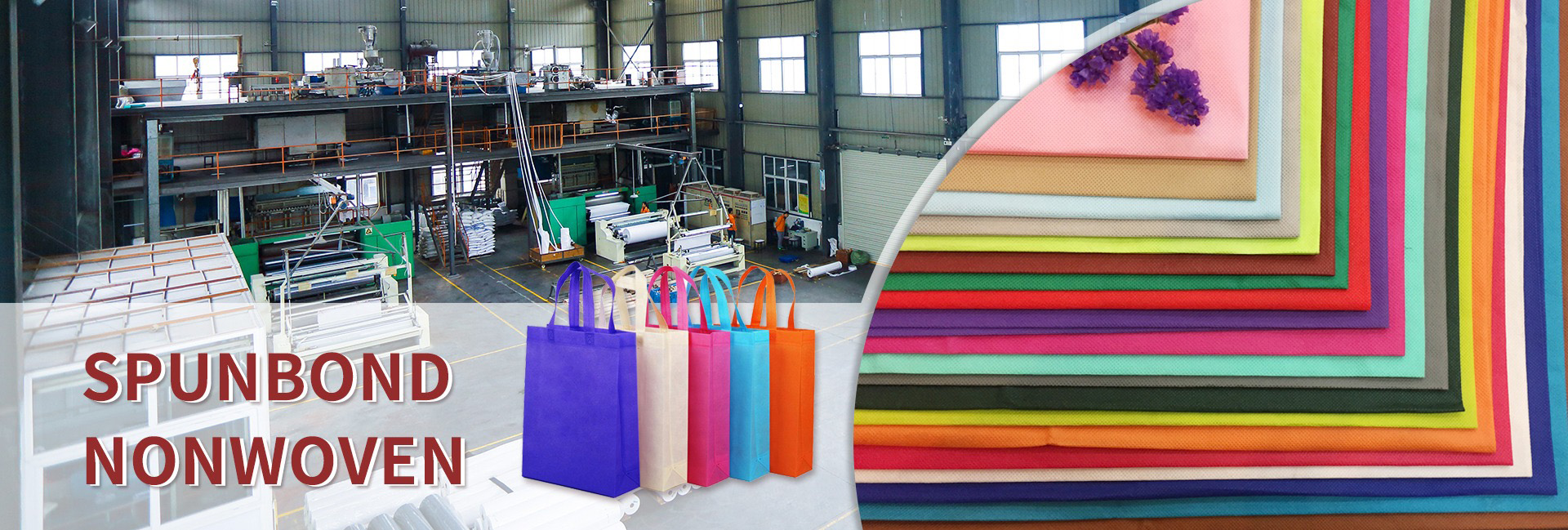
Dongguan Liansheng Non woven Technology Co., Ltd. was established in May 2020. It is a large-scale non-woven fabric production enterprise integrating research and development, production, and sales. It can produce various colors of PP spunbond non-woven fabrics with a width of less than 3.2 meters from 9 grams to 300 grams.
Post time: May-21-2026