
As a core functional material in the automotive industry, spunbond nonwoven fabric has fully penetrated into interior, filtration systems, body structures, and new energy vehicle battery packs with its comprehensive advantages of lightweight, modifiability, low cost, and multifunctionality. Its market size and development trend are deeply linked to the global automotive industry’s electrification, environmental protection, and high-end upgrading processes, presenting the overall characteristics of “steady expansion of scale, continuous optimization of structure, and accelerated technological iteration”. The following is a detailed analysis based on the latest industry research data.
Global expansion, China leading, new energy becoming the core growth pole
In recent years, the global market for spunbond nonwoven fabrics for automobiles has continued to expand. China, as the core base of global automobile manufacturing and the country with the highest penetration rate of new energy vehicles, has become the main engine of market growth. At the same time, the demand for segmented scenarios has shown a differentiated growth trend, and the market size and production capacity layout have steadily increased.
(1) Global market size: steadily growing, dominated by the Asia Pacific region
The global automotive non-woven fabric market has maintained steady growth overall, with spunbond non-woven fabric as the core sub category, accounting for over 60% of the market share, becoming a key driving force for market expansion. According to industry research data, the global revenue scale of automotive non-woven fabrics in 2024 is about 34.03 billion yuan, of which the corresponding scale of spunbond non-woven fabrics is about 20.42 billion yuan; It is expected that the annual compound growth rate of the global automotive non-woven fabric market will be 6.1% from 2025 to 2031, and the revenue scale will approach 50.11 billion yuan by 2031. It is estimated that the market size of spunbond non-woven fabric will exceed 30 billion yuan, and the growth momentum will mainly come from the demand for new energy vehicles and the upgrading of traditional fuel vehicles. In terms of production capacity, the global production of automotive non-woven fabrics will reach about 1771 thousand tons in 2024, with an average market price of about $2658 per ton. Spunbond non-woven fabrics have become the most cost-effective category of automotive non-woven fabrics due to their mass production advantages, accounting for over 65% of production capacity. In terms of regional pattern, the Asia Pacific region occupies a dominant position in the global market, benefiting from the huge automobile manufacturing bases and strong market demand in China, Japan, South Korea, and India. Europe and North America rely on high-end automobile segments and strict environmental regulations to maintain stable growth, mainly focusing on the research and application of high-end functional spunbond non-woven fabric products.
(2) Chinese market size: leading growth rate, increasing concentration of production capacity
As the world’s largest producer and consumer of automobiles, China is also a leader in the new energy vehicle industry. The growth rate of the automotive spunbond nonwoven fabric market is significantly higher than the global average. Based on industry data, it is estimated that the market size of China’s automotive non-woven fabric will reach 18.56 billion yuan by 2025, of which the scale of spunbond non-woven fabric is about 11.14 billion yuan, a year-on-year increase of about 12.8%; By 2026, the size of China’s automotive non-woven fabric market will increase to 20.89 billion yuan, with the proportion of spunbond products remaining above 60%, and the scale is expected to exceed 12.5 billion yuan. In terms of production capacity layout, the total number of automotive non-woven fabric production enterprises in China will reach 342 by 2025, an increase of 8.7% compared to 2024. Among them, enterprises above designated size account for 68.4%, and the total production capacity of the top ten enterprises will reach 45.6%, indicating a continuous increase in industry concentration. The East China region is the core supply area, with a production capacity of 544000 tons, accounting for 42.3% of the total national production capacity. Among them, Jiangsu Province has a production capacity of 213000 tons, ranking first in the country; The production capacity of South China is 279000 tons, accounting for 21.7% of the national total. The production capacity of spunbond nonwoven fabrics for new energy vehicles accounts for 35.2%, which is 8.7 percentage points higher than the national average.
(3) Segmented scenario scale: New energy vehicles become the core increment
From the perspective of demand structure, the growth of spunbond nonwoven fabrics for automobiles mainly relies on the upgrading of demand for new energy vehicles and high-end fuel vehicles. The difference in single vehicle consumption between the two is significant: traditional fuel vehicles consume about 15-20 kilograms of nonwoven fabrics per vehicle, of which spunbond nonwoven fabrics account for 60%, corresponding to a single vehicle consumption of 9-12 kilograms; Due to the higher demand for lightweight, sound insulation, and battery safety, new energy vehicles consume 22-28 kilograms of non-woven fabric per vehicle, with high-end new energy models even exceeding 35 kilograms. The corresponding consumption of spunbond non-woven fabric per vehicle is 13.2-16.8 kilograms, which is more than 40% higher than traditional fuel vehicles. By 2025, the production of new energy vehicles in China is expected to exceed 10 million units, accounting for 31.2% of the overall automobile production, driving an average annual growth rate of 25.8% in demand for spunbond nonwoven fabrics for new energy vehicles, far higher than the average annual growth rate of 6.2% for traditional fuel vehicles. From the perspective of application scenarios, the interior field is still the largest demand side for spunbond non-woven fabrics, with seats, carpets, ceilings, and other scenarios accounting for over 60%; The demand for spunbond non-woven fabric specifically designed for new energy vehicle battery packs is growing the fastest, and the market size is expected to exceed 1.5 billion yuan by 2025, becoming the core scenario for new growth; The demand for spunbond nonwoven fabrics used in filtration systems is steadily increasing, benefiting from the implementation of China VI emission standards, and the demand for high-performance spunbond materials for filtration is growing by 15-20%.
Core growth drivers
The continuous expansion of the spunbond nonwoven fabric market for automobiles is the result of the synergistic effect of multiple factors, including the upgrading of the automotive industry, policy promotion, technological innovation, and consumption upgrading. Among them, the penetration of new energy vehicles and the tightening of environmental policies are the most core driving forces.
1. Increase in penetration rate of new energy vehicles: The ultimate pursuit of lightweight and battery safety in new energy vehicles has promoted the new application of spunbond non-woven fabrics in battery pack flame retardant separation, insulation protection, waterproof and breathable scenarios. At the same time, the upgrade of interior lightweight has also expanded the substitution of spunbond materials for traditional fabrics and plastics, becoming the core engine of demand growth.
2. Policy and regulatory promotion: Global environmental regulations are becoming stricter, China’s “dual carbon” goals, National VI emission standards, as well as EU RoHS, REACH certifications, etc., are promoting car companies to choose environmentally friendly and recyclable spunbond non-woven fabrics to replace traditional adhesive containing and difficult to degrade materials; Under the guidance of the automotive lightweighting policy, the application proportion of spunbond nonwoven fabric as a lightweight material continues to increase.
3. Consumption upgrade driving: Consumers’ demand for car interior quality, comfort, and health has increased, promoting the application of high-end functional spunbond non-woven fabrics (such as antibacterial, low VOC, and delicate touch) in mid to high end car models, enhancing the value of bicycle matching. By 2025, the value of spunbond non-woven fabrics for new energy vehicles will reach 450-600 yuan per bicycle, which is 35-45% higher than traditional fuel vehicles.
4. Technological maturity: The large-scale production of spunbond technology has reduced production costs, while breakthroughs in modification technology (flame retardant, anti-static, waterproof and breathable) and composite technology (SMS spunbond meltblown spunbond) have expanded the application scenarios of spunbond nonwoven fabrics, enhanced product competitiveness, and promoted their penetration in the high-end automotive field.
High-end functionality, diversified applications, and intensive industries
With the deep transformation of the automotive industry towards electrification, intelligence, and greenization, spunbond nonwoven fabrics for automobiles will break away from traditional auxiliary material positioning and develop towards high-end functional and integrated directions. At the same time, the industrial pattern will continue to optimize, presenting four clear trends.
(1) Product features are high-end, focusing on the exclusive needs of new energy
In the future, spunbond nonwoven fabrics will be upgraded towards the direction of “multifunctional integration”, with a focus on adapting to the core scenarios of new energy vehicles: spunbond materials for battery packs will enhance flame retardancy, high temperature resistance, insulation performance, and continuously improve the ultimate oxygen index, while optimizing waterproof, breathable, and thermal management adaptability to delay battery thermal runaway; The use of spunbond materials in the interior will focus on low VOC, antibacterial, anti-static, and delicate touch, combined with nanofiber technology to improve filtration and sound insulation performance. After nanofiber modification, the specific surface area of the spunbond material can reach 5-15m ²/g, and the filtration accuracy is significantly improved by 30-40%; The use of spunbond materials for filtration will be upgraded towards high efficiency and long lifespan, adapting to strict filtration requirements such as PM0.3, while reducing wind resistance and energy consumption. In addition, the application proportion of bio based spunbond materials (PLA, PHA fibers) continues to increase, reaching 15% by 2024 and expected to exceed 25% by 2026, in line with the trend of green environmental protection.
(2) Diversify application scenarios and expand the core structural component field
Spunbond non-woven fabric will further penetrate into the core structural components and new energy exclusive parts of automobiles from traditional interior and filtration scenarios. In the field of vehicle body structure, it will replace more metal and plastic components and be used for chassis guards, bumper linings, etc. Through high-strength modification, it will enhance impact resistance and wear resistance, and help to reduce the weight of the entire vehicle; In the field of new energy vehicles, in addition to battery pack protection, it will also expand to scenarios such as motor sound insulation and charging port protection; In the field of intelligent automobiles, we will develop dust-proof, waterproof, and anti-interference spunbond materials that are compatible with autonomous driving sensors, as well as intelligent responsive products that are temperature sensitive and humidity sensitive, to achieve adaptive environmental regulation.
(3) Intensive industrial pattern, leading enterprises leading the upgrade
The industry concentration will continue to increase, showing a trend of “oligopoly monopoly”. The market share of the top ten spunbond nonwoven fabric suppliers will gradually increase to over 65%. Leading enterprises will consolidate their market position through technology research and development, capacity expansion, mergers and acquisitions. At the same time, the synergy of the industrial chain continues to deepen, and spunbond non-woven fabric enterprises will establish synchronous development mechanisms with automobile and battery manufacturers, deeply participate in the preliminary design of vehicles and battery packs, and enhance the adaptability of the supply chain; The regional layout will further align with the automotive industry cluster, and the East and South China regions will continue to strengthen their production capacity advantages. At the same time, the central and western regions will rely on the layout of the new energy vehicle industry to gradually form supporting production capacity and reduce logistics costs.
(4) Deepening green and low-carbon development, promoting the upgrading of the entire industry chain
Green environmental protection will become the core competitiveness of the industry. On the one hand, the research and application of bio based and biodegradable spunbond materials will accelerate, replacing traditional petroleum based raw materials and reducing carbon emissions; On the other hand, the large-scale application of recycled raw materials (recycled PP, PET) continues to advance, and some enterprises have achieved batch use of more than 30% of recycled raw materials. At the same time, production processes are upgrading towards energy conservation, reducing wastewater and exhaust emissions, in line with global circular economy goals. In addition, environmental compliance capabilities will become the core threshold for enterprise access, and low VOC, recyclable spunbond materials will become the mainstream in the market.
Summary
The market for automotive spunbond nonwoven fabrics is currently in a golden period of rapid growth, with the global market steadily expanding. China, with its advantages in the new energy vehicle industry, has become the core engine of market growth. By 2031, the global application scale of spunbond nonwoven fabrics in the automotive field is expected to exceed 30 billion yuan. The demand for new energy vehicles is driven by policies and regulations, technological upgrades, and consumption upgrades, which together support the sustained growth of the industry. In the future, there will be a development trend of “high-end functionality, diversified applications, intensive industry, and green and low-carbon”.
Spunbond non-woven fabric will gradually replace traditional materials and achieve deeper penetration in automotive interiors, structural components, new energy battery packs, and other scenarios. It will upgrade from “invisible accessories” to the core material support for high-quality upgrading of the automotive industry. At the same time, industry competition will focus on technology research and development and environmental compliance. Leading enterprises will dominate the industry development pattern with their technological and production capacity advantages, and high-end functional and green environmentally friendly spunbond materials will become the core focus of market competition.
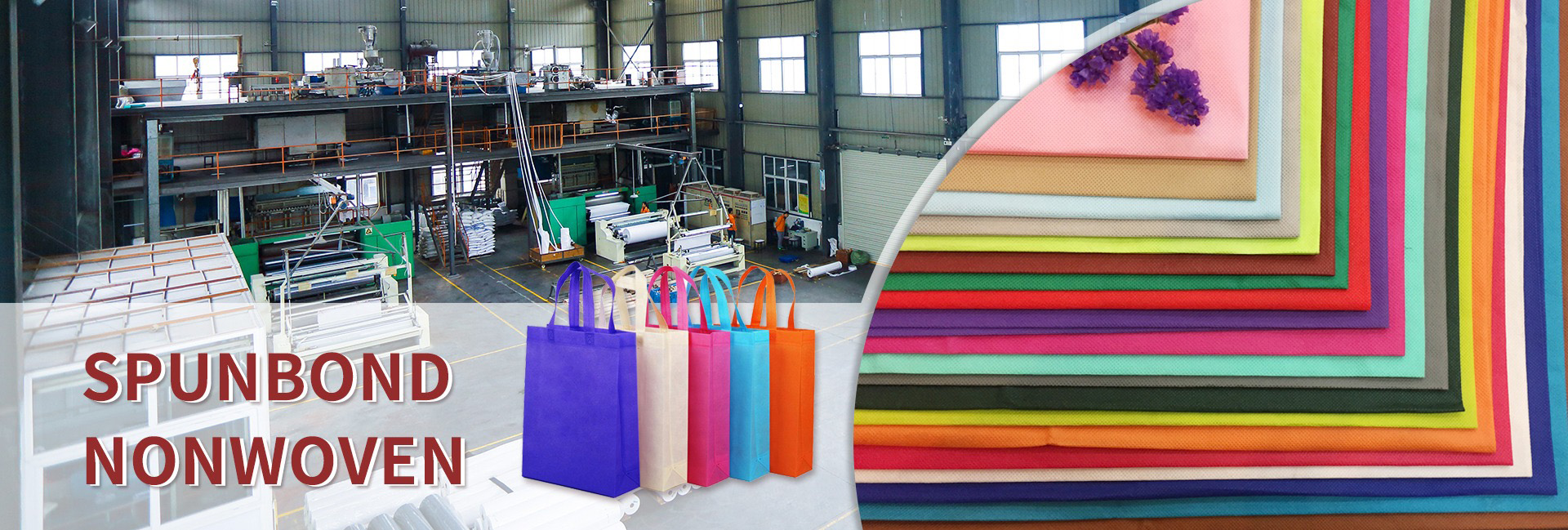
Dongguan Liansheng Non woven Technology Co., Ltd. was established in May 2020. It is a large-scale non-woven fabric production enterprise integrating research and development, production, and sales. It can produce various colors of PP spunbond non-woven fabrics with a width of less than 3.2 meters from 9 grams to 300 grams.
Post time: Feb-16-2026