
When people mention PLA corn fiber, they often first associate it with biodegradable packaging materials – this type of polylactic acid fiber made from renewable plant starch such as corn through fermentation, polymerization, and spinning. With its ability to completely degrade into carbon dioxide and water in the natural environment, it has become an important breakthrough in solving “white pollution”. But the value of PLA corn fiber goes far beyond that. It has multiple advantages such as renewability, biocompatibility, softness, and skin friendliness, and is gradually penetrating into multiple core fields such as medical and home textiles, unlocking new application possibilities that combine green environmental protection and functional practicality. It has become an important force in promoting low-carbon transformation and product upgrading in related industries.
Building a secure defense line with biocompatibility
The medical field has extremely strict requirements for the safety and functionality of materials, and the natural characteristics of PLA corn fiber perfectly meet this demand, especially in the two major areas of absorbable medical products and medical protective equipment, demonstrating irreplaceable advantages and breaking the limitations of traditional petroleum based materials.
Say goodbye to secondary damage and achieve natural metabolism
The most prominent advantage of PLA corn fiber is its excellent biocompatibility and degradability. It is non-toxic and harmless to the human body, does not cause allergies or adverse reactions, and does not require additional harmful additives to meet medical grade safety standards. It has become an ideal raw material for absorbable medical consumables. In the field of surgical sutures, sutures made of PLA and its copolymers have been widely used. By adjusting the copolymerization ratio of lactic acid and glycolic acid, the degradation rate can be accurately controlled and adapted to the healing cycle of different parts of the wound – from short-term degradation of epidermal wounds to long-term support for deep tissue repair, all of which can achieve natural degradation after wound healing, avoiding the pain and infection risk of secondary surgical removal and greatly improving the postoperative recovery experience of patients.
In the field of tissue engineering, PLA corn fiber can be used to create three-dimensional scaffold materials, providing stable carriers for cell growth and assisting in the regeneration of damaged tissues. Its porous structure can simulate the microenvironment of human tissue, promote cell adhesion, proliferation, and differentiation, and gradually degrade as tissue repair is completed, ultimately fully integrating into the human body without the need for subsequent removal operations. In addition, PLA corn fiber can also be used to make absorbable medical dressings, which have breathable, moisturizing, and antibacterial properties, reducing the risk of wound infection and accelerating wound healing, especially suitable for the care of chronic wounds and burn wounds.
Balancing protection and environmental protection, solving the problem of waste disposal
Traditional medical protective equipment often uses non degradable petroleum based materials, which accumulate in large quantities after use, forming “medical waste pollution”. Protective equipment made from PLA corn fiber can meet medical grade protection requirements and achieve natural degradation after disposal, reducing environmental burden from the source. For example, PLA spunbond nonwoven fabric can be used to make disposable surgical gowns and inner non-woven fabrics for masks. Its fiber structure is dense and can effectively block dust and bacteria, while also having good breathability to avoid discomfort caused by prolonged wearing by medical staff.
Compared to traditional materials, PLA medical protective equipment does not release toxic gases during combustion, and can be completely degraded within a few months to a year under composting conditions after disposal, which is in line with the development trend of low-carbon and environmental protection in the medical field. At the same time, PLA fiber can be compounded with nano cellulose, alginate and other materials to improve the protection and hemostatic performance. For example, the composite hemostatic cotton can quickly gel in case of bleeding, achieve efficient hemostasis within 20 seconds, and can self degrade and absorb in the body, solving the hidden danger of medical accidents caused by the residue of traditional hemostatic materials.
Reconstructing comfortable experience with green skin friendly design
Home textile products have close contact with the human body, and consumers’ demand for skin friendliness, safety, and environmental friendliness continues to increase. PLA corn fiber, with its soft and delicate touch, natural antibacterial and mite resistant properties, and full lifecycle environmental advantages, gradually replaces traditional synthetic fibers and pure cotton, becoming a new preferred material in the home textile industry, covering multiple categories such as bedding and home accessories.
Balancing comfort and health, adapting to diverse needs
PLA corn fiber has a soft and smooth hand feel, with a delicate luster similar to silk and good drape. Its skin friendliness far exceeds that of traditional polyester fibers, and it is non irritating, especially suitable for infants, young children, and people with sensitive skin. Its natural weakly acidic environment can inhibit the growth of harmful bacteria such as Staphylococcus aureus and Escherichia coli. Without the need for additional antibacterial agents, it can reduce the odor caused by bacteria growing in sweat on bedding, while also repelling dust mites, reducing the risk of allergies, and building a healthy defense line for the sleeping environment.
In terms of performance, PLA corn fiber has excellent moisture absorption, breathability, and temperature regulation capabilities. It can quickly absorb human sweat and discharge it, keeping the skin dry and comfortable. At the same time, it has a certain degree of warmth and is suitable for use in all seasons. At present, some companies have launched “corn hugging quilts” with added PLA corn fiber. With its lightweight and smooth texture and environmentally friendly properties, sales have exceeded 100000 pieces. In addition, PLA fiber can also be blended with cotton, wool, Lyocell and other fibers to make bed sheets, pillowcases, duvet covers and other bedding products. By integrating the advantages of multiple fibers, the fabric’s softness, warmth and durability are improved, while also considering environmental protection and practicality.
Combining aesthetics and environmental friendliness, helping green homes
In the field of home accessories, PLA corn fiber can be used to make curtains, carpets, sofa covers and other products. It has excellent light resistance and wear resistance, can withstand sunlight exposure and daily friction for a long time, maintain bright colors and complete forms, and has the characteristics of low flammability and low smoke emission, improving the safety of home use. Compared with traditional synthetic fiber jewelry, PLA corn fiber jewelry can be completely degraded after disposal, without causing environmental pollution, which is in line with the new concept of “the more environmentally friendly, the more fashionable” home consumption and provides a new solution for green home life.
In addition, PLA corn fiber has good dyeing performance and can be dyed with dispersed dyes to present rich colors and adapt to different home styles. It can not only meet consumers’ pursuit of beauty, but also achieve full lifecycle environmental protection, solving the problem of “beauty and environmental protection cannot be achieved at the same time” in traditional home accessories. At the same time, it can be processed using conventional textile techniques without the need to modify existing production equipment, reducing upgrade costs for enterprises and assisting the low-carbon transformation of the home textile industry.
Breaking through bottlenecks and unlocking a broader future of applications
Although PLA corn fiber has shown great potential in the medical and home textile fields, it still faces some bottlenecks: it is prone to degradation in high temperature environments, which increases the difficulty of processing steps such as dyeing and printing; The process threshold for weaving high-quality fine yarn is relatively high, and the production cost is higher than traditional materials, which limits its large-scale application.
With the continuous iteration of technology, these challenges are gradually being solved – enterprises optimize spinning and processing technology, adjust fiber crystallinity and orientation, and improve the heat resistance and processing performance of PLA fibers; The breakthrough in the one-step production process of polylactic acid has effectively reduced production costs and gradually improved its cost-effectiveness. In the future, with the continuous increase of research and development investment, PLA corn fiber can further achieve performance upgrades, such as improving strength, optimizing degradation speed, expanding to more segmented fields such as high-end medical consumables and functional home textiles, while promoting the development of the medical and home textile industries towards lower carbon, healthier, and more sustainable directions.
From biodegradable packaging to deep penetration in medical and home textile fields, the value of PLA corn fiber is constantly being explored. It is not only an environmentally friendly material, but also carries the mission of promoting industrial upgrading and practicing green development. With the deepening of environmental protection concepts and continuous breakthroughs in technology, PLA corn fiber will inevitably break through application boundaries, bloom in more fields, and open up a new era of green materials that originate from nature and return to nature.
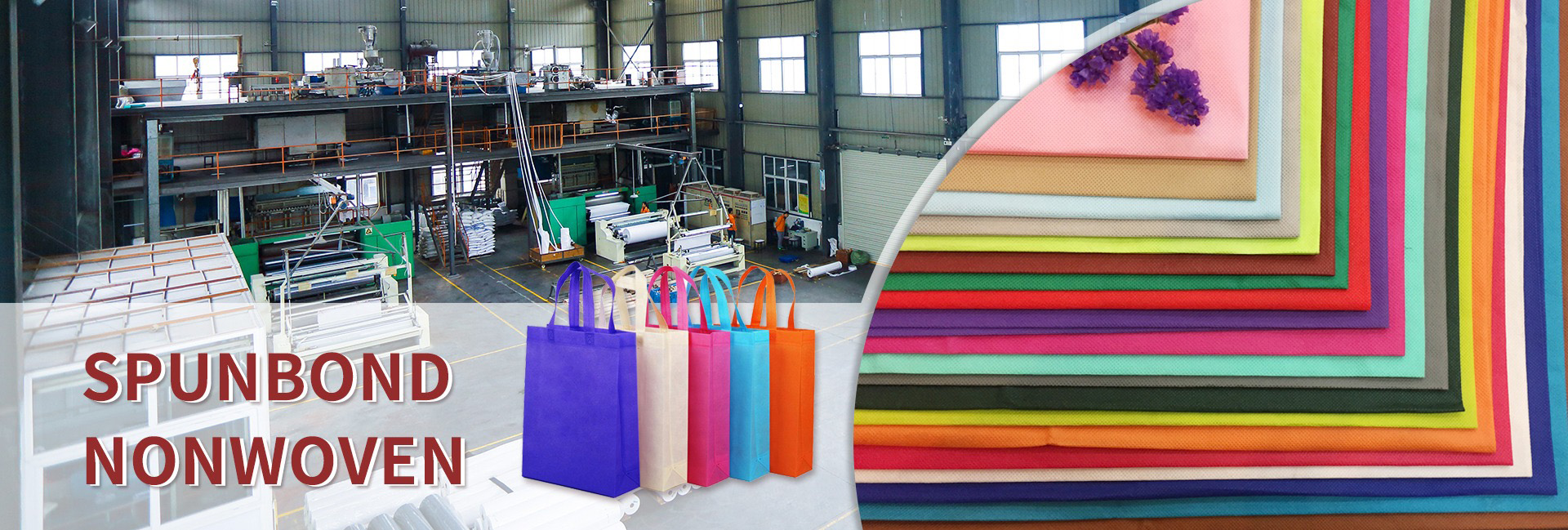
Dongguan Liansheng Non woven Technology Co., Ltd. was established in May 2020. It is a large-scale non-woven fabric production enterprise integrating research and development, production, and sales. It can produce various colors of PP spunbond non-woven fabrics with a width of less than 3.2 meters from 9 grams to 300 grams.
Post time: Feb-04-2026