
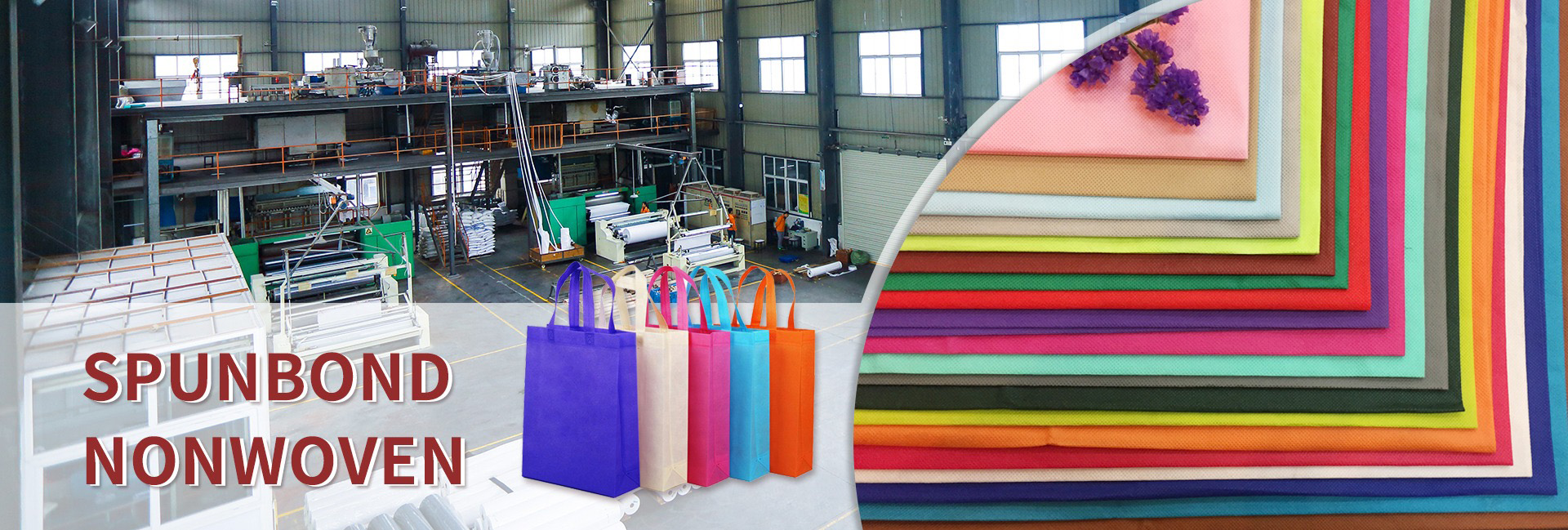
For a long time, the application of spunbond non-woven fabric in automotive filters has been limited to the auxiliary positioning of “wrapping protection”, but has ignored its advantages in structural controllability, material modification potential, and process upgrading, and has already become a core participant in precision filtration in air and oil filters. The automotive air filter safeguards the clean intake of the engine, while the oil filter ensures that the lubrication system is free of impurities, both of which directly determine the stability and service life of the engine operation. The spunbond non-woven fabric, through gradient filtration design, durability modification and other technologies, breaks the perception of “only supporting” and plays a key role in precision interception, efficiency balance, long-term operation and maintenance. It has become a functional core material that adapts to the harsh filtration needs of automobiles. The following provides a detailed analysis based on material characteristics, scenario applications and industry data.
Material and process advantages of spunbond non-woven fabric for precision filtration
Spunbond non-woven fabric can undertake the role of precision filtration, rooted in its precisely controllable three-dimensional pore structure and diverse modification potential. Combined with large-scale production processes, it not only meets the requirements of filtration accuracy, but also considers cost and durability, making it suitable for the complex working conditions of automotive filters. Its core advantages are concentrated in three points:
Firstly, controllable pore structure, using PP (polypropylene) and PET (polyester) as core raw materials, through melt spinning, mesh laying, hot rolling and bonding, the fiber diameter can be controlled within 15-30 μ m, and the porosity can reach 70% -90%. Through gradient weight design, a “loose surface and dense inner layer” structure can be achieved, which is suitable for layered interception of impurities of different particle sizes and meets the core requirements of precision filtration.
Secondly, it has excellent mechanical strength, with a fracture strength of up to 15-25N/5cm, much higher than that of meltblown fabric (1.5-3.0N/5cm). It can resist the impact of high wind speed airflow and oil pressure, avoid filter element collapse and damage, and ensure the stability of the filtration structure.
The third advantage is that there is ample potential for modification, which can be achieved through oil resistance, flame retardancy, polarization and other modification treatments to adapt to the working conditions of two different filter media, air and oil. At the same time, it has the advantage of low cost, with a unit price 25% lower than meltblown fabrics, and outstanding cost-effectiveness for mass application.
It is worth noting that the popularization of SMS (spunbond meltblown spunbond) composite technology has further strengthened the precision filtration ability of spunbond non-woven fabrics, forming a gradient system of “outer spunbond pre filtration support, middle meltblown efficient interception”, which retains the strength and toughness of spunbond while integrating the high-precision filtration advantages of meltblown, becoming the mainstream choice for high-end filters. By 2025, its proportion in non-woven fabrics used in automotive air filters has reached 15.1%, becoming the fastest-growing sub category.
Layered precision interception, guarding clean intake and efficient engine operation
The core requirement of automotive air filters is to intercept impurities such as dust, pollen, and metal debris (with a particle size range of 0.3-100 μ m) in the air. It is necessary to ensure smooth engine intake and prevent impurities from entering the cylinder and causing wear. Spunbond non-woven fabrics play multiple roles of “pre filtration+support+auxiliary fine filtration” to achieve a balance between precision filtration and airflow flux. They are widely used in passenger cars and commercial vehicles, accounting for about 22% of the non-woven fabric market for automotive air filters.
1. Primary precision pre filtration: intercepting large particles and reducing the burden on the core filtration layer
The outer layer of an air filter often uses spunbond non-woven fabric as the primary filtration layer. By optimizing the pore size (10-20 μ m), it accurately intercepts large particle impurities above 5 μ m, and the filtration efficiency can reach 65% -75%, avoiding large particles from directly impacting the middle melt blown high-efficiency filtration layer, reducing the clogging speed of the core filter material, and extending the service life of the filter element. For example, the air conditioning filter element of Jetour X90 adopts a composite design of high-quality spunbond non-woven fabric and melt blown ultrafine fibers. The spunbond layer alone can efficiently intercept large particles such as sand and dust, laying a solid first line of defense for PM2.5 precision filtration and ultimately achieving a PM2.5 filtration efficiency of over 96%. Under conditions of high dust and high pollution, the spunbond non-woven fabric optimized by gradient structure can increase the dust holding capacity to over 17g/m ², further extending the replacement cycle.
2. Structural support and auxiliary fine filtration: ensuring filtration stability
As the supporting skeleton of the filter element, spunbond non-woven fabric runs through the entire filtration layer. Its excellent mechanical strength can prevent structural deformation and collapse of the filter element under high wind speed (the intake wind speed can reach 20-30m/s when the engine is running at high speed) or long-term vibration environment, ensuring stable filtration area. At the same time, the inner layer of spunbond non-woven fabric can be treated with electrostatic modification to endow the fibers with persistent static charges. With the help of electrostatic adsorption effect, it can intercept fine particles of 2.5-5 μ m, compensate for the filtration shortcomings of a single melt blown layer, and improve the overall filtration efficiency to over 95%, meeting the strict requirements of the National VI emission standard for engine intake particulate matter emissions – about 50% stricter than the National V standard, requiring stable interception of particles of 0.3-10 μ m.
3. Adapt to diverse scenarios: balancing efficiency and low resistance
For different vehicle models and working conditions, the specifications of spunbond non-woven fabric can be flexibly adjusted: passenger car air filters focus on lightweight and low wind resistance, using lightweight spunbond materials of 20-40g/m ², with a breathability of 100-300L/(m ² · s), to avoid engine power loss caused by excessive intake resistance; Commercial vehicles (trucks, buses) have complex driving conditions, and high-strength spunbond materials ranging from 40-80g/m ² are selected. After wear-resistant modification treatment, they are suitable for scenarios with high dust and high loads, and their service life is extended by more than 30% compared to passenger car filters. In addition, spunbond non-woven fabric has strong moisture resistance, which can avoid filter softening and delamination in humid environments, and is suitable for use in rainy and high humidity areas.
Oil resistant precision interception, guarding the cleanliness of the lubrication system
The oil filter is the “purifier” of the engine lubrication system, which needs to intercept metal debris, sludge, and impurity particles (particle size ≥ 0.5 μ m) in the engine oil to prevent impurities from wearing core components such as crankshafts and pistons. After oil resistant modification, the spunbond non-woven fabric replaces traditional filter paper as the core filter material for mid to high end oil filters with precision interception ability and durability characteristics, especially suitable for the long-term filtration needs of China VI and new energy hybrid vehicles.
1. Oil resistant modified adaptation: to cope with complex lubricating media
The filtering medium of the oil filter is engine oil and needs to withstand the high temperature (80-120 ℃) generated by engine operation. Ordinary spunbond non-woven fabric can achieve excellent oil and temperature resistance after PTFE (polytetrafluoroethylene) or fluororesin oil resistance modification treatment. In ASTM F316 testing, the oil penetration time exceeds 72 hours, the oil droplet penetration pressure reaches above 4.5kPa, and it will not swell or damage due to oil immersion bubbles, while maintaining the stability of the filtering structure. The mainstream choice is oil resistant PP spunbond non-woven fabric, suitable for various types of engine oils such as mineral oil and synthetic oil, to meet the lubrication and filtration needs of different engines.
2. Precise interception of impurities: Avoiding the risk of component wear and tear
The oil resistant spunbond non-woven fabric designed with gradient pores can achieve “multi-layer precision interception”: the surface layer intercepts large metal debris particles of more than 10 μ m, the middle layer captures oil sludge and impurities of 2-10 μ m, and the inner layer accurately intercepts fine particles of 0.5-2 μ m. The filtration accuracy can reach over 98%, fully meeting the precision filtration requirements of oil filters. Compared to traditional filter paper, spunbond non-woven fabric has an advantage in dust holding capacity, with an average dust holding capacity of 18-22g/m ². Some high-end products can further increase their dust holding capacity after being modified with nano coatings, extending the service life of oil filters to over 15000 kilometers, which is 1.5 times that of traditional paper filters and suitable for the product needs of long-lasting oil filters such as Mahler and MAN.
3. Long term operation and maintenance advantages: reducing usage costs
The mechanical strength and wear resistance of spunbond non-woven fabric make it less prone to damage and shedding in high-pressure oil circulation environments, preventing impurities from entering the lubrication system due to filter element damage and reducing the risk of engine failure. At the same time, its filtering resistance is stable, and long-term use will not cause poor oil circulation due to blockage, ensuring the lubrication effect of the engine, especially suitable for new energy hybrid models – such models have frequent engine start stop, large oil temperature fluctuations, and higher requirements for filter stability. The durability characteristics of spunbond non-woven fabric can be perfectly adapted. In addition, spunbond non-woven fabrics can be recycled and reused, and after treatment, they can be used as recycled raw materials, which is in line with the green and low-carbon development trend of the automotive industry.
Iterative direction of precision filtration capability for spunbond nonwoven fabrics
With the upgrading of automotive engine technology and the tightening of environmental standards, the precision filtration capability of spunbond nonwoven fabrics continues to iterate. The core upgrade direction focuses on three points:
First, nano modification, by adding alumina and silicon carbide nano coatings, the fiber specific surface area is increased, the filtration accuracy is further optimized, and it can intercept ultrafine particles of 0.1-0.3 μ m, while improving oil and temperature resistance by more than 60%.
The second is customized structural design, which customizes gradient pore distribution and weight specifications for different engine intake and oil circulation speeds, achieving the optimal balance between filtration efficiency and resistance. For example, high-end models use SMS composite spunbond materials, which can be adapted to HEPA level filtration requirements by adjusting the weight ratio of each layer (S: M: S=15:40:15).
The third is green upgrading, using bio based PLA and PHA fibers to prepare spunbond non-woven fabrics. The natural degradation rate can reach 92% within 180 days after disposal, while retaining precision filtration performance, adapting to the global automotive industry’s “dual carbon” goals.
At present, global filter leading companies such as Kodebao and Mannheim have established synchronous development mechanisms with spunbond material manufacturers, widely applying modified spunbond non-woven fabrics to high-end vehicle filters. The HVAC systems of new energy vehicles such as NIO ET5 and Ideal L9 all use SMS composite spunbond filter cartridges to achieve the dual goals of efficient filtration and low VOC release.
Refactoring the Precision Filtering Pattern of Filters from Auxiliary to Core
The application of spunbond non-woven fabric in automotive air and oil filters has long broken through the traditional positioning of “wrapping protection”. With controllable pore structure, excellent mechanical strength, and diverse modification potential, it has become the core carrier of precision filtration. In air filters, it achieves dual functions of pre filtering large particles and auxiliary interception of fine particles, ensuring clean engine intake; In the oil filter, after oil resistant modification, impurities in the lubrication system are accurately intercepted to protect the long-term operation of the engine. It combines the advantages of low cost, high durability, and upgradability, perfectly adapting to the core requirements of “precision, long-lasting, and durable” automotive filters, especially meeting the strict requirements of new energy vehicles and National VI vehicle models.
In the future, with the continuous upgrading of spunbond modification technology and composite processes, its precision filtration capability will further break through. It will not only adapt to higher standard filtration needs, but also achieve new breakthroughs in lightweight and green aspects, continuously replacing traditional filter paper, glass fiber and other filter materials, restructuring the material application pattern of automotive filters, and truly upgrading from “invisible assistance” to the “core guardian” of engine clean protection, providing solid guarantees for the efficient and stable operation of automotive engines.
Dongguan Liansheng Non woven Technology Co., Ltd. was established in May 2020. It is a large-scale non-woven fabric production enterprise integrating research and development, production, and sales. It can produce various colors of PP spunbond non-woven fabrics with a width of less than 3.2 meters from 9 grams to 300 grams.
Post time: Feb-19-2026