
Core standard framework: underlying differences between the Chinese and American systems
The core difference of anti-aging spunbond non woven fabric testing between China and the United States stems from the positioning and application logic of the standard system. The core frameworks of the two systems are clearly compared:
Chinese National Standards (GB/T): With GB/T 16422.2-2014 (Xenon Arc Lamp Method) and GB/T 46539-2025 (Fluorescent Ultraviolet Lamp Method, implemented in May 2026) as the core, the former is equivalent to ISO 4892-2:2006, while the latter is specifically customized for geosynthetic materials, presenting the overall characteristics of “international integration+adaptation to domestic scenarios”. The standard covers multiple categories of spunbond fabrics such as plastics and geotechnical materials, with testing requirements that balance universality and industry specificity. It has mandatory or recommended effectiveness in the domestic engineering and civil product fields.
The American Society for Testing and Materials (ASTM) standard, centered around ASTM G155-21 (Xenon Arc Lamp Operating Specification) and used in conjunction with ASTM G151 (Exposure Equipment Performance Standard), is an authoritative non-metallic material aging testing standard in the North American market. Its technical details are more detailed, equipment operation and environmental control requirements are more stringent, and the update frequency is faster (1-3 years/time), which can quickly adapt to new materials and new scene requirements. It has a mandatory position in product certification for export to the North American market.
Comparison of key testing dimensions: comprehensive analysis from equipment to conditions
1.Light source and filtering system: accuracy differences in simulating environments
National standard (GB/T 16422.2): Using a quartz envelope xenon arc lamp, the spectrum covers ultraviolet, visible, and infrared light above 270nm, providing two filtering schemes – Method A (daylight filter) simulates direct sunlight outdoors, filters out short wavelength ultraviolet radiation, and matches the CIE 85:1989 daylight spectrum; Method B simulates sunlight passing through window glass and reduces irradiance below 310nm. The selection of filters is relatively fixed and suitable for most common scenarios.
American standard (ASTM G155): Xenon arc lamps are also used, but more combinations of filters are supported. The spectrum can be customized according to the actual usage environment of the material (such as outdoor direct sunlight, glass filtration, industrial pollution areas), and even the sunlight characteristics of different climate regions in North America can be accurately simulated by adjusting the filters (such as strong ultraviolet radiation in the southwest and mild sunshine in the northeast). In addition, the American standard has higher requirements for light source stability and requires regular calibration of irradiance to avoid spectral drift during testing.
2.Environmental parameter control: differences in strictness and flexibility
Temperature control: The national standard stipulates that the temperature range of the blackboard is 40-80 ℃, and the standard value of 65 ℃ is often used for routine testing, allowing for fluctuations of ± 3 ℃; The American standard divides the temperature range according to the scene, such as controlling it at 50 ± 2 ℃ for outdoor rainy scenes and 70 ± 2 ℃ for dry sun exposure scenes, with a narrower fluctuation range and higher requirements for equipment temperature control accuracy.
Humidity and Wetting: The national standard provides three wetting methods: spraying, immersion, and condensation. Conventional testing uses a “102 minute light exposure+18 minute water spray” cycle, with relative humidity controlled between 50% -70%; The American standard supports more flexible wetting cycle customization (such as 5-minute water spray+55 minute drying), and has stricter water quality requirements (deionized water is required, with a resistivity of ≥ 10M Ω· cm) to avoid impurities in the water affecting the test results.
Irradiance: The default irradiance in the national standard is 0.35 W/m ² @ 340nm, with limited adjustment range; The American standard can be flexibly set between 0.2-1.0 W/m ² @ 340nm, which can achieve rapid accelerated aging by increasing irradiance (such as a 5-fold acceleration of natural aging corresponding to 1.0 W/m ²), or reduce irradiance to simulate long-term mild aging.
3.Sample processing and testing process: normative differences
Sample preparation: According to the requirements of GB/T 13762 (Geotextiles) and GB/T 3923.1 (Textiles) in national standards, take at least 5 samples and equilibrate them for 24 hours at 23 ± 2 ℃ and 50 ± 5% humidity; The American standard has more detailed requirements for sample size and cutting direction (longitudinal/transverse). For outdoor fabrics, they need to be tested in the warp, weft, and 45 ° diagonal directions at the same time. The balancing time is extended to 48 hours to ensure the stability of the sample state.
Test cycle: There is no mandatory cycle requirement in the national standard, and it needs to be combined with the product life setting (such as 1000-2000 hours for engineering use and 500 hours for civilian use); The American standard provides a recommended cycle table, such as 500 hours for short-term use products (1-3 years) and 3000 hours for long-term use products (more than 10 years), and requires regular sampling and testing (every 500 hours) during the testing process to track performance degradation curves.
Differences in core performance indicators: adaptability logic of judgment criteria
1.Comparison of Key Indicator Requirements
Tensile strength retention rate: The general requirement of the national standard is ≥ 80% (after 1000 hours of xenon lamp aging), and for geotechnical materials and building envelope fabrics, it must be ≥ 85%; The American standard provides more detailed segmentation for different scenarios, such as outdoor building materials requiring ≥ 85% (1000 hours), high-end outdoor products (such as sunshades) requiring ≥ 90% (1500 hours), and allowing threshold adjustments based on product warranty period (such as 5-year warranty product requirement ≥ 88%).
Appearance and color difference: The national standard requires no cracking or powdering, and the color difference Δ E is ≤ 3.0; The American standard has stricter criteria for determining appearance defects, and does not allow any minor cracks. The color difference Δ E is ≤ 2.5 (for outdoor direct exposure products), and the fading level must be evaluated through grayscale card comparison (≥ 4 levels).
Additional indicators: The national standard only requires chemical resistance and freeze-thaw stability for special scenarios; For common environments in North America, such as high salt spray coastal areas and industrial ozone polluted areas, American standards require additional testing of corrosion resistance and ozone aging stability after aging. Some products also need to be tested for hydrolysis stability (strength retention rate after wet heat aging).
2.Logical differences in result determination
The national standard adopts a simplified logic of “passing once a single indicator is qualified”. As long as the core indicator (such as tensile strength retention rate) meets the standard, other auxiliary indicators that do not meet the standard can be negotiated and judged;
The American standard adopts “multi index collaborative judgment”, which must simultaneously meet the requirements of strength retention rate, color difference, appearance, and additional indicators, and require the coefficient of variation (CV%) of the test data to be ≤ 5% (allowed by the national standard to be ≤ 8%), ensuring the repeatability and reliability of the results.
Scenario based selection guide: Accurately match according to the target market
1.Core principles of selection
Market oriented principle: Domestic sales/engineering procurement (such as water conservancy and construction projects) should prioritize the use of GB/T standards, which must meet GB/T 16422.2 (Xenon arc lamps) or GB/T 46539 (Fluorescent ultraviolet lamps, special for geotechnical materials); Exporting to the North American market (United States, Canada) must comply with ASTM G155 standards and provide a test report issued by an American standard certified laboratory.
Scenario adaptation principle: General scenarios (such as ordinary outdoor products and civilian building materials) can use national standards, which have lower testing costs and shorter cycles; It is recommended to use American standards for extreme environmental scenarios such as high altitude ultraviolet radiation and exposure to sunlight in southwestern North America. Its flexible parameter settings can more accurately simulate actual usage environments.
Priority given to customer requirements: If a major customer (such as a North American outdoor brand or a major domestic project client) specifies testing standards, they must strictly follow them and, if necessary, conduct double standard cross validation (such as meeting GB/T 16422.2 and ASTM G155) to ensure product compatibility.
2.Typical scenario selection example
Geotextile for domestic water conservancy engineering: The target service life is 50 years, and it needs to pass the GB/T 46539-2025 fluorescent ultraviolet lamp test (2000 hours), with a tensile strength retention rate of ≥ 85%, and meet the GB/T 16422.2 xenon arc lamp test (1500 hours) to ensure dual standards of weather resistance and UV resistance.
Exported North American sunshade fabric: It must comply with ASTM G155 standard, using a daylight filter, a blackboard temperature of 70 ℃, a “5-minute water spray+55 minute drying” cycle, a tensile strength retention rate of ≥ 90% after 1500 hours of aging, a color difference Δ E ≤ 2.0, a fading grade ≥ 4, and provide a hydrolysis stability test report.
Domestic civilian greenhouse covering fabric: short-term use (3-5 years), using GB/T 16422.2 method A (sunlight filter), 500 hour aging test, tensile strength retention rate ≥ 78%, meeting the balance of cost and performance.
Cross border procurement of universal spunbond fabric: It is recommended to conduct dual standard testing, parallel to GB/T 16422.2 (1000 hours) and ASTM G155 (1000 hours), to ensure that the tensile strength retention rate is ≥ 85%, adapt to different market demands at home and abroad, and enhance product competitiveness.
Selection precautions: avoid common misconceptions
Avoiding standard mismatch: Domestic engineering products that only pass ASTM G155 testing and do not meet GB/T standards will not be accepted; If national standards are used instead of American standards for exported products, they will be rejected by the North American market.
Pay attention to standard updates: The national standard GB/T 46539-2025 will be implemented in May 2026, and this standard should be given priority in the subsequent UV resistance testing of geotechnical materials; The American standard ASTM G155 has been updated to the 2021 version, and it is necessary to ensure that the testing basis is the latest version to avoid using outdated standards.
Control testing costs: The cost of American standard testing is usually 30% -50% higher than the national standard (with high equipment accuracy requirements and long cycle time). Non North American market products do not need to blindly pursue American standards, and can find a balance between cost and performance through the combination of national standards and actual environmental simulation testing.
Pay attention to laboratory qualifications: Test reports must be issued by laboratories with CNAS (National Standard) or A2LA (American Standard) qualifications, otherwise the report will be invalid and affect product access.
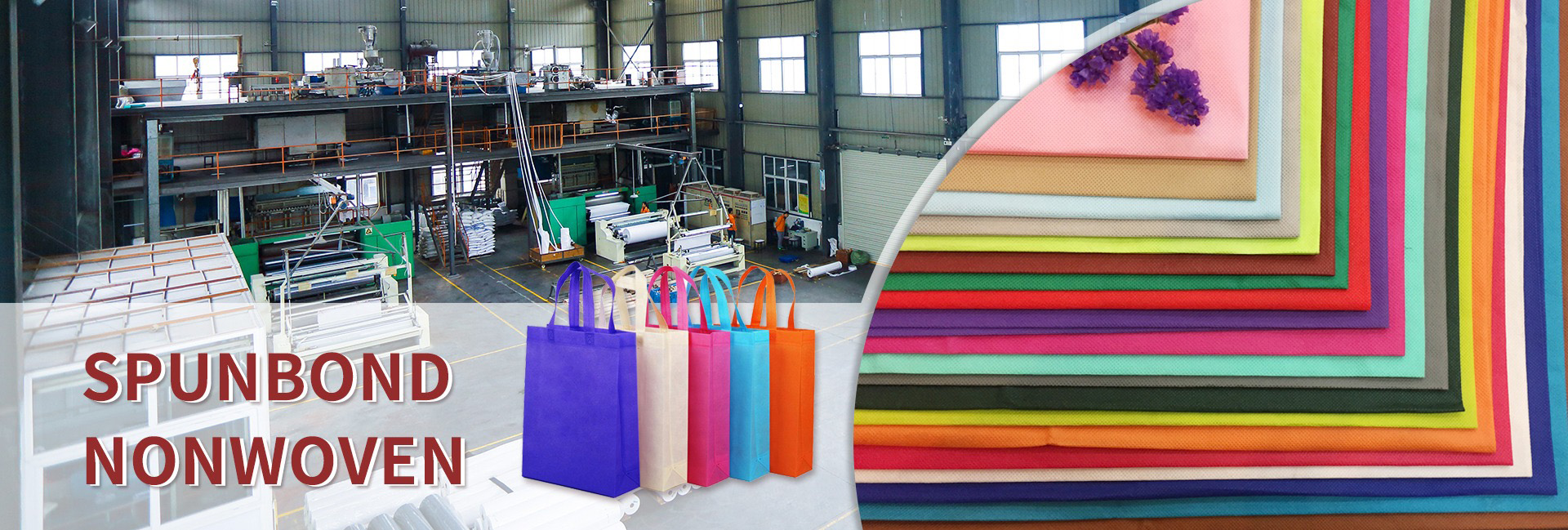
Dongguan Liansheng Non woven Technology Co., Ltd. was established in May 2020. It is a large-scale non-woven fabric production enterprise integrating research and development, production, and sales. It can produce various colors of PP spunbond non-woven fabrics with a width of less than 3.2 meters from 9 grams to 300 grams.
Post time: Mar-03-2026