
With the global penetration rate of new energy vehicles exceeding 55% by 2025, power battery safety accidents, range anxiety, and carbon footprint control have become the three core challenges in the industry. Polyester spunbond nonwoven fabric, with its modifiable physical properties, mature recycling system, and process adaptability, is upgrading from traditional automotive interior materials to key materials for core functional components of new energy vehicles. From the fire barrier of the battery pack to the lightweight structural components of the vehicle body, from the air quality control system inside the car to the protection of high-voltage wiring harnesses, this material is reshaping the material application pattern of new energy vehicles with the triple value of “safety redundancy enhancement+weight reduction+carbon reduction”.
Battery safety system: the core barrier of flame retardancy and insulation
As the “heart” of new energy vehicles, the thermal runaway protection and electrical insulation requirements of power batteries create key application scenarios for polyester spunbond nonwoven fabrics. Although traditional glass fiber insulation materials can meet basic high temperature resistance requirements, they have problems such as dust pollution and skin irritation during installation. However, modified polyester spunbond non-woven fabrics have achieved performance surpassing through multi-dimensional technological innovation.
The polyester spunbonded non-woven fabric with the process of phosphorus nitrogen grafting modification (atomic ratio of phosphorus to nitrogen 3:2) and nano air gel co spinning can reach the flame retardant level of UL94 V-0, and the limiting oxygen index (LOI) is increased to more than 32%, which can effectively prevent the flame spread when the battery is out of control. Under the continuous high temperature of 150 ℃, the fracture strength retention rate of this material still reaches 85%, far higher than the 50% of PP non-woven fabric, fully meeting the stability requirements for long-term working temperature (-40 ℃ to 85 ℃) of battery packs. The practice of Luca electric vehicles in the Netherlands has shown that using recycled PET honeycomb composite structure for battery shells not only reduces weight by 42% compared to traditional steel shells, but also achieves insulation resistance between battery modules of>100M Ω through the three-dimensional network structure of spunbond non-woven fabric, greatly reducing the risk of short circuits.
In the internal structure of the battery pack, polyester spunbond non-woven fabric exhibits multi scenario adaptability: as a buffer insulation pad between battery cells, its precise thickness control of 0.3-0.5mm can reduce thermal conductivity efficiency by 30%; As the inner lining layer of the battery shell, it can withstand instantaneous high temperature impact of 1000 ℃ after being treated with organic silicon flame retardant coating; As a coolant filter layer, its uniform pore size of 2-5 μ m can intercept electrolyte impurities and extend the battery cycle life to over 1200 times. These applications all rely on the continuous filament structure of polyester spunbond technology – the fiber free breakage characteristic avoids the shedding problem of traditional needle punched non-woven fabrics, and eliminates the hidden danger of conductive particles inside the battery from the source.
Innovation of in car system: from functional components to low-carbon interior
The ultimate pursuit of air quality and lightweight in new energy vehicles is restructuring the interior material standards. Polyester spunbond nonwoven fabric has become an ideal choice to replace traditional fabrics and foam materials due to its combination advantages of “low VOC emissions+high recycling rate”. After testing, the formaldehyde emission of recycled polyester spunbond nonwoven fabric is less than 0.02mg/m ³, and the total volatile organic compounds (TVOC) are only 35 μ g/m ³, far lower than the 150 μ g/m ³ required by the national standard GB/T 27630, perfectly meeting the health needs of new energy vehicle cabins.
In specific applications, this material demonstrates significant scene customization capabilities: the ceiling material produced using 1.5dtex fine denier spunbond technology has a surface density of only 45g/㎡, which is 25% lighter than traditional needle punched cotton, and achieves an 80% improvement in sound insulation through uniform distribution of thermal bonding points; The 3D molded cushion of the seat back utilizes the high elastic recovery rate (≥ 90%) of polyester filament to maintain stable shape during temperature cycling tests from -30 ℃ to 70 ℃, avoiding the problem of low-temperature brittleness of PP material. More innovatively, car companies such as BMW have started using recycled PET spunbond non-woven fabric to make door panel decorative layers. Each car can consume about 45 recycled mineral water bottles, which can reduce carbon emissions by 18kg based on the life cycle of each car, directly helping car companies meet the requirements of the European Union’s Carbon Border Adjustment Mechanism (CBAM).
The upgrade of the filtration system highlights the performance advantages of polyester spunbond nonwoven fabric. In the battery cooling circuit, its air permeability of 800-1200L/m ² · s can ensure smooth flow of coolant and intercept over 95% of micron sized particle impurities; In the air conditioning fresh air system, the filtration efficiency of spunbond non-woven fabric treated with polar electrodes for PM2.5 can reach 99%, and the dust holding capacity is twice that of traditional meltblown fabric, greatly extending the filter replacement cycle. The characteristic of “one material, multiple energies” is driving the material system of new energy vehicles towards simplification and efficiency.
Lightweight Structure and Sustainable Development: Material Carriers for Circular Economy
For every 10kg reduction in weight of new energy vehicles, the range can be increased by 5-8km. This industry consensus has led to a breakthrough in the use of polyester spunbond nonwoven fabrics in the field of structural components. By adjusting the spinning and bonding process parameters, gradient materials with a weight of 20-200g/㎡ can be prepared: low weight products (20-50g/㎡) are used for the ventilation layer of battery packs due to their high breathability; Medium weight products (50-100g/㎡) rely on a longitudinal to transverse strength ratio of 1.1-1.3, making them suitable for making load-bearing components such as trunk linings; High weight products (100-200g/㎡) can be used as lightweight substrates for car door panels after hot pressing, reducing weight by 30% and cost by 15% compared to traditional PP honeycomb panels.
The honeycomb composite technology of Dutch EconCore company maximizes the structural potential of polyester spunbond nonwoven fabrics. They will use spunbond non-woven fabric made from recycled PET bottle flakes and composite it with linen fibers to form a lightweight structure with a density of only 0.15g/cm ³, which will be used for the chassis components of Luca electric vehicles, keeping the overall weight of the vehicle at 360kg (excluding batteries), reducing it by 40% compared to vehicles in the same class. The bending strength of this material can reach 80MPa, fully meeting the mechanical requirements of non load bearing structures of the vehicle body. After the end of its service life, it can be 100% recycled and remelted, achieving a closed-loop cycle from bottle to car and then to bottle.
In terms of sustainable development, the carbon advantage of polyester spunbond nonwoven fabric is particularly significant. Producing 1 ton of recycled polyester spunbond material reduces carbon emissions by 3.2 tons and energy consumption by 45% compared to native PP material. With the maturity of bio based PET technology, the carbon footprint of polyester spunbond nonwoven fabric prepared by corn starch fermentation can be further reduced by 70%, which will help car companies obtain key points under the 2030 EU carbon emission standards. According to calculations by Volkswagen Group, if all of its new energy vehicle models adopt recycled polyester spunbond materials, the interior and battery pack sectors alone can reduce carbon emissions by 120000 tons per year, equivalent to the carbon sequestration capacity of planting 6.7 million trees.
Technological Challenges and Future Trends: From Auxiliary Materials to Core Materials
Despite its broad prospects, the application of polyester spunbond nonwoven fabric in the field of new energy vehicles still faces the need for technological breakthroughs. In extreme environments, such as low-temperature impact at -40 ℃, the fracture elongation of ordinary polyester materials will decrease to below 15%, and it is necessary to introduce flexible chain segments through molecular design to improve low-temperature toughness. For the insulation requirements of the 800V high-voltage platform, the volume resistivity of the material needs to be increased from the current 10 ¹⁴Ω· cm to above 10 ¹⁶Ω· cm, which requires precise control of the dispersion uniformity of additives during the spinning process.
In the future, there will be three major trends in development: in terms of functional compounding, flame retardancy, thermal conductivity, sensing and other functions will be integrated into a single spunbond material, such as embedding carbon nanotubes into fibers to form intelligent insulation pads that can monitor battery temperature; In terms of process precision, the combination of electrospinning and spunbond technology is used to prepare nano micron composite structures, further improving filtration efficiency and mechanical properties; In terms of efficient recycling, solvent based depolymerization technology is developed to achieve precise separation and recycling of PET components in mixed plastics. These innovations will promote the upgrading of polyester spunbond nonwoven fabrics from auxiliary materials to core materials with active functions.
With the development of new energy vehicles towards “safety, low carbonization, and intelligence”, polyester spunbond nonwoven fabrics are facing unprecedented market opportunities. According to industry predictions, the global market size of polyester spunbond materials for new energy vehicles is expected to exceed 8.5 billion US dollars by 2028, with a compound annual growth rate of 23%. This growth is not only due to the continuous upgrading of material properties, but also to its deep integration with the ecosystem of the new energy vehicle industry – building a defense line for battery safety, reducing energy consumption in lightweighting, and achieving carbon reduction in the circular economy. Polyester spunbond nonwoven fabric is writing a new chapter in automotive material innovation.
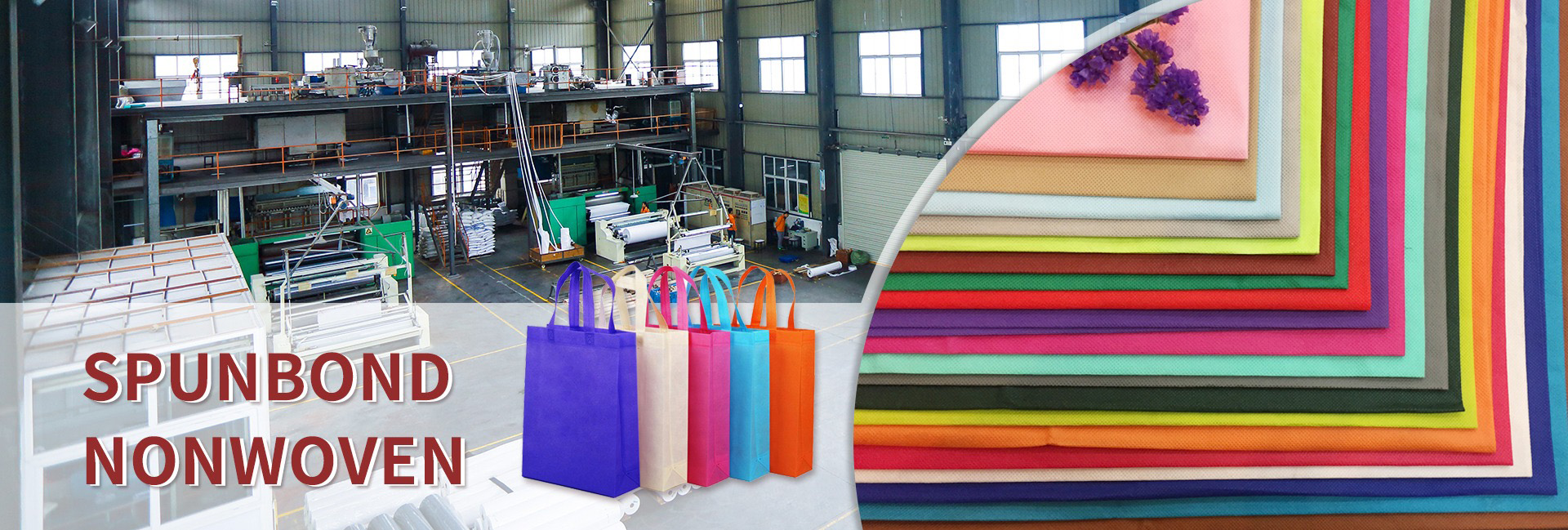
Dongguan Liansheng Non woven Technology Co., Ltd. was established in May 2020. It is a large-scale non-woven fabric production enterprise integrating research and development, production, and sales. It can produce various colors of PP spunbond non-woven fabrics with a width of less than 3.2 meters from 9 grams to 300 grams.
Post time: Sep-18-2025