
With the extension of urban greening to the sky, roof greening has become an important way to solve the “urban heat island effect” and improve the quality of living. However, in the construction of roof greening, “load control” and “drainage protection” have always been the two core pain points: traditional water filtration materials are heavy and bulky, which increases the risk of roof load-bearing; Ordinary non-woven fabric has insufficient strength and is prone to aging, making it unable to meet the long-term collaborative work requirements of drainage boards. In this context, the polyester spunbond hot-rolled fabric specifically designed for drainage boards has become the preferred material for roof greening water filtration systems due to its core advantages of “lightweight, high strength, and durable water filtration”. It is widely used in various roof greening projects such as residential buildings, shopping malls, and office buildings, and has become a new driving force for promoting high-quality development of roof greening.
Why does roof greening rely on dedicated water filter cloth?
The biggest difference between rooftop greening and ground greening lies in the limited load-bearing capacity of the roof, special drainage conditions, and strict requirements for the performance of supporting materials. As the “core protective layer” of roof greening, the filter layer is sandwiched between the drainage board and the planting soil. It not only needs to quickly filter water and prevent the loss of planting soil from blocking the drainage channel, but also needs to be lightweight, durable, and not increase the additional load on the roof. It should also be able to resist outdoor exposure and rainwater erosion, avoiding short-term aging and damage.
Traditional roof greening and water filtration materials often have obvious shortcomings: ordinary polypropylene non-woven fabric has low strength and poor heat resistance, and will shrink significantly when the temperature reaches 140 ℃. Long term outdoor use is prone to brittleness and tearing, leading to soil loss and blockage of drainage boards, affecting the greening effect; Cotton filter cloth doubles in weight after absorbing water, significantly increasing the roof’s load-bearing capacity, and is prone to mold and decay, with a service life of less than 2 years; However, ordinary polyester non-woven fabric has not been specially modified, resulting in poor adhesion with drainage boards and prone to breakage at the joints, which cannot form a complete water filtration protection system.
The emergence of polyester spunbond hot-rolled fabric specifically designed for drainage boards has precisely solved these pain points. It is designed specifically for roof greening drainage boards, using 100% high-quality polyester chips as raw materials and made through spunbond filament hot rolling technology, perfectly balancing the two core requirements of “lightweight” and “high strength”. It can adapt to roof load limitations and work together with drainage boards to build a strong water filtration and protection line for roof greening, thus quickly gaining favor from construction parties and owners.
Lightweight and high-strength+Multi dimensional adaptation, unlocking a new experience of roof water filtration
The reason why polyester spunbond hot-rolled fabric for drainage boards can become the “golden partner” for roof greening lies in its tailor-made performance advantages. Each feature is precisely adapted to the usage scenario of roof greening, forming a synergistic effect with drainage boards, and comprehensively improving the stability and durability of greening projects.
Lightweight and load saving is one of its core highlights. The weight of this material can be flexibly controlled within 150-200g/m ², which is more than 30% lighter than traditional cotton filter cloth. After installation, it hardly increases the additional load-bearing capacity of the roof, perfectly adapting to the limited load-bearing capacity of the roof, especially suitable for the greening renovation of old building roofs, and avoiding potential safety hazards from the source. At the same time, it has a soft texture and good extensibility, which can easily fit the special structures of drainage boards such as concave convex and conical shapes, without the need for excessive cutting and splicing, making construction convenient and efficient.
High strength and durability are another core competitive advantage. Relying on the continuous spunbond filament structure and precise hot rolling consolidation process, its longitudinal fracture strength can reach over 800N/5cm, and its transverse strength is not less than 750N/5cm. Its outstanding bursting strength can resist pulling and rolling during construction, avoiding damage; At the same time, it has excellent weather resistance. After 1500 hours of UV accelerated aging test, the strength retention rate still exceeds 88%. It can be used stably in environments ranging from -30 ℃ to 220 ℃, and is not afraid of outdoor exposure, rain and snow erosion. Its service life can reach more than 10 years, far exceeding ordinary water filtration materials.
In addition, it also has excellent water filtration and environmental performance. The porosity is controlled at 70% -80%, with a high permeability coefficient, which can quickly filter the water in the planting soil, allowing excess water to flow smoothly into the drainage plate and be discharged. At the same time, it firmly locks in soil particles to prevent drainage channel blockage, playing the role of “filtering water without blocking water, protecting soil from loss”, and can be called the “gatekeeper” of the drainage system; The production process does not require the addition of chemical adhesives, is environmentally friendly, odorless, and free of harmful substances. It is recyclable and in line with the development concept of green roof greening. At the same time, it does not absorb water or dissolve in water, effectively preventing mold and decay, and is suitable for damp roof environments.
Tailored to fit drainage boards for collaborative work
The excellent performance of polyester spunbond hot-rolled fabric for drainage boards cannot be achieved without targeted production process design. Each step revolves around “adapting to drainage boards and roof greening” to ensure stable product performance and meet construction needs.
At the beginning of production, high-quality primary polyester chips with characteristic viscosity ≥ 0.64dL/g and melting point ≥ 255 ℃ are selected to eliminate the mixing of recycled materials, ensure the strength and stability of the material, and avoid aging and brittleness hazards from the source. Subsequently, the polyester chips are melted at a high temperature of 280-290 ℃ and spun using advanced spinning equipment to form high-strength polyester filaments with a diameter of 0.3-0.8mm per filament. They are then stretched by high-speed airflow and precisely laid to form a uniform and dense fiber network structure, with a mesh uniformity error of ≤ 5%, ensuring uniform water filtration and balanced stress distribution.
The core hot rolling process adopts a double pass hot rolling shaping process, with precise temperature and pressure control: the first pass is pre pressed at 185 ± 3 ℃ to form controllable fiber melting and bonding points; The secondary layer is pressurized and extended at 205 ± 2 ℃, forming a gradient structure of dense surface layer and loose core layer, which ensures the high strength of the material while retaining sufficient porosity, balancing water filtration performance and durability. At the same time, through special processing techniques, the surface friction of the material is increased to make it more closely adhere to the drainage board, making it less likely to shift during laying. The overlap width can be controlled within 10-20cm, and the joint part can be staggered from the drainage board joint position to avoid water filtration faults.
Widely applied, witnessing the new upgrade of roof greening
With the core advantages of “lightweight, high strength, and durable water filtration”, polyester spunbond hot-rolled cloth for drainage boards has been widely used in various roof greening projects, from residential roofs to shopping mall sky gardens, from old building renovations to new project supporting facilities, becoming the preferred water filtration material for construction parties. It works in conjunction with drainage boards to create an efficient, stable, and durable roof greening system.
In a rooftop greening project of a shopping mall in Zhejiang, this material is used in combination with high-density polyethylene drainage boards to become the core component of the water filtration system. During the project construction, the construction party first lays the drainage board and firmly fastens it to ensure that the cup-shaped mouth of the drainage board is facing upwards. Then, they lay the special polyester spunbond hot-rolled cloth for the drainage board, with a lap width controlled at 15cm and a reverse height of 100mm around it. They cover it with 10-20mm thick medium coarse sand as a permeable filter layer, and finally lay lightweight planting soil. After being put into use, the water filtration system effectively filters water, locks in soil, and does not encounter problems such as drainage blockage or filter cloth damage. It not only reduces the load-bearing capacity of the roof, but also ensures the healthy growth of vegetation, which has been highly recognized by the owners.
In the renovation project of old residential roof greening, the lightweight advantage of this material is fully utilized. The load-bearing capacity of old roofs is limited, and traditional water filtration materials are prone to exceeding the load-bearing standards. However, the polyester spunbond hot-rolled cloth used for drainage boards is lightweight, combined with lightweight planting soil and drainage boards, greatly reducing the roof load. At the same time, it has excellent aging resistance and does not require frequent maintenance and replacement. It not only solves the load-bearing problem of old roof greening, but also improves the durability of greening, bringing new vitality to old buildings.
In addition, it is widely used in office sky gardens, school roof greening and other projects. Whether it is a large flat roof or a steep sloping roof, it can be perfectly adapted. It works together with drainage boards, waterproofing membranes, lightweight planting soil and other materials to build a complete roof greening system of “waterproofing drainage filtration planting”, which not only improves the urban green coverage rate, but also improves the building environment, realizing the dual value of ecology and practicality.
Domestic upgrade helps popularize roof greening
With the continuous upgrading of domestic non-woven technology, polyester spunbond hot rolled fabrics for drainage boards have achieved large-scale and customized production. Domestic enterprises such as Shandong Taipeng and Anhui Jinchun, relying on advanced imported production equipment and precise process control, produce products with performance standards that are comparable to international advanced levels, and have significant cost-effectiveness advantages, gradually breaking the foreign monopoly in the high-end water filtration material market.
Compared with traditional water filtration materials, although the unit price of polyester spunbond hot-rolled fabric for drainage boards is slightly higher, its service life is extended by more than 5 times, and there is no need for frequent replacement, greatly reducing maintenance costs in the later stage; Simultaneous construction is convenient, allowing for direct laying and rapid consolidation, effectively shortening the construction period and reducing construction costs. In addition, its flexible customized services can adjust parameters such as weight and width according to the drainage board models and load requirements of different roof greening projects, accurately adapting to diverse needs.
The high-quality development of roof greening cannot be achieved without the support of high-quality supporting materials. Polyester spunbond hot-rolled fabric specifically designed for drainage boards, with “lightweight and high-strength” as its core and precise adaptation as its advantage, has solved the load and drainage pain points of roof greening. It works together with drainage boards to protect the stability and durability of roof greening, becoming an ideal water filtration material for roof greening. In the future, with the continuous upgrading of technology and the deepening of green building concepts, it will be further popularized and applied, helping more roofs to wear “green clothes” and injecting more vitality into urban ecological construction.
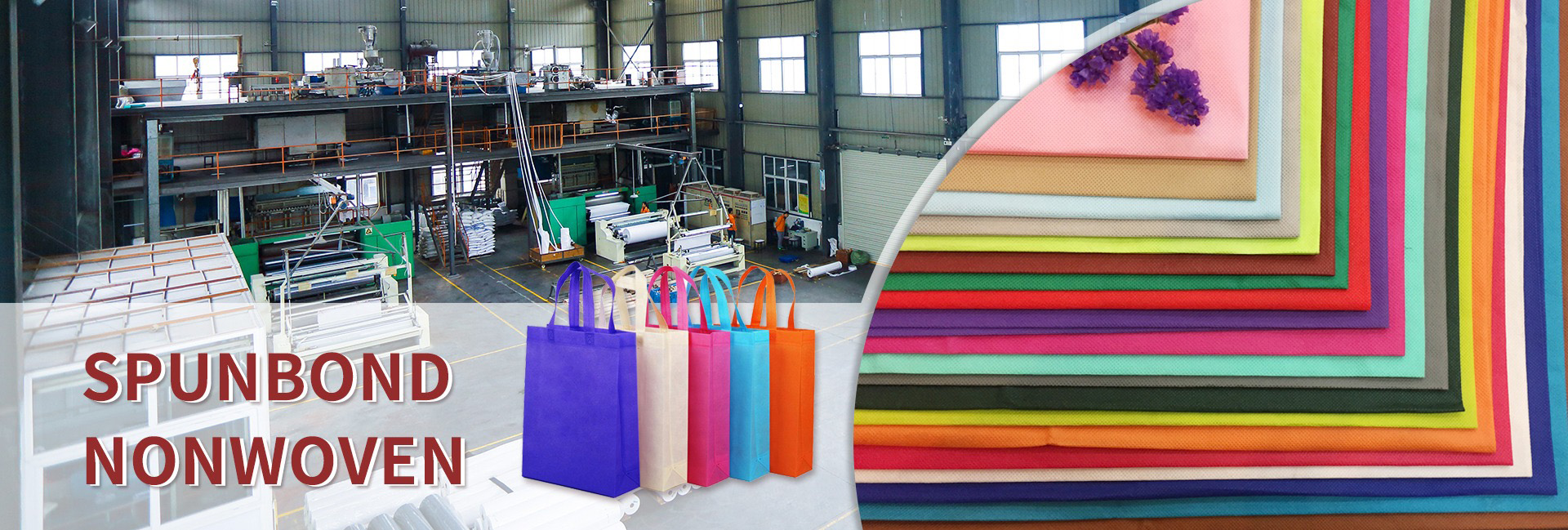
Dongguan Liansheng Non woven Technology Co., Ltd. was established in May 2020. It is a large-scale non-woven fabric production enterprise integrating research and development, production, and sales. It can produce various colors of PP spunbond non-woven fabrics with a width of less than 3.2 meters from 9 grams to 300 grams.
Post time: Mar-31-2026