
Core objective: To achieve a three-year performance baseline of non brittleness in outdoor environments
In outdoor environments, spunbond non woven fabrics (based on PP) need to resist multiple forms of erosion such as ultraviolet radiation, oxygen, rainwater, and alternating high and low temperatures. The core performance index of “three years without brittleness” needs to meet:
Mechanical performance retention rate: After 3000 hours of xenon lamp aging test (simulating three years of outdoor exposure, in accordance with GB/T 8427 standard), the tensile strength retention rate is ≥ 85%, the elongation at break is ≥ 70%, and there is no significant embrittlement (decrease in fracture strength ≤ 15%);
Appearance stability: Yellowing index Δ E ≤ 2.0 (grayscale card rating ≥ 4), no cracks, powdering, or fiber shedding phenomenon;
Environmental tolerance: Under temperature cycling of -20 ℃~60 ℃ and an annual rainfall of 1000mm, there is no sudden deterioration in performance.
Traditional modification techniques are difficult to achieve this goal due to the easy migration of additives and a single protective system. The combination of “quaternary composite additives+molecular locking process” has become the key to solving this problem.
Core technology I: quaternion composite anti-aging system – blocking aging path through the whole chain
(1) System composition: from “single protection” to “global collaboration”
Abandoning the traditional binary system of “UV absorber+antioxidant”, we innovatively adopt a quaternary composite formula of “main antioxidant+auxiliary antioxidant+UV absorber+light stabilizer”, where each component plays its own role and synergistically enhances efficiency:
Ingredient type
1. Main antioxidant
The core function is to capture the free radicals generated by aging and terminate the chain reaction; Mainstream models and dosage, hindered phenols (1790), 0.2-0.3%; Reduce the burden of light stabilizers and minimize residual free radicals.
2. Auxiliary antioxidant
The core function is to decompose hydrogen peroxide and cut off the source of oxidation; Mainstream models and additives, PEP-Q, 0.1-0.2%; Collaborative logic is combined with the main antioxidant to increase protection efficiency by 50%.
3. UV absorbers
The core function is to shield the 280-400nm full band ultraviolet radiation; Mainstream models and dosage, benzotriazole (UV-328), 0.3-0.5%; Collaborative logic is to reduce the generation of free radicals caused by ultraviolet radiation.
4. Light stabilizer
The core function is to capture residual free radicals and repair minor aging damage; Mainstream models and dosage, hindered amine (HALS), 0.1-0.2%; Collaborative logic is to extend the service life of other additives and achieve “long-term protection”.
(2) Key Innovation: Molecular level Collaboration and Compatibility Optimization
Proportional precision ratio: Determine the optimal ratio through orthogonal experiments (main antioxidant: auxiliary antioxidant: UV absorber: light stabilizer=3:2:5:2) to avoid migration or compatibility issues caused by excessive use of a single component;
Compatibility modification: Using maleic anhydride grafting technology to modify the surface of the additive, the compatibility between the quaternary system and PP substrate is improved by 40%, without precipitation or frosting;
Efficiency amplification effect: the anti-aging validity period of the quaternary system is 2-3 times that of the traditional binary system. After testing, the outdoor service life is extended from 1-2 years to 3-5 years.
Core Technology 2: Molecular Locking Process – Solving the Pain Point of Additive Migration and Loss
The traditional anti-aging additives are mostly small molecular structures, which are easy to migrate and volatilize due to the sun, rain and temperature changes in outdoor use, resulting in rapid decline of protection efficiency. The molecular locking process uses two major technical methods to firmly fix the additives inside the fibers:
(1) Anti aging masterbatch technology
The four component composite auxiliary is mixed with PP carrier and dispersant (such as EVA wax), and then melted and blended at 200-220 ℃ to make anti-aging master batch. The addition amount is controlled at 3-5%:
The auxiliary agents in the masterbatch are dispersed in nanoscale particles (particle size ≤ 500nm) to avoid aggregation and ensure that each fiber receives uniform protection;
The melt index of the masterbatch matches that of the PP substrate (12-15g/10min), which does not affect the stretching and web forming effects of the spunbond process. It can directly replace the original raw materials without the need for equipment modification.
(2) Polymer graft curing
Using gamma ray irradiation or peroxide initiators, functional components such as antioxidants and light stabilizers are grafted onto PP molecular chains to form stable cross-linked structures:
The grafted auxiliary molecules become part of the PP molecular chain and cannot migrate or evaporate, achieving “lifelong protection”;
After curing, the fiber forms a dense structure, which not only improves the aging resistance, but also increases the tensile strength by 10-15% and the elongation at break by 15-20%.
Core technology III: collaborative optimization of base material and process – building a solid foundation for anti-aging
(1) Base material modification: improve its anti-aging potential
PP raw material selection: Select homopolymer PP with high crystallinity (≥ 65%) and low ash content (≤ 0.05%) to reduce the aging acceleration point caused by impurities;
Composite substrate design: Adding 5-10% HDPE or POE elastomer to improve the toughness of PP, reduce the risk of brittle fracture, and enhance the dispersion uniformity of additives.
(2) Optimization of spunbond process parameters
Melting temperature control: Reduce the extrusion temperature from 240-250 ℃ to 230-235 ℃ to minimize thermal oxidation degradation during processing;
Cooling and stretching: Side blowing cooling is adopted (wind speed 0.8-1.0m/s, temperature 20-25 ℃) to avoid the formation of stress concentration points on the fiber surface; Control the stretching ratio between 3.5-4.0 times to balance strength and toughness;
Post finishing strengthening: after being modified by anti-aging master batch, the non-woven fabric is dipped and rolled (containing the dispersion of UV absorber) to form a dual structure of “internal protection+surface shielding”, and the UV barrier rate is increased to more than 99%.
Practical application cases
Outdoor geotextile: A certain infrastructure project uses modified spunbond non-woven geotextile. After 3 years of outdoor exposure, the tensile strength retention rate is 88%, without brittleness or damage, meeting the long-term use needs of road protection;
Agricultural covering materials: Modified sunshade nets have been used in strong ultraviolet areas in the south for 3 years and still maintain good toughness, with a decrease in fracture strength of only 12%, far exceeding the service life of traditional products by 1 year;
Outdoor packaging cloth: a packaging cloth used for outdoor storage of goods, which has been exposed to sunlight and rain for 3 years, without powdering or fiber shedding, and can still effectively protect goods from moisture and damage.
Technological development trend: from “long-term protection” to “multifunctional integration”
Green upgrading: develop bio based anti-aging additives (such as plant extracts modified UV absorbers), give consideration to protection effectiveness and degradability, and adapt to environmental requirements;
Multi functional composite: combine anti-aging system with anti-bacterial, flame retardant and waterproof functions, such as adding nano zinc oxide, while achieving anti-aging and anti-bacterial, expanding application scenarios;
Precision customization: adjust the proportion of the quaternion system for different climate regions (such as high UV and high humidity regions) to achieve an anti-aging solution that “adapts to local conditions”.
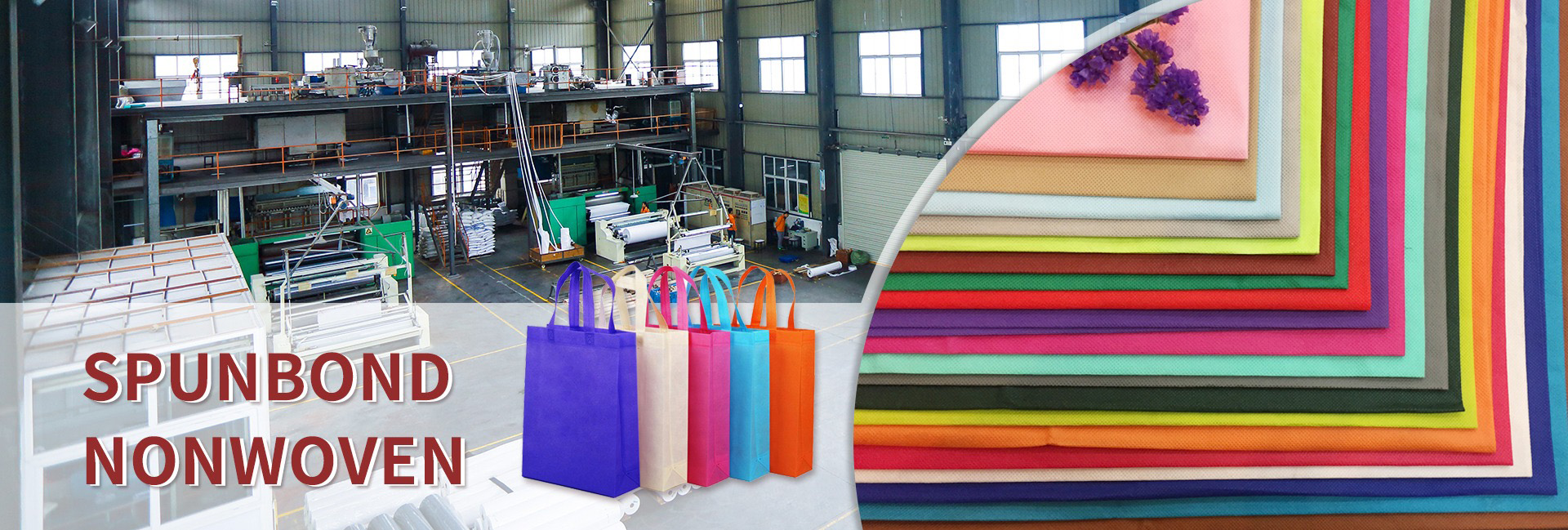
Dongguan Liansheng Non woven Technology Co., Ltd. was established in May 2020. It is a large-scale non-woven fabric production enterprise integrating research and development, production, and sales. It can produce various colors of PP spunbond non-woven fabrics with a width of less than 3.2 meters from 9 grams to 300 grams.
Post time: Mar-08-2026