
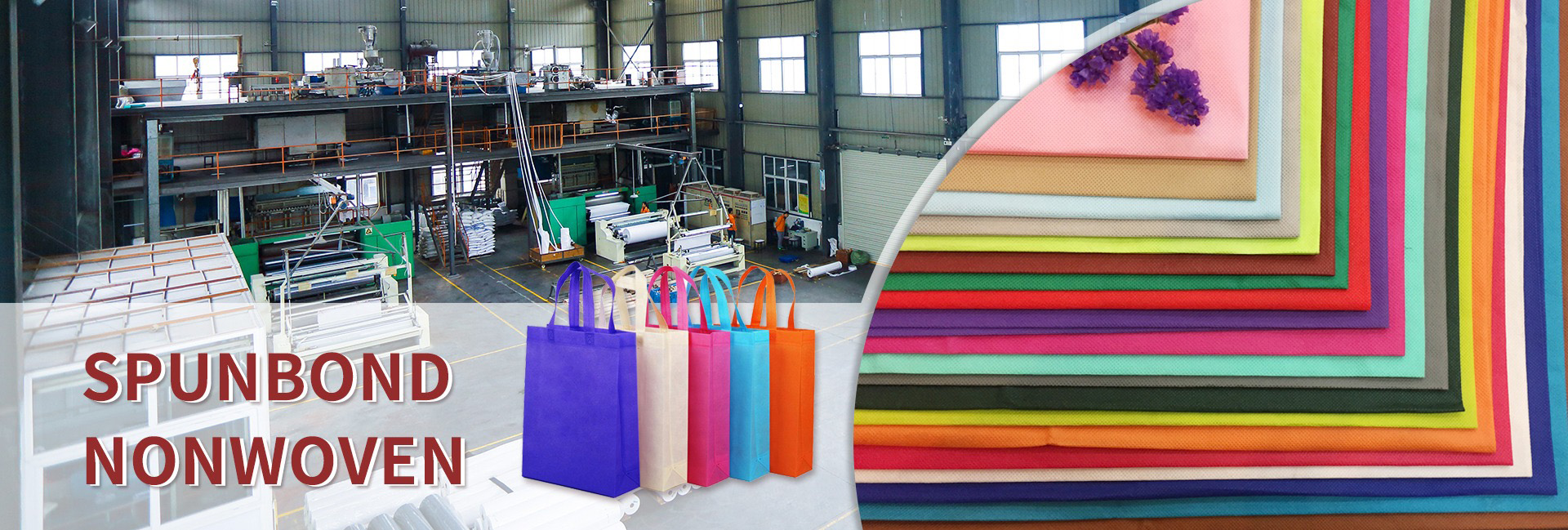
Non woven fabric, as a widely used polymer material, has a presence in various fields such as geotechnical construction, automotive interior, medical protection, agricultural film, etc. However, long-term exposure to light, heat, oxygen and other environments can easily lead to “aging” problems such as brittleness, pulverization, and sudden drop in strength, greatly shortening its service life and becoming a pain point in the industry. How to make non woven fabrics achieve “longevity”? Experts have revealed that the core lies in building a full chain technology system from fiber body modification to “molecular shield” protection. By precisely intervening in the aging mechanism, the material is endowed with long-term weather resistance and solves the industry problem of “easy aging and short service life”.
Unlike traditional textile materials, non-woven fabrics are directly formed from fibers into a mesh. Their “aging” is essentially the breaking and degradation of polymer chains under external factors, not caused by a single factor, but by the synergistic effect of the three major culprits of photo oxygen aging, thermal oxygen aging, and mechanical aging. The aging performance varies in different scenarios.
Three core culprits of nonwoven fabric aging
To solve the problem of “anti-aging” of non-woven fabrics, it is necessary to first identify the root causes of aging in order to implement precise policies and targeted protection.
Photooxidative aging is the number one killer of outdoor non-woven fabric aging. When ultraviolet light with a wavelength of 280-400nm is irradiated on non-woven fabric substrates such as polypropylene (PP) and polyester (PET), it directly cuts off the carbon carbon bonds on the molecular chains, triggering a chain oxidation reaction that generates hydrogen peroxide and oxygen-containing free radicals, ultimately leading to material discoloration, brittleness, and a significant decrease in tensile strength. The data shows that the tensile strength of PP non-woven fabrics without anti-aging treatment can decline by more than 60% after six months of outdoor exposure, directly losing their use value, which is also the core reason for frequent replacement of outdoor geotextiles, sunshades and other products.
Thermal oxidative aging mainly occurs in high-temperature scenarios during processing and use. The melting, screw shearing and extrusion during the spinning process, as well as outdoor exposure in summer and high temperature environments in car interiors, can accelerate the breakage of polymer chains. Mechanical shearing can cause the breakage of large molecular chains, forming carbon free radicals that react with oxygen, further promoting the oxidation cycle, resulting in a decrease in the relative molecular weight of the material, a synchronous decrease in fracture strength and elongation, and affecting the durability of the product.
Mechanical aging is the ‘chronic consumption’ of external forces and fatigue. In scenarios such as geotextile laying, long-term use of automotive interiors, and repeated folding of protective equipment, non-woven fabrics are subjected to repeated stretching, bending, and friction, resulting in fiber structure fatigue, breakage, delamination, wear, and other problems, which accelerate overall material failure. Especially in long-term stress scenarios, this aging behavior is more pronounced.
Fiber Modification – Building a Strong “Anti Aging Foundation” from the Source
Fiber is the basic unit of non-woven fabric, and the root of “aging” begins with fibers. Therefore, fiber body modification has become the basis for achieving “anti-aging” of non-woven fabric. By optimizing the fiber structure through chemical or physical means, its weather resistance, toughness, and stability can be improved from the root, and it can resist the erosion of various aging factors.
Resin matrix modification is the core method for optimizing fiber weather resistance, which involves adjusting molecular structure to reduce aging attack sites. Among them, copolymerization modification is the most widely used. Introducing ethylene octene copolymer units and other copolymer monomers into PP, PET and other matrices can disrupt the regularity of molecular chains, reduce crystallinity, make it difficult for aging factors such as ultraviolet radiation and oxygen to find targets, and improve material toughness. For example, PP fibers introduced with POE (polyolefin elastomer) can maintain 92% initial tear strength and significantly improve weather resistance after being stored in a humid and hot environment at 85 ℃/85% RH for 500 hours. In addition, the addition of β nucleating agent can induce the formation of β crystal form in PP, improve crystallinity and thermal deformation temperature, up to 160 ℃, which can enhance the heat aging resistance and improve the impact and tear resistance of fibers, reducing the damage caused by mechanical aging.
The fiber surface modification is to build a “protective coat” for the fiber. Through chemical grafting, nano coating and other means, anti-aging functional groups are introduced on the fiber surface to achieve physical and chemical dual protection. For example, grafting polyphenolic substances such as caffeic acid onto the surface of fibers can effectively capture free radicals, absorb ultraviolet radiation, and enhance the interfacial compatibility between fibers and polymer matrix, while also achieving antioxidant and anti ultraviolet effects; The composite coating of polydopamine wrapped zinc oxide and intercalated magnesium silicate nanosheets can reduce the quantum size of zinc oxide particles, blue shift the UV absorption boundary, and achieve a UV blocking rate of over 95%, significantly improving the fiber’s resistance to photo aging.
Functional filler composites mainly enhance the physical toughness of fibers and resist mechanical aging and thermal oxidative aging. In the fiber production process, adding inorganic fillers such as nano silica and calcium carbonate can improve the wear resistance of fibers by more than 30% and reduce the problem of broken fibers caused by friction; Adding nano titanium dioxide can form a light shielding layer, reflect ultraviolet rays, delay photo oxidative aging, and improve the heat resistance of fibers, avoiding softening and degradation in high-temperature environments.
“Molecular Shield” – Building a “Protection Loop” throughout the entire process
If fiber modification is to “build a solid foundation”, then the construction of “molecular shields” is to “provide full protection”. On the basis of fiber modification, a full link protection of “absorption conversion neutralization stability” is created through the optimization of the composite anti-aging agent system and the whole process, so as to ensure that the non-woven fabric can resist the aging corrosion throughout the life cycle and achieve long-term anti-aging.
The complex anti-aging additive system is the core of the “molecular shield”. It abandons the limitations of a single additive and adopts the synergistic formula of “light stabilizer+antioxidant+ultraviolet absorber” to form a multi-dimensional protection network. Among them, hindered amine (HALS) light stabilizers convert ultraviolet energy into harmless heat energy through hydrogen atom transfer mechanism, while capturing photooxidative free radicals and blocking chain reactions, which can extend the outdoor service life of non-woven fabrics to 3-5 years; Phenolic and hypophosphite antioxidants focus on inhibiting thermal oxidative aging. Phenolic antioxidants preferentially react with free radicals to terminate oxidative chain reactions, while hypophosphite antioxidants decompose hydrogen peroxides, block oxidative cycles, and ensure stable mechanical properties of materials; Benzotriazole and salicylate UV absorbers can accurately absorb ultraviolet light in the 280-400nm wavelength range, convert it into heat energy for release, avoid direct attack of ultraviolet light on molecular chains, and reduce the intensity attenuation rate.
The anti-aging master batch technology solves the industry pain point of uneven distribution of additives and realizes “molecular level uniform protection”. The anti-aging additive and carrier resin are made into master batch through special process, and the particle size is only 2-5 microns, which can realize molecular dispersion in the process of spinning and netting, ensure the full integration of the additive and the matrix resin, and avoid agglomeration and failure problems caused by direct addition. The thermal decomposition temperature of this type of masterbatch reaches over 320 ℃, fully meeting the high temperature requirements for spinning, avoiding production defects such as wire breakage and crystal dots, and ensuring production continuity; At the same time, the proportion of additives can be precisely adjusted according to the use scenario. Adding 2% -3.5% anti-aging masterbatch to outdoor geotextiles can achieve weather resistance for more than 3 years, and adding 1% -1.5% to indoor decoration materials can meet long-term use needs.
The whole process protection is to avoid “secondary damage” and ensure the integrity and effectiveness of the “molecular shield”. Starting from raw material pretreatment, strictly control the moisture content and impurities of the raw materials to avoid the generation of free radicals during processing, which may cause premature degradation of the materials; Optimizing the melting temperature and screw speed in the spinning process to reduce mechanical shear damage to molecular chains, using efficient spinning components to improve fiber forming uniformity, and reducing aging weak spots; The composite process adopts processes such as hot rolling and ultrasonic composite to improve the bonding strength between fibers while avoiding the loss of additives caused by high-temperature composite, ensuring that the “molecular shield” plays a full role throughout the process.
Effectiveness and application scenarios of anti-aging technology
The effect of anti-aging technology needs to be verified by measured data. Taking PP spunbonded non-woven fabric with 4% composite anti-aging master batch as an example, after ASTM G154-06 ultraviolet aging test (UVA-340 lamp, 8h/60 ℃ light+4h/50 ℃ condensation), the tensile strength retention rate after 500 hours reached 93.4%, which was far higher than the conventional level of the industry (below 50%); The strength retention rate remained above 96% after 250 hours, and the anti-aging effect was significant.
According to the industry standard ISO 4892-2, anti-aging non-woven fabrics need to meet a retention rate of at least 70% in fracture strength after 3000 hours of aging, while high-end products using full chain anti-aging technology can achieve over 85%. At present, this kind of anti-aging non-woven fabric has been widely used in many scenes: outdoor sunshades, geotextiles, agricultural mulch film, which can achieve 3-5 years of long-term weather resistance and significantly reduce replacement costs; The seat substrate and soundproof cotton used in car interiors can enhance durability in high-temperature environments and extend their service life; Long term storage packaging materials in the field of medical protection can resist material failure caused by humid and hot environments, ensuring protective performance; Curtains and wall coverings in home decoration can effectively resist UV rays and discoloration, maintaining a long-lasting decorative effect.
Future trend: from “passive protection” to “active intelligence”
With the development of the industry and technological iteration, non-woven anti-aging technology is upgrading towards high efficiency, greenness, and intelligence, gradually achieving a transformation from “passive resistance” to “active regulation”. In the future, the replacement of green additives will become the mainstream, and plant based anti-aging additives (such as lignin, tea polyphenol derivatives) will gradually replace traditional chemical additives, reduce environmental load, and meet the goal of “double carbon”; Smart responsive materials will become a research and development hotspot, which can turn on light-emitting responsive and thermal responsive anti-aging non-woven fabrics. When the ultraviolet ray or temperature in the environment exceeds the standard, the protection mechanism will be automatically activated to improve the protection accuracy; At the same time, the full lifecycle design will incorporate anti-aging technology, from raw materials, production to recycling, to achieve the dual goals of “anti-aging+recyclability” and promote the sustainable development of the non-woven fabric industry.
In summary, the “anti-aging” of non-woven fabrics is not a single technological breakthrough, but a full chain system engineering that builds a solid foundation through fiber modification, provides full protection through molecular shielding, and ensures process optimization. By precisely regulating the molecular structure and constructing a collaborative protective system, not only can the product’s lifespan be extended from months to years, but it can also expand its application boundaries in complex scenarios. With the continuous popularization of technology, anti-aging non-woven fabrics will move from “high-end customization” to “large-scale application”, providing more durable and reliable material support for multiple industries, and truly realizing “long-term durability and quality free”.
Dongguan Liansheng Non woven Technology Co., Ltd. was established in May 2020. It is a large-scale non-woven fabric production enterprise integrating research and development, production, and sales. It can produce various colors of PP spunbond non-woven fabrics with a width of less than 3.2 meters from 9 grams to 300 grams.
Post time: Apr-17-2026