
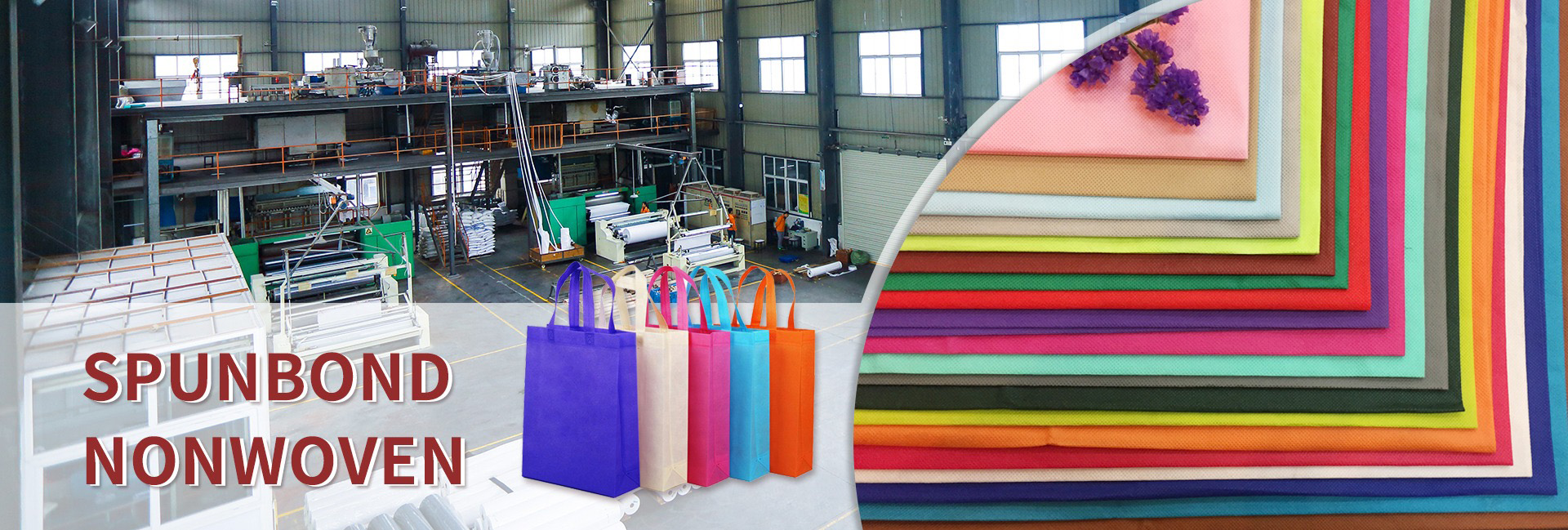
Non woven fabric, a new type of environmentally friendly material, has been widely used in various fields in recent years. Compared with traditional textiles, the production process of non-woven fabrics is more environmentally friendly, and the waste after use is also easier to dispose of, thus having significant advantages in environmental protection.
The environmental characteristics of non-woven fabrics
The production process of non-woven fabric does not require spinning, thereby reducing energy consumption and wastewater discharge. In addition, Guangdong non-woven fabric materials can be recycled, reducing the pollution of waste to the environment. These characteristics make non-woven fabric a material that conforms to environmental protection concepts.
The application of non-woven fabric in the field of environmental protection
1. Eco friendly bags: Non woven eco-friendly bags have gradually become a substitute for plastic bags. They are lightweight, durable, and reusable, effectively reducing the use of plastic bags and lowering white pollution.
2. Agricultural covering: Non woven fabric can also be used as agricultural film, with good breathability and permeability, which helps with crop growth and reduces soil pollution caused by traditional plastic film.
The recyclability of non-woven fabric
As an environmentally friendly material, non-woven fabric is highly praised for its recyclability. Under the concept of circular economy, the recycling of non-woven fabrics has become an important way to achieve resource conservation and environmental protection. Non woven fabrics can achieve effective recycling of resources through methods such as recycling and reusing.
Recycling and reuse: Non woven products can be collected through recycling channels after use. After classification, cleaning, and crushing processes, non-woven fibers are reused to produce new non-woven products. This method not only reduces the generation of waste, but also saves raw material resources and lowers production costs.
Biodegradable: Some non-woven fabrics are made of biodegradable materials such as polylactic acid (PLA). After use, this type of non-woven fabric can be degraded by microbial action in the natural environment, ultimately converting into harmless substances such as carbon dioxide and water. This biodegradation method helps reduce environmental pollution and achieve green recycling of non-woven fabrics.
The impact of non-woven fabric on the environment
Although non-woven fabrics have recyclability, they may still have certain environmental impacts during their production, use, and recycling processes. For example, wastewater, exhaust gas, and solid waste may be generated during the production process; Some non-woven fabric products may be difficult to recycle or mishandled after use, leading to environmental pollution. Therefore, while promoting non-woven fabrics, attention should be paid to their full lifecycle environmental impact and corresponding measures should be taken to reduce environmental burden.
Conclusion
As a new type of environmentally friendly material, non-woven fabric reflects respect and protection for the environment in both production and use. By replacing traditional materials and reducing pollution, non-woven fabrics are becoming an important tool for us to achieve sustainable development goals. In the future, with the advancement of technology and the improvement of people’s environmental awareness, the application fields of non-woven fabrics will be further expanded, bringing more convenience and environmental benefits to our lives.
Dongguan Liansheng Non woven Technology Co., Ltd. was established in May 2020. It is a large-scale non-woven fabric production enterprise integrating research and development, production, and sales. It can produce various colors of PP spunbond non-woven fabrics with a width of less than 3.2 meters from 9 grams to 300 grams.
Post time: Feb-04-2025