
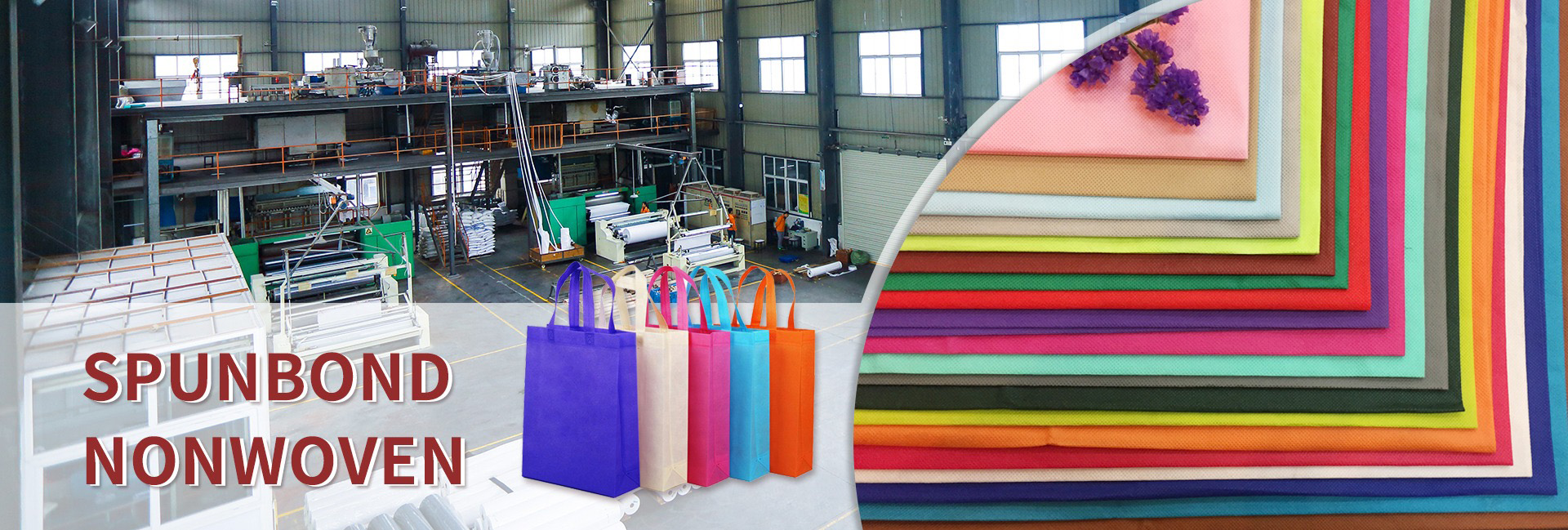
Under the scorching summer sun, ordinary polypropylene non-woven fabric is prone to aging, brittleness, and ineffective protection, making it difficult to adapt to outdoor shading, agricultural coverage, outdoor protection, and other scene requirements. Recently, good news came from a domestic research team – a new type of anti UV polypropylene non woven fabric using “flat cross-section fibers+multi-layer composite structure” has been successfully developed. After testing by professional institutions, its UPF (ultraviolet protection factor) value is as high as 500+, far exceeding the requirements of “UPF>40, UVA transmittance<5%” for anti UV products in the national GB/T 18830-2025 standard. The UV shielding efficiency is over 99.9%, completely solving the industry pain points of weak anti UV performance and short service life of traditional polypropylene non-woven fabric, and providing a new solution for the field of outdoor functional materials.
The traditional polypropylene non-woven fabric has weak UV resistance, and the core problem lies in two points: firstly, the fibers are mostly circular in cross-section, and UV rays easily penetrate the fiber gaps, resulting in limited protective effect; Secondly, they are mostly single-layer structures that cannot form effective protective barriers. Long term exposure to sunlight can easily lead to molecular chain breakage, resulting in material brittleness and pulverization. The new anti UV polypropylene non-woven fabric developed this time innovatively adopts a dual strategy of “flat cross-section fiber modification+multi-layer composite structure design” to achieve “reflection+barrier” dual anti UV, which not only improves the protective effect but also extends the service life, achieving a qualitative leap compared to traditional products.
Flat Cross Sectional Fiber – Setting a Reflective Barrier for Ultraviolet Radiation
The shape of the fiber cross-section directly determines the UV resistance of non-woven fabrics. Traditional polypropylene non-woven fabric uses circular cross-section fibers, which have a smooth surface and limited contact area. Ultraviolet rays can easily penetrate the fiber gaps and only absorb a small amount of ultraviolet rays, greatly reducing the protective effect. The innovative use of flat cross-section polypropylene fibers in the new non-woven fabric enhances its UV resistance from the source by changing the fiber morphology, which is also one of its core breakthrough points.
The research team optimized the structure of the spinning nozzle and changed the traditional circular nozzle to a flat shape, preparing flat section polypropylene fibers with a cross-sectional aspect ratio of 3:1~5:1. This special form of fiber has two core advantages: firstly, its specific surface area is increased by more than 40% compared to circular fibers, which can more fully contact and reflect ultraviolet rays, reducing the penetration of ultraviolet rays – flat fibers can reflect more than 80% of ultraviolet rays back, while the reflectivity of traditional circular fibers is only about 30%; The second is that the arrangement between flat fibers is tighter, with smaller gaps between fibers, forming a natural “physical barrier network” that further blocks the penetration of ultraviolet rays, avoiding direct exposure of ultraviolet rays to the interior of the material and delaying the aging of molecular chains.
To further enhance the anti UV effect, the research team also modified the flat cross-section fibers by adding hindered amine light stabilizers and benzotriazole UV absorbers during the fiber preparation process, forming a dual protection of “reflection+absorption”. The modified flat fibers not only reflect most of the ultraviolet rays, but also absorb a small amount of ultraviolet rays that penetrate the gaps between the fibers and convert them into harmless heat energy for release, completely blocking the damage of ultraviolet rays to the polypropylene molecular chain. Experimental data shows that the UV shielding efficiency of a single flat modified fiber reaches over 92%, which is 60% higher than that of traditional circular fibers, laying a solid foundation for the protection effect of subsequent multi-layer composite structures.
In addition, flat cross-section fibers can also enhance the mechanical properties of non-woven fabrics. Compared to circular fibers, flat fibers have stronger adhesion, resulting in a 35% increase in tensile strength and a 28% increase in tear strength for non-woven fabrics. Even under long-term outdoor exposure, it is less prone to breakage and delamination, and its service life is more than three times longer than traditional non-woven fabrics, perfectly solving the industry problem of “difficult balance between UV resistance and mechanical properties”.
Multi layer Composite Structure – Building a Full Band Anti UV “Protection Loop”
If flat cross-section fibers are the ‘first line of protection’, then multi-layer composite structures are the ‘all-round protective net’. The research team has designed a three-layer composite structure of “surface layer+middle layer+bottom layer” based on the protection needs of different scenarios. Each layer has clear functional division and synergistic efficiency, constructing a full band, no dead angle anti UV protection closed loop, completely breaking the limitations of traditional single-layer non-woven fabric protection.
The surface is made of modified flat cross-section polypropylene fibers, with the core function of “reflecting ultraviolet rays+wear-resistant protection”. In addition to having strong UV reflection ability, the surface is also treated with special anti scratch treatment, which has excellent wear resistance and can resist external damage such as outdoor wind and sand, friction, etc., avoiding damage to the surface fibers and preventing protection failure. At the same time, its surface is smooth and easy to clean, which can reduce dust and dirt adhesion and maintain long-term protection effect. It is worth mentioning that the surface fibers can also be adjusted in color according to needs. Dark colored surfaces can further enhance UV absorption capacity, while light colored surfaces are more suitable for outdoor shading scenes, balancing practicality and aesthetics.
The middle layer is the “core barrier” against ultraviolet radiation, using a composite system of “flat fibers+anti ultraviolet masterbatch”, while adding a mesh layer woven from anti ultraviolet polyester filament, which not only enhances the anti ultraviolet performance but also improves the overall stiffness of the material. The anti UV masterbatch added in the middle layer, after special dispersion treatment, can be evenly distributed in the fiber gaps, accurately absorbing UVA (320-400nm) and UVB (290-320nm) full band ultraviolet rays, avoiding ultraviolet rays from penetrating to the bottom layer; The mesh layer can enhance the structural stability of non-woven fabric, prevent material deformation under high temperature and external force, and further block ultraviolet penetration, forming a triple protection of “reflection absorption barrier”.
The bottom layer is made of soft and breathable polypropylene fiber, with the core function of “breathable comfort+secondary protection”. The bottom fiber has a soft texture and excellent breathability, which can avoid the stuffiness caused by multi-layer structures and is suitable for outdoor protection, agricultural coverage and other scenes that require breathability; At the same time, a small amount of ultraviolet absorber is added to the bottom layer, which can absorb the trace ultraviolet rays that penetrate the middle layer for a second time, ensuring that there are no blind spots in the protection. In addition, the bottom layer can also add functional additives such as antibacterial and waterproof according to the application scenario, expanding the product’s applicability.
In terms of composite technology, the research team adopts ultrasonic hot pressing composite technology to replace traditional adhesive bonding, which not only ensures the tight bonding of the three-layer structure and is not easy to separate, but also avoids the environmental hazards caused by adhesive. The entire production process is green and environmentally friendly, with no harmful gas emissions. At the same time, by optimizing the hot pressing temperature and pressure, it ensures that the composite non-woven fabric not only has super strong UV resistance, but also maintains good softness and breathability, balancing protection and practicality.
UPF500+, stable even after 1000 hours of exposure to sunlight
The performance of the new anti UV polypropylene non-woven fabric has been strictly tested by professional institutions, and all indicators far exceed industry standards, demonstrating super strong anti UV ability and stability. According to Chinese GB/T 18830-2025, European DIN EN 13758-1 and other standards, the UPF value of this non-woven fabric is as high as 500+, far exceeding the industry’s top standard of “UPF50+”. The UV shielding efficiency is over 99.9%, with a UVA transmittance of only 0.3%, far below the standard requirement of 5%.
To simulate actual outdoor use scenarios, the research team conducted long-term exposure tests: placing the new non-woven fabric and traditional polypropylene non-woven fabric outdoors for 1000 hours of continuous exposure (equivalent to 1 year of outdoor use). The test results show that the new non-woven fabric has no obvious aging or brittleness phenomenon, with a tensile strength retention rate of over 88%, a tear strength retention rate of over 85%, a UPF value still maintained at 400+, and almost no degradation in protective performance; After being exposed to sunlight for 1000 hours, traditional polypropylene non-woven fabric has shown significant brittleness, pulverization, and a decrease in tensile strength of more than 70%, completely losing its practical value.
In addition, the non-woven fabric has also passed the UV STANDARD 801 certification from the Hohenstein Institute in Germany. This certification not only tests its performance in a brand new state, but also simulates actual usage conditions, such as the protective effect after stretching, wetting, and washing. The test results show that even after 50 washes and multiple stretches, its UPF value remains at 300+, and the protective effect is stable and reliable, fully meeting the long-term outdoor use needs. At the same time, the product also has good resistance to moisture and chemical corrosion, and can maintain stability in high temperature and high humidity environments, making it suitable for complex outdoor scenes.
Unlock new possibilities for outdoor protection in multiple scenarios
This new type of polypropylene non-woven fabric, which combines super strong UV resistance, high toughness, breathability and environmental protection, has unlocked multiple outdoor application scenarios with its excellent performance. It has a broad market prospect and can effectively replace traditional non-woven fabrics to solve the problem of outdoor scene protection.
In the field of agriculture, it can be used to make agricultural sunshade nets and grass proof fabrics – which can efficiently block ultraviolet rays, protect crops from scorching sun, and be breathable and permeable, without affecting crop growth. At the same time, it has excellent aging resistance, with a service life of up to 3-5 years, which is more than twice the service life of traditional sunshade nets and significantly reduces the replacement cost for farmers; In the field of outdoor leisure, it can be used to make sunshade tents, umbrellas, outdoor seat cushions and other products, providing reliable sun protection for people, while being soft and breathable, improving the comfort of use.
In the industrial and public fields, it can be used to make outdoor billboards, building sunshades, highway protective nets, etc., which can resist the aging and fading caused by long-term exposure, extend the service life of products, and at the same time, its mechanical properties are excellent, which can withstand the impact of external forces such as outdoor sandstorms and rainstorm; In the field of personal protection, it can be used to make outdoor sun protection clothing, sun protection masks, sun protection gloves, etc. The UPF value reaches 500+, which can effectively block UV damage, and the texture is soft, breathable and comfortable, better than traditional chemical sun protection materials.
In addition, the non-woven fabric can also be applied to new energy vehicle interiors, outdoor medical packaging materials, and other scenarios. It can resist material aging caused by ultraviolet rays, meet the environmental and breathable needs of the scene, and further expand the application boundaries of polypropylene non-woven fabric.
Technical significance and future prospects
The successful development of a new type of anti UV polypropylene non-woven fabric not only solves the industry pain points of weak anti UV performance and short service life of traditional polypropylene non-woven fabric, but also fills the technical gap of flat cross-section+multi-layer composite anti UV non-woven fabric in China, promoting the transformation of China’s non-woven fabric industry towards high-end and functional. Compared with similar foreign products, this product not only has comparable UV resistance, but also reduces production costs by more than 25%, possessing strong market competitiveness and breaking the technological monopoly of high-end UV resistant non-woven fabrics abroad, achieving a breakthrough in “domestic substitution”.
The research team stated that they will further optimize product performance in the future. On the one hand, they will adjust the aspect ratio and modified formula of the flat cross-section fibers to further enhance their UV resistance, with the goal of increasing the UPF value to over 800; On the other hand, expanding the multifunctionality of multi-layer composite structures, integrating antibacterial, flame-retardant, waterproof and other functions, and adapting to more complex scene requirements, such as outdoor high-end protection, aerospace auxiliary protection, etc. At the same time, the team will promote the large-scale production of this technology, reduce production costs, and bring this new type of UV resistant non-woven fabric into more industries and daily life, providing people with more reliable and environmentally friendly outdoor protection solutions.
The development of new UV resistant polypropylene nonwoven fabrics, from traditional single-layer circular fibers to flat cross-section modified fibers, from single protection to multi-layer collaborative protection, is a vivid epitome of functional innovation in the nonwoven industry. With the continuous iteration of technology, this “sun resistant” non-woven fabric will play a greater role in outdoor protection, agricultural production, industrial manufacturing and other fields, injecting new vitality into green and low-carbon development and demonstrating the innovative strength of domestic functional materials.
Dongguan Liansheng Non woven Technology Co., Ltd. was established in May 2020. It is a large-scale non-woven fabric production enterprise integrating research and development, production, and sales. It can produce various colors of PP spunbond non-woven fabrics with a width of less than 3.2 meters from 9 grams to 300 grams.
Post time: Apr-14-2026