
When it comes to PLA (polylactic acid) fiber, many people associate it with “biodegradable plastics”, but its value goes far beyond environmental degradation – its inherent natural antibacterial properties and excellent skin friendly performance make it stand out in fields such as healthcare, maternal and child care, and close fitting clothing, breaking the inherent perception that “green materials must sacrifice the user experience”. As a fiber derived from natural biomass such as corn, PLA’s antibacterial and skin friendly properties are not artificially added, but deeply rooted in its molecular structure and material essence, becoming the core advantage that distinguishes it from traditional petroleum based fibers.
Natural antibacterial properties: derived from the molecular essence of “antibacterial confidence”
The antibacterial ability of PLA fiber does not rely on the addition of additional antibacterial agents, but is determined by its own molecular structure and physicochemical properties. It belongs to “natural antibacterial” and avoids the problems of skin irritation and environmental residue that may be caused by artificial antibacterial agents. It is suitable for high-end medical, maternal and child sensitive scenes. Its antibacterial mechanism is mainly reflected in three core levels, and after multiple experimental verifications, its antibacterial effect is stable and reliable.
Firstly, the “antibacterial barrier” effect of molecular structure. The PLA molecular chain is rich in ester bonds, which slowly hydrolyze during use to produce lactic acid. Lactic acid can regulate the microenvironment of the fiber surface, forming a weakly acidic atmosphere (pH maintained at 5.5-6.5). The suitable living environment for the vast majority of harmful bacteria, such as Escherichia coli, Staphylococcus aureus, and Candida albicans, is neutral to weakly alkaline. A weakly acidic environment can damage the integrity of bacterial cell membranes, inhibit bacterial metabolism and reproduction, and thus block bacterial growth and spread. Experimental data shows that the 24-hour antibacterial rate of pure PLA fiber against Escherichia coli can reach over 70%. If blended with bamboo pulp adhesive, cotton fiber, etc., the antibacterial rate can be increased to over 90%, and the antibacterial effect will not significantly decrease after long-term use.
Secondly, the “low adsorption characteristics” of the material surface. The growth of bacteria relies on the adsorption and retention of moisture and nutrients on the surface of fibers, while PLA fibers have a smooth surface, no obvious pore structure, and a moderate hydrophobic oleophilic balance (HLB) value, which makes it difficult to adsorb nutrients from sweat and sebum, effectively cutting off the “food source” of bacteria and reducing bacterial colonization from the source. Compared to traditional polyester fibers and nylon fibers, the bacterial adsorption on the surface of PLA fibers can be reduced by 40% -60%, making it particularly suitable for making close fitting clothing, wet wipes, and other products that are prone to contact with sweat.
Thirdly, the “antibacterial synergistic” effect of the degradation process. PLA fibers can slowly degrade in natural environments or human body fluids, and the lactic acid produced during the degradation process can not only regulate the microenvironment, but also further inhibit bacterial growth, forming a dual synergy of “degradation and antibacterial”. This feature is particularly important in medical scenarios, such as PLA medical dressings and absorbable sutures, which can prevent bacterial infections and naturally degrade after completing their functions, reducing medical waste residue and aligning with the development concept of green healthcare.
It is worth noting that the antibacterial properties of PLA fibers have “selectivity” – they efficiently inhibit harmful bacteria, but have no significant effect on beneficial bacterial communities on the surface of human skin, and will not disrupt the skin’s microecological balance. This is also an important advantage of PLA fibers over artificial antibacterial fibers.
Skin friendly characteristics: “natural adaptability” that fits the human body
The skin friendly properties of PLA fiber are essentially a high degree of compatibility between its material characteristics and the physiological needs of human skin, achieving a “gentle fit” from multiple dimensions such as touch, breathability, and irritation, especially suitable for sensitive skin, infants, and other groups. Compared with traditional petroleum based fibers, the skin friendly advantage of PLA fibers does not require additional softening treatment, due to its natural material nature.
Firstly, the touch is soft and delicate, fitting the skin without any friction. The cross-section of PLA fibers is circular or elliptical, with a smooth and burr free surface, and the fiber fineness can be flexibly controlled (conventional fineness is 1.0-3.0 dtex, which can be made into ultrafine fibers). The arrangement between fibers is loose and uniform, and the resulting fabric has high fluffiness and soft touch, with a touch similar to cotton fibers but smoother than cotton fibers, avoiding the “roughness” and “itching” of traditional polyester fibers. The facial mask cloth and makeup removing cotton made of PLA fiber can fit the skin without pulling, better fit the skin texture, and improve the use experience.
Secondly, it is breathable and moisture absorbing, balancing dryness and comfort. Although the molecular chains of PLA fibers contain ester bonds, they have a certain degree of breathability overall. The breathability of their fabrics can reach 200-300mm/s, which is superior to traditional polyester fabrics; At the same time, fibers can quickly absorb sweat from the skin surface and conduct it to the fabric surface for evaporation, avoiding the stuffiness and stickiness caused by sweat accumulation, achieving the effect of “moisture absorption and quick drying”. For close fitting clothing and baby diapers, this breathable and moisture absorbing property can effectively reduce skin discomfort and reduce the probability of problems such as red buttocks and skin itching.
Finally, low irritability and biocompatibility are suitable for sensitive scenarios. PLA fiber is derived from natural biomass, free of formaldehyde, odor, and harmful heavy metal residues. After authoritative testing, its skin irritation level is “no irritation” and its allergenicity is extremely low. At the same time, PLA has excellent biocompatibility and does not trigger immune reactions when in contact with human skin. It can be used to make medical care pads, infant clothing, sensitive skin textiles, and even medical implants inside the human body (such as absorbable sutures), fully reflecting its skin friendly nature of “warmth and adaptability”.
Double advantage overlay: Unlock the core competitiveness of diverse scenarios
The natural antibacterial and skin friendly properties of PLA fiber do not exist in isolation. The combination of the two forms a unique core competitiveness, promoting its large-scale application in multiple high-end scenarios and gradually replacing traditional petroleum based fibers and artificially modified fibers.
In the field of maternal and child care, PLA fiber made diapers, wet wipes, and infant clothing can not only reduce irritation to the delicate skin of babies due to their skin friendly properties, but also block the growth of harmful bacteria through their natural antibacterial ability, reducing the risk of skin infections and red buttocks, which meets the core requirements of “safe and gentle” maternal and child products; In the field of healthcare, PLA medical dressings, surgical gowns, and nursing pads balance antibacterial, skin friendly, and biodegradable properties, ensuring the comfort of medical staff and patients while reducing medical waste pollution, in line with the concept of green healthcare; In the field of close fitting clothing, underwear and socks made by blending PLA fiber with cotton, bamboo pulp adhesive, etc. have both soft and skin friendly, breathable and dry, and natural antibacterial functions, solving the pain points of traditional close fitting clothing such as stuffiness, stickiness, and easy bacterial growth; In the field of beauty, PLA facial mask cloth can not only closely fit the skin, improve the absorption efficiency of skin care products, but also avoid bacterial contamination during the use of facial mask by virtue of its low irritation and bacteriostasis, and is suitable for people with sensitive muscles.
Compared to fibers artificially added with antibacterial agents, PLA fibers have more stable and environmentally friendly natural antibacterial properties, without the risk of antibacterial agent precipitation; Compared to traditional natural fibers such as cotton, PLA fiber has more outstanding antibacterial ability and has the additional advantage of biodegradability, achieving the unity of “environmental protection, antibacterial, and skin friendly”. With the continuous upgrading of PLA modification technology, its antibacterial and skin friendly properties can be further improved through blending, spinning process optimization and other methods, adapting to the needs of more high-end scenarios and gradually breaking the monopoly pattern of traditional fibers.
Conclusion: Not only environmentally friendly, but also a “gentle and powerful” new material
The natural antibacterial and skin friendly secrets of PLA fiber are essentially the perfect combination of the “natural advantages” of natural biomass materials and material science and technology. It breaks people’s one-sided understanding of “biodegradable materials” – environmental protection is not its only highlight, its inherent antibacterial and skin friendly properties make it a new type of fiber that balances environmental value and user experience.
With the promotion of the “dual carbon” strategy and consumption upgrading, people’s requirements for the environmental protection, safety, and comfort of textiles and medical materials continue to increase, and the dual advantages of PLA fiber will be further highlighted. In the future, with the continuous optimization of aggregation and spinning technology, the performance of PLA fibers will continue to upgrade, and their application scenarios will continue to expand. They will not only protect the ecological environment, but also meet the needs of the human body, becoming an important force in reshaping the future material landscape, truly realizing the material value of “originating from nature, adapting gently, and returning to nature”.
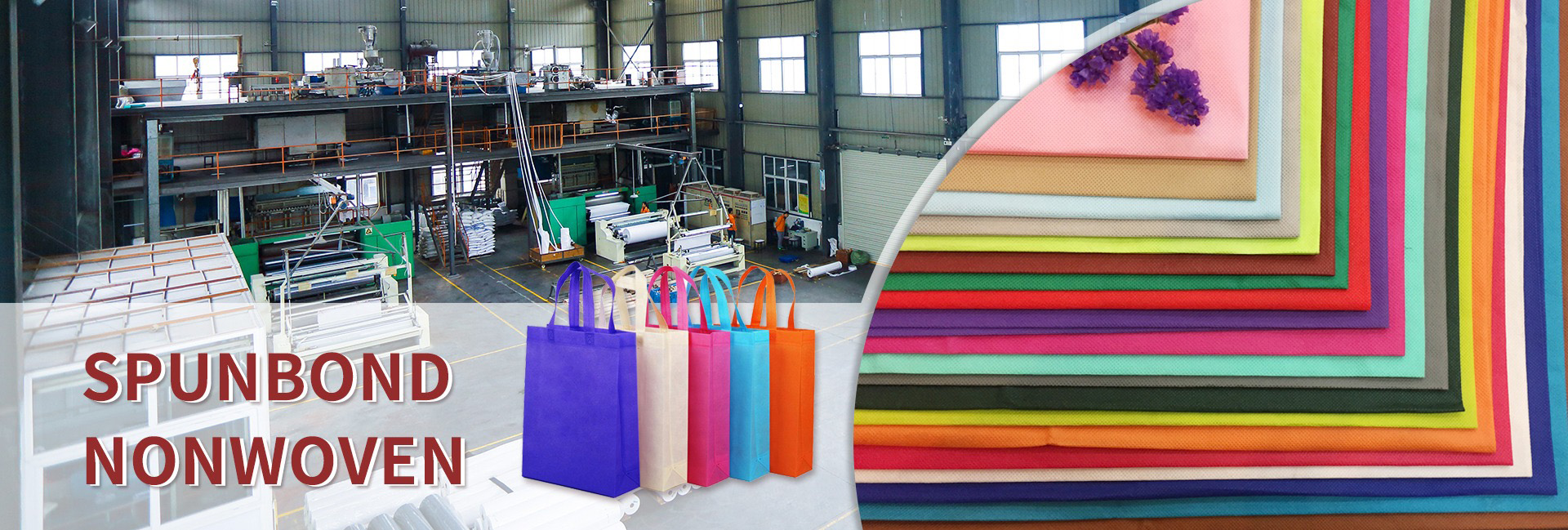
Dongguan Liansheng Non woven Technology Co., Ltd. was established in May 2020. It is a large-scale non-woven fabric production enterprise integrating research and development, production, and sales. It can produce various colors of PP spunbond non-woven fabrics with a width of less than 3.2 meters from 9 grams to 300 grams.
Post time: Feb-17-2026