
The core demand of the Century Project: to resist the dual tests of time and environment
Geotechnical engineering (especially water conservancy and road engineering), as infrastructure related to national economy and people’s livelihood, often requires a service life of more than 50 years, and some major projects are even based on the “hundred year plan” standard. These types of projects are exposed to outdoor environments for a long time and face multiple extreme challenges: water conservancy projects need to withstand the continuous effects of water flow erosion, groundwater erosion, wet dry alternation, and freeze-thaw cycles; Road engineering needs to deal with repeated rolling of vehicle loads, long-term exposure to ultraviolet radiation, severe temperature fluctuations (summer road surface temperatures can reach over 60 ℃, winter temperatures in the north can drop below -30 ℃), and erosion caused by rainwater infiltration.
Traditional geotechnical materials (such as ordinary non-woven fabrics and unmodified synthetic fabrics) are prone to aging and degradation in such environments – ultraviolet radiation can damage polymer molecular chains, causing the material to become brittle and fracture; Water erosion and chemical media will weaken the strength of materials and eventually lead to hidden dangers in engineering structures. Anti aging spunbonded non-woven fabrics become the core choice to solve this problem through targeted material innovation.
Structural essence of anti-aging spunbonded non-woven fabric: a century stable “engineering framework”
The reason why the anti-aging spunbonded non-woven fabric can meet the long-term requirements of geotechnical engineering lies in the dual guarantee formed by the unique filament interwoven structure and anti-aging modification design. From a structural perspective, it is made of polypropylene (PP) or polyester (PET) filaments as raw materials, which are spun and bonded into a dense and uniform mesh structure through hot rolling and solidification processes.
The winding and bonding between the filaments are not simply stacked, but form a mutually locked mechanical system, which gives the material balanced and durable mechanical properties. Unlike the short fiber overlap structure of ordinary non-woven fabrics, the long fiber structure avoids the problems of fiber detachment and looseness. Its longitudinal and transverse tensile strength can be stably maintained at a high level, and its elongation can reach 50% -80%. It can resist the construction pulling during engineering construction, adapt to the settlement deformation of roadbeds and dams, effectively disperse stress, and prevent structural cracking caused by local stress concentration.
The anti-aging modification extended the duration of structural stability from the molecular level. By precisely adding hindered amine light stabilizer and pentaerythritol ester antioxidant, the material can actively block the aging path: the light stabilizer can efficiently absorb ultraviolet energy and convert it into heat energy release to avoid polymer molecular chain breaking. According to the actual measurement, the strength retention rate of high-quality anti-aging spunbonded non-woven fabrics can still reach more than 85% of the initial value after 10 years of outdoor exposure, while the strength decay rate of ordinary non-woven fabrics under the same conditions exceeds 60%; Antioxidants can decompose hydrogen peroxides produced by materials in humid and oxidative environments, inhibit free radical chain reactions, and ensure that materials do not undergo oxidative degradation in media such as groundwater and rainwater. Even in long-term immersion environments of water conservancy projects, their strength loss can be controlled within 10%. This dual design of “structure+modification” makes the anti-aging spunbonded non-woven fabric become the “unfading skeleton” in the project, providing basic support for a hundred years of service.
The designated logic of hydraulic engineering: resist the erosion of water and environment, safeguard structural safety
The core risk of water conservancy projects (such as dams, river regulation, reservoir seepage prevention, drainage system) comes from the dynamic action of water and environmental erosion. The functional adaptability of anti-aging spunbonded non-woven fabrics has become the key to their mandatory designation. In dam construction, it bears the triple core functions of “inverted filtering, drainage and reinforcement”: as an inverted filter, its uniform pore structure can accurately control the loss of soil particles, allow water to penetrate smoothly, and prevent sediment from blocking the drainage channel – compared with ordinary materials, the anti-aging spunbonded non-woven fabric has stronger pore stability, and will not appear pore deformation and blockage after long-term water scouring, avoiding the risk of piping and dam break caused by seepage damage of the dam; As a reinforcement layer, it can enhance the integrity of the dam soil mass and resist the impact of water flow and wave scouring. Especially under the pressure of high water level in flood season, it can effectively disperse the stress and prevent the landslide of the dam slope. Its anti-aging performance ensures that this reinforcement effect will not decay over time, avoiding the hidden danger of the decline of dam strength after the aging of ordinary materials.
The chemical corrosion resistance of anti-aging spunbonded non-woven fabrics is more critical in water conservancy projects in areas with rich groundwater or salinization. It can resist the erosion of groundwater and saline alkali water, and will not swell or degrade due to chemical media. However, ordinary materials often experience a significant decrease in strength within 1-2 years in saline alkali environments, leading to the failure of engineering anti-seepage and filtration functions. In addition, the freeze-thaw cycle in water conservancy projects requires very high toughness of materials. The anti-aging spunbonded non-woven fabric can still maintain good flexibility at -30 ℃, without bending cracks, and without performance degradation after thawing, while ordinary materials are prone to brittle cracks at low temperatures, and will completely lose their functions after repeated freeze-thaw, which is also an important reason why water conservancy projects in the northern cold regions are forced to specify their use.
The designated logic of road engineering: adapting to complex working conditions and ensuring the service life of traffic
The core challenge faced by road engineering (expressway, railway subgrade, municipal road) is the superposition of repeated load action and environmental alternative erosion, and the comprehensive performance of anti-aging spunbonded non-woven fabric perfectly matches such complex working conditions. In subgrade treatment, it plays a key role as the “isolation, reinforcement and seepage prevention” material: as the isolation layer, it can effectively separate the subgrade soil and the pavement structure layer to prevent materials of different particle sizes from mixing with each other – during road operation, the vehicle load will cause plastic deformation of the subgrade soil.
If there is no reliable isolation layer, the subgrade soil will invade the pavement base course, causing damage to the base course structure and pavement subsidence. The high strength and anti-aging properties of anti-aging spunbonded non-woven fabric can maintain the isolation effect for a long time and avoid interlayer pollution after material aging and damage; As a reinforcement layer, it can enhance the bearing capacity of the roadbed, disperse the concentrated pressure of vehicle loads on the roadbed, reduce uneven settlement of the roadbed, thereby reducing the incidence of pavement cracking and rutting, and extending the service life of the road.
The open-air environment of road engineering has strict requirements on the weather resistance of materials. The high temperature of pavement in summer will accelerate the aging of ordinary materials, and the low temperature in winter will lead to the embrittlement of materials. The anti-aging spunbonded non-woven fabric can maintain stable performance in the temperature range of -30 ℃ to 60 ℃, neither softening and deformation due to high temperature nor brittle failure due to low temperature. At the same time, it has good water permeability and drainage, which can quickly drain the rainwater inside the subgrade to avoid the softening and strength decline of subgrade soil caused by moisture accumulation. In road engineering, subgrade ponding is one of the main reasons for early damage of the pavement.
The anti-aging spunbonded non-woven fabric drainage function can keep the subgrade moisture content in a reasonable range to ensure long-term stability of the subgrade. In addition, in road reconstruction, expansion or maintenance projects, anti-aging spunbonded non-woven fabrics have stronger construction adaptability, light weight, easy cutting, easy laying, good compatibility with asphalt, concrete and other pavement materials, and will not affect the project quality due to material adaptation problems, which is also an important practical factor widely designated.
Engineering Collaboration Value: Empowering the Entire Chain from Cost Control to Safety Assurance
The anti-aging spunbonded non-woven fabric is designated for use in water conservancy and road engineering, not only because of its own performance advantages, but also because it can provide collaborative value for the whole life cycle of the project. From a short-term construction perspective, its high strength and flexibility reduce the loss rate during the construction process, avoiding secondary procurement and rework of ordinary materials due to their susceptibility to damage, indirectly saving construction costs; From the perspective of long-term operation and maintenance, its service life and stability of more than 50 years have significantly reduced the maintenance and reinforcement costs in the later stage of the project – traditional materials often need to be replaced or repaired every 5-10 years, while anti-aging spunbonded non-woven fabrics almost do not need additional maintenance, especially in underwater parts of water conservancy projects, deep subgrade of road works and other areas difficult to construct, this long-term effectiveness can avoid large-scale maintenance caused by material aging, and reduce the difficulty and cost of operation and maintenance.
More importantly, it can fundamentally ensure the bottom line of engineering safety. The collapse of dams in hydraulic engineering and the collapse of road surfaces in road engineering are often directly related to the aging and failure of geotechnical materials. Such accidents not only cause huge economic losses, but may also endanger life safety. The anti-aging spunbonded non-woven fabric can block the structural hidden danger caused by material aging from the source through stable performance, and ensure that the project always remains safe and stable during the design service cycle.
This is also the core logic of the mandatory requirement of anti-aging spunbonded non-woven fabric to be used in major water conservancy and road projects in relevant national standards (such as the Technical Specifications for the Application of Geosynthetics in Water Conservancy Engineering and the Technical Rules for the Application of Geosynthetics in Highway Engineering) – it is not an optional “efficiency enhancing material”, but a “necessary material” to ensure the long-term project.
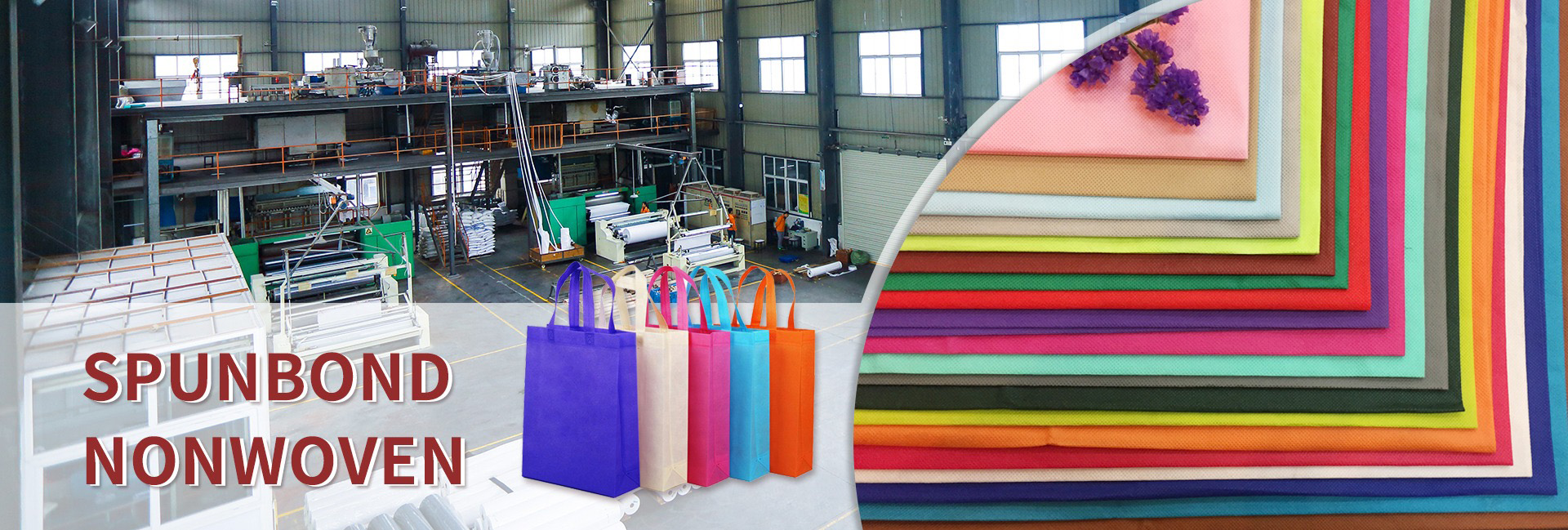
Dongguan Liansheng Non woven Technology Co., Ltd. was established in May 2020. It is a large-scale non-woven fabric production enterprise integrating research and development, production, and sales. It can produce various colors of PP spunbond non-woven fabrics with a width of less than 3.2 meters from 9 grams to 300 grams.
Post time: Mar-07-2026