
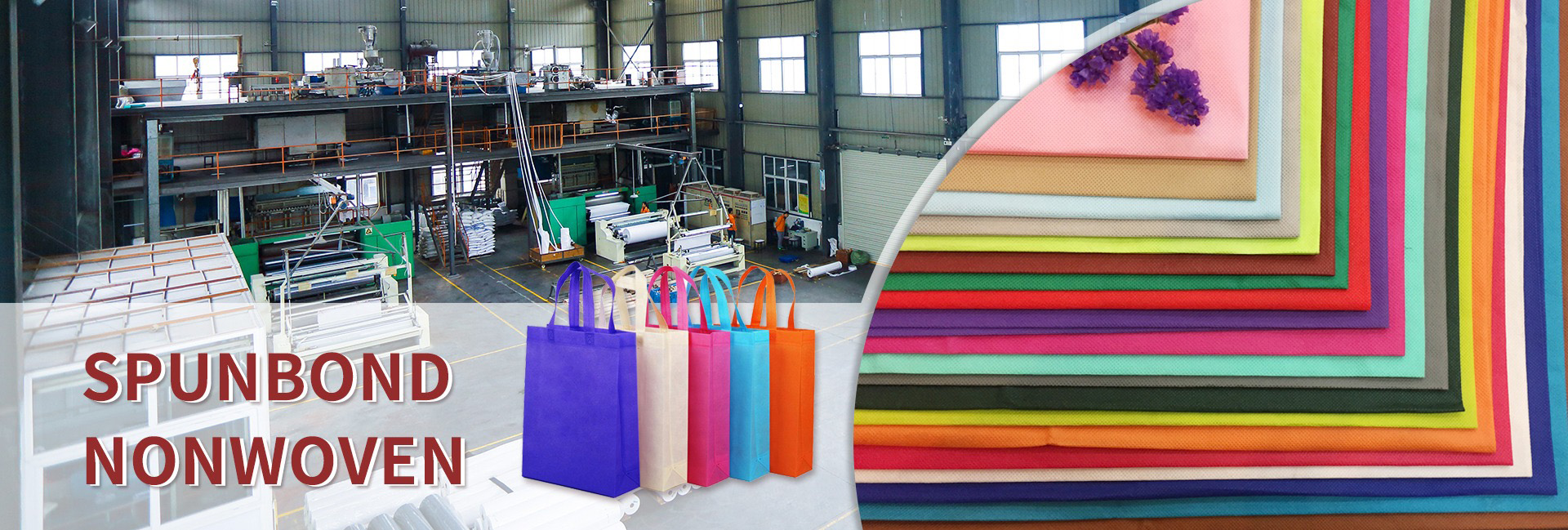
Filtering technology has already penetrated into every corner of our lives, industries, and healthcare – indoor air purification, industrial waste gas treatment, drinking water filtration, medical liquid purification, and even impurity screening in food processing all rely on high-quality filtering substrates. As the “core carrier” of the filtration system, the performance of the substrate directly determines the filtration effect, service life, and operating efficiency. Among numerous filter substrates, polyester spunbond hot-rolled non-woven fabric stands out with its high strength, stable filtration performance, temperature and corrosion resistance, and has become the preferred substrate in the field of air and liquid filtration, providing solid support for various filtration scenarios and safeguarding every cleanliness and safety.
Why is polyester spunbond hot-rolled non-woven fabric the preferred filter substrate?
The core requirement for filtration is “efficient retention of impurities and stable and continuous operation”, which places strict demands on the substrate: it must have a uniform pore structure to achieve precise filtration; It also needs to have sufficient strength to withstand pressure shocks during the filtration process; It is also necessary to adapt to different filtering environments, such as high temperature, acidity, alkalinity, humidity, etc. Traditional filter substrates often struggle to meet these needs, while the unique structure and properties of polyester spunbond hot-rolled nonwoven fabric perfectly fit the core requirements of the filtration field.
Compared with other filter substrates such as needle punched non-woven fabric and melt blown non-woven fabric, polyester spunbond hot-rolled non-woven fabric is made from 100% high-quality polyester chips and integrated through the spunbond filament hot rolling process, without the need for chemical bonding media, ensuring the stability and environmental friendliness of the substrate from the root. It not only avoids the shortcomings of uneven pores and easy shedding of hair in needle punched fabrics, but also compensates for the low strength and easy damage of meltblown fabrics. It has three advantages of “efficient filtration, strong and durable, and wide adaptability”. It can be used as a pre substrate for primary filtration and a supporting substrate for intermediate and advanced filtration, becoming an indispensable core component of air and liquid filtration systems.
Whether it is resisting the erosion of dust and harmful gases in air filtration, or intercepting impurities and purifying media in liquid filtration, polyester spunbond hot-rolled non-woven fabric can play a stable role with its own performance, building the “first line of defense” for the filtration system. Therefore, it is widely used in various filtration equipment and scenarios, and has become a recognized high-quality filtration substrate in the industry.
Three core characteristics, suitable for dual air/liquid filtration
The reason why polyester spunbond hot-rolled non-woven fabric can become the preferred filter substrate lies in its three core properties of tailor-made filtration scenarios. It can meet the lightweight and breathable requirements of air filtration, as well as the anti-corrosion and impact resistance requirements of liquid filtration, achieving precise adaptation to dual filtration scenarios.
Firstly, uniform pores+efficient filtration, balancing filtration efficiency and flux. The key to filtration lies in the pore structure. Polyester spunbond hot-rolled non-woven fabric is formed into a uniform and dense fiber network structure through precision spinning and mesh laying processes. The porosity can be accurately controlled at 60% -80%, and the pore size distribution is uniform (adjustable from 0.1-10 μ m). It can efficiently intercept dust, particles, impurities, and suspended solids in the air or liquid, with a filtration efficiency of over 90%, while ensuring good breathability and liquid flux, avoiding the increase of filtration pressure and the decrease of operating efficiency caused by pore blockage, and achieving “efficient filtration without pore blockage”.
Secondly, high toughness and wear resistance extend the service life of the filter. During the filtration process, the substrate needs to withstand the impact of airflow and liquid flow for a long time, as well as the pulling and pulling during backwashing and replacement, which requires extremely high strength. Polyester spunbond hot-rolled non-woven fabric relies on continuous spunbond filament structure and hot rolling consolidation process, with a longitudinal fracture strength of over 500N/5cm and a transverse strength of not less than 450N/5cm. It has outstanding tear and tensile resistance, and is not easily damaged or shed; At the same time, it has excellent wear resistance and can maintain structural integrity after repeated rinsing. Its service life is 3-4 times longer than traditional needle punched filter substrates, greatly reducing the maintenance and replacement costs of the filtration system.
Thirdly, it is temperature resistant, corrosion-resistant, environmentally friendly and stable, suitable for complex filtration environments. Air filtration may face high-temperature exhaust gases and corrosive gases, while liquid filtration may come into contact with acid-base solutions and organic solvents, which requires substrates to have good environmental adaptability. Polyester spunbond hot-rolled non-woven fabric has a wide temperature resistance range and can be stably used in environments ranging from -30 ℃ to 220 ℃, without fear of the strict requirements of high-temperature exhaust gas filtration; Excellent chemical stability, with a strong retention rate of over 90% even after soaking in acidic and alkaline environments with pH values of 2-13, suitable for filtering various corrosive liquids; At the same time, the production process is environmentally friendly and odorless, with no residual chemical additives, and will not contaminate the filtration medium. It is especially suitable for filtration scenarios that require extremely high purity, such as drinking water, medical drugs, and food.
Craftsmanship builds a solid foundation for the quality of filter substrates
The excellent filtration performance of polyester spunbond hot-rolled non-woven fabric cannot be achieved without rigorous and precise production processes. Every step revolves around “improving filtration performance and enhancing stability” to ensure uniform product quality, reliable performance, and adaptability to the needs of various filtration scenarios.
At the beginning of production, high-quality native polyester chips with intrinsic viscosity ≥ 0.64dL/g are selected to eliminate the mixing of recycled materials, ensure the strength and stability of the fibers themselves, and avoid the hidden dangers of shedding and damage during the filtration process from the source. Subsequently, the polyester chips are melted at a high temperature of 280-290 ℃ and spun using advanced spinning equipment to form polyester filaments with a diameter of 0.3-0.8mm per filament. They are then stretched by high-speed airflow and precisely laid to form a uniform and dense fiber network structure, with a mesh uniformity error of ≤ 5%, ensuring uniform pore distribution and consistency of filtration effect.
The core hot rolling process adopts precise temperature control technology. Within the temperature range of 180-210 ℃, the number and strength of bonding points between fibers are controlled through double hot rolling shaping. This ensures the high strength of the substrate, avoids fiber loosening and detachment, and retains sufficient porosity without affecting air and liquid permeability. At the same time, the weight (20-200g/m ²), width (1.6-4.5m), and aperture size can be flexibly adjusted according to the needs of different filtration scenarios, achieving customized production and accurately adapting to the different requirements of air filtration and liquid filtration.
Empowering air and liquid filtration to safeguard cleanliness and safety
With excellent comprehensive performance, polyester spunbond hot-rolled non-woven fabric has been widely used in the two core fields of air filtration and liquid filtration, covering multiple segmented scenarios such as industrial, medical, civilian, and food. With its strength, it safeguards every clean product and becomes the “solid substrate” of the filtration system.
In the field of air filtration, it is the core substrate of various purification equipment. In industrial scenarios, it can be used as a substrate for industrial waste gas filter bags and dust collector filter materials, and is used for waste gas treatment in industries such as steel, cement, and chemical. It efficiently intercepts dust and particulate matter in waste gas, purifies the air, and meets environmental emission requirements; In civilian scenarios, it can be used as a substrate for air purifier filters and air conditioning filters, intercepting impurities such as PM2.5, pollen, and bacteria in the air, improving indoor air quality, and protecting human health; In medical settings, it can serve as a supporting substrate for medical masks and operating room air filtration systems, balancing filtration efficiency and breathability, providing a clean medical environment for medical staff and patients.
In the field of liquid filtration, its applications are equally widespread and important. In water treatment scenarios, it can be used as a pre filtration substrate for drinking water filtration and sewage treatment, intercepting large particle impurities such as sediment and suspended solids in water, laying the foundation for subsequent deep filtration. It can also be used as a support substrate for ultrafiltration and reverse osmosis membranes, improving membrane stability and service life; In food processing scenarios, it can be used as a filtering substrate for liquids such as fruit juice, edible oil, beer, etc., to intercept impurities and sediment, ensuring food purity and taste; In medical settings, it can be used as an auxiliary substrate for liquid medicine filtration and blood filtration, ensuring the cleanliness of liquid medicine and blood and ensuring medical safety.
Domestic upgrading, becoming the mainstream choice for filter substrates
With the advancement of environmental policies and the continuous upgrading of filtration technology, the demand for high-quality filtration substrates in the market continues to grow. Polyester spunbond hot-rolled nonwoven fabric, with its comprehensive advantages, has gradually become the mainstream substrate in the filtration field. At present, domestic enterprises such as Shandong Hengyang and Tiandingfeng have achieved large-scale and customized production of this product. With advanced production equipment and precise process control, the product performance benchmarks the international advanced level, and the cost-effectiveness advantage is significant, gradually breaking the foreign monopoly in the high-end filter substrate market.
Compared with imported substrates, domestically produced polyester spunbond hot-rolled nonwoven fabrics not only have stable performance, but also can provide personalized customized services according to the needs of domestic filtration scenarios. At the same time, the price is more advantageous, greatly reducing the production cost of filtration equipment enterprises. In addition, with the deepening of the “dual carbon” policy, the recyclable, environmentally friendly and pollution-free characteristics of this material are more in line with the development concept of green filtration and have become the future development direction of the industry.
From industrial waste gas purification to drinking water filtration, from indoor air purification to medical liquid purification, filtration technology is closely related to our daily life and production, and high-quality filtration substrates are the foundation of efficient filtration. Polyester spunbond hot-rolled non-woven fabric provides solid support for air and liquid filtration with uniform pores, high toughness, and wide adaptability, solving many pain points of traditional filtration substrates and empowering various filtration scenarios. In the future, with the continuous upgrading of processes and iterative optimization of products, it will continue to deeply cultivate the field of filtration, injecting more strength into creating a cleaner and safer environment.
Dongguan Liansheng Non woven Technology Co., Ltd. was established in May 2020. It is a large-scale non-woven fabric production enterprise integrating research and development, production, and sales. It can produce various colors of PP spunbond non-woven fabrics with a width of less than 3.2 meters from 9 grams to 300 grams.
Post time: Mar-30-2026