
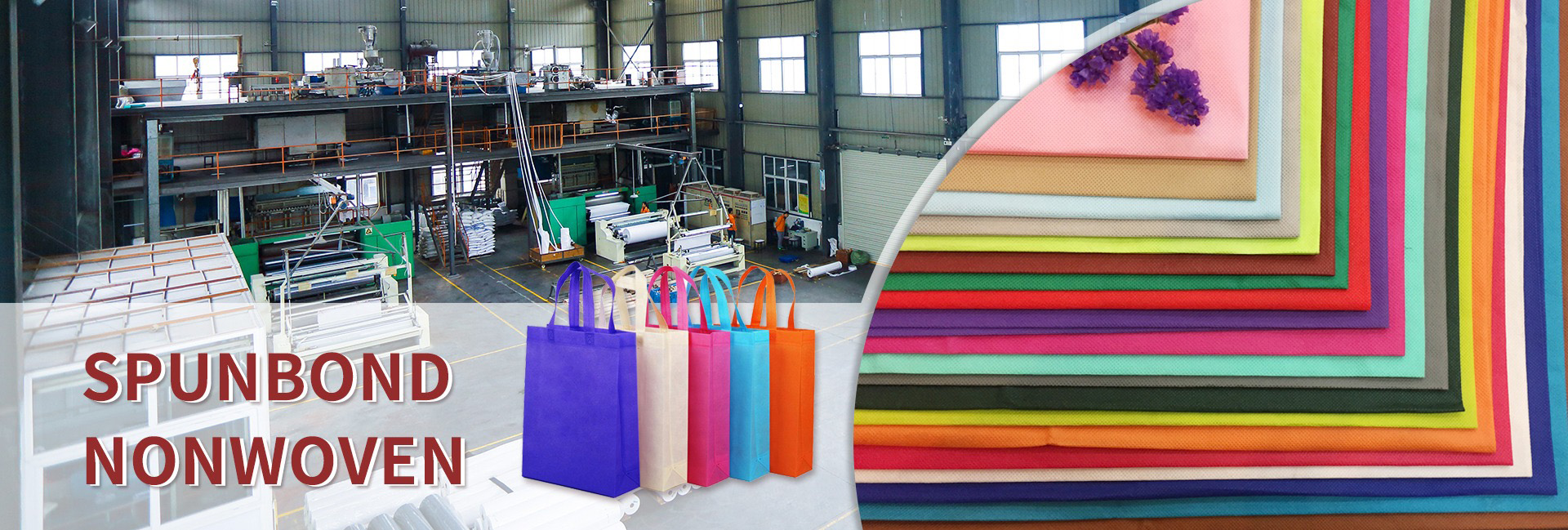
Non woven fabric has already permeated our daily lives, from eco-friendly bags used for grocery shopping and inner layers of masks, to outdoor sunshades and home storage bags, its presence can be seen everywhere. But many people don’t know that the non-woven fabrics we often come into contact with are mainly divided into two types – PP non-woven fabric (polypropylene non woven fabric) and polyester non-woven fabric (polyester non-woven fabric). The two have great differences in breathability and sun resistance. Choosing the right one can save a lot of trouble, while choosing the wrong one can either be stuffy and not breathable, or it can quickly age and break after exposure to sunlight.
Today, we will focus on the two core issues that everyone is most concerned about: which one is more breathable, PP non-woven fabric or polyester non-woven fabric? Which one is more sun resistant? The whole process is informative without any unnecessary words, combining material principles, measured performance, and practical scenarios to help you distinguish in one article. Whether it is daily procurement or industrial use, you can accurately avoid pitfalls and choose the right materials!
The core differences between two types of nonwoven fabrics
Before comparing breathability and sun resistance, take a minute to understand the essential differences between the two, which will make it easier to understand their performance later on:
PP non-woven fabric: made of polypropylene (PP) as the raw material, it is currently the most common and cost-effective type of non-woven fabric. Most of the eco-friendly bags and masks we buy as gifts are made of it. Its characteristics are light weight, softness, low processing temperature, relatively low production energy consumption, and extremely high cost-effectiveness.
Polyester non-woven fabric: made of polyester fiber (PET) as raw material, the cost is higher than PP non-woven fabric, the fiber structure is denser, and the strength and stability are stronger. It is commonly used in outdoor products, filter materials, high-end packaging and other scenarios, such as outdoor sunshades, geotextiles, etc., all of which use polyester non-woven fabric.
Summary: PP non-woven fabric focuses on “cost-effectiveness+lightweight”, while polyester non-woven fabric focuses on “durability+stability”. The breathability and sun resistance are determined by their raw material characteristics and fiber structure.
Breathability – PP non-woven fabric wins with a clear gap
Conclusion: Under the same weight and process, the breathability of PP non-woven fabric is much better than that of polyester non-woven fabric. The difference between the two can be clearly felt in daily use, especially in close fitting and breathable scenarios, where the difference is more prominent.
Why is PP non-woven fabric more breathable? There are two core reasons closely related to its material and craftsmanship:
Firstly, the fiber density is lower. The density of PP fiber is only 0.91g/cm ³, which is the lightest among common chemical fibers, while the density of polyester fiber is as high as 1.38g/cm ³. Low density means larger gaps between fibers, making it easier for gases to penetrate, just like loose sponges are more breathable than dense sponges. The fiber structure of PP non-woven fabric is naturally more conducive to air circulation.
Secondly, the fiber structure is looser. PP nonwoven fabric is more prone to forming ultrafine fibers and three-dimensional network structures during the production process. The fiber arrangement is relatively loose, the porosity is higher, and air can easily pass through the fiber gaps; The fiber structure of polyester non-woven fabric is denser, the surface is relatively smooth, and the fiber arrangement is tighter. Especially for polyester non-woven fabric that has undergone hot rolling bonding process, the pores will be further compressed, and the breathability will naturally be greatly reduced.
The actual test results are more intuitive: comparing PP non-woven fabric and polyester non-woven fabric with the same weight (20g/㎡), the air permeability of PP non-woven fabric can reach 300-500cm ³/cm ² · s, while the air permeability of polyester non-woven fabric is usually between 100-200cm ³/cm ² · s. The air permeability of PP non-woven fabric is almost 2-3 times that of polyester.
Scenario adaptation suggestions: If you need products with good breathability, priority should be given to PP non-woven fabrics – such as mask inner layers, close fitting disposable clothing, summer sunscreen inner lining, food packaging (requiring breathability and moisture resistance), etc; If the requirement for breathability is not high and more emphasis is placed on durability, then consider polyester non-woven fabric.
Additional reminder: The breathability of both types of non-woven fabrics is affected by the process – for example, PP or polyester non-woven fabrics produced by melt blown technology may have lower breathability than spunbond technology due to finer fibers and smaller pores. However, even so, under the same process, PP non-woven fabric still has better breathability than polyester non-woven fabric. In addition, non-woven fabrics that have undergone surface treatments such as waterproofing and oil resistance will have significantly reduced breathability, which is the same for both materials.
Sun resistance – Polyester non woven fabric rolled, PP should be used with caution outdoors
The conclusion is also clear: the sun resistance of polyester non-woven fabric is much better than that of PP non-woven fabric, especially in long-term outdoor exposure scenarios, where the difference in service life between the two will widen. This is also the core reason why polyester non-woven fabric is more suitable for outdoor scenes.
The difference in sun resistance is essentially due to the different UV resistance abilities of the two raw materials:
Polyester non-woven fabric: The molecular structure of polyester fibers contains aromatic rings, with stronger intermolecular bonds and excellent UV resistance. It can effectively resist the erosion of UV rays in sunlight and is not easily degraded by photooxidation. Actual test data shows that after 600 hours of sunlight exposure, polyester non-woven fabric only loses 60% of its strength. When exposed to outdoor conditions for a long time (unobstructed), its service life can reach 3-5 years. Even after exposure to wind and sun, it is not easily yellowed, brittle, or damaged, and can maintain good mechanical strength.
PP non-woven fabric: PP fibers belong to non-polar molecules, with relatively simple molecular chain structures and weak UV resistance. Long term exposure to sunlight can quickly cause photooxidation reactions, leading to molecular chain breakage, yellowing, brittleness, cracking and other problems, resulting in a significant decrease in strength. If UV stabilizers are not added, PP non-woven fabric will significantly age and break after 6-12 months of outdoor exposure. Even with stabilizers added, its service life can only be extended to 1-2 years, far less than polyester non-woven fabric.
For example, outdoor sunshade fabrics, sunscreens, and geotextiles mostly use polyester non-woven fabrics because they are sun resistant and durable, and can withstand direct sunlight for a long time; And the PP non-woven bag we give as a gift when buying groceries, if left outdoors for a long time and exposed to sunlight, will soon become torn when pulled, which is a direct reflection of the poor sun resistance of PP non-woven fabric.
Scenario adaptation suggestion: If the product needs to be used outdoors for a long time, such as outdoor awnings, sunscreens, geotextiles, outdoor storage bags, etc., polyester non-woven fabric must be selected; If it is only for indoor use or short-term outdoor use (such as temporary shelter), PP non-woven fabric has a higher cost-effectiveness and can fully meet the needs.
Additional reminder: PP non-woven fabric can improve its sun resistance by adding UV stabilizers, surface coating treatments, etc., but this will increase costs and the improvement effect is limited, still not as stable and reliable as polyester non-woven fabric; Even without special treatment, polyester non-woven fabric can still meet the sun resistance requirements of most outdoor scenes.
Summary of a table: Quickly distinguish the core differences between the two (for future reference)
For friends who are afraid of confusion, just take a look at this comparison table. Breathability, sun resistance, and key characteristics are clear at a glance, and you can choose according to your needs.
In fact, there is no need to memorize performance parameters by rote. As long as you grasp the core requirements, you can quickly choose the right one:
1. Consider breathability requirements: For those that require breathability, fit snugly, and moisture resistance, choose PP non-woven fabric; There is no requirement for breathability, but more emphasis is placed on durability. Choose polyester non-woven fabric.
2. Look at the usage environment: long-term outdoor exposure, choose polyester non-woven fabric; Choosing PP non-woven fabric is more cost-effective for indoor use or short-term outdoor use.
Additionally, it should be noted that many people mistakenly believe that “the thicker the non-woven fabric, the worse its breathability and sun resistance,” but this is not the case – thickness is only one of the factors affecting performance, and the core still depends on the material and production process. For example, thick PP non-woven fabric may still have better breathability than thin polyester non-woven fabric; Thin polyester non-woven fabric also has stronger sun resistance than thick PP non-woven fabric.
Overall, there is no absolute superiority or inferiority between PP non-woven fabric and polyester non-woven fabric, only whether they meet the requirements. By understanding their differences in breathability and sun resistance, and combining them with your own usage scenarios, whether it’s buying shopping bags, masks, or outdoor products, you can avoid the intelligence tax and choose the one that suits you best!
Dongguan Liansheng Non woven Technology Co., Ltd. was established in May 2020. It is a large-scale non-woven fabric production enterprise integrating research and development, production, and sales. It can produce various colors of PP spunbond non-woven fabrics with a width of less than 3.2 meters from 9 grams to 300 grams.
Post time: May-02-2026