
The regulation of fiber web uniformity is a systematic engineering of carding machine process optimization. In addition to the core spacing and speed ratio, feeding system parameters, needle cloth configuration and status, fiber load and self leveling, airflow and environmental parameters, roller status, etc. will indirectly or directly affect the uniformity by affecting the fiber opening, combing, transfer and arrangement process. Based on actual production, the impact mechanism and control points of each parameter are analyzed in detail, forming a complete process system with distance and speed adjustment as mentioned earlier.
Feed system related parameters
Feeding is a prerequisite for the carding process, and its stability directly determines the initial distribution state of fibers. If the feeding is uneven, further optimization of the carding parameters will not be able to compensate for the defects in the fiber web. The core parameters include feeding amount, feeding method, and cotton box pressure.
1. Feeding amount and feeding stability
The feeding amount is not an independent parameter, it needs to be matched with the weight demand and equipment capacity, and more importantly, the instantaneous stability of the feeding amount. If the feeding speed of the roller fluctuates and the feeding plate pressure is uneven, it will cause the amount of fibers entering the combing area to fluctuate intermittently per unit time, ultimately forming a quantitative fluctuation of the fiber web (manifested as cloud spots and uneven thickness). Lightweight and heavy non-woven fabric (30-80g/㎡) requires strict control of feeding amount fluctuations of ≤± 2%. Variable frequency speed regulation can be used to feed the roller, and real-time monitoring of fiber layer thickness can be achieved through photoelectric sensors; Although the feeding amount of heavy-duty products (200g/㎡ or more) is large, they need to be buffered by a double cotton box structure to prevent fiber clusters from entering the combing area and causing local accumulation.
2. Cotton box pressure and fiber fluffiness
The air pressure parameters of the cotton box determine the fluffiness and distribution uniformity of the fibers. Excessive air pressure can cause fibers to be compacted, forming a dense fiber layer that is difficult to fully loosen after entering the combing area, resulting in residual fiber bundles and defects in the fiber web; If the air pressure is too low, the fibers will be scattered in the cotton box, and the feeding amount will fluctuate more. In production, adjustments need to be made according to the fiber type: natural fibers (such as cotton) should be controlled at a cotton box pressure of 0.02-0.03MPa to ensure that the fibers are fluffy and fall steadily; Synthetic fibers (such as polyester) have high fluffiness, and the air pressure can be reduced to 0.01-0.02MPa to avoid uneven layering of fibers due to airflow impact. At the same time, it is necessary to regularly clean the airflow channels inside the cotton box to prevent blockage and imbalance of air pressure distribution.
Needle cloth configuration and status parameters
Needle fabric is the core component of the carding machine for achieving fiber combing and transfer. Its parameter selection and operating status have an impact on the uniformity of the fiber web throughout the entire carding process, and work in synergy with spacing and speed parameters.
1. Needle fabric model and tooth profile parameters
The tooth density, tooth height, and working angle of the needle cloth directly determine the fiber gripping ability, combing strength, and transfer efficiency, and need to be adapted to the fiber characteristics and weight requirements, rather than relying solely on spacing adjustment. In terms of tooth density: Light and heavy products require fine tooth needle cloth (Xilin needle cloth tooth density ≥ 500 teeth/inch ²), reinforced single fiber combing, and reduced fiber bundle residue; Heavy weight products require coarse toothed needle cloth (with a tooth density of 300-400 teeth/inch ²) to enhance fiber load-bearing and transfer capacity, and avoid needle tooth blockage. In terms of tooth height and working angle: Short fibers (such as cotton short fibers) are selected with low tooth and small working angle needle cloth (working angle 30 ° -35 °) to enhance grip strength; Long fibers (such as polyester filament) should be made of high tooth, large working angle needle cloth (working angle 40 ° -45 °) to prevent excessive stretching and breakage of the fibers, and reduce the decrease in uniformity caused by short fibers.
2. Installation and wear status of needle cloth
The installation accuracy and wear degree of the needle cloth directly affect the stability of combing. During installation, it is necessary to ensure that the tension of the needle cloth wrapping is uniform (usually 80-100N/mm), and the flatness error of the needle cloth on the roller surface is ≤ 0.02mm. If the wrapping is uneven or the needle cloth bulges, it will cause abnormal local spacing and longitudinal stripes. Wear, lodging, and hanging of needle teeth during operation can reduce combing efficiency and require regular inspection. When the wear of needle teeth exceeds 0.1mm and the lodging rate is ≥ 5%, it is necessary to grind or replace the needle cloth in a timely manner; If there are flowers hanging on the surface of the needle cloth, special tools should be used to clean it to avoid fiber entanglement and the formation of cotton knots, which will affect the uniformity of the fiber web.
Fiber load and self-adjusting parameters
The fiber load of each roller (Xilin, working roller, Dove) of the carding machine and the parameter settings of the self leveling device are the key to actively regulating the uniformity of the fiber web, which can compensate for small fluctuations in the feeding and carding process.
1. Roller fiber load control
Fiber load refers to the fiber mass carried on the surface of a roller per unit area, which needs to be matched with weight and speed parameters. Excessive loading of Xilin fibers can lead to insufficient combing, resulting in fiber accumulation on the surface of Xilin and local thickening when transferred to Dove; If the load is too low, it will reduce production efficiency, and excessive fiber combing can easily produce short fibers. The load capacity of light and heavy products such as Xilin fiber is controlled at 0.05-0.1g/cm ², medium weight is 0.1-0.2g/cm ², and heavy weight is 0.2-0.3g/cm ². The load capacity can be controlled by adjusting the feeding amount and Dove speed to ensure stability. At the same time, it is necessary to control the fiber transfer rate between the work roll and the tin (usually ≥ 85%). If the transfer rate is too low, it will cause fiber accumulation in the work roll, affecting the subsequent combing uniformity.
2. Parameters of the self leveling device
The self leveling device (divided into mechanical and electronic types) detects the thickness of the fiber web, adjusts the feeding speed or doff speed in real time, compensates for weight deviation, and its sensitivity, adjustment range, and lag time directly affect the uniformity control effect. Parameter settings need to be adapted to the weight requirements: the sensitivity of light and heavy products should be adjusted to a medium to high level (detection accuracy ≤ 0.1g/㎡), the adjustment lag time should be ≤ 0.5s, and quick response should be made to small thickness fluctuations; Heavy weight products can reduce sensitivity appropriately, expand the adjustment range, and avoid fiber web fluctuations caused by frequent adjustments. At the same time, it is necessary to regularly calibrate and test sensors (such as capacitive and photoelectric sensors) to ensure accurate detection data and avoid adjustment failure caused by sensor deviation.
Airflow and environmental parameters
The internal airflow state of the carding machine and the temperature and humidity of the production environment indirectly affect the uniformity of the fiber web, especially for synthetic fibers, by influencing the fiber motion trajectory and electrostatic characteristics.
1. Internal airflow control parameters
During the combing process, the high-speed rotation of Xilin and Daofu will form airflow vortices. If the airflow is unstable, it will cause the fibers to float and transfer in disorder, resulting in more hairiness and decreased uniformity of the fiber web. The airflow needs to be controlled by adjusting the position of the cover plate and the air volume of the suction device: the gap (airflow channel) between the Xilin cover plate and Xilin should be matched with the speed, and the gap can be appropriately increased (usually 0.5-1.0mm) as the speed increases to avoid excessive airflow resistance; The air volume of the suction device is adjusted according to the weight, and the air volume of light and heavy products is controlled at 1500-2000m ³/h to timely remove short fibers and floating dust, and reduce fiber entanglement; The air volume of heavy products has been increased to 2000-3000m ³/h to prevent fiber accumulation in the combing area. At the same time, it is necessary to ensure that the air intake is evenly distributed to avoid local airflow being too strong or too weak.
2. Environmental temperature and humidity parameters
The environmental temperature and humidity affect the moisture content of fibers and the generation of static electricity, which in turn affects the fluidity and grip performance of fibers. Suitable environment for natural fibers (such as cotton): temperature 20-25 ℃, humidity 55% -65%, moisture content maintained at 8% -12%. Excessive moisture content can cause fiber adhesion and difficulty in combing; If the moisture content is too low, the fibers are brittle and prone to breakage, resulting in short fibers. Synthetic fibers (such as polyester and polypropylene fibers) are prone to generate static electricity due to their poor moisture absorption, so the humidity should be increased to 60% -70%. Humidification can be achieved through humidifier spray, or antistatic agents can be added during fiber pretreatment to prevent fibers from being adsorbed on the roller surface due to static electricity, resulting in uneven transfer and defects on the fiber mesh. Excessive temperature can accelerate fiber aging, while insufficient temperature can decrease fiber flexibility, both of which need to be strictly controlled.
Roller status and auxiliary parameters
The mechanical state and auxiliary device parameters of the carding machine rollers (such as cylinder, working roller, doff, feeding roller, etc.), although not directly involved in combing, indirectly affect the uniformity of the fiber web by affecting the stability of equipment operation.
1. Roller mechanical status
The parallelism, roundness, and speed stability of the roller are crucial. The parallelism deviation of the roller can lead to uneven local spacing, causing the fiber web to be thick on one side and thin on the other. Regular calibration is required (parallelism error ≤ 0.01mm); The deviation of the roundness of the roller (ellipticity ≥ 0.02mm) will cause periodic fluctuations in the rotational speed, leading to longitudinal thickness fluctuations in the fiber web, which need to be repaired by grinding. In addition, the wear of roller bearings can cause operational vibration and affect the stability of fiber transfer. It is necessary to regularly check the bearing status, replace worn parts in a timely manner, and control the equipment vibration value to be ≤ 0.1mm/s.
2. Auxiliary device parameters
The parameters of auxiliary components such as disorderly rollers, cotton stripping rollers, and mesh laying devices can also affect uniformity. The ratio of chaotic roller speed to doff speed needs to be adapted to the weight, with a light to medium weight ratio of 2-3:1. By disrupting the fiber orientation and arrangement through airflow vortices, the difference in longitudinal and transverse strength is reduced, and uniformity is improved; The weight to weight ratio is set to 1.5-2:1 to avoid excessive fiber disorder and loose fiber webs. The speed of the cotton stripping roller should be slightly higher than that of the working roller (speed ratio 1.1-1.2:1) to ensure complete fiber stripping and reduce fiber residue on the working roller; The reciprocating speed of the mesh laying device needs to be matched with the Dove speed. When cross laying, the fiber angle between layers should be controlled at 30 ° -45 ° to optimize the uniformity of fiber mesh stacking and avoid thickness fluctuations caused by interlayer misalignment.
Summary
The process parameters of the carding machine that affect the uniformity of the fiber web are a collaborative system. In addition to spacing and speed, the stability of the feeding system, the adaptability of the needle cloth, the accuracy of fiber load and self leveling, the controllability of airflow and environment, and the mechanical state of the rollers are all key factors that cannot be ignored. In actual production, it is necessary to optimize various parameters based on fiber type, product weight, and equipment characteristics. At the same time, real-time adjustments can be made through online detection (weight deviation, thickness fluctuation), combined with daily equipment maintenance and environmental control, in order to achieve stable control of fiber web uniformity and compensate for the limitations of single parameter adjustment.
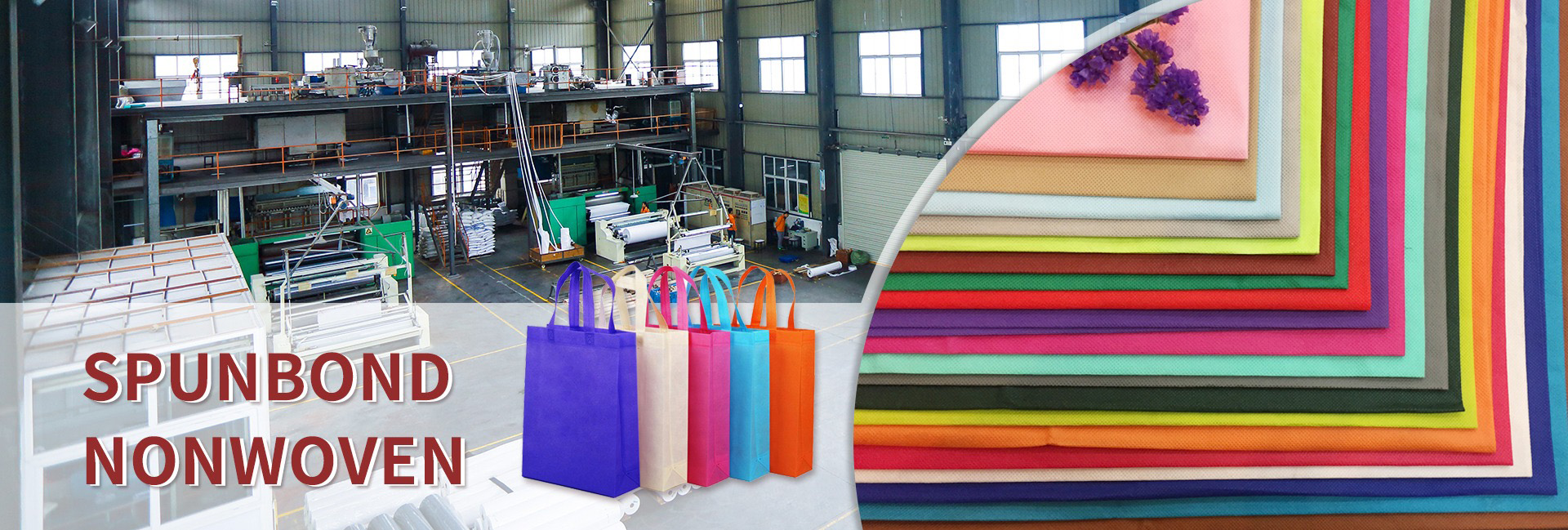
Dongguan Liansheng Non woven Technology Co., Ltd. was established in May 2020. It is a large-scale non-woven fabric production enterprise integrating research and development, production, and sales. It can produce various colors of PP spunbond non-woven fabrics with a width of less than 3.2 meters from 9 grams to 300 grams.
Post time: Jan-18-2026