
Traditional anti slip non-woven fabrics are often limited to disposable use scenarios due to issues such as decreased anti slip performance, coating detachment, and substrate deformation after washing, which not only increases usage costs but also brings environmental pressure. With the upgrading of green consumption concepts and the increasing demand for multi scenario reuse, reusable anti slip non-woven fabrics have become the focus of industry research and development.
In recent years, multiple technological breakthroughs in material modification, coating processes, and composite structure design have successfully resolved the core contradiction between “water washing durability” and “anti slip stability”, promoting their transformation from disposable products to recyclable materials, widely used in home, medical, industrial and other fields. This article will delve into the key technological breakthroughs that support this transformation, as well as the performance upgrades and application expansions it brings.
Traditional pain point: the core bottleneck that restricts the repeated washing of non slip non-woven fabrics
Before the maturity of reusable water washing technology, the durability shortcomings of non slip non-woven fabrics were mainly reflected in three aspects:
Firstly, the non slip coating was prone to failure. Traditional hot melt adhesive or ordinary water-based adhesive coatings were prone to viscosity reduction and coating peeling due to water molecule erosion during the water washing process, resulting in a sudden drop in anti slip performance. Usually, they cannot be used after 1-2 water washes;
Secondly, the substrate structure is unstable, and the bonding force between conventional non-woven fibers is weak. After washing, stretching and rubbing can easily cause fiber looseness, substrate deformation, and even tearing, making it difficult to maintain the original size and shape;
The third issue is poor functional synergy. Some products use PE film composite layers to enhance waterproofing, which can provide short-term waterproofing but can lead to loss of breathability. Additionally, after washing, the interlayer composite strength decreases, making it prone to delamination and warping. These pain points make it difficult for traditional anti slip non-woven fabrics to meet the reuse needs of repeated washing, limiting their application scenarios.
Core technological breakthrough: Building a dual guarantee of water washing durability and anti slip stability
The core of technological innovation in reusable water washed anti-skid non-woven fabric lies in the full chain innovation of “material upgrading coating modification process optimization”, achieving the goal of “high retention rate of anti-skid performance after water washing, stable substrate morphology, and long-lasting function”. At present, the key technological breakthroughs that have achieved large-scale applications mainly focus on three dimensions:
1. Substrate reinforcement technology: Fiber modification and composite structure build a durable foundation
The substrate is the core carrier that determines the water washing durability of non-woven fabrics. Through fiber modification and multi-layer composite structure design, its tensile and deformation resistance can be greatly improved. In terms of fiber modification, “skin core composite fibers” are used instead of traditional single component fibers. The skin layer is made of low melting point polyester with a melting point of 110-135 ℃, and the core layer is made of high-strength polyester or polypropylene. After high-temperature melt spinning, more stable hot melt adhesive points are formed between the fibers, which are less likely to loosen after washing. At the same time, introducing 0.5% -1% antioxidants and UV stabilizers into the fibers can prevent oxidative aging during water washing and extend their service life.
In the design of composite structures, breaking through traditional single-layer or double-layer structures, adopting a three-layer or even five layer composite structure of “functional layer reinforcement layer anti slip layer”. The reinforcement layer is made of high-strength synthetic wire mesh or woven fabric, with a mesh design of 6-11mm quadrilateral. The transverse tensile strength can reach 40-60N/5cm, and the longitudinal tensile strength is 45-70N/5cm, which can effectively limit the displacement range of the upper and lower layers of fibers and reduce the risk of deformation and tearing after washing. For example, the SSMMS five layer composite substrate launched by Xinxin Company has achieved significant improvements in waterproofing, breathability, and tensile strength compared to the traditional SMS three-layer structure. After 5 standard water washes, the retention rate of tensile fracture strength still exceeds 85%.
2. Anti slip coating modification technology: water-resistant adhesive system solves the problem of detachment
The water resistance of anti slip coatings is the key to determining the value of product reuse, and the latest technological breakthroughs are focused on two directions: “research and development of cross-linked adhesives” and “reinforcement with composite anti slip particles”. In the adhesive system, traditional easily hydrolyzed ordinary water-based adhesives are abandoned, and “polyurethane acrylic cross-linked copolymer adhesive” or “silicone modified water-based adhesive” is used. By introducing cross-linking agents to form a three-dimensional network molecular structure, the water resistance and adhesion of the coating are greatly improved. This type of adhesive is not easily penetrated and dissolved by water molecules during the water washing process, and can still maintain stable viscosity and friction coefficient after more than 10 machine washes.
In terms of anti slip particle reinforcement, the innovation adopts the “dual anti slip particle embedding” technology, which fixes silica or polyurethane anti slip particles in the coating through a dual method of hot melt bonding and mechanical fitting. The top of the upper anti slip particles passes through the surface of the substrate to form protrusions, enhancing the mechanical interlocking force with the contact interface; The lower anti slip particles are fixed to the bottom coating to enhance the anti slip stability of the contact surface, while preventing particle detachment through a fixing mechanism. In addition, adding 2% -5% polyisobutene adhesive masterbatch to the coating can further improve the washability and flexibility of the coating. After testing, the coating using this technology showed no significant decrease in anti slip performance after being machine washed three times at a water temperature of 30 ℃, and the wet friction coefficient remained at a safe value of 0.6 or above.
3. Optimization of composite molding process: precise control to enhance interlayer bonding strength
In terms of production process, the “precise temperature control composite” and “gradient curing” technologies are used to enhance the bonding strength between the substrate, coating, and various composite layers, avoiding delamination after water washing. In the composite process, a hot melt adhesive laminating machine is used to evenly spray the hot melt adhesive in a mist form, with a coating thickness controlled at 20-30 μ m. Then, precise pressure of 2-6kg/cm ² is applied for composite molding to ensure tight adhesion between layers. In the curing process, a gradient heating and drying process of 60-120 ℃ is adopted. The moisture is removed at low temperature first, and then the cross-linking reaction of the adhesive is promoted at high temperature to avoid coating foaming or interlayer peeling caused by rapid heating.
In response to special scenario requirements, a “hydrophobic hydrophilic synergistic coating process” has also been developed, which constructs nanoscale hydrophobic textures on the coating surface to reduce water infiltration during water washing, while retaining an appropriate amount of hydrophilic groups at the bottom layer to improve the drying speed after water washing and avoid mold growth. The coating prepared by this process has a static contact angle of over 110 ° and excellent hydrophobicity and washability, making it suitable for reuse in humid environments such as bathrooms and kitchens.
Performance verification and application expansion: the practical value of technological breakthroughs landing
1. Core performance verification standards
The performance verification of reusable water washed anti-skid non-woven fabric is mainly based on relevant standards such as GB/T 24218, with a focus on testing the anti-skid performance, physical strength, and appearance stability after water washing. The core validation indicators include: after 3-10 standard machine washes (at a water temperature of 30 ℃, using conventional washing procedures), the wet friction coefficient is ≥ 0.6 and the dry friction coefficient is ≥ 0.7; The retention rate of tensile fracture strength is ≥ 80%, the tear strength is ≥ 10N; there is no obvious delamination, delamination, pilling or deformation, and the size change rate is ≤ 3%. Some high-end products also need to pass the Martindale abrasion test, with no surface damage after 100 rubs.
2. Comprehensive expansion of application scenarios
Technological breakthroughs have pushed the application scenarios of reusable water washable anti slip non-woven fabrics to extend from traditional disposable fields to multi scenario reuse: in the medical field, surgical gown cuffs and rehabilitation equipment liners used for reusable disinfection can still maintain stable anti slip performance and biocompatibility after sterilization with ethylene oxide and multiple water washings; In the home field, as washable anti slip floor mats, dining table mats, and pet mats, they can be repeatedly cleaned and used, reducing both usage costs and environmental pressure; In the industrial field, it is used for washable slope conveying anti-skid pads and equipment protective covers, which can withstand industrial cleaning and friction and improve reuse economy. Among them, Xinxin Company uses domestically produced new anti slip adhesive to prepare washable anti slip shoe covers. Although the unit price is three times that of conventional products, it can be reused more than 5 times, reducing the comprehensive use cost by 40% and becoming an export star product.
Development trend: Multi functional integration and green upgrading
In the future, the technological development of reusable water washed anti-skid non-woven fabrics will move towards “multifunctional integration” and “full lifecycle greening”. In terms of functional integration, the anti slip and water-resistant performance is combined with antibacterial, antiviral, self-cleaning and other functions. For example, adding silver ion antibacterial agents to the coating can achieve a bacteriostatic rate of over 99% even after washing; Introducing nano hydrophobic self-cleaning technology to reduce water washing frequency and further enhance durability.
In terms of greening, research and development of biodegradable biobased composite fibers (such as polylactic acid fibers) and water-based biodegradable adhesives can achieve natural degradation of products after disposal, reducing environmental burden. At the same time, by optimizing production processes, energy consumption and pollutant emissions can be reduced, promoting the green upgrading of the entire industrial chain.
Conclusion
The breakthrough in durability technology of reusable water washable anti slip non-woven fabric not only solves the bottleneck of traditional product reuse, but also promotes the transformation of anti slip non-woven fabric from “disposable consumables” to “recycled materials”, which meets the needs of green development and efficient utilization in the era.
From substrate reinforcement, coating modification to process optimization, every technological innovation revolves around the core goals of “washable durability” and “anti slip stability”, achieving a dual improvement in performance and value. With the continuous iteration of technology and the gradual reduction of costs, reusable water washed anti-skid non-woven fabrics will replace traditional materials in more fields, bringing more efficient and environmentally friendly anti-skid solutions to the consumer market and industrial sector.
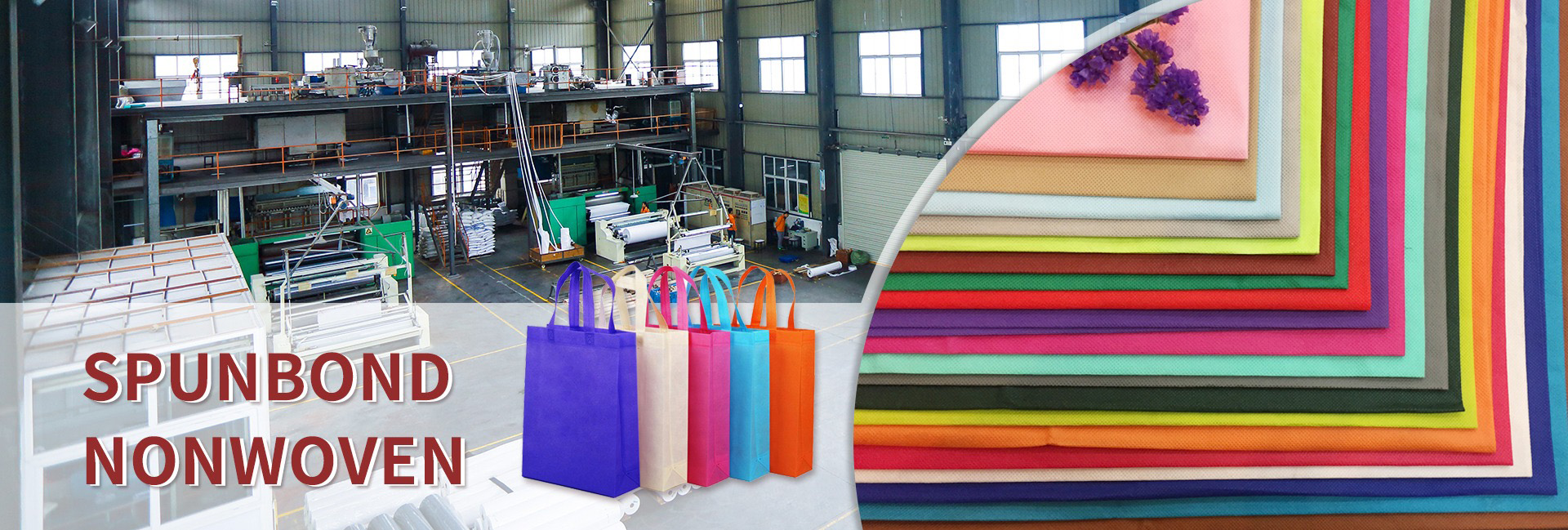
Dongguan Liansheng Non woven Technology Co., Ltd. was established in May 2020. It is a large-scale non-woven fabric production enterprise integrating research and development, production, and sales. It can produce various colors of PP spunbond non-woven fabrics with a width of less than 3.2 meters from 9 grams to 300 grams.
Post time: Jan-02-2026