
Roof waterproofing is the top priority for building maintenance, but many homeowners have experienced the problem of leaking, bulging, and cracking in less than 3-5 years after spending a lot of money on it. Repeated repairs only treat the symptoms without addressing the root cause, which not only consumes a lot of time and money, but also damages the interior decoration and affects the living experience. According to the statistics of the National Construction Quality Supervision and Inspection Center, the average actual service life of waterproof engineering with standardized construction and authentic materials is only 6-8 years.
The “short life” problem of traditional waterproof rolls has become a concern for many families and construction companies. In fact, the key to solving this dilemma lies in a kind of “invisible armor” – anti-aging non woven fabric, which can make the service life of waterproof coiled materials directly break through the 10 year mark, and solve the pain point of “annual repair, annual leakage” of roof waterproofing from the root.
The core reason why roof waterproofing membranes have a “short lifespan” is that they are exposed to complex outdoor environments for a long time. UV rays in sunlight, rainwater erosion, and repeated fluctuations in high and low temperatures can continuously damage the molecular structure of the membrane, leading to brittleness, cracking, aging, and ultimately losing their waterproof function. According to data from the China Building Waterproofing Association, 65% of newly constructed buildings in China experience leakage within 1-2 years, and 65% of waterproofing projects require renovation after 6-8 years.
Among them, 80% of leakage problems are related to the aging and failure of waterproofing membranes. Most of the traditional waterproof coiled materials are not subject to professional anti-aging treatment, and only rely on their own coating to resist external erosion, which is naturally difficult to be durable. The anti-aging non-woven fabric builds a “invisible shield” for the waterproof roll through material modification and process upgrading, blocks the aging path, doubles the service life of the waterproof roll, and easily breaks through the 10-year mark.
Anti-aging non-woven fabric, why can the waterproof membrane “live long”?
The anti-aging non-woven fabric is not a direct replacement for the waterproof roll, but a “supporting protective layer” and “reinforcing layer” of the waterproof roll. Through “dual protection+structural strengthening”, it can delay the aging of the roll from the root and extend its service life. Its core advantages are concentrated in two aspects: raw material modification and process upgrading, perfectly adapting to the harsh outdoor use environment of roofs, and solving the aging pain points of traditional waterproofing.
First, raw materials are modified to build a solid foundation for anti-aging. The anti-aging non-woven fabric uses high-purity polypropylene (PP) modified raw materials, which completely solves the problem that ordinary non-woven fabrics are vulnerable to aging – ordinary polypropylene molecular chains contain tertiary carbon atoms that are extremely sensitive to ultraviolet radiation. Under outdoor ultraviolet radiation, it is very easy to have photodegradation reaction, resulting in molecular chain fracture, and then embrittlement and damage.
In the production process of anti-aging non-woven fabrics, anti-aging master batches and nano reinforced particles will be specially added to form a synergistic protection system of “UV absorption – UV reflection – free radical capture”. Among them, anti-aging masterbatch (such as hindered amine light stabilizer and ultraviolet absorber) can actively absorb harmful ultraviolet rays in the sun like “sunscreen”, transform high-energy ultraviolet light into harmless heat energy for dissipation, capture free radicals generated after ultraviolet radiation, interrupt chain oxidation reaction, prevent fiber molecules from being damaged, and delay aging at the root. Nano reinforced particles can further strengthen the fiber structure, enhance the tensile strength and wear resistance of non-woven fabrics, and even under wind and rain erosion and slight friction, they are not easily damaged or broken, providing solid protection for waterproofing membranes.
Secondly, upgrading the process enhances protection and adhesion. The anti-aging non-woven fabric adopts the spunbond needle punched composite process to make the fiber arrangement more compact and the structure more stable. At the same time, it has undergone high temperature setting and surface coating treatment to further improve the waterproof, antifouling and anti-aging capabilities. Surface coating can form a dense protective film on the surface of non-woven fabric, preventing rainwater infiltration and dust adhesion, avoiding fiber swelling and discoloration after absorbing water, and blocking direct ultraviolet radiation from the waterproof membrane below.
The high-temperature shaping process makes the size of non-woven fabric more stable, even in environments with repeated fluctuations in high and low temperatures, it will not shrink or deform, ensuring a tight fit with the waterproof membrane without hollowing or falling off, and avoiding rainwater from seeping into the gaps and damaging the waterproof system. In addition, high-quality anti-aging non-woven fabrics will also undergo strict UV aging test, simulating outdoor exposure environment for 1000 hours continuously, to ensure that its weather resistance meets the standard, can withstand the erosion of outdoor harsh environment for a long time, and protect the waterproof roll.
Three scenarios witness the “protective power” of anti-aging non-woven fabrics
At present, anti-aging non-woven fabrics have been widely used in various scenarios such as residential roofs, industrial factory roofs, and old residential quarters’ waterproof renovation. With excellent anti-aging performance, the service life of waterproof coiled materials has broken through the 10 year mark. After being tested and verified by many projects, the effect is remarkable, and the status quo of traditional waterproof “short-lived” has been thoroughly changed.
Scenario 1: Residential roof waterproofing, bidding farewell to “annual repair”
Residential roofs (especially flat roofs) are a high-risk area for waterproofing. If exposed to sunlight and rainwater for a long time, traditional waterproofing membranes will become brittle, crack, and leak after 3-5 years of use. The use of anti-aging non-woven fabrics as the protective layer and reinforcement layer of waterproof coiled materials can effectively extend the service life of coiled materials. In the construction of residential roof, anti-aging non-woven fabrics will be laid on the surface of waterproof coiled materials, which can not only prevent ultraviolet rays from directly irradiating the coiled materials, but also resist rain wash and external friction. At the same time, it has good permeability, which can avoid moisture under the coiled materials and prevent the coiled materials from bulging and falling off.
Taking the roof waterproofing renovation project of a residential area as an example, the original roof waterproofing of the residential area uses traditional SBS asphalt coiled material, which has experienced a large area of leakage after only four years of use. Later, the composite waterproofing system of “anti-aging non-woven fabric+waterproof coiled material” was adopted. After six years of outdoor tests after construction, the waterproof coiled material is still intact, free of cracks and leakage, and its service life is more than twice longer than before. It is expected to be stable for 12-15 years. Owners have provided feedback that since the renovation, there have been no more issues with roof leaks, saving the trouble and cost of repeated repairs.
Scenario 2: Industrial factory roof, resistant to extreme environmental tests
The roof area of industrial plants is large and the usage environment is more demanding. They not only have to withstand sunlight exposure and rainwater erosion, but also have to deal with problems such as high temperature, acid and alkali corrosion, and have higher requirements for the weather resistance of waterproofing membranes. Traditional waterproofing membranes often age and fail within 2-3 years in this environment, causing rainwater to leak into the workshop, damaging equipment and affecting production. The simple roof of a mechanical processing plant in Weifang used white label non asphalt based rolls in 2022. However, in the summer of 2023, there were large-scale cracks, and rainwater leaked into the workshop through the cracks, causing several machine tools to be damaged by water ingress. The repair cost was 120000 yuan, which also delayed production progress and resulted in losses of nearly one million yuan.
The anti-aging non-woven fabric and polymer waterproof roll can effectively resist the erosion of extreme environment. The anti-aging non-woven fabric has acid and alkali resistance and high temperature resistance, which can protect the waterproof coiled material from the damage of industrial waste gas and high temperature. At the same time, its excellent tensile strength can adapt to the thermal expansion and cold contraction of the factory roof, and prevent the coiled material from cracking due to deformation. After adopting this composite system on the roof of a certain mechanical processing plant, there have been no leakage or aging problems after 8 years of use. The waterproof membrane is intact and the expected service life can exceed 15 years, greatly reducing the maintenance cost and production loss of the plant.
Scenario 3: Waterproof renovation of old residential areas, saving time, effort, and durability
The problem of aging waterproofing on the roofs of old residential areas is prominent, and renovation construction is limited by factors such as site and residents, requiring convenient construction and strong durability. Most of the traditional renovation methods are just re laying waterproof coiled materials, ignoring anti-aging protection, resulting in leakage after renovation within a few years. The renovation project of an old residential area in Qingdao used white label non asphalt base roll materials. During construction, it was found that the roll materials were not firmly bonded to the base layer, and local hollows appeared immediately after laying. Residents complained continuously, and in the end, all of them had to be removed and rebuilt, which not only delayed the construction period but also increased costs.
The anti-aging non-woven fabric is light in weight, convenient in construction, and can be directly laid on the surface of the original waterproof membrane (or used with new membrane) without complex tools, which can not only play a protective role, but also save construction time and cost. The roof waterproofing renovation project of an old residential area adopted the construction scheme of anti-aging non-woven fabrics with waterproof coiled materials, and completed the roof waterproofing renovation of 12 buildings in only 20 days. Zero complaints passed the acceptance, and the construction efficiency was increased by 40% compared with the traditional way. After 5 years of use after renovation, the waterproof effect is still good, completely solving the problem of roof leakage in old residential areas. The lifespan of the waterproof membrane has exceeded 10 years, saving homeowners the trouble of repeated repairs.
Choose and use correctly to double the lifespan of waterproofing membranes
In order to make the service life of waterproof coiled material truly break through the 10 year mark, in addition to selecting anti-aging non-woven fabric as the protective layer, it is also important to select the right product and standardize the construction. These two details directly determine the durability of the waterproof system, to avoid the situation of “the right material, but the effect is not good”.
In terms of product selection, we should first recognize the “anti-aging” logo, give priority to anti-aging non-woven fabrics marked with “weather resistance ≥ 10 years” and “UV resistance grade UPF50+”, and avoid purchasing “pseudo anti-aging” products; Secondly, check the raw materials and test reports of the products, and give priority to the products that use high-purity modified polypropylene raw materials and add special anti-aging masterbatch.
The tensile strength should be above 2.0MPa, and the anti-aging test should be more than 3000 hours, meeting the requirements of the national standard to ensure that the anti-aging performance can meet the standards. At the same time, the matched waterproof coiled material should be compatible with the anti-aging non-woven fabric. Polymer waterproof coiled material (such as EPDM, TPO coiled material) is preferred, which has better tensile strength and weather resistance. When matched with the anti-aging non-woven fabric, the protective effect of “1+1>2″ can be achieved, and the service life can exceed 15 years.
Three points need to be paid attention to in construction and later maintenance: first, ensure that the base course is flat and dry during construction to avoid hollowing and falling off of coiled materials due to moisture in the base course; anti-aging non-woven fabrics and waterproof coiled materials need to be closely bonded, with the lap width not less than 10cm; additional layers need to be made at key nodes (such as internal and external corners, pipe roots, and water outlets) to improve the protection effect; Second, avoid construction in high temperature and rainstorm weather.
High temperature will cause softening and deformation of coiled materials, and rainstorm will affect the fitting degree of non-woven fabrics and coiled materials, reducing the waterproof effect; Thirdly, regular maintenance should be carried out in the later stage. The roof waterproofing should be inspected every 5 years, and surface dust and debris should be cleaned to avoid scratching non-woven fabrics and rolls with sharp objects. Minor damages should be repaired in a timely manner to further extend the service life of the waterproofing rolls.
To sum up, the “longevity code” of roof waterproofing is hidden in the “invisible armor” of anti-aging non-woven fabric. It is not ostentatious or conspicuous, but with the dual advantages of raw material modification and process upgrading, it can resist the erosion of ultraviolet rays, rainwater, and high and low temperatures for waterproofing membranes, delay aging from the root, and break the 10-year mark for the lifespan of waterproofing membranes, completely solving the pain point of “annual repair and leakage” in roof waterproofing. Whether it is the waterproof construction of new buildings or the waterproof renovation of old residential areas, the anti-aging non-woven fabric is selected as the protective layer, which can not only save the trouble and cost of repeated maintenance, but also make the roof waterproof stable for a long time, truly realize “one time construction, ten years of worry free”, and build a waterproof defense line for the house.
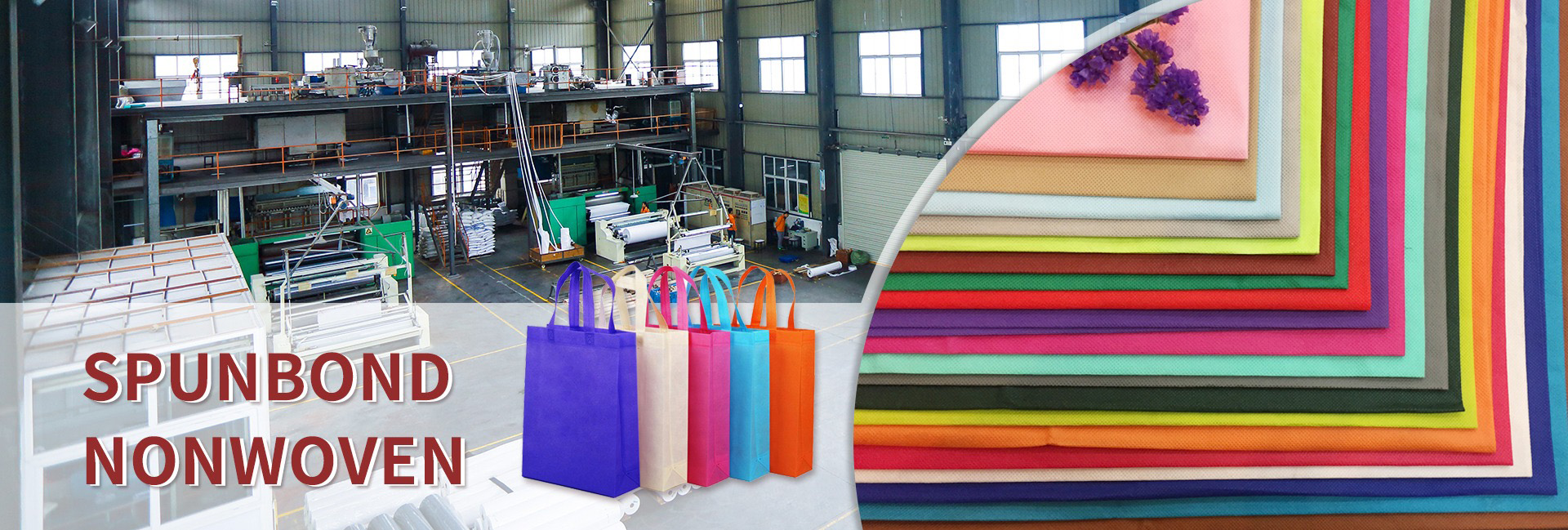
Dongguan Liansheng Non woven Technology Co., Ltd. was established in May 2020. It is a large-scale non-woven fabric production enterprise integrating research and development, production, and sales. It can produce various colors of PP spunbond non-woven fabrics with a width of less than 3.2 meters from 9 grams to 300 grams.
Post time: May-06-2026