
The anti slip effect of non slip non-woven fabric is not a one size fits all solution. Its performance is highly dependent on the usage environment – humidity directly affects the stability of coating adhesion and friction coefficient, while the slope angle and material determine the required fixed strength and adhesion requirements for anti slip.
Whether it’s the balcony slope at home, the damp countertop in the kitchen, the slope rehabilitation equipment in the medical field, or the slope conveyor in industrial scenes, only by accurately matching materials according to the “humidity level” and “slope parameters” can the anti slip effect be maximized. This article will start with the analysis of environmental variables and provide selection strategies and practical suggestions for different scenarios.
Clarify two key environmental variables
Before making a purchase, it is necessary to accurately determine the core parameters of the usage environment to avoid blind selection:
1. Definition of humidity level
Divided into three categories based on environmental humidity:
① Dry environment (relative humidity ≤ 50%): such as living room, bedroom, dry workshop, without obvious water vapor or liquid contact;
② Damp environment (relative humidity 50% -80%, or occasional contact with liquids): such as kitchens, bathroom exteriors, semi outdoor balconies, with small amounts of water stains, sweat, or condensation;
③ High humidity environment (relative humidity ≥ 80%, or long-term contact with liquids): such as the shower area in the bathroom, around the swimming pool, and next to the dishwasher, the contact surface is easily soaked by water or has flowing water stains.
2. Slope environmental parameters
Core focus points: ① Slope angle: gentle slope (≤ 15 °), medium slope (15 ° -30 °), steep slope (>30 °); ② Slope material: Smooth material (such as glass, polished tiles, stainless steel), rough material (such as frosted tiles, cement surface, wooden board). In addition, it is necessary to synchronously confirm the weight and activity frequency of the objects in contact (such as the placement of lightweight items vs. human trampling, high-frequency activities vs. static placement).
Selection strategy for humidity scenarios: focus on “friction coefficient stability”
1. Dry environment: prioritize both slip resistance and breathability
In dry environments, the core requirement for non slip non-woven fabrics is a “stable dry friction coefficient”, without excessive pursuit of waterproof performance. It is important to focus on adhesion and breathability to avoid bacterial growth or stuffiness during use.
Selection points: ① Coating type: Priority should be given to water-based adhesive coatings with micro nano rough texture, dry friction coefficient ≥ 0.7 (national safety value), good adhesion and no irritation;
② Substrate characteristics: Choose thin non-woven fabric with a weight of 20-40g/㎡, balancing breathability and flexibility, suitable for flat or slightly curved dry slopes (such as bookshelf shelves, wardrobe drawer walls);
③ Scenario adaptation: If used in dry environments such as clothing, seats, etc. that come into contact with the skin, additional confirmation of “low sensitivity certification” is required; If used for industrial dry slope conveying, point coated non-woven fabric with hot melt adhesive coating can be selected to enhance wear resistance while retaining breathability.
The core focuses on the dual performance of “hydrophobic+wet anti-skid”
The key risk of a humid environment is the sudden drop in friction coefficient caused by water stains. Therefore, the material needs to have both “hydrophobic and impermeable” and “wet anti-skid stability” characteristics to avoid water stains forming a water film on the contact surface.
Key points for selection:
① Core parameters: Attention must be paid to the “wet friction coefficient”, which should be ≥ 0.6 (recommended value by the national standard), and products labeled with “wet anti-skid certification” should be prioritized;
② Coating structure: The preferred composite coating is a combination of a hydrophobic surface layer and a water absorbing bottom layer. The surface layer repels a large amount of water stains, while the bottom layer quickly absorbs residual moisture to avoid the formation of water films (such as anti slip pads for kitchen countertops and bathroom doorways);
③ Adhesive type: using water-resistant water-based adhesive or silicone adhesive to avoid viscosity attenuation and detachment when in contact with water;
④ Material avoidance: Do not choose completely waterproof coatings with smooth surfaces (such as pure PVC composite layers), as these materials are prone to slipping when wet; Do not choose thick, non breathable materials to avoid mold growth in humid environments.
Strengthen “water-resistant fixation+wear-resistant and corrosion-resistant”
In a high humidity environment, the contact surface is soaked in water for a long time. Non slip non-woven fabric not only needs to be stable and slip resistant, but also needs to have the properties of corrosion resistance and long-term fixation without falling off, especially to avoid coating failure due to water bubbles.
Key points for selection:
① Coating material: Priority should be given to water-resistant polymer coatings (such as polyurethane and fluorocarbon modified coatings), which are resistant to water bubbles, corrosion, and can maintain a stable friction coefficient even after long-term immersion;
② Fixed method: For steep slopes or high-frequency activity scenes (such as shower area slopes, pool perimeter slopes), choose a composite anti slip non-woven fabric with “back glue+physical fixation” (such as edge buckle or Velcro styles) to avoid simple back glue failure due to long-term immersion in water;
③ Structural design: Adopting a mesh or striped coating to facilitate rapid drainage of water stains and reduce contact area with water; Choose reinforced non-woven fabric with high weight (40-60g/㎡) as the substrate to enhance wear resistance and tear resistance;
④ Safety certification: If used in medical high humidity scenarios (such as inclined instrument tables in operating rooms), additional confirmation of “ethylene oxide sterilization certification” and “biocompatibility report” is required.
Selection strategy for inclined surface environment: focus on “fixed strength and fit”
1. Gentle slope (≤ 15 °): Priority given to lightweight and highly adhesive materials
The gentle slope environment has lower requirements for anti slip strength, and the core requirement is to “fit the texture of the slope and avoid slight shaking causing displacement”, which is suitable for most daily or mild industrial scenarios.
Key points for selection:
① Coating thickness: Choose a thin coating (20-30 μ m) that can tightly adhere to the subtle bumps and depressions of the inclined surface, improving friction resistance;
② Coating method: For flat gentle slopes (such as balcony storage rack slopes), choose full surface coating, while for curved gentle slopes (such as cylindrical instrument surfaces), choose point coating or stripe coating, retaining flexibility;
③ Applicable scenarios: Home bookshelf shelves, kitchen seasoning rack slopes, medical mild slope rehabilitation pads, etc. can be directly selected with conventional anti slip non-woven fabric without additional reinforcement and fixation.
2. Mid slope (15 ° -30 °): Enhanced anti slip strength, suitable for moderate stress
In a medium slope environment, objects are prone to sliding due to gravity, and it is necessary to improve the anti slip strength of the material while ensuring adhesion and avoiding displacement caused by uneven local stress.
Key points for selection:
① Coating process: Choose cross-linked reinforced micro nano anti slip coating to enhance the bonding strength between the coating and the substrate, and avoid coating detachment during sliding;
② Adhesive strength: Medium strength water-based adhesive or hot melt adhesive. For dry environments, regular models can be selected, but for humid environments, it needs to be upgraded to water-resistant adhesive;
③ Structural optimization: For smooth slopes (such as polished ceramic tiles), choose coatings with deeper surface textures (texture depth ≥ 0.5mm) to enhance the mechanical interlocking effect; For rough slopes (such as cement slopes), choose a thicker substrate (weighing 40-50g/㎡) to avoid the substrate being punctured by the slope protrusions;
④ Applicable scenarios: Industrial conveying inclined platforms, home pet ladder inclined surfaces, medical moderate inclined surface orthotic liners, etc.
3. Steep slope (>30 °): Composite fixation+high wear resistance to cope with strong sliding tendency
In steep slope environments, the risk of sliding is extremely high, and relying solely on coating anti slip is difficult to meet the requirements. A composite solution of “coating anti slip+physical fixation” is needed to improve the wear resistance and tear resistance of the material.
Key points for selection:
① Core solution: Priority should be given to non slip non-woven fabrics with physical fixing structures (such as edge pressure strips, bottom anti slip nails, styles that can be fixed with holes), and stability should be enhanced through mechanical fixation;
② Coating upgrade: adopting wear-resistant anti slip coating (adding inorganic fillers such as silica and alumina) to improve surface hardness and friction coefficient, and cope with high-frequency friction or heavy pressure;
③ Substrate selection: High strength non-woven fabric with a weight of 60-80g/㎡ and a tear resistance of ≥ 5N to avoid damage during use;
④ Environmental adaptation: For dry steep slopes, hot melt adhesive composite physical fixation can be selected. For wet/high humidity steep slopes, water-resistant coatings and stainless steel physical fixation parts should be selected to avoid corrosion;
⑤ Applicable scenarios: Industrial steep slope conveyor lines, outdoor slope channels, medical heavy slope rehabilitation equipment fixation, etc.
Cross scenario general precautions: avoid product selection omissions
1. Prioritize reviewing the testing report: focus on confirming core parameters such as friction coefficient (dry/wet state), water resistance, and wear resistance to avoid purchasing inferior products without testing data;
2. Small sample testing: Before purchasing, take a sample and test it in an actual environment. If the slope is damp, wet the sample and push it to test the anti slip effect. If the slope is steep, place an object of corresponding weight to observe whether it has shifted;
3. Scene overlay adaptation: If you are in a complex environment such as “high humidity+steep slope” at the same time (such as steep slopes around a swimming pool), you need to choose the “more demanding scene”, which prioritizes meeting the water resistance requirements of high humidity and the composite fixation requirements of steep slopes;
4. Safety compliance: Sterility certification and biocompatibility need to be confirmed in medical scenarios, and food grade safety certification needs to be confirmed in food contact scenarios (such as kitchen countertops) to avoid the migration of harmful substances.
The core logic of selection – “Matching environmental parameters with material properties”
The selection of anti slip non-woven fabrics in different humidity and inclined environments is essentially a precise match between environmental requirements and material properties: dry environments require breathable bonding, while humid/high humidity environments require anti slip and water resistance in a heavy wet state;
Gentle slopes have strong adhesion, medium slopes have enhanced anti slip strength, and steep slopes rely on composite fixation. There is no need to blindly pursue the “best overall performance”, but to select the coating type, adhesive strength, and fixing method based on core parameters such as humidity level, slope angle, and contact material, and then verify them through small sample testing to ensure stable and reliable anti slip effect while controlling usage costs.
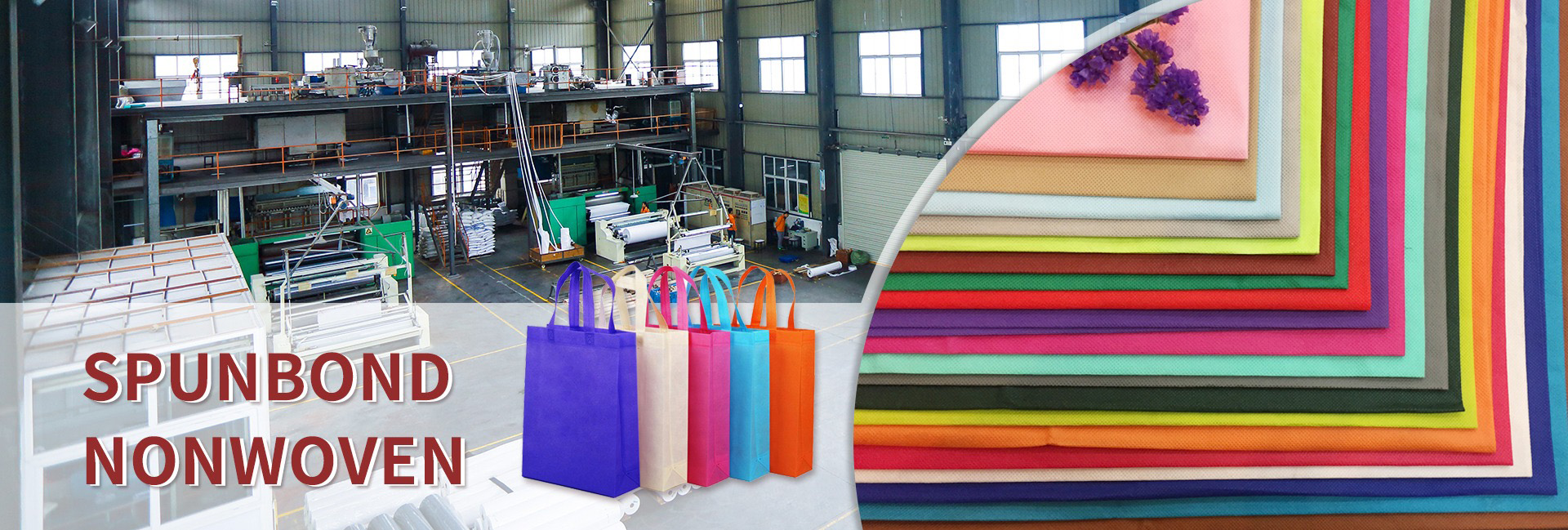
Dongguan Liansheng Non woven Technology Co., Ltd. was established in May 2020. It is a large-scale non-woven fabric production enterprise integrating research and development, production, and sales. It can produce various colors of PP spunbond non-woven fabrics with a width of less than 3.2 meters from 9 grams to 300 grams.
Post time: Jan-04-2026