
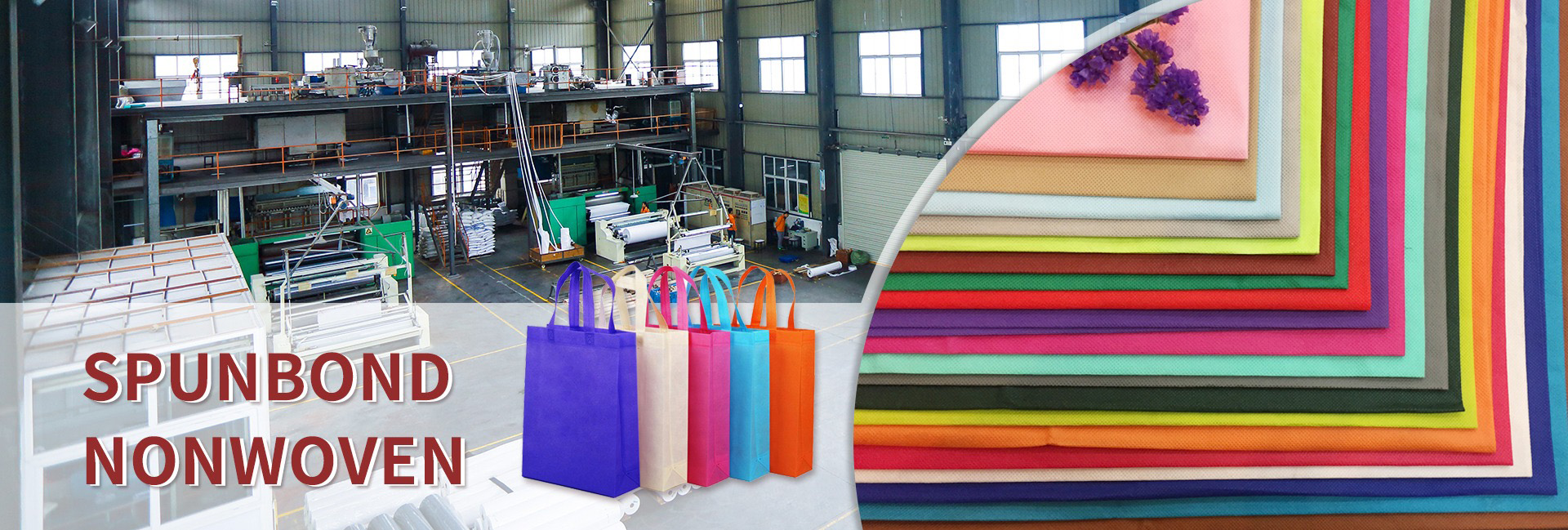
Aging pain points and protection requirements of spunbond nonwoven fabrics
Spunbond non-woven fabric (mainly made of PP) is prone to aging and failure in outdoor and high-temperature environments, with core causes including:
1. UV erosion: Ultraviolet radiation in the 280-400nm wavelength range directly causes polymer molecular chain breakage, leading to material brittleness and yellowing (such as a strength decrease of more than 30% in non-woven fabrics for car interiors after 5 years);
2. Oxidative degradation: The processing process (melt blending at 240-250 ℃) and the presence of oxygen in the usage environment can accelerate free radical chain reactions and damage the integrity of the fiber structure;
3. Synergistic aging effect: UV irradiation promotes the rate of oxidation reaction, and the oxidation products enhance the material’s sensitivity to UV absorption, forming a vicious cycle.
It is difficult to solve this problem with a single anti-aging agent: although UV absorbers can shield ultraviolet rays, they cannot inhibit the generated free radicals; Antioxidants can scavenge free radicals, but they have no protective effect against ultraviolet radiation, making their synergy an inevitable choice.
The mechanism of action of core additives: each performing its own duties as a “protective guard”
1.UV Absorbent: The “Interceptor” of Ultraviolet Radiation
Working principle: By absorbing ultraviolet energy through the conjugated system in the molecular structure, it is converted into harmless thermal energy and released, avoiding the penetration of ultraviolet light into the fiber and damaging the molecular chain;
Mainstream types and characteristics:
Benzotriazole (such as UV-1, UV-2): 280-400nm wide band protection, absorption rate>98%, suitable for general raw materials such as PP, with an addition amount of only 0.1-0.3%;
Benzophenones: Excellent stability in UV resistant dispersions, firmly bonded to fibers after immersion and rolling treatment, suitable for spunbond finishing processes;
Key indicators: Thermal stability (decomposition temperature>300 ℃) and compatibility with resin (no risk of migration and precipitation) are core requirements, such as UV-3 products that can withstand long-term use at 150 ℃.
2.Antioxidants: the “scavengers” of free radicals
Working principle: It is divided into main antioxidants (such as aniline and antioxidant 1790) and auxiliary antioxidants (such as PEP-Q and hypophosphite). The main antioxidant terminates the free radical chain reaction by providing hydrogen atoms, while the auxiliary antioxidant decomposes hydrogen peroxide to prevent the generation of new free radicals;
Advantages of composite systems: Single antioxidants are prone to performance degradation, while composite systems (such as aniline+dibutyl hydroxytoluene) can be optimized through molecular dispersion to avoid performance degradation caused by antioxidant aggregation and significantly improve antioxidant persistence;
Application form: It can be made into anti-aging masterbatch (containing main antioxidant 0.1-0.2%+auxiliary antioxidant 0.1-0.2%), which is convenient for adding spunbond process and improving the mechanical strength of non-woven fabrics.
The core principle of synergy: 1+1>2 protection upgrade
1.Mechanism complementarity: blocking the entire chain of aging
UV absorber “front-end interception”: reduces the generation of free radicals caused by UV radiation, and lowers the probability of initiating oxidation reactions from the source. Experiments have shown that adding anti UV dispersion reduces the risk of PP molecular chain breakage by more than 60%;
Antioxidant “backend removal”: neutralizes a small amount of free radicals that are not completely blocked by UV absorbers, while decomposing hydrogen peroxide produced by photooxidation to avoid secondary aging;
Data evidence: After 1000 hours of xenon lamp aging test, the tensile strength retention rate of non-woven fabric treated with the collaborative system is greater than 90%, while the single additive system is only 65-75%.
2.Efficiency enhancement: Extend the service life of additives
Antioxidants can stabilize UV absorbers: UV irradiation can cause the UV absorbers to degrade themselves. Antioxidants reduce the photo oxidation loss of UV absorbers by removing free radicals, extending their effective protection period;
UV absorbers reduce antioxidant consumption: reduce the total amount of free radicals caused by UV radiation, lower the oxidation consumption rate of antioxidants, such as increasing the retention rate of antioxidant efficacy in composite systems by more than 30% compared to single use.
3.Process adaptation: Collaborative optimization of production logic
Collaborative application in spunbond process: using a combination of “melt blending+post finishing”, antioxidants are melted and extruded with PP particles to achieve internal antioxidant protection of fibers; UV absorbers adhere to the surface of fibers through immersion and rolling treatment, forming an external UV barrier;
Synergy of auxiliary ingredients: the combination of enhanced cellulose nanocrystals (such as fluorinated modified ones) and the synergistic system can further improve the breaking strength and anti-aging durability of non-woven fabrics. Compared with the system without addition, the service life of the system is extended by 2-3 times.
Practical application cases and technical parameter references
Key process parameters
• Melting and blending temperature: 240-250 ℃ (to ensure uniform dispersion of antioxidants and avoid thermal degradation);
• Dip rolling treatment: Soak in UV resistant dispersion solution for 2-2.5 hours to ensure that the fibers fully adsorb the absorbent;
• Stretch setting: Treat at 170-190 ℃ for 20-40s to improve the bonding strength between additives and fibers.
Application scenario verification
Agricultural covering materials: After being processed by a collaborative system, the outdoor service life is extended from 12 months to 36 months, and the tensile strength retention rate is greater than 85%;
Automotive interior: After 500 hours of QUV aging test, the yellowing index Δ YI is less than 3, solving the problem of long-term exposure to sunlight yellowing;
Medical protection: Stored in a humid and hot environment for 18 months without significant aging or failure, meeting long-term storage needs.
Technological development trends and optimization directions
1. Green upgrade: develop degradable anti-aging additives, give consideration to protection efficiency and environmental protection, and adapt to the demand for non-woven fabric recycling;
2. Multifunctional composite: combine anti-aging synergetic system with functions such as reinforcement and waterproof, such as synergetic formula of composite cellulose nanocrystals, while improving mechanical properties and durability;
3. Precise adaptation: Customize collaborative ratios for different application scenarios (high temperature, strong ultraviolet, humid heat), such as using a combination of UV-3 absorbers and heat-resistant antioxidants for high temperature scenarios.
Dongguan Liansheng Non woven Technology Co., Ltd. was established in May 2020. It is a large-scale non-woven fabric production enterprise integrating research and development, production, and sales. It can produce various colors of PP spunbond non-woven fabrics with a width of less than 3.2 meters from 9 grams to 300 grams.
Post time: Mar-10-2026