
Factors affecting textile aging
There are many factors that affect the aging of textiles, and the interactions between them are very complex. Therefore, current research on the aging mechanism and testing methods of textiles at home and abroad is not in-depth. The aging behavior of polypropylene geotextiles was studied using atmospheric natural aging, sand burial aging, and underwater aging. The polyurethane coated polyester canopy fabric was subjected to thermal aging treatment at different temperatures, and the mechanical properties of the fabric after thermal aging treatment were studied. Hot The influence of factors such as humidity, oxygen, and light on the aging process of textile materials was analyzed, and the storage conditions of special industrial textiles were studied. A comparative analysis of polyester coated fabrics before and after aging was conducted using infrared absorption spectroscopy, scanning electron microscopy, and other methods. The EDT (Energy Dispersal During Tearing) index was proposed to quantitatively evaluate the effect of thermal aging on the tearing performance of fabrics.
Main testing methods
As for the testing method of aging resistance or weather resistance of textiles, some standards have been formulated at home and abroad, such as ISO1419-1995, AATCC111-2009, AATCC186-2009, etc. There are FZ/To1008-2008, FZ/T75002-1993 in China. These test methods can be divided into two categories: one is to conduct anti-aging test directly in natural environment, the other is to conduct artificial accelerated aging by heating, humidifying, lighting and other methods, which is mainly the latter at present. The scope of application and main testing conditions of these methods are as follows.
(1) 1SO1419-1995 “Accelerated Aging Test for Rubber or Plastic Coated Fabrics”. Method A: The testing conditions are 100 ℃ for 16 hours, applicable to PVC coated fabrics, and the evaluation index is the mass loss of volatile compounds in the fabric. The method is classified as artificial accelerated aging; Method B (General Method), with testing conditions of 70 ℃, normal atmospheric pressure, and low oxygen concentration, aged for 168 hours or its multiples, applicable to various coated fabrics. The evaluation index is the comparison of the same index before and after aging, and the method is classified as artificial accelerated aging; Method C (tropical testing conditions): The testing conditions are aging for 168 hours or its multiples at 70 ℃ and 95% relative humidity, applicable to various coated fabrics, and the evaluation index is the comparison before and after aging of the same index. The method is classified as artificial accelerated aging; Method D: The testing conditions are 70 ℃ for 168 hours, applicable to nitrocellulose coated fabrics, and the evaluation indicators are appearance changes and cracks. The method is classified as artificial accelerated aging.
(2) AATCC111-2009 “Climate Resistance of Textiles: Sunlight and Climate Exposure”. Method A: The testing conditions are exposure to sunlight and natural environment; Method: Expose to natural light filtered through glass and without getting wet. The scope of application is: automotive fabrics, household decorative fabrics, photosensitive materials for clothing, and fabrics for roof structures. The evaluation indicators are the fracture strength, tear strength, swelling strength, and color difference comparison of the fabric before and after aging, and the method is classified as natural aging.
(3) AATCC169-2009 “Climate resistance of textiles: Exposure to silkworm arc lamps”. Method 1: Blackboard temperature is 77 ℃, relative humidity is 70%, exposed to sunlight for 90 minutes, alternating between 30 minutes of light and water spraying; Method 2: Blackboard temperature is 77 ℃, relative humidity is 70%, exposed to sunlight for 60 minutes, alternating dark periods of 60 minutes, without spraying water; Method 3: Blackboard temperature 77 ℃, relative humidity 27%, continuous exposure to sunlight without spraying water; Method 4: Blackboard temperature is 63 ℃, relative humidity is 50%, exposed to sunlight for 102 minutes, alternating between 18 minutes of light and water spraying. The scope of application is all kinds of textile materials, including coated fabrics and their products. The evaluation indicators are the percentage of residual strength, residual strength or color difference. The method is classified as artificial accelerated aging.
(4) AATCC186-2009 “Climate Resistance of Textiles: UV and Wet Exposure”. Using ultraviolet radiation with a wavelength range of 315-400nm and wet exposure. Scope of application: general application fabrics (outdoor furniture fabrics); Thermal shock application fabrics (used in construction sites and other places where thermal shock may occur); Fabric for external application of motor vehicles. The evaluation indicators are the bursting strength, breaking strength, and color difference changes of the fabric before and after aging, and the method is classified as artificial accelerated aging.
(5) ASTMD5427-2009 “Implementation Standard for Accelerated Aging of Inflatable Shock Absorbent Fabrics”. The testing methods include high and low temperature cycling aging, high temperature aging, high humidity aging, and ozone aging. The testing conditions for high and low temperature cyclic aging are divided into option A and option B, with a maximum temperature of 107 ℃ or 105 ℃ and a minimum temperature of -40 ℃ for 96 hours per cycle. The testing conditions for high temperature aging are divided into option A and option B, with option A being 120 ℃ for 336 hours and option B being 105 ℃ for 408 hours. The testing conditions for high humidity aging are divided into option A and option B, with option A being 80 ℃ for 95% relative humidity for 336 hours and option B being 70 ℃ for 95% relative humidity for 408 hours. The testing conditions for ozone aging are 40 ℃ for an atmosphere with a relative humidity of 65% and an ozone concentration of 50% for 60 minutes. The scope of application is for inflatable shock-absorbing fabrics, and the evaluation criteria are not clear. It needs to be used in conjunction with other standards. The method is classified as artificial accelerated aging.
(6) FZ/TO1008-2008 “Determination of Heat and Air Aging Resistance of Coated Fabrics”. The testing conditions, scope of application, and evaluation indicators are the same as ISO 1419, and the method classification is artificial accelerated aging.
(7) The test conditions for FZ/T75002-1993 “Light accelerated aging test method for coated fabrics” are a maximum blackboard temperature of 58 ℃ and a moderate effective relative humidity. The scope of application is various coated fabrics, and the evaluation index is the appearance change The comparison of indicators before and after aging is classified as artificial accelerated aging.
It can be seen from the above description that foreign countries have developed relatively perfect test methods for the anti-aging performance of textiles. For example, AATCC’s various test methods include natural light, arc light, ultraviolet light and other different exposure conditions. ASTMD5427 has considered the aging effect of ozone; China is relatively backward in this respect, mainly focusing on the evaluation of the impact of temperature and relative humidity on the aging performance of textiles is not comprehensive, so it is very necessary to improve and supplement the testing methods of anti-aging performance of textiles in China.
Existing problems
There are two problems in the existing testing methods for the anti-aging performance of textiles in China: one is that the simulation of factors affecting the anti-aging performance of textiles is not comprehensive enough, such as the lack of simulation of light radiation, climate impact, harmful gases in the atmosphere and other factors; The second issue is that the evaluation indicators are too single, only focusing on the numerical changes or color differences of macro indicators such as strength before and after the experiment, as well as other changes in appearance, lacking a micro level characterization method. Similar problems also exist in foreign standards.
In fact, the temperature fluctuation range of textiles in use, especially outdoors, is large. Therefore, new testing methods for anti-aging properties of textiles should be developed to simulate the extreme conditions of such temperature fluctuations. In addition, the anti-aging performance of textiles can be tested under the condition that the test atmosphere is simulated to contain trace sulfide, nitrogen oxide and other harmful gases.
The changes in the microstructure and molecular structure of textiles during the aging process are also factors that need to be considered in the development of testing methods in the future. According to research results, fibers such as cotton, wool, polyester, nylon, acrylic, and polypropylene will exhibit carbon based peaks in their infrared reflectance spectra under UV irradiation, and the content of carbon based groups in the fibers will increase with the prolongation of UV irradiation time. Therefore, it can be considered to use the change in carbon based content in fibers to characterize the degree of textile aging. The introduction of this index can describe the degree of aging of textiles from the molecular structure level, and improve the evaluation model of anti-aging properties of textiles.
Precautions
In order to further improve the testing method of anti-aging properties of textiles, the following work needs to be done well:
(1) By increasing light radiation, simulating extreme temperature fluctuations, and adding harmful gases such as sulfides and nitrogen oxides in the experimental atmosphere, the actual usage environment of textiles can be better simulated.
(2) The content change of Yuanji in the fiber or other quantitative indicators are introduced to improve the evaluation of the anti-aging properties of textiles.
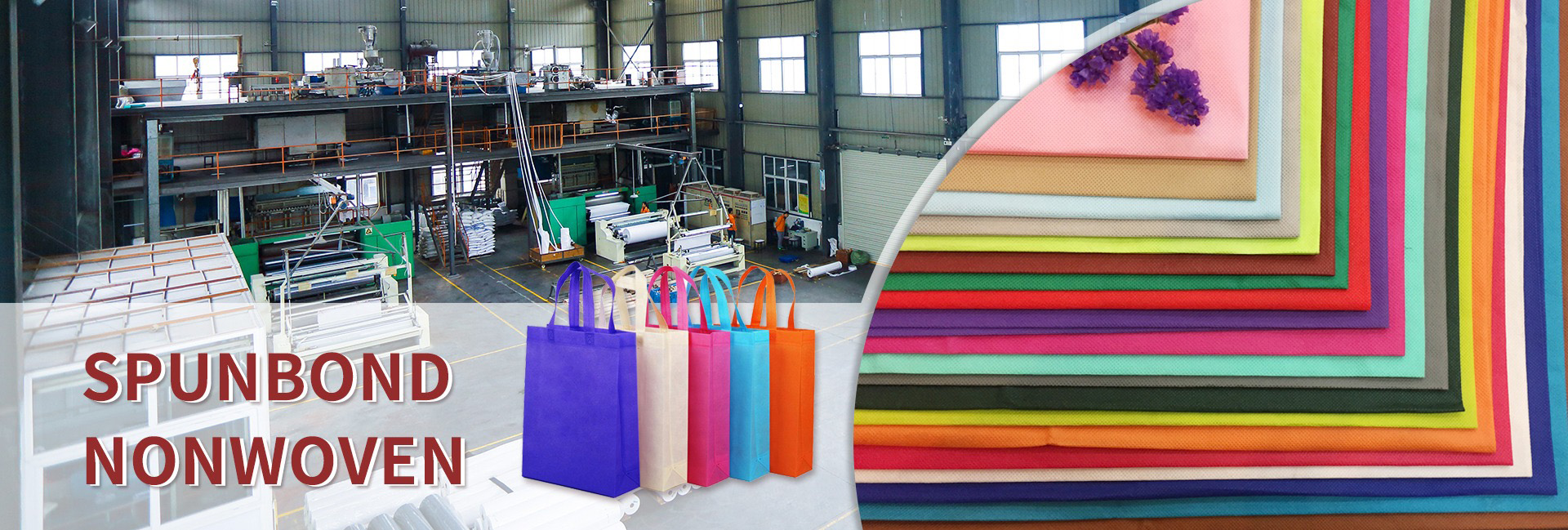
Dongguan Liansheng Non woven Technology Co., Ltd. was established in May 2020. It is a large-scale non-woven fabric production enterprise integrating research and development, production, and sales. It can produce various colors of PP spunbond non-woven fabrics with a width of less than 3.2 meters from 9 grams to 300 grams.
Post time: May-31-2025