
In the non-woven fabric industry, “feel” and “breathability” have always been the core indicators for measuring product quality – traditional petroleum based non-woven fabrics either have a rough touch or insufficient breathability, while natural fiber non-woven fabrics are prone to moisture and difficult to mass produce, making it difficult to balance the two. The emergence of PLA corn fiber non-woven fabric completely breaks this dilemma, reconstructing the tactile experience of non-woven fabric with the dual characteristics of “silky smoothness” and “cotton like breathability”, and sparking a tactile revolution covering multiple scenes. It not only continues the environmental advantages of bio based materials, but also achieves a leapfrog improvement in the user experience.
Silky touch: derived from the natural delicacy of fiber essence
The silky feel of PLA corn fiber non-woven fabric does not rely on post-processing softeners, but is deeply rooted in the structural characteristics of the fibers themselves, achieving a “naturally delicate” texture from the source. The touch is comparable to real silk, but more practical than real silk, suitable for the intimate use needs of various scenarios.
The core reason lies in the control of fiber morphology and fineness. PLA fibers can be precisely controlled in fineness through melt spinning technology. The fiber fineness commonly used in non-woven fabrics is only 1.0-2.5dtex, far exceeding traditional polyester fibers (3.0-5.0dtex), and can also be made into ultrafine fibers below 0.5dtex. The cross-section of ultrafine fibers is regular circular or elliptical, with a smooth surface without burrs or the rough texture of traditional fibers. When the fibers are interwoven to form non-woven fabric, they are tightly arranged but not stiff, with a delicate and smooth touch. When it fits the skin, there is no friction or itching, and even long-term contact will not cause skin discomfort.
In addition, the flexible nature of PLA molecular chains further enhances the silky feel. The presence of ester bonds in PLA molecules endows the molecular chains with a certain degree of flexibility. Compared to rigid polyester molecules, PLA molecular chains are more prone to slight deformation, allowing non-woven fabrics to better adhere to the contact surface when subjected to force, resulting in a smoother and more comfortable touch. At the same time, it has a certain degree of elastic recovery, is less prone to wrinkling and hardening, and can maintain a delicate touch even after long-term use. Experimental data shows that the friction coefficient of PLA corn fiber non-woven fabric is only 0.23, far lower than that of traditional polyester non-woven fabric (0.38), and the silk smoothness is improved by more than 40%.
Cotton breathable: Balancing refreshing and comfortable “breathing sensation” advantages
If the silky touch solves the pain point of “close fitting comfort”, then cotton breathable fabric overcomes the problem of “stuffiness and lack of breathability” in traditional non-woven fabrics – PLA corn fiber non-woven fabric not only continues the breathable and moisture absorbing characteristics of cotton fibers, but also avoids the defects of cotton fibers being prone to moisture and mold, achieving a dual effect of “breathability without stuffiness, moisture absorption and quick drying”.
Its breathability advantage comes from the precise matching of fiber structure and fabric pores. During the spinning and web forming process, PLA fibers can form a uniform porous structure by adjusting the spinning speed and web density. The pore size inside the non-woven fabric is moderate (pore size 0.5-5 μ m), which will not be too loose and cause structural instability, nor will it be too dense and hinder air circulation. Tests have shown that the air permeability of PLA corn fiber non-woven fabric can reach 250-350mm/s, far exceeding traditional polyester non-woven fabric (120-200mm/s) and comparable to pure cotton non-woven fabric. It can quickly achieve air circulation, reduce stuffiness, and is particularly suitable for close fitting use.
Meanwhile, the moisture absorption balance of PLA fibers gives it a cotton like dryness. Although PLA fibers themselves are hydrophobic, the ester bonds on the fiber surface can form weak hydrogen bonds with water molecules, which can quickly absorb sweat on the skin surface and conduct it to the non-woven fabric surface for evaporation, avoiding the sticky discomfort caused by sweat accumulation and achieving the effect of “moisture absorption and quick drying”. Compared to pure cotton non-woven fabric, PLA corn fiber non-woven fabric has a 30% increase in moisture absorption rate and a 50% increase in drying rate. It can not only maintain the skin friendly dryness of cotton fibers, but also avoid mold and odor problems caused by long-term moisture of pure cotton, making it suitable for humid environments or sweat prone scenes.
Craft Empowerment: Achieving Large Scale Implementation of “Silk Smooth+Breathable”
PLA corn fiber non-woven fabric can simultaneously possess silky and cotton like breathable characteristics, which cannot be achieved without the precise empowerment of web forming and post finishing processes. By optimizing process parameters, it not only retains the natural advantages of the fibers themselves, but also maximizes the tactile and breathable performance of the fabric, achieving the dual goals of large-scale production and stable quality.
In terms of web forming technology, the mainstream methods are spunbond meltblown composite technology and hydrojet technology. The spunbond meltblown composite process can accurately control the interweaving density of fibers, forming a double-layer structure of “smooth outer layer and breathable inner layer”. The outer layer is made of ultra-fine PLA fibers to enhance the smoothness, and the inner layer retains an appropriate amount of pores to enhance breathability, suitable for products such as masks and nursing pads; The spunlace process entangles the fibers through high pressure water flow without the use of adhesive, which can not only retain the natural fineness of the fibers, but also form a uniform porous structure, giving consideration to the silky touch and breathability, and is suitable for making facial mask cloth, makeup remover cotton and other personal beauty and care products.
In the post finishing process, traditional chemical additives such as softeners and fluorescent agents are abandoned, and physical modification is used to optimize the hand feel – through low-temperature heat setting treatment, the elasticity and smoothness of fibers are improved, while retaining the pore structure of the fabric, avoiding chemical additives from blocking pores and affecting breathability. This not only ensures the environmental friendliness of the product, but also makes the silky and breathable characteristics more stable. In addition, through the blending process of PLA with cotton fiber and bamboo pulp adhesive, the tactile sensation can be further optimized, achieving an advanced experience of “silky smooth with cotton softness” and adapting to more scene requirements.
Touch Revolution: Unlocking Multi Scene Experience Upgrades
The dual advantages of “silky and breathable” PLA corn fiber non-woven fabric have broken the limitations of traditional non-woven fabric usage, achieving comprehensive implementation in beauty, maternal and child care, medical, close fitting clothing and other fields, promoting the upgrading of tactile experience in various scenarios, and becoming the core choice to replace traditional non-woven fabric.
In the beauty field, the facial mask cloth and makeup remover cotton made of PLA corn fiber non-woven fabric fit the skin texture with a silky touch, without a pulling feeling, which can better carry the ingredients of skin care products, improve the absorption efficiency, and at the same time, it is breathable and not stuffy, so as to avoid stuffy heat and discomfort when applying the film, and it is suitable for people with sensitive muscles; In the field of mother and baby products, the surface layer of diapers, wet wipes and other products use PLA non-woven fabric, which has a silky touch and reduces friction on the delicate skin of babies. Its breathable and moisture absorbing properties prevent stuffiness and redness of the buttocks, and its environmentally friendly advantages of no chemical residues are more in line with the safety needs of mother and baby products; In the medical field, surgical gowns, nursing pads and other products combine silky and skin friendly properties with breathable and refreshing features, reducing discomfort for medical staff and patients who wear them for a long time. At the same time, their natural antibacterial and biodegradable properties are in line with the concept of green medicine; In the field of close fitting clothing, the underwear lining and socks made of PLA non-woven fabric are silky, non stick to the skin, breathable and sweat free, solving the pain points of traditional non-woven underwear’s roughness and stuffiness, and improving wearing comfort.
Compared to traditional petroleum based non-woven fabrics, PLA corn fiber non-woven fabrics not only achieve compaction in texture, but also have additional advantages of biodegradability and environmental friendliness; Compared to natural cotton non-woven fabric, it is easier to mass produce, less prone to mold, and balances practicality and user experience. This combination of “environmental protection+high-quality touch” completely breaks the inherent cognition that “environmentally friendly materials must sacrifice experience”, and promotes the transformation of the non-woven fabric industry from “functional satisfaction” to “experience upgrading”.
Conclusion: Using the power of fibers to reconstruct a new standard for tactile sensation
The tactile revolution of PLA corn fiber non-woven fabric is essentially the perfect integration of bio based materials and process technology – from corn particles in farmland, to delicate and silky fibers, and then to breathable and comfortable non-woven fabric, each step balances natural advantages and technological empowerment, achieving environmental value while reconstructing the tactile standards of non-woven fabric.
With the continuous optimization of spinning and web forming technology, the tactile performance of PLA corn fiber non-woven fabric will be further upgraded. In the future, precise control of silk smoothness and breathability can be achieved through fiber modification and process iteration to meet the needs of more high-end scenarios. This tactile revolution led by PLA corn fiber not only changes the development pattern of the non-woven fabric industry, but also allows environmentally friendly materials to truly enter daily life, realizing the dual value of “originating from nature, comfortable adaptation, and returning to nature”, becoming an important direction for the future development of materials.
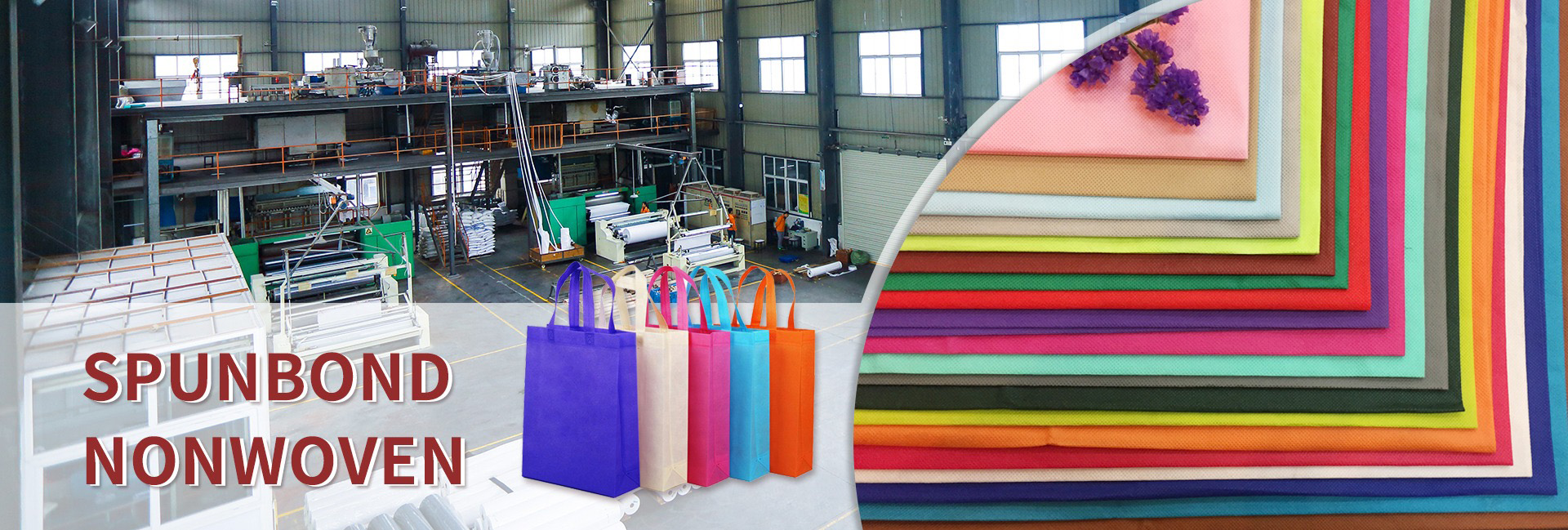
Dongguan Liansheng Non woven Technology Co., Ltd. was established in May 2020. It is a large-scale non-woven fabric production enterprise integrating research and development, production, and sales. It can produce various colors of PP spunbond non-woven fabrics with a width of less than 3.2 meters from 9 grams to 300 grams.
Post time: Feb-18-2026