
To design a non-woven fabric that achieves top-level anti slip performance under high weight, the key is to abandon the thinking of “single process stacking” and turn to systematic “structural design”. It is no longer just a surface treatment, but a balance art that makes materials “as stable as Mount Tai” from inside to outside.
From “coating” thinking to “structural” thinking
High weight (usually ≥ 100gsm) materials are naturally thick and stable, but their slip resistance is not simply proportional to their weight. The key is to design a reasonable surface and internal structure, and find the optimal solution between weight, friction, durability, and cost. The core design philosophy is “layered design” and “gradient structure”.
1. Hierarchical functional design
Consider materials as a system composed of different functional layers:
Contact layer (top layer): responsible for providing immediate, high coefficient frictional resistance. This usually requires the formation of macroscopic, deep enough three-dimensional patterns (such as diamonds, waves) through embossing technology, or the formation of high friction microscopic adhesive dot matrices through glue dispensing.
Support layer (middle layer/base fabric layer): High weight non-woven fabric itself. Its function is not only to increase weight, but also to provide stable mechanical support and thickness, ensuring that the surface anti slip structure will not collapse under pressure.
Functional composite layer (bottom layer/optional): If double-sided anti slip or special functions (such as moisture absorption and buffering) are required, another layer of anti slip material or functional film (such as PE or rubber particle layer) can be combined together through composite technology to form a “sandwich” structure.
2. Gradient distribution of Young’s modulus
This is a crucial professional concept. The ideal anti slip structure should have a relatively “hard” surface (high Young’s modulus) to effectively “bite” the contact surface and generate greater static friction; The inner layer to the lower layer should gradually become “soft” (with a decrease in modulus gradient) to enhance cushioning, adhesion, and overall flexibility, avoiding material brittleness. This can be controlled through raw material ratios (such as mixing low melting point fibers) and hot pressing processes.
Process combination: Collaborative strategy of 1+1>2
A single process has a bottleneck, only a combination of processes can break through the limit.
Need ultimate surface grip
Embossing and dispensing: First, create a macroscopic anti slip groove by embossing, and then apply glue at the bottom or ridge of the groove. Glue dots, as “micro spikes” embedded in macro patterns, greatly increase the friction of complex contact surfaces. The anti slip coefficient can be increased by 30% -50%, especially suitable for oily and humid environments (such as industrial floor mats and bathroom anti slip mats).
High strength and double-sided anti slip are required
Composite+Embossing: First, composite the high weight non-woven fabric with a layer of granular PE film or rubber sponge, and then perform double-sided embossing on the composite material. The composite layer provides high friction foundation, embossed reinforcement structure locking and drainage/exhaust performance. Realize double-sided efficient anti slip, and significantly improve overall tear resistance and tensile strength, suitable for heavy-duty packaging and sports equipment covers.
Need to maintain softness and high friction
Gradient dispensing+light embossing uses hot melt adhesives with different viscosities and particle sizes for gradient dispensing design from dense to sparse, from large to small, and finally supplemented with slight surface embossing to avoid excessive hardening. In scenarios such as yoga mats and high-end pet mats, the balance between soft touch and anti slip stability during use is achieved.
Performance verification: an indispensable closed loop
After design, strict testing must be conducted to verify whether the “balance” has been achieved:
Anti slip test: Use a static/dynamic friction coefficient tester to measure in dry, wet, and oil states, and the target value is usually a static friction coefficient>0.5 (dry state).
Physical strength test: Ensure that the anti slip treatment does not seriously damage the material body. The key indicators include: tensile strength, tear strength (particularly important), and wear resistance (Martindale or Tiber test).
Structural stability test: Simulate actual use, conduct repeated bending and pressure tests, and then retest the anti slip coefficient to ensure that performance does not deteriorate.
Summary
Designing high weight anti slip non-woven fabric is a systematic project: using layering and gradient as the design concept, intelligent combination of embossing, dispensing, and composite as the implementation means, and strict frictional and mechanical testing as the verification loop.
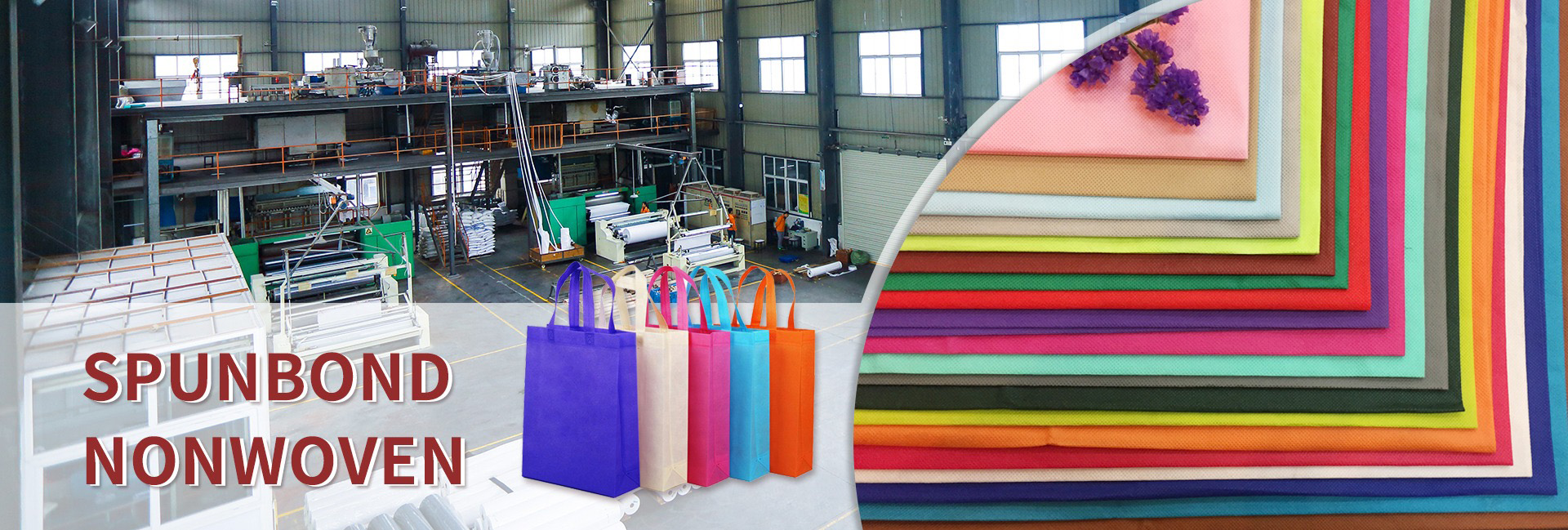
Dongguan Liansheng Non woven Technology Co., Ltd. was established in May 2020. It is a large-scale non-woven fabric production enterprise integrating research and development, production, and sales. It can produce various colors of PP spunbond non-woven fabrics with a width of less than 3.2 meters from 9 grams to 300 grams.
Post time: Jan-21-2026