
In the wave of upgrading the new energy and high-end manufacturing industries, lightweight, high-strength, and high durability have become the core demands of material innovation. Carbon fiber, with its ultimate strength to weight ratio, has become the benchmark for lightweight materials. However, pure carbon fiber products have pain points such as high cost, insufficient toughness, and complex molding processes; As a low-cost, easy to form, and flexible substrate, spunbond fabric can complement carbon fiber in terms of performance.
The composite material of “carbon fiber+spunbond fabric” has broken the performance boundaries of traditional materials through structural design and technological innovation, and has sparked a material revolution in the field of wind turbine blades and lightweight components, demonstrating broad application prospects.
Technological breakthrough: complementary performance and process innovation build core advantages
The core competitiveness of “carbon fiber+spunbond fabric” composite materials lies in the precise performance adaptation of carbon fiber and spunbond fabric, as well as the deep exploration of material potential through composite technology. Carbon fiber, as a reinforcing phase, can have a carbon content of over 90% after pre oxidation, carbonization, and surface treatment.
Its strength is 15 times that of ordinary steel, providing ultimate structural support and load-bearing capacity for composite materials; As a matrix or functional layer, spunbond fabric is made from materials such as polyester and polypropylene, which have excellent flexibility, formability, and cost advantages. It can solve the problems of high brittleness, easy delamination, and high processing difficulty of carbon fiber, and optimize the overall performance of composite materials through structural design.
The existing patented technology has formed a mature composite path, providing support for performance implementation. A mainstream process adopts a three-layer composite structure of “spunbond fabric carbon fiber mesh layer meltblown fabric”. The carbon fiber mesh layer is made up of 1-10 μ m ultra-fine carbon fibers mixed with vinylon fibers in a 1:1 ratio and laid in a mesh.
After thermal or adhesive composite molding, the vinylon fibers are dissolved by boiling water to form internal cavities, which not only retains the high strength of carbon fibers but also endows the material with good elasticity, solving the pain point of traditional composite fibers that are difficult to balance strength and softness.
Another process uses carbon fiber as the inner reinforcement, and introduces polar groups such as hydroxyl and carboxyl groups through electrochemical oxidation treatment to enhance adhesion. The outer layer is woven with spandex spunbond fabric mesh, combined with organic silicon modified acrylic adhesive composite, to achieve the synergy of high strength and high elasticity, significantly improving weather resistance and interface stability. These processes not only reduce the production cost of pure carbon fiber products, but also broaden the molding and adaptation scenarios of materials, laying the foundation for large-scale applications.
Wind turbine blade field: Breaking through performance bottlenecks and empowering efficient power generation
The material requirements for wind turbine blades are extremely strict, meeting the four core requirements of high strength, fatigue resistance, lightweight, and extreme environmental resistance. The “carbon fiber+spunbond fabric” composite material precisely meets these demands and is gradually replacing traditional glass fiber composite materials as the preferred choice for large blades. Currently, the proportion of carbon fiber composite materials in the wind turbine blade market has steadily increased, and it is expected to exceed 60% by 2025. The addition of spunbond fabric further optimizes the comprehensive performance and manufacturing cost of the blades.
In terms of performance improvement, this composite material can achieve a dual breakthrough in blade lightweighting and load resistance. The use of traditional materials for large wind turbine blades (over 100 meters in length) can easily affect power generation efficiency due to excessive self weight. However, the “carbon fiber+spunbond fabric” composite material can reduce the weight of glass fiber blades by 20% to 30% while maintaining structural strength.
This not only reduces blade rotational inertia and improves wind energy capture efficiency, but also reduces the load pressure on the tower and cabin, extending the service life of the entire machine. At the same time, the flexible characteristics of spunbond fabric and the internal cavity structure formed by composite technology enable the blades to have better wind resistance, load toughness, and fatigue resistance, which can adapt to the high humidity, strong corrosion, and strong gust environment of offshore wind power, reducing the risk of blade cracking, delamination, and other faults.
In terms of manufacturing and cost, this composite material simplifies the blade forming process. Spunbond fabric can be quickly formed through winding, molding and other processes, combined with modular placement of carbon fiber mesh layers, without the need for complex secondary processing, greatly shortening the production cycle; At the same time, the low-cost characteristics of spunbond fabric effectively dilute the high unit price of carbon fiber, reducing the total cost of composite materials by 15% to 25% compared to pure carbon fiber blades, solving the core bottleneck of large-scale application of carbon fiber blades.
In the future, as offshore wind power advances into the deep sea, blade size will continue to increase, and the performance advantages of “carbon fiber+spunbond fabric” composite materials will be further highlighted, becoming the core direction for upgrading wind turbine blade materials.
Lightweight component field: cross scenario adaptation, driving industry cost reduction and efficiency improvement
In fields with strong demand for lightweight, such as rail transit, automobiles, and aerospace, “carbon fiber+spunbond fabric” composite materials are accelerating the replacement of steel, aluminum, and traditional composite materials with customized performance and cost advantages, promoting the transformation of components towards “lightweight, efficient, and durable”, and have formed multiple commercial application cases.
The field of rail transit is a key landing scenario for this composite material. Currently, both domestically and internationally, there is a strong promotion of carbon fiber lightweight components. Japanese E4 vehicles and Korean TTX trains have adopted carbon fiber composite roof and side wall structures, while the carbon fiber cab of the UK Intercity 125 train has reduced weight by 30% to 35% compared to steel structures. The composite material of “carbon fiber+spunbond fabric” is further optimized on this basis, and components such as bogies, equipment compartments, and interior parts are manufactured through modular molding technology.
This not only achieves weight reduction goals, but also reduces component maintenance costs and total assembly workload due to the corrosion resistance and ease of processing of spunbond fabric. The carbon fiber subway train developed by CRRC Group in China adopts a similar composite structure to achieve a weight reduction of 13% for the entire vehicle, and a weight reduction of over 30% for the driver’s cab and equipment compartment, significantly reducing operational energy consumption and rail wear.
In the fields of automobiles and aerospace, this composite material exhibits flexible adaptability. In the automotive industry, it can be used to manufacture body frames, chassis components, interior panels, etc., reducing weight by 40% to 50% compared to traditional steel, helping new energy vehicles improve their range; Meanwhile, the excellent buffering performance formed by the composite process can enhance the impact resistance of components and ensure driving safety. In the aerospace field, it can be used to manufacture cabin interiors, secondary structural components, etc.
While meeting high-strength requirements, it reduces the weight of the fuselage and fuel consumption. The low-cost characteristics of spunbond fabric can alleviate the high cost pressure of aviation materials. In addition, the composite material can also be extended to high-end equipment interiors and other segmented scenarios by adding functional coatings (such as antibacterial and anti-static coatings), further expanding its application boundaries.
Existing bottlenecks and future trends: from technological optimization to ecological construction
Although the advantages of “carbon fiber+spunbond fabric” composite materials are significant, their large-scale application still faces three major bottlenecks:
Firstly, the interface compatibility needs to be improved, and the bonding strength between carbon fiber and spunbond fabric is easily affected by the environment, requiring further optimization of surface treatment and adhesive formula;
Secondly, there is still room for optimization in the cost structure. High end carbon fiber raw materials rely on imports, and the cost of functional modification of spunbond fabrics is relatively high;
Thirdly, there is a lack of industry standards, and there is no unified standard for performance indicators and testing methods in different scenarios, which affects the implementation of industrialization.
In the future, this composite material will be upgraded towards “multifunctionality, process intelligence, and recycling”. At the technical level, materials will be endowed with additional functions such as antibacterial, extreme temperature resistance, electromagnetic shielding, etc. through nano modification, multi-component composites, and other means; At the process level, combining technologies such as automated placement and 3D printing can improve production efficiency and product consistency, and reduce manufacturing costs.
At the ecological level, we will develop biodegradable spunbond substrates and carbon fiber recycling technologies to align with the trend of green manufacturing. At the same time, with the improvement of the domestic carbon fiber industry chain (such as Jilin City having formed a full industry chain layout and the world’s largest raw silk production capacity), the cost of raw materials will gradually decrease. Coupled with the continuous release of downstream demand, “carbon fiber+spunbond fabric” composite materials are expected to achieve large-scale commercial applications in fields such as wind power and rail transportation, becoming the core material support for upgrading high-end manufacturing industries.
Conclusion
The rise of “carbon fiber+spunbond fabric” composite materials is essentially the inevitable result of complementary material properties and technological innovation. It not only breaks through the cost and molding bottleneck of pure carbon fiber products, but also fills the performance gap of traditional spunbond fabrics and glass fiber materials, providing a high-performance, low-cost, and easy to scale solution for wind turbine blades and lightweight components.
Against the backdrop of rapid development in the new energy and high-end manufacturing industries, with the gradual breakthrough of technological bottlenecks and the continuous improvement of the industrial chain, this composite material will completely reshape the material application pattern in related fields, become the core force driving the transformation of the industry towards lightweight, efficient, and green, and open a new chapter in the materials revolution.
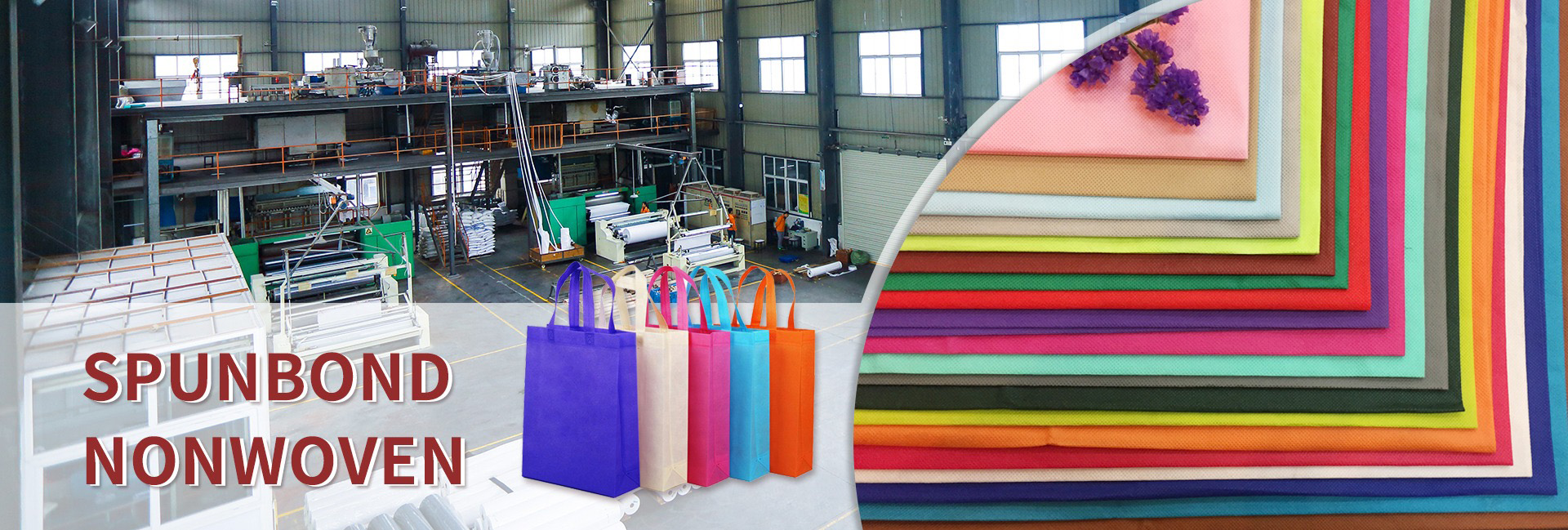
Dongguan Liansheng Non woven Technology Co., Ltd. was established in May 2020. It is a large-scale non-woven fabric production enterprise integrating research and development, production, and sales. It can produce various colors of PP spunbond non-woven fabrics with a width of less than 3.2 meters from 9 grams to 300 grams.
Post time: Jan-30-2026