
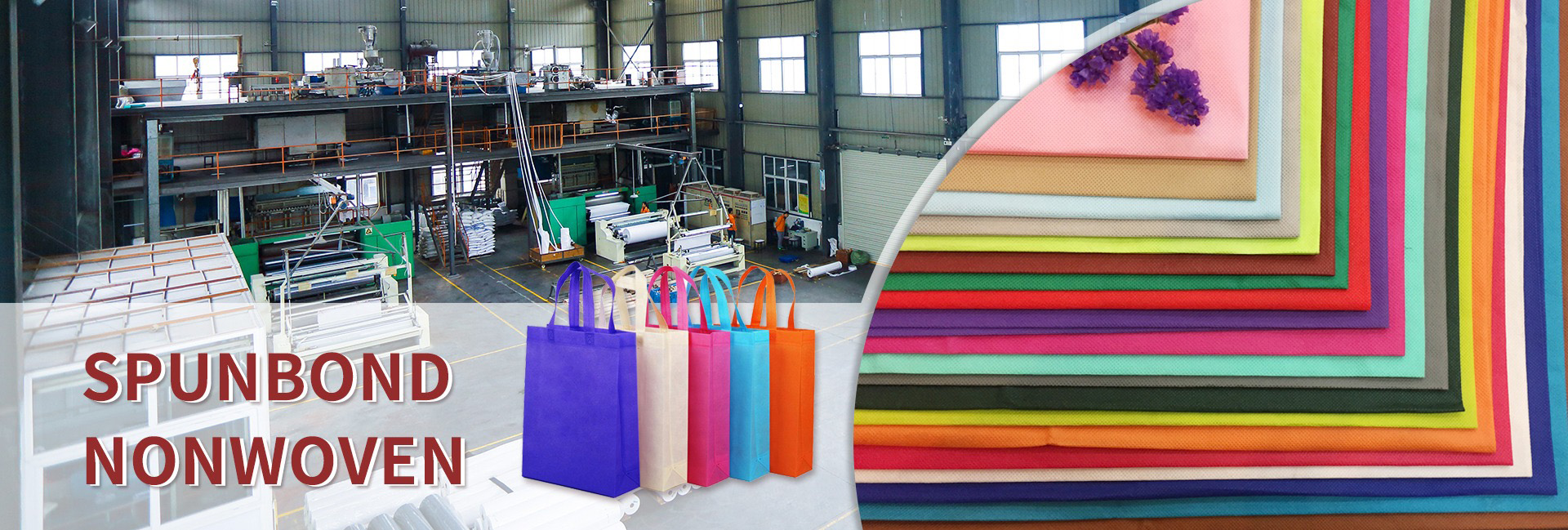
Anti aging spunbonded fabric: material innovation to solve the pain points of traditional agricultural film
Agricultural covering material is the “environmental control barrier” for crop growth, and anti-aging spunbond fabric thoroughly solves the industry pain point of “short life, heavy pollution and single function” of traditional plastic film and ordinary non-woven fabric through raw material modification+process optimization. This kind of material takes polypropylene (PP) or polyester (PET) as the base material, which is spunbonded into a mesh and then added with special anti-aging additives.
It performs multiple functions such as “heat preservation and cold prevention, sunshade and insect prevention, grass prevention and moisture conservation” in agricultural scenes. Its service life can reach 3-5 times of ordinary agricultural film, and it can be degraded and easily recycled, which fully meets the policy requirements of “promoting high-performance, biodegradable agricultural covering materials” in the “Fourteenth Five Year Plan” National Agricultural Green Development Plan.
Anti aging core technology: double guarantee from formula to process
The “lasting protection” ability of anti-aging spunbonded fabric originates from precise technical design, and its core technical system can be summarized as “formula modification+process strengthening”:
Anti aging formula system: strictly follow the golden ratio of “0.8-1.0% antioxidant+0.2-0.4% light stabilizer”, in which the antioxidant is pentaerythritol ester, which can decompose the hydroperoxide produced during material aging; The light stabilizer uses hindered amines (such as bis (2,2,6,6-tetramethyl-4-piperidinyl) sebacic acid esters), which can efficiently absorb ultraviolet light and convert it into heat energy for release, blocking the degradation pathway at the molecular level. According to industry standard testing, high-quality products still have a retention rate of over 75% (horizontal) and over 95% (vertical) in terms of breaking strength after 6 months of outdoor exposure, far exceeding the residual strength of ordinary non-woven fabrics within 30%.
Optimization of Forming Process: Adopting S/SS/SMS spunbond process, melting through twin-screw extruder, high-speed stretching into silk, hot rolling and solidification forming, forming a dense and breathable mesh structure. This structure not only ensures the tensile strength of the material (longitudinal ≥ 85N/5 × 10cm, transverse ≥ 100N/5 × 10cm), but also has good breathability (moisture permeability ≥ 500g/m ² · 24h), avoiding crop diseases caused by traditional agricultural films that are “not breathable and prone to condensation”.
Functional customization design: According to the needs of different agricultural scenarios, functional differentiation can be achieved by adjusting the weight (7-250g/m ²), color, and thickness: white products have a light transmittance of 60% -85% and are suitable for greenhouse insulation; Black products have a shading rate of ≥ 90% and are specifically designed for outdoor grass protection; Green products balance transparency and insect resistance, suitable for fruit and vegetable cultivation.
Scenario based application analysis: functional adaptation between greenhouse and outdoor covering
By virtue of flexible functional design, anti-aging spunbonded fabric shows accurate adaptability in two core scenes of greenhouse and outdoor coverage, and its application logic and effect are significantly different:
(1) Greenhouse: Creating a stable and controllable growth environment
The core requirements of greenhouse for covering materials are “heat preservation, light transmittance and durability”. The anti-aging spunbonded fabric achieves three major functional breakthroughs through multi-layer composite design:
Thermal insulation and cold prevention: Compared with traditional films, the fiber mesh structure of spunbond fabric can form an air insulation layer, increasing the insulation coefficient by 20% -40%. The temperature drop inside the greenhouse at night in winter is controlled at 3-5 ℃, reducing the temperature difference by more than 5 ℃ compared to film coverage. The vegetable yield reduction rate in northern regions during winter has decreased from 15% -20% to within 5%;
Light transmission regulation: By adjusting the fiber density, a precise light transmission rate of 60% -85% can be achieved, which can meet the needs of crop photosynthesis and filter harmful ultraviolet rays, reducing the occurrence of crop sunburn;
Long term durability: The service life can reach 3-5 years, and the annual maintenance cost per mu is only 100-150 yuan, which is more than 60% lower than traditional films (annual replacement cost of 300-500 yuan), and avoids the increase in labor costs caused by frequent replacement.
(2) Outdoor Coverage: Comprehensive Protection against Extreme Environments
Open planting faces multiple challenges such as wind and rain, sun exposure, weeds and insect pests, and anti-aging spunbond fabric achieves all-round protection through “functional integration”:
Grass prevention and moisture retention: Black spunbond fabric can completely block weed photosynthesis, with a grass prevention effect of over 95%, reducing herbicide use by 80%, while inhibiting soil moisture evaporation, increasing soil moisture retention rate by 40%, especially suitable for planting corn and cotton in arid areas;
Cold and frost prevention: In the scene of fruit tree overwintering and seedling cultivation, covering with spunbond cloth can increase the surface temperature by 2-3 ℃, effectively resisting frost damage. For example, in rice seedling cultivation in northern Jiangsu, high-quality spunbond cloth can prevent damage to seedlings due to low temperature freezing (counterexample: low-quality products oxidize and damage for a short period of time, resulting in 14.5 acres of seedlings being damaged);
Insect and disease prevention: The high-density fiber structure can block the invasion of pests such as aphids and planthoppers. Combined with a silver gray reflective design, it can also repel pests such as thrips, reducing pesticide use by 30% -50%. The breathable structure can also reduce field humidity and inhibit the growth of fungal diseases.
Core Performance Advantage: Comprehensive Competitiveness Compared to Traditional Materials
Compared with traditional agricultural film and ordinary non-woven fabric, anti-aging spunbond fabric has rolled advantages in key performance dimensions. The following is a comparison of core indicators:
Anti aging spunbonded fabric
Service life of 3-5 years, thermal insulation (winter night cooling) of 3-5 ℃, air permeability (moisture permeability) ≥ 500g/m ² · 24h, air permeability (moisture permeability) ≤ 50g/m ² · 24h, biodegradable and easy to recycle (recovery rate ≥ 85%), with an average annual cost of 100-150 yuan per mu.
Traditional plastic film
Service life of 1-2 years, insulation (winter night cooling) of 8-10 ℃, breathability (moisture permeability) of ≤ 50g/m ² · 24h, tensile strength ≥ 30N/5 × 10cm, difficult to degrade (recovery rate less than 20%), average annual cost per mu of 300-500 yuan.
Ordinary non-woven fabric
Service life 3-6 months, insulation (winter night cooling) 5-7 ℃, breathability (moisture permeability) 300-400g/m ² · 24h,Tensile strength ≥ 50N/5 × 10cm (before aging), partially biodegradable, but with short lifespan and low recycling value, with an average annual cost of 200-300 yuan per mu (requiring frequent replacement).
(Data source: “Analysis of the Application Prospects of Non woven Fabrics in Greenhouse Materials”, “Technical Specifications for Agricultural Spunbond Non woven Fabrics”, and Enterprise Measurement Reports)
In addition, the anti-aging spunbonded fabric also has additional advantages such as construction convenience (can be cut as needed, light weight, and can be operated by a single person), scene versatility (suitable for multiple scenarios such as seedling raising, planting, fruit tree cold prevention, etc.), low carbon environmental protection (the proportion of bio based materials can reach more than 30%, and the carbon footprint is 28% lower than that of traditional films), becoming a “multi-functional protective material” for modern agriculture.
Typical case verification: Implementation of effects from laboratory to field
The application value of anti-aging spunbond fabric has been fully verified in agricultural production in many places across the country, and typical cases show significant economic and ecological benefits:
Greenhouse vegetable planting case: a vegetable base in Shouguang, Shandong Province used 200g/m2 white anti-aging spunbonded cloth to cover the greenhouse. After replacing the traditional film, the temperature in the shed in winter increased by 4 ℃ on average, the incidence of diseases and pests of cucumber and tomato decreased by 60%, and the per mu yield increased by 15% -20%. In addition, the materials have not been aged or damaged for three consecutive years, saving more than 800 yuan in replacement costs per mu.
Outdoor Grass Prevention and Moisture Preservation Case: The cotton production area in Xinjiang uses 150g/m ² black spunbond fabric as a substitute material for plastic film, with a grass prevention effect of 98%. The soil moisture content is 35% higher than that of bare land, and the cotton emergence rate is increased from 85% to 98%. The material can be recycled and reused, avoiding soil pollution caused by traditional plastic film residue.
Case study of fruit tree cold prevention: In the apple production area of Liaoning Province, 100g/m ² green spunbond cloth is used to wrap fruit trees in winter, which reduces the freezing damage rate of fruit trees from 20% to 3% compared to traditional grass rope cold prevention. The material is breathable and not stuffy, and can be reused for 2-3 years after being removed in spring, saving an average of 200 yuan in cold prevention costs per mu.
Industry development trends: greenization, multifunctionality, and customization
With the advancement of agricultural modernization and green development, anti-aging spunbond fabric is upgrading in three directions:
Green and low-carbon: The proportion of bio based polyester (such as PTT) and recycled polyester (CP rPET) raw material applications has increased, and it is expected that the market share of low-carbon and environmentally friendly products will reach over 25% by 2028, further reducing carbon footprint;
Functional compounding: integrating insect resistance, antibacterial, flame retardant, self-healing and other functions, such as adding nano silver particles to spunbond fabric, which can achieve triple effects of grass prevention, insect prevention, and antibacterial at the same time;
Scenario customization: Develop specialized products for different crops (such as rice seedling cultivation, fruit tree planting, vegetable cultivation) and climate regions (northern cold prevention, southern sun shading) to solve the problem of “insufficient adaptability of universal products” and avoid losses caused by product incompatibility in rice seedling cultivation in northern Jiangsu.
Dongguan Liansheng Non woven Technology Co., Ltd. was established in May 2020. It is a large-scale non-woven fabric production enterprise integrating research and development, production, and sales. It can produce various colors of PP spunbond non-woven fabrics with a width of less than 3.2 meters from 9 grams to 300 grams.
Post time: Mar-06-2026