
In industrial production, industries such as metallurgy, chemical engineering, building materials, and mechanical processing generate a large amount of dust-laden flue gas. If the large particles of dust and fibrous impurities mixed in directly enter the dust removal system, they will not only pollute the environment and harm human health, but also wear out core components such as dust collector filter bags and fans, shortening equipment service life and increasing operation and maintenance costs. As the mainstream equipment for industrial dust removal, the performance of the filter material in bag filters directly determines the dust removal efficiency and system stability. Spunbond nonwoven fabrics, with their excellent mechanical strength, suitable filtration accuracy, and wide operating condition compatibility, have become the “first line of defense” in bag filters for intercepting industrial dust. They precisely undertake the core responsibility of retaining large particles of impurities and protecting subsequent fine filtration processes. The following provides a detailed explanation from four dimensions: core performance, selection logic, operating condition compatibility, and considerations.
Adapt to bag-type dust removal, and establish the first protective barrier
As the pre-filter material for bag filters, spunbond nonwoven fabric does not require the pursuit of extreme fine filtration precision. The core is to balance “high-efficiency interception, durability, dust holding capacity, and energy saving”. Its performance advantages precisely match the core needs of the first filtration stage for industrial dust. This is specifically reflected in four major aspects:
1. Accurately intercept large particles to reduce subsequent filtration load
Spunbond nonwoven fabrics are made from raw materials such as polypropylene (PP) and polyester (PET). They are formed through melt spinning, web laying, and thermal bonding, resulting in a three-dimensional interlaced fiber structure with pores. The pore size can be precisely controlled between 10 and 50 μm, perfectly meeting the core requirement of the first filtration step for industrial dust – efficiently intercepting large particles with a diameter of ≥10 μm (such as metal debris in metallurgical furnace dust, cement particles in the building materials industry, and metal dust from mechanical processing). The interception efficiency can reach 90% to 98%. This precise interception can prevent large particle impurities from directly impacting and abrading subsequent fine filter materials (such as meltblown filters and membrane filters), while reducing the probability of impurities blocking the pores of the filter bag, lowering the pressure loss of the dust removal system, laying the foundation for subsequent fine filtration steps, and ensuring the efficient operation of the entire dust removal system.
2. Excellent mechanical strength, strong resistance to wear and impact
Industrial dust often flows with high-speed airflow, and some dust particles (such as metal debris and quartz sand particles) have high hardness, posing extremely high requirements on the wear resistance and impact resistance of filter materials. Spunbond nonwoven fabric, through the thermal bonding process, allows fibers to bond tightly, achieving a breaking strength of 15~35N/5cm and a tearing strength of ≥5N/5cm. Its mechanical strength far exceeds that of paper filters and ordinary knitted filters, enabling it to withstand the impact of high-speed dusty airflow without easily experiencing damage or thread shedding. Additionally, its smooth surface and tightly entangled fibers reduce the scouring and wear of dust on the filter surface. Under high dust concentration and high airflow velocity conditions, its service life can reach 6~12 months, significantly reducing the frequency of filter material replacement and maintenance costs.
3. Large dust holding capacity, balancing filtration efficiency and air flow rate
The porosity of spunbond nonwoven fabric can reach 75% to 90%, and the fiber layer has a high bulkiness, providing strong dust holding capacity. It can accommodate dust weighing 3 to 5 times its own weight without significant blockage. Compared to fiberglass filters (with a dust holding capacity of 1 to 2 times its own weight) and paper filters (with a dust holding capacity less than 1 time its own weight), it has significant advantages. Sufficient dust holding capacity can extend the filter replacement cycle, reduce downtime for maintenance, and avoid issues such as decreased air flow and increased energy consumption caused by rapid filter blockage. Under conventional industrial dust conditions, its air permeability can reach 100 to 300 L/(m²·s), allowing for both efficient interception and smooth ventilation, ensuring stable processing air volume for bag filters and meeting the dust removal needs of industrial large-scale production.
4. Wide adaptability to working conditions, suitable for complex industrial flue gas environments
Industrial flue gas often experiences complex conditions such as high and low temperatures, acid-base corrosion, and humidity fluctuations. Relying on its raw material characteristics and process advantages, spunbond nonwoven fabric exhibits excellent temperature resistance, chemical resistance, and moisture resistance: PP-based spunbond fabric can withstand a temperature range of -20℃ to 100℃, suitable for medium and low temperature flue gas (such as dust from mechanical processing and food processing), and has excellent acid-base resistance, capable of withstanding acid and alkaline flue gas with pH values ranging from 1 to 14; PET-based spunbond fabric can withstand temperatures up to 150℃, suitable for medium and high temperature flue gas (such as dust from medium and low temperature kilns in the metallurgical and building materials industries), with more prominent mechanical strength; through modification treatments (such as flame retardant modification and antistatic modification), spunbond fabric can also be suitable for conditions containing flammable dust and electrostatic sensitivity (such as coal dust removal), avoiding safety hazards such as fires and electrostatic dust accumulation.
Fit the working conditions, taking into account both performance and cost-effectiveness
The core of selecting spunbond nonwoven fabrics lies in “matching working conditions + adapting performance”, which requires consideration of industrial dust characteristics, bag filter parameters, and environmental protection requirements to avoid “performance redundancy” or “insufficient selection”. Specifically, we should start from four dimensions to ensure scientific and reasonable selection:
1. Selection based on smoke and dust characteristics
The core lies in matching the temperature, corrosivity, dust particle size distribution, and concentration of the flue dust. Firstly, selection should be based on the flue gas temperature. For medium and low temperature flue gas (≤100℃), PP spunbond nonwoven fabric is preferred, taking into account both cost and acid-alkali resistance; for medium and high temperature flue gas (100~150℃), PET spunbond nonwoven fabric is selected to ensure temperature resistance meets standards; for high temperature flue gas (>150℃), modified high temperature resistant spunbond fabric or other high temperature resistant filter materials should be used to avoid filter aging and damage. Secondly, selection should be based on the corrosivity of the flue dust. For flue gas containing strong acids and alkalis (such as acid-base exhaust gas in the chemical industry), PP spunbond nonwoven fabric is preferred, as its chemical resistance is superior to PET; for flue gas without obvious corrosivity (such as mechanical processing dust), PET spunbond nonwoven fabric can be selected, with emphasis on mechanical strength. Thirdly, selection should be based on dust particle size and concentration. For large particle dust (with a high proportion of ≥10μm particles) and high concentration flue dust (>50g/m³), spunbond fabric with larger pore size (30~50μm) and higher grammage (40~80g/m²) is selected to enhance dust holding capacity and wear resistance; for flue dust with a high proportion of fine particles, spunbond fabric with smaller pore size (10~30μm) is selected to ensure interception efficiency and prevent fine particles from penetrating to subsequent filter materials.
2. Selection of parameters for bag filters
The selection of dust collector should match the filter bag size, processing air volume, and dust removal method: Firstly, it is to select the model according to the filter bag size, customize the spunbond nonwoven fabric with suitable size based on the diameter and length of the filter bag, ensure it fits the inner wall of the filter bag, and avoid gaps between the filter material and the filter bag, which may lead to short-circuit penetration of smoke dust; secondly, it is to select the model according to the processing air volume. For dust collectors with a large processing air volume (>10000m³/h), choose spunbond fabric with high air permeability (200~300L/(m²·s)) to reduce system pressure loss and fan energy consumption; thirdly, it is to select the model according to the dust removal method. Pulse jet dust collectors should use spunbond fabric with high mechanical strength and resistance to wire breakage (such as PET spunbond fabric) to withstand the impact of pulse airflow; vibrating dust collectors should use spunbond fabric with good flexibility (such as PP spunbond fabric) to avoid damage to the filter material during vibration.
3. Model selection based on environmental protection and safety requirements
It is necessary to meet local dust emission concentration standards and industry safety regulations: First, environmental protection requirements. If there is no subsequent fine filtration process, the spunbond fabric should be selected with a capture efficiency of ≥95% to ensure emission compliance. If paired with subsequent fine filtration materials, the filtration precision of the spunbond fabric can be appropriately reduced, with a focus on capturing large particles. Second, safety requirements. For flammable dust (such as coal dust and wood dust), flame-retardant modified spunbond fabric with a limiting oxygen index of ≥32 should be selected to avoid dust accumulation and subsequent fires. For electrostatic-sensitive working conditions (such as dust in the electronics industry), anti-static modified spunbond fabric with a surface resistivity of ≤10¹¹Ω should be selected to prevent electrostatic dust accumulation and discharge hazards.
4. Consider both cost and performance when selecting models
There is no need to blindly pursue high-end specifications; instead, choose according to specific needs: For regular operating conditions (moderate to low temperature, low corrosion, low dust concentration), select standard PP or PET spunbond fabric to control procurement costs. For complex operating conditions (high corrosion, high dust concentration, high temperature), choose modified spunbond fabric to avoid frequent replacement of filter materials due to inadequate selection, which could increase long-term operation and maintenance costs. Additionally, when purchasing in bulk, prioritize sourcing from original manufacturers. This allows for a 10% to 15% discount through negotiation, while ensuring stable product quality and preventing dust removal efficiency from being compromised due to filter material quality issues.
Typical Operating Condition Adaptation Cases
Based on different industrial scenarios, clarify the selection plan for spunbond nonwoven fabrics and provide references for practical applications:
1. Machining industry (machine tool cutting dust)
When the flue gas temperature is ≤80℃, with no obvious corrosion, and the dust primarily consists of metal debris and cutting dust, with particle sizes mostly ranging from 10 to 100μm and a moderate concentration (10 to 50g/m³), it is preferable to use PET spunbond nonwoven fabrics with a weight of 40 to 60g/m². These fabrics emphasize mechanical strength and wear resistance, and are suitable for pulse jet bag filters, with a service life of up to 8 to 12 months.
2. Chemical industry (dust removal of acid and alkali waste gas)
When the flue gas temperature is ≤90℃, contains strong acid or alkali components, and has fine dust particle size (5~50μm), it is preferred to use 30~50g/m² PP spunbond nonwoven fabric. Relying on its excellent chemical resistance, it can prevent the filter material from being corroded and damaged. When paired with a vibrating bag filter, regular inspection of the filter material’s aging condition is necessary to ensure the interception efficiency.
3. Building materials industry (low-temperature flue dust from cement kilns)
With a flue gas temperature ranging from 120 to 140℃, high dust concentration (>50g/m³), and containing a large amount of cement particles, it is preferable to use PET spunbond nonwoven fabrics with a weight of 60 to 80g/m². These fabrics meet the required temperature resistance and dust holding capacity standards, and are suitable for bag filters with high processing air volume. They can effectively intercept large cement dust particles, protecting the subsequent fine filter materials.
Precautions for Use
Scientific use can extend the service life of spunbond nonwoven fabrics and ensure stable operation of the dust removal system. Four key points need to be noted:
1. Pre-treatment adaptation: If the flue gas contains a large amount of oil contaminants (such as oil fumes from machining), it needs to undergo oil removal pre-treatment first to prevent the oil contaminants from adhering to the surface of the spunbond fabric, blocking the pores, and reducing the filtration efficiency and service life;
2. Avoid using beyond operating conditions: It is strictly prohibited to use spunbond fabric for conditions beyond its temperature and corrosion resistance range. For example, using PP spunbond fabric for flue gas above 120℃ will lead to rapid aging and damage of the filter material;
3. Standardize dust removal operations: Based on the accumulation of dust, reasonably adjust the dust removal cycle and intensity to avoid excessive dust removal that leads to wear of filter materials, or delayed dust removal that leads to filter blockage and excessive pressure loss;
4. Regular inspection and replacement: Regularly inspect the spunbond fabric for damage, aging, and thread detachment. If there is local damage, it needs to be repaired or replaced in a timely manner to avoid smoke and dust short-circuit penetration. If the filtration efficiency drops below the standard, the filter material should be replaced immediately to ensure environmental compliance.
Summary
Spunbond nonwoven fabrics have become the “first line of defense” for industrial dust in bag filters, thanks to their precise large particle interception capability, excellent mechanical strength, wide operating condition adaptability, and high cost-effectiveness. Their core value lies not only in efficiently intercepting large particle impurities and reducing subsequent filtration loads, but also in extending the service life of the entire dust removal system, reducing operation and maintenance costs, and adapting to industrial dust removal needs across multiple industries.
When selecting models, it is necessary to closely consider core operating conditions such as flue gas temperature, dust corrosivity, and filter parameters, while balancing performance and cost-effectiveness to avoid blind selection. Standardized operation and regular maintenance during use can fully leverage their protective advantages. With the continuous upgrading of spunbond modification processes, high-end spunbond nonwoven fabrics that are resistant to high temperatures, strong corrosion, flame retardant, and antistatic will gradually expand their application scenarios, further consolidating their core position in the industrial dust removal field and providing more reliable and economical solutions for industrial dust treatment.
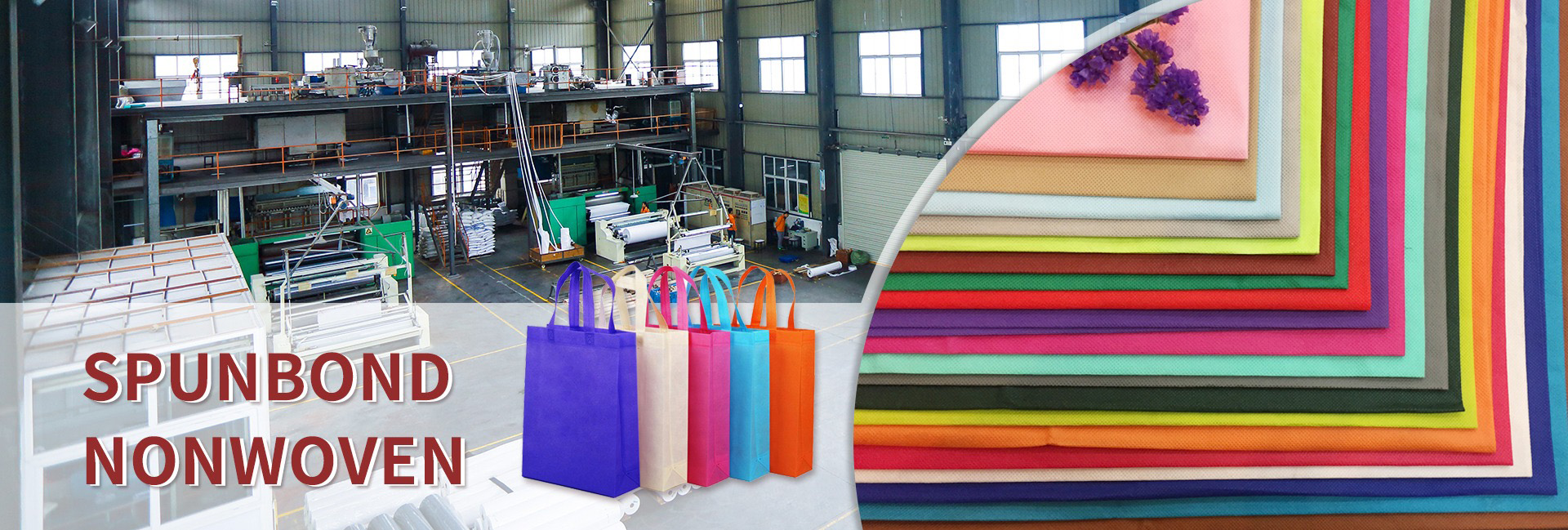
Dongguan Liansheng Non woven Technology Co., Ltd. was established in May 2020. It is a large-scale non-woven fabric production enterprise integrating research and development, production, and sales. It can produce various colors of PP spunbond non-woven fabrics with a width of less than 3.2 meters from 9 grams to 300 grams.
Post time: Feb-20-2026