
After three years of the epidemic, masks have long been integrated into our daily lives. But many people have experienced this kind of trouble. After wearing a mask for a long time, the inner layer becomes damp and sticky, breathing becomes stuffy, and even condensation droplets can be seen. Especially in medical, factory, public transportation and other scenarios that require long-term wearing, this discomfort directly affects the user experience and willingness to protect. The root cause of the problem is not complicated. The polypropylene non-woven fabric used in the inner layer of traditional masks is naturally a hydrophobic material. It repels water vapor, and the moist air exhaled cannot be quickly exported, ultimately accumulating on the inside of the mask. To break through this physical limitation, a technological revolution around “hydrophilicity” is quietly unfolding in the field of PP non-woven fabrics. Through modification, this originally hydrophobic material can actually achieve instant liquid absorption, making the mask core layer unprecedentedly dry and comfortable.
A natural short board of hydrophobic PP non-woven fabric
Polypropylene, abbreviated as PP, is a thermoplastic resin that has become the preferred raw material for non-woven fabric manufacturing due to its low density, high strength, good chemical stability, and low cost. PP non-woven fabric made by melt blown or spunbond processes has a fiber diameter of up to micrometers, a large specific surface area, and high porosity, making it very suitable for use as a filter layer or inner lining layer for masks. However, PP molecular chains are composed of carbon hydrogen bonds, with almost no polar groups and extremely low surface energy. When water droplets fall onto the surface of PP non-woven fabric, they cannot spread and instead form nearly spherical droplets that roll off with a gentle shake. This phenomenon is called hydrophobicity in materials science, and its water contact angle is usually between 90 degrees and 120 degrees.
For masks, this hydrophobic property is advantageous in the filtering layer. As the core filtering layer of masks, meltblown fabric relies on electrostatic adsorption and fiber interception to capture particles such as droplets and aerosols. A hydrophobic surface helps maintain charge stability and avoid electrostatic decay caused by moisture. But when hydrophobic materials appear on the inner layer of the mask, which is the “core layer” that directly contacts the skin, the problem arises. The gas exhaled by the human body is close to saturated humidity, with a temperature of about 34 to 36 degrees Celsius. When encountering relatively cold inner fibers of masks, water vapor quickly condenses into tiny droplets. Hydrophobic surfaces are unable to guide or absorb these droplets, causing them to gradually accumulate and block fiber gaps, resulting in increased respiratory resistance. At the same time, hot and humid environments can also irritate the skin and even trigger contact dermatitis.
Therefore, the mask core layer requires a completely opposite characteristic, hydrophilicity. That is to say, the surface of the material can quickly capture liquid water and use capillary action to diffuse it to a larger area, accelerating evaporation. This seemingly contradictory demand has precisely driven the rapid development of PP non-woven fabric modification technology.
Three technological pathways for surface modification from hydrophobic to hydrophilic
To make PP non-woven fabric change from “hydrophobic” to “hydrophilic”, it is essentially necessary to change its surface chemical properties or microscopic physical structure. At present, the industrial and academic communities have explored three mature technological paths, namely physical surface treatment, chemical grafting modification, and blending addition modification.
Physical surface treatment is the most direct method. By using corona discharge, plasma bombardment, or ultraviolet irradiation, micro depressions and cracks are created on the surface of PP fibers, while introducing oxygen, nitrogen, and other elements from the air into the surface to form polar functional groups such as hydroxyl, carboxyl, and amino groups. These polar groups can form hydrogen bonds with water molecules, thereby endowing the material with hydrophilicity. The equipment for corona treatment is simple, low-cost, and suitable for large-scale continuous production, but the modification effect will gradually decline over time, and usually the hydrophilic performance will significantly decrease after a few weeks. Plasma treatment is more uniform and durable, capable of deep modification inside fibers, but requires higher equipment investment. Currently, it is mainly used for high-end masks or medical dressing products.
Chemical grafting modification is more ‘hardcore’. By initiating a free radical polymerization reaction on the surface of PP, monomers containing hydrophilic segments such as acrylic acid and hydroxyethyl methacrylate are grafted onto the molecular chain. These grafted polymer chains are like countless tiny ‘tentacles’, greatly enhancing the material’s ability to capture water molecules. The durability of chemical grafting far exceeds that of physical treatment, and even after multiple wiping or washing, the hydrophilic effect remains stable. But the process is relatively complex, involving control of multiple parameters such as initiators, monomer concentration, reaction temperature, etc., and the cost also increases accordingly.
Blended addition modification is currently the most widely used and cost-effective solution in industrial applications. Before melt spinning PP raw materials, a certain proportion of hydrophilic masterbatch is mixed into it, which is usually composed of polyether, polyester or surfactant substances. During the melt blending process, hydrophilic components are uniformly dispersed in the PP matrix. After spinning, some hydrophilic agents migrate to the surface of the fibers, forming a very thin but efficient hydrophilic layer. Due to the hydrophilic agent being “embedded” inside and on the surface of the fiber, its durability is between physical treatment and chemical grafting, which is sufficient to meet the requirements of disposable masks, while the cost increase is very limited. At present, the vast majority of “instant suction” non-woven fabrics on the market adopt this technology route.
The secret hydrophilic agent that absorbs liquid in three moments and the synergistic effect of capillary structure
Just making PP non-woven fabric hydrophilic is not enough. To achieve “instant liquid absorption”, which means completing absorption and diffusion within a few seconds of the droplet contacting the material surface, a clever combination of hydrophilic agents and fiber microstructures is required.
The selection of hydrophilic agents is crucial. The ideal hydrophilic modifier should have the characteristics of rapid migration, low surface tension, good compatibility, and biocompatibility. Non ionic surfactants, such as fatty acid polyoxyethylene esters, alkyl glycosides, etc., are currently the mainstream choices. They can significantly reduce the surface tension of PP fibers from about 30 mN/m to a surface tension level close to water, about 72 mN/m. When water vapor condenses into droplets, the low surface tension fiber surface no longer repels the droplets, but instead actively “pulls” water like a sponge. More importantly, the hydrophilic agent changes the contact angle between the droplets and the fibers, transforming it from an obtuse angle to an acute angle. As a result, the capillary pressure changes from negative to positive, and water is quickly drawn into the tiny pores between the fibers.
The microstructure of fibers is another accelerating factor. By adjusting the parameters of melt blown or spunbond processes, non-woven fabrics with different diameters, orientations, and porosities can be manufactured. Research has shown that the capillary effect is most significant when the fiber diameter is between 1 and 5 microns and the pore size is between 10 and 50 microns. This structure is similar to the capillary network in nature, where each fiber becomes a “conduit” for guiding water. When hydrophilic agents reduce surface tension, water molecules rapidly spread out under capillary pressure, and the liquid diffusion area per unit time can reach tens or even hundreds of times that of unmodified materials.
In actual testing, the optimized hydrophilic PP non-woven fabric can completely absorb the added water droplets within 0.5 seconds, with a diffusion diameter exceeding 5 centimeters. The unmodified hydrophobic PP non-woven fabric, on the other hand, maintains a spherical shape even after 10 seconds of standing water droplets, showing no signs of penetration. This “instant liquid absorption” ability directly translates into an improvement in the wearing experience of the mask. The exhaled water vapor no longer condenses into water droplets, but is quickly absorbed and diffused by the core layer to the edge. It slowly evaporates through the gaps at the edge of the mask or the outer layer material, and the inner surface always maintains a relatively dry state.
How to achieve four performance and safety hydrophilic modification without sacrificing filtration efficiency
Hydrophilic modification has brought about improved comfort, but masks are first and foremost protective equipment, and filtration efficiency must not be compromised. There is a classic contradiction here, where a hydrophobic environment helps to maintain the charge of the melt blown cloth polarizer, while a hydrophilic surface accelerates charge dissipation, leading to a decrease in filtration efficiency. If the filtration performance is excessively sacrificed for the hydrophilicity of the core layer, it is tantamount to sacrificing the essence for the end.
The solution lies in layered design. A mask is not a single structure, but a composite of an outer anti splash layer, a middle melt blown filter layer, and an inner hydrophilic and moisture absorbing layer. Hydrophilic modification is only targeted at the inner core layer, while the middle layer meltblown fabric continues to maintain its hydrophobic properties and adopts persistent polarization techniques, such as corona polarization or water polarization, to extend its charge decay period to more than two years. In this way, the hydrophilic inner layer is responsible for quickly guiding away water vapor, while the hydrophobic middle layer is responsible for efficiently filtering out particulate matter. Both play their respective roles and do not interfere with each other.
In addition, the biological safety of hydrophilic agents themselves must be rigorously verified. The modified PP non-woven fabric used for mask core layer needs to pass skin irritation test, cytotoxicity test, and sensitization test. The hydrophilic masterbatch selected by legitimate manufacturers usually meets the standards for food and drug contact materials, such as the requirements of FDA 21 CFR 177.1520 in the United States or GB 15979 in China. Consumers do not need to worry about the migration of hydrophilic agents to the skin surface causing irritation, as the modified hydrophilic layer is fixed by physical interlocking or covalent bonding, and the migration amount is extremely limited, far below the safety threshold.
Five application prospects and challenges: from masks to broader fields
The hydrophilic revolution of mask core layer is just a microcosm of PP non-woven fabric modification technology. The same technological concept is extending in multiple directions. In the field of hygiene products, the flow guiding layer of baby diapers, adult incontinence care pads, and women’s sanitary napkins has widely used hydrophilic modified PP non-woven fabric to achieve rapid absorption and prevent re infiltration. In the medical field, surgical gowns, wound dressings, and blood sucking pads require instantaneous absorption of body fluids. Hydrophilic non-woven fabrics are gradually replacing traditional cotton fabrics, reducing production costs and improving consistency. In the field of industrial wiping, electronic workshops and precision instrument manufacturing require dust-free and highly absorbent wiping cloths. Hydrophilic modified PP non-woven fabric occupies a place due to its low dust generation and solvent resistance characteristics.
However, challenges still exist. Long term durability is currently the biggest bottleneck, and many hydrophilic modified products show a significant decrease in hydrophilic performance after six months of storage, which limits their application in long-term reserve medical supplies. Cost is also a limiting factor. High quality hydrophilic masterbatch is expensive, while the mask market is fiercely competitive with meager profits. Finding a balance between performance and price tests the wisdom of material engineers. In addition, environmental pressure is increasing day by day, and traditional PP non-woven fabrics are difficult to degrade. Hydrophilic modification often further increases the difficulty of waste disposal. Biobased biodegradable hydrophilic non-woven fabrics, such as polylactic acid modified materials, are becoming a new research direction.
From hydrophobic to hydrophilic, the seemingly simple performance reversal embodies the profound accumulation of materials science, surface chemistry, and textile engineering. PP non-woven fabric achieves instant liquid absorption through modification, not only transforming the mask wearing experience from “stuffy” to “dry”, but also providing a simple and efficient solution for countless scenarios that require rapid liquid absorption. This inconspicuous material revolution is silently elevating every subtle moment of our lives. The next time you put on a dry and comfortable mask, think about the hydrophilic molecules hidden deep in the fibers, tirelessly guiding away moisture gently.
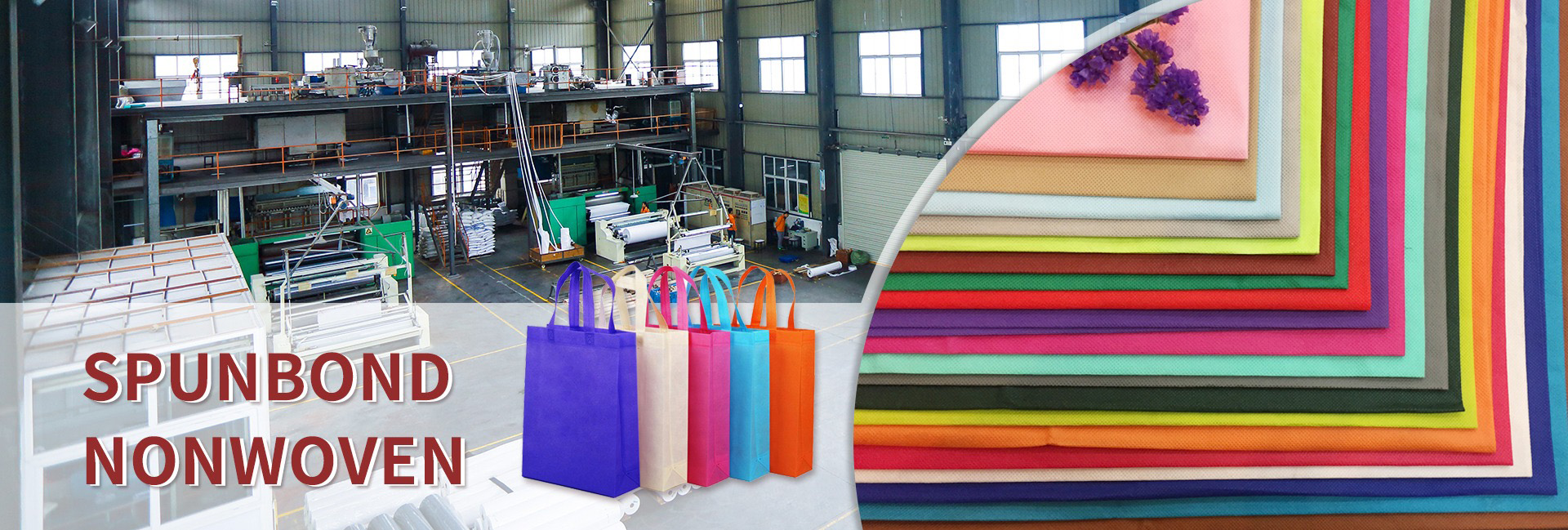
Dongguan Liansheng Non woven Technology Co., Ltd. was established in May 2020. It is a large-scale non-woven fabric production enterprise integrating research and development, production, and sales. It can produce various colors of PP spunbond non-woven fabrics with a width of less than 3.2 meters from 9 grams to 300 grams.
Post time: Jun-04-2026