
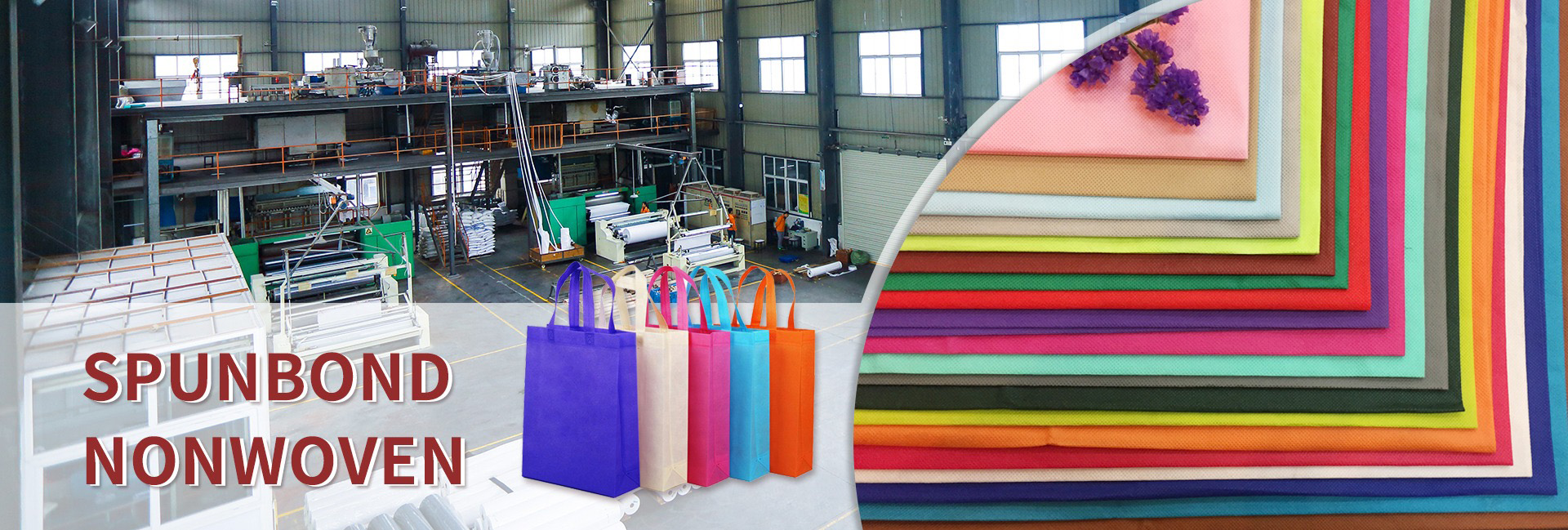
Automotive lightweighting has become the core theme of global automotive industry upgrading, with the core goal of improving the range of new energy vehicles and reducing the energy consumption of fuel vehicles through material substitution and structural optimization. Spunbond nonwoven fabric, with its comprehensive advantages of “low density, high strength, modifiability, and low cost”, has become one of the core choices for lightweight materials. This demand side transformation not only directly drives the expansion of the spunbond non-woven fabric industry, but also forces the industry to achieve comprehensive upgrades in technology research and development, product structure, and industrial pattern. At the same time, it also brings new challenges and development opportunities, and deeply reconstructs the industry’s development path.
Driving continuous expansion of industry scale, optimizing and upgrading demand structure
The promotion of automotive lightweighting has a primary impact on expanding the market demand boundary of spunbond nonwoven fabrics, promoting steady growth in industry scale, and driving the transformation of demand structure towards high-end and customized products, completely breaking away from the traditional low-end accessory market positioning.
From the perspective of market size, the rapid penetration of new energy vehicles has become the core growth engine. Compared to traditional fuel vehicles, which consume 15-20 kilograms of non-woven fabric per vehicle (with spunbond accounting for 60%), new energy vehicles have a more urgent demand for lightweight, increasing the consumption of non-woven fabric per vehicle to 22-28 kilograms. High end models even exceed 35 kilograms, and spunbond non-woven fabric corresponds to a consumption of 13.2-16.8 kilograms per vehicle, which is more than 40% higher than traditional fuel vehicles. By 2025, China’s new energy vehicle production will exceed 10 million units, accounting for 31.2% of the overall vehicle production, driving the scale of spunbond nonwoven fabrics for automobiles to reach 7.68 billion yuan.
In 2026, with the continuous increase in new energy vehicle production, the market size of China’s automotive nonwoven fabrics is expected to exceed 14 billion yuan, and the proportion of spunbond categories will remain above 60%, corresponding to a scale of over 8.4 billion yuan. The overall industry growth rate will remain at 12% -15%, significantly higher than the average growth rate of the nonwoven fabric industry. At the same time, the lightweight upgrade of traditional fuel vehicles continues to release demand. By replacing traditional materials such as plastics and fabrics with spunbond materials, the amount of spunbond used per vehicle has steadily increased, forming a dual driving pattern of “new energy increment+traditional vehicle stock upgrade”.
From the perspective of demand structure, lightweight demand is driving the transformation of spunbond nonwoven fabrics from ordinary interior materials to high-end functional and customized products. In the past, the industry mainly focused on universal PP spunbond products, while automotive lightweighting requires materials to balance multiple functions such as strength, sound insulation, flame retardancy, and low VOC while reducing weight. This has forced an increase in demand for high-end functional spunbond products.
By 2026, the proportion of high-end functional products will increase from 35% in 2024 to 42%. Among them, the demand for lightweight core scenarios such as interior panels, soundproofing felt, and carpets is the most prominent, accounting for more than 60% of the demand for spunbond non-woven fabric vehicles in the interior field alone. At the same time, new lightweight scenarios such as battery pack protection and body structural components have been added, further expanding the demand boundary and promoting the continuous optimization of industry demand structure.
Forcing material and process upgrades, breaking through performance bottlenecks
The lightweighting of automobiles has put forward higher requirements for the performance of spunbond nonwoven fabrics – while reducing density and weight, it is necessary to ensure sufficient mechanical strength, temperature resistance, and functional integration. This demand forces the industry to increase research and development investment in material modification and process optimization, and promote continuous technological iteration.
In terms of material modification, the core is to achieve a balance between lightweight and high strength. The industry is gradually promoting high-strength modification technology, which improves the mechanical properties of spunbond nonwoven fabrics through carbon fiber reinforcement, nano coating modification, and other methods. For example, PET spunbond nonwoven fabrics can have a density as low as 0.1g/cm ³ and a tensile strength of ≥ 25N/5cm after carbon fiber reinforcement modification, while retaining the lightweight advantage and adapting to the lightweight needs of vehicle structural components; Customized modifications for different scenarios have become mainstream.
The engine compartment soundproofing felt needs to use high-temperature resistant PET spunbond materials (temperature resistance ≤ 150 ℃), battery pack protection needs to use flame-retardant modified products (ultimate oxygen index ≥ 32), and interior products need to meet low VOC requirements (VOC emissions ≤ 50 μ g/g). These breakthroughs in modification technologies have significantly increased the added value of spunbond non-woven fabrics. In addition, the research and application of bio based spunbond materials (PLA, PHA fibers) are accelerating, which not only meets the demand for lightweight, but also conforms to the trend of green environmental protection. Its market share has increased from 8% in 2022 to 15% in 2024, and is expected to reach over 25% in 2026.
In terms of process optimization, composite and forming processes have become the focus of upgrading. The SMS (spunbond meltblown spunbond) composite process is widely used, which achieves a dual improvement in strength and function through the structure of “outer spunbond support+middle meltblown function”, adapting to the lightweight and multifunctional needs of high-end car models; The upgrading of processes such as compression molding and air flow stretching into a mesh enables spunbond non-woven fabrics to accurately adhere to complex shapes such as automotive interior panels and chassis guards, with a molding accuracy of ± 0.5mm. It can adapt to large-scale automotive production without the need for additional dedicated production lines, and the production efficiency has increased by 30% compared to the industry average. At the same time, the industry is promoting energy-saving upgrades in production processes, reducing wastewater and exhaust emissions, and balancing lightweight needs with green production goals. Some enterprises have achieved batch use of over 30% recycled raw materials, further optimizing production costs and environmental performance.
The increase in R&D investment has become an important support for technological iteration. By 2025, the R&D investment in China’s automotive non-woven fabric industry will account for 4.2% of sales revenue, an increase of 1.3 percentage points from 2020. Among them, the R&D investment in new energy vehicle specific spunbond non-woven fabric technology will exceed 35%, and the commercialization process of cutting-edge technologies such as nanofiber technology and intelligent responsive materials will continue to accelerate.
Promote intensive development of the industry, accelerate localization substitution
The high-end and customized demand brought by the lightweighting of automobiles has promoted the transformation of the spunbond nonwoven industry from decentralized competition to intensive development, while accelerating the process of domestic substitution and reconstructing the global industrial competition pattern.
The continuous increase in industry concentration is the core trend. Automobile manufacturers have strict requirements for the quality stability and delivery capability of lightweight materials, and are more inclined to cooperate with leading enterprises with large-scale production capacity, core technology, and customized service capabilities, forcing small and medium-sized manufacturers to exit the market or transform into segmented fields.
By 2025, the total number of Chinese automotive non-woven fabric production enterprises will reach 342, with 68.4% of enterprises above designated size and 45.6% of the total production capacity of the top ten enterprises. It is expected that the industry concentration will continue to increase in the next five years, and the market share of the top ten enterprises is expected to exceed 65%. Leading enterprises consolidate their advantages through capacity expansion, mergers and acquisitions, while deepening collaborative cooperation with automotive and battery manufacturers, deeply participating in the early design of vehicles and battery packs, forming a closed loop of “demand research and development production”, and further expanding their competitive advantages.
The process of localization substitution continues to accelerate. Previously, the high-end automotive spunbond non-woven fabric market was mainly monopolized by multinational companies such as DuPont and Kodebao. However, with the technological breakthroughs of domestic enterprises such as Hengtian Fiber, Huafang Co., Ltd., and Wuxi Xinhaokai, the import substitution of high-end products has gradually been achieved. Domestic enterprises, relying on their localization advantages, can quickly respond to customized needs of car companies while controlling production costs, with significant cost-effectiveness advantages.
For example, the lightweight spunbond ceiling substrate produced by Wuxi Xinhaokai is 40% lighter than traditional materials and has a rebound rate 35% better than traditional sponges. It has been matched with car companies such as BYD and NIO, with an annual supply of over 3000 tons of automotive materials. By 2026, the market share of Chinese enterprises in the global automotive non-woven fabric market is expected to reach 28.4%, an increase of 2.7 percentage points from 2025. The number of Chinese enterprises among the top ten non-woven fabric companies in the world has increased from 2 to 4, gradually breaking the monopoly pattern of multinational enterprises.
The industrial cluster effect is further highlighted, and the regional layout continues to be optimized. As the core cluster of China’s automotive industry, the production capacity of spunbond nonwoven fabrics is concentrated in the East and South China regions. Among them, the production capacity of East China accounts for 42.3% of the national total, while Jiangsu Province ranks first in the country. The production capacity of spunbond nonwoven fabrics for new energy vehicles in South China accounts for 35.2%, which is 8.7 percentage points higher than the national average level. The formation of industrial clusters effectively reduces logistics costs and supply chain collaboration costs, promotes upstream and downstream collaborative upgrading of the industrial chain, and forms a collaborative development ecology of “automobile manufacturing spunbond materials”.
Extend from interior to core structural components, broaden market boundaries
The demand for automotive lightweighting not only drives the increase in the use of spunbond non-woven fabrics in existing scenarios, but also extends their application scenarios from traditional interiors to body structural components and exclusive parts for new energy vehicles, completely breaking the positioning of “only as auxiliary materials” and becoming the “core skeleton” material for automotive lightweighting.
The usage of traditional interior scenes continues to increase, and lightweight upgrades are achieved through material substitution. In traditional scenarios such as interior panels, soundproofing felt, carpets, etc., spunbond non-woven fabric is used to replace ABS plastic, traditional velvet, asphalt soundproofing felt and other materials, achieving significant weight reduction. For example, spunbond based interior panels can reduce weight by 30% -50% compared to traditional ABS plastic, and the total weight of the vehicle’s interior panels can be reduced by 3-5 kg; spunbond composite soundproofing felt can reduce weight by 40% -60% compared to traditional asphalt soundproofing felt, while improving soundproofing effect by 15% -25%, becoming the core choice for interior lightweighting, suitable for all models of passenger and commercial vehicles.
Core structural components have become a new incremental scenario, further expanding market boundaries. With the improvement of mechanical properties of spunbond materials, they have gradually penetrated into the field of vehicle structural components, used for chassis guards, bumper linings and other parts. Through high-strength modification treatment, they can withstand a tensile force of 2700 Newtons and weigh only 1/5 of traditional metal guards. They can achieve lightweight and provide reliable impact resistance and wear-resistant protection, helping the whole vehicle reduce weight by 2-3kg. Such products have been embedded in multiple models such as Tesla, BYD, and Ideal, becoming an important breakthrough in vehicle lightweighting.
The demand for exclusive scenarios for new energy vehicles has exploded, forming a differentiated growth pole. The demand for lightweight and safety protection of new energy vehicle battery packs has promoted the application of spunbond non-woven fabrics in scenarios such as flame retardant separation, insulation protection, waterproof and breathable battery packs, becoming a core scenario for new growth; At the same time, the demand for motor sound insulation, charging port protection, and other scenarios is gradually being released, further expanding the application boundaries of spunbond non-woven fabrics and forming a dual growth pattern of “traditional scene quality improvement+new scene expansion”.
The key breakthrough point for industry upgrading
While automotive lightweighting brings development opportunities to the spunbond nonwoven industry, it also brings new challenges, forcing the industry to break through development bottlenecks and achieve high-quality upgrades.
The core challenges focus on two aspects: firstly, the high-end technological barriers are relatively high, and cutting-edge technologies such as nanomodification and multifunctional integration are still controlled by some multinational enterprises. Domestic enterprises still have gaps in the stability and consistency of high-end products, making it difficult to fully meet the stringent requirements of high-end luxury car models; Secondly, cost pressure persists, with high prices for high-performance modified raw materials such as carbon fiber and bio based fibers, coupled with increased research and development investment, making it difficult for some small and medium-sized enterprises to afford, further exacerbating industry differentiation.
The corresponding development opportunities are also significant: firstly, the continuous release of policy dividends, China’s “dual carbon” goals, automotive lightweighting policies, as well as EU RoHS, REACH and other environmental certifications, promote car companies to accelerate the adoption of green lightweight materials, providing a favorable development environment for the spunbond nonwoven industry; Secondly, there is a vast space for technological innovation, and breakthroughs in cutting-edge fields such as bio based materials and intelligent responsive spunbond materials are expected to drive the industry to achieve leapfrog development; Thirdly, there is enormous potential for globalization layout. Domestic enterprises can rely on their cost-effectiveness advantages to expand into the overseas new energy vehicle market and increase their global market share. Wuxi Xinhao Kai and other enterprises have achieved product exports, with the export proportion increasing to 28% year by year.
Summary
Automotive lightweighting is the core driving force for the high-quality development of the spunbond nonwoven industry, and its impact runs through the entire industry chain – it not only drives the continuous expansion of market size, promotes the upgrading of demand structure towards high-end and customized, but also forces the industry to achieve technological iteration in material modification and process optimization, while accelerating the intensive development of the industry and the process of domestic substitution, and broadening the boundaries of application scenarios. For spunbond nonwoven fabric enterprises, only by focusing on the core demand for automotive lightweighting, increasing investment in high-end technology research and development, enhancing customized service capabilities, and balancing green environmental protection and cost control, can they seize industry development opportunities, break through technological barriers, and stand out in industry differentiation.
In the future, with the deepening of automotive lightweighting and continuous breakthroughs in biobased materials and nanofiber technology, spunbond nonwoven fabrics will further replace traditional materials and achieve deeper penetration in automotive interiors, structural components, new energy battery packs, and other scenarios. They will be completely upgraded from “automotive accessories” to “lightweight core materials”, continuously supporting the automotive industry to upgrade towards high efficiency, environmental protection, and energy conservation, while promoting the global competitiveness of the spunbond nonwoven fabric industry.
Dongguan Liansheng Non woven Technology Co., Ltd. was established in May 2020. It is a large-scale non-woven fabric production enterprise integrating research and development, production, and sales. It can produce various colors of PP spunbond non-woven fabrics with a width of less than 3.2 meters from 9 grams to 300 grams.
Post time: Feb-12-2026