
As moms know, changing diapers is a ‘practical exercise’ – slow to leak urine, fast to not clean thoroughly, and having to operate blindly with eyes closed in the middle of the night. But have you ever thought about what secrets are hidden inside and outside of that magical tool that can hold a baby’s urine for several bubbles without reflux, leakage, and dry buttocks?
Many people think that diapers rely solely on “absorbent beads” (polymer absorbent resin) to support the surface, but yes, that thing can indeed absorb water. But what really makes diapers leak free, not stuffy, and not sticky to the bottom are actually two “invisible heroes” that are low-key to the dust – the flow guiding layer and the bottom film.
And they both have a common soul material that they cannot do without: PP spunbond non-woven fabric .
Today, let’s take apart and crush the diapers to see why these two layers of “plastic cloth” can debut in the C-section. We can’t take away any other materials we want.
Diversion layer: a high-speed diversion channel for liquids, which is indispensable
Let’s talk about the diversion layer first. Its position is between the surface layer (the soft non-woven fabric directly attached to the baby’s skin) and the absorbent core (the bulging core layer filled with absorbent beads).
You might say: Isn’t it just a layer of cloth sandwiched in the middle? Just find any material with holes to guide the liquid, okay?
Too naive.
Baby’s urine is not scattered like a heavenly maiden, but concentrated at a certain point to release water. If there is no diversion layer, urine will stick firmly to that landing point, and only that small piece of the absorbent core will desperately absorb water, leaving the rest of the body staring blankly. The result is local saturation, reflux, and a wet “red area” covering the baby’s buttocks.
The task of the diversion layer is to quickly spread the urine into a large cake – horizontally diffusing and vertically penetrating, allowing the entire absorbent core to work together. This requires the diversion layer to possess three abnormal level characteristics:
Hydrophilic but not water storing – able to quickly grasp liquids and deliver them, never obsessed with battle.
Stable pore structure – cannot collapse immediately after being washed away by urine, otherwise the liquid cannot pass through.
Thin, soft, and non irritating – After all, if it is placed under the buttocks, it will not cause discomfort.
So the question is: why does this responsibility have to be entrusted to PP spunbond non-woven fabric ?
1. Spunbond technology creates a ‘highway network’
PP spunbond non-woven fabric is made by melting polypropylene, extruding continuous filaments from a spinneret, and then laying them into a mesh and hot-rolled reinforcement. The non-woven fabric produced in this way has continuous filament fibers, rather than short fibers bonded together. What does filament mean? This means that the liquid can smoothly ‘slide’ from one fiber to another, without being blocked by breakpoints like short fibers. The pore structure of spunbond fabric is like an orderly highway network, where urine falls onto it and, driven by capillary effects, rapidly spreads horizontally along the fibers while penetrating downwards.
If ordinary hot air non-woven fabric or water jet cloth is used, either it is too dense, the flow rate is slow, or the pores are uneven and the diffusion is uneven. Only PP spunbond can achieve both fast and uniform at the same time.
2. The ultimate skill of “hydrophilic modification”
Pure PP is hydrophobic, that’s right. But the most impressive thing about PP spunbond non-woven fabric is that it can be transformed into a “pseudo hydrophilic” material through hydrophilic finishing – adding hydrophilic agents or blending hydrophilic jellyfish particles. The surface tension is lowered, and water molecules are sucked in as soon as they touch, but the fibers themselves do not swell or deform. The water passes by and does not “linger”. In this way, the diversion layer itself has almost no water storage, and the backflow rate is extremely low.
Mother fans all know that diapers are most afraid of “leakage” – when you press them with your hand, they become damp. A good guide layer paired with PP spunbond can achieve a infiltration rate of less than 3 grams. What is the concept? A tissue doesn’t even feel damp when pressed.
3. Strong enough, unbreakable and residue free
The filament structure of spunbond non-woven fabric makes it inherently tear resistant and lint free. Diapers run at high speed on the production line, with hundreds of pieces per minute. The flow guiding layer needs to be embossed, compounded, and cut with a knife… If it is a short fiber cloth, it is easy to fall off and become fuzzy, and even break on the production line. And PP spunbond fabric is so stable that it won’t break no matter how you rub it. After putting it on, the baby crawls and kicks, and the flow guide layer remains intact, without breaking into debris and sticking to the buttocks.
Bottom film: How to achieve a leak proof and breathable “raincoat”?
Let’s talk about the bottom film. The bottom film is the outermost layer of the diaper, which directly contacts the baby’s clothes and bed sheets. Its task is very divided: it must not leak urine, but it must also allow moisture to escape.
It’s like asking for a raincoat that can block pouring rain but doesn’t make you sweat – can ordinary plastic film do it? Ordinary PE film has first-class waterproof performance, but its breathability is about zero. It’s like wrapping a baby’s buttocks in a plastic bag, and the red buttocks come knocking at the door in minutes.
So, the PP spunbond non-woven composite microporous membrane became the top flow at the bottom membrane boundary.
1. Micro porous breathable, allowing only water vapor to pass through
The bottom film of modern high-end diapers is usually a composite of PE microporous film and PP spunbond non woven fabric. There are countless tiny pores (0.1-0.5 micrometers in diameter) that are invisible to the naked eye on the PE film, larger than water vapor molecules but much smaller than liquid water molecules. In this way, water vapor can easily escape, while urine molecules cannot be squeezed out – physically leak proof.
What is PP spunbond non-woven fabric doing here? Two functions: * * increase strength and improve tactile sensation * *. The PE microporous membrane itself is soft and thin, and it can break easily when pulled, giving a plastic feel to the touch. After laminating with a layer of PP spunbond non-woven fabric, the bottom film becomes tear resistant like fabric, and the surface has a matte texture of fibers, no longer shiny plastic skin, making it much more comfortable to touch.
2. Why can’t other non-woven fabrics work?
Someone asked: Is it possible to use PET spunbond? Can we use adhesive to prick it?
PET (polyester) is too hard, making the bottom film will turn diapers into “hard shell paper”, and the bottom of the baby’s thighs will be worn red. The adhesive fibers expand and soften when they come into contact with water, and their leak proof performance decreases linearly. And their heat sealing performance is not as good as PP – the production of diapers relies on hot melt adhesive to bond each layer. PP spunbond non-woven fabric has a suitable melting point and excellent affinity with PE film and hot melt adhesive, which can firmly stick together without delamination.
Only PP spunbond, combining softness, strength, breathability, and heat sealing, with a cheap price. How do you think about using other materials?
3. Breathable but impermeable ‘mask’
Many people mistakenly believe that the breathability of the bottom film relies on the non-woven fabric itself, which is incorrect. The real water barrier is PE microporous membrane, but why do people always touch the outer layer of diapers to see if it feels like a “fabric”? Because pure PE film feels like slippery plastic, mothers may feel stuffy. After compounding with PP spunbond non-woven fabric, it not only has the warm feel of the fabric, but also does not sacrifice waterproof and breathable performance, which is a perfect “user experience black technology”.
It is also indispensable in other locations, but the diversion layer and bottom membrane are the most indispensable
In fact, diapers also have a surface layer (skin layer), waist patch, and anti leakage three-dimensional protective fence, many of which are made of PP spunbond non-woven fabric. But those positions can sometimes be replaced with hot air non-woven fabric (softer). Only the guide layer and bottom film, if replaced with PP spunbond, will have poor performance.
-If spunbond is not used for the diversion layer, the diffusion speed will be slower by more than 30%, and the infiltration rate will double.
-If spunbond composite is not used for the bottom film, it will either leak urine or cause red buttocks to be stuffy.
That’s also why when you buy diapers, when you open the expensive and cheap ones, you’ll see that the flow guiding layer of the cheap ones may be made of hot-rolled fabric, which is thin and hard, and the liquid cannot spread out at all; The bottom film is a layer of PE film, which is smooth and stuffy. And for high-end brands, the guiding layer and bottom film will definitely be labeled with “PP spunbond non-woven fabric” – although it is not a selling point, experts know that this is the bottom line.
In conclusion
A small piece of diaper, made of five or six different materials from inside to outside, but the flow guiding layer and bottom film are stuck on PP spunbond non-woven fabric. It’s not because there’s no other choice, but because it’s so powerful: * * After hydrophilic modification, it can guide water like flying, and when hydrophobic and breathable, it doesn’t leak water. Its strength is so high that it can be easily trampled on the production line, and it’s so soft that babies can turn over without feeling * *.
It’s like an ‘invisible agent’ in a diaper – you never see it appear alone, but without it, the entire system would be paralyzed.
Next time you change your baby’s diaper, why not touch the fabric like bottom film on the outside and think about the thin, cicada wing like flow guiding layer in the middle. These two pieces of “plastic cloth” are silently guarding the baby’s night’s sleep with unimaginable technological content.
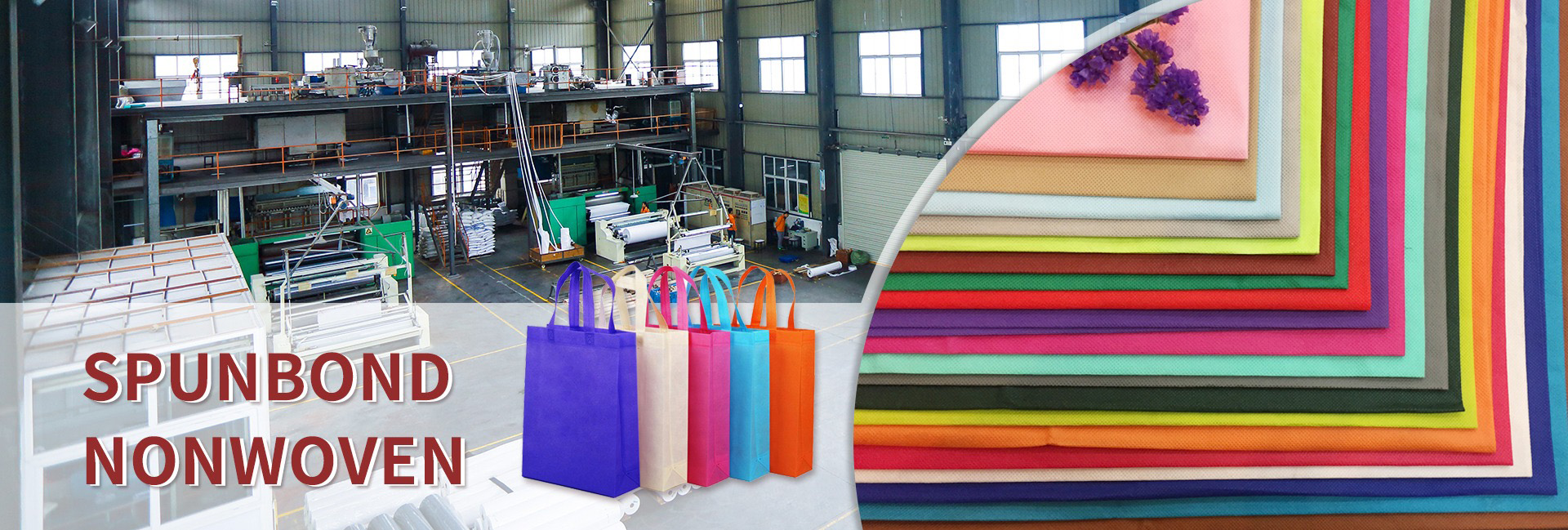
Dongguan Liansheng Non woven Technology Co., Ltd. was established in May 2020. It is a large-scale non-woven fabric production enterprise integrating research and development, production, and sales. It can produce various colors of PP spunbond non-woven fabrics with a width of less than 3.2 meters from 9 grams to 300 grams.
Post time: Jun-02-2026