
Have you ever had such an experience?
In the morning, I was so tired that I couldn’t open my eyes. I tore open a bag of hanging ear coffee, and as soon as I rinsed it with hot water, the aroma instantly permeated the entire office. Or during work breaks, throw a tea bag into the cup and watch the dark brown tea slowly leach out.
After soaking it and throwing it away, you probably never thought: What material is that thin, paper like small bag made of?
Most people think it’s “paper” – after all, it won’t break when soaked in water, and it doesn’t look like plastic. But the truth may surprise you slightly: The tea bags and ear hooks you drink every day are not made of paper, but food grade PP non-woven fabric.
That’s right, it’s the familiar name again - PP non-woven fabric. From masks, wet wipes to diapers, from orchard weed proof fabric to eco-friendly courier bags, it has permeated every aspect of our lives. Nowadays, even the cup of tea you brewed has not been spared.
Why does it look like paper but feel like cloth?
Let’s do a small experiment first.
Tear open a used tea bag and lay it flat on the table. You will find that its texture is neither as fragile as ordinary paper when it comes into contact with water, nor as smooth and impermeable as plastic film. It is soft and has a certain degree of toughness, with subtle fiber textures faintly visible on the surface.
The scientific name of this material is food grade PP non-woven fabric (polypropylene non-woven fabric) , and the manufacturing process is the same as the mask non-woven fabric we discussed before: polypropylene particles are melted at high temperature, extruded, spun, laid, and hot-rolled to form a uniform, permeable, and foam resistant “fabric”.
The reason why it looks like paper is because its fibers are extremely fine, and the surface has high flatness after calendering treatment, making it difficult for the naked eye to distinguish fiber intersections. But its essence is still plastic – just a plastic that is widely recognized by global food safety agencies and can come into contact with hot water.
Why is it PP? Three major reasons make it “superior”
Tea bags and ear bags have very strict requirements for materials: they must be resistant to high temperatures, have fast water permeability, have no odor, and be safe and non-toxic. Looking at the entire material industry, PP is almost the only solution that can simultaneously meet these conditions.
Firstly, it is resistant to high temperatures and does not deform when brewed with boiling water. The melting point of PP is around 160-170 ℃, while boiling water is only 100 ℃. During the brewing process, PP non-woven fabric neither softens nor deforms, nor releases harmful substances. In contrast, ordinary paper will chip and soften in hot water, while other plastics such as PE (polyethylene) have poor heat resistance and are prone to shrinkage when approaching boiling point.
Secondly, it has excellent filtering ability, only leaking tea soup without residue. The fiber diameter of PP non-woven fabric is usually between a few micrometers and tens of micrometers, and the pore size is precisely controlled. It can allow water molecules and soluble substances such as tea polyphenols and caffeine to pass through smoothly, but it can firmly block tea leaves and coffee powder. That’s why when you use a hanging ear bag to make coffee, there is almost no residue at the bottom of the cup.
Thirdly, it is odorless and does not interfere with the original flavor. Polypropylene itself has no odor and does not absorb the aroma of tea or coffee. If you have ever used inferior pulp tea bags, you may drink a pulp smell – that is lignin and bleach residue. However, PP non-woven fabric does not have this problem at all. It only acts as a “transmitter” and does not add any extra flavor.
Security risks? Food grade PP is safer than you imagine
Many consumers immediately become alert when they hear the word “plastic”: Will plastics release microplastics or harmful chemicals when soaked in hot water?
This concern is not unfounded. In 2024, a study by McGill University in Canada found that a plastic tea bag releases approximately 11.6 billion microplastic particles in hot water at 95 ℃. The research caused a global uproar. But it needs to be distinguished that the study used “silk tea bags” made of nylon (PA) or PET (polyester) material, rather than PP non-woven tea bags.
PP is widely recognized as one of the safest food contact plastics. It is listed as a “touchable food” material by the US FDA, EU EFSA, and Chinese food safety standards, and can be used for microwave heating and boiling water immersion. PP hardly releases monomers or additives at high temperatures, and has extremely high chemical stability.
Of course, this does not mean that all PP non-woven tea bags are absolutely safe. The key lies in the three words’ food grade ‘. Legitimate brands will use PP raw materials that do not contain plasticizers, bisphenol A, and comply with the GB 4806 series standards. Poor quality products may use recycled materials or industrial grade PP, which may contain impurities and harmful substances.
So, when choosing, it is more effective to identify big brands and see their logos clearly than to be fixated on the material itself.
Should disposable ‘plastic sheeting’ be despised?
Tea bags and ear bags are almost all disposable. After brewing for two or three minutes, they are thrown into the trash can along with coffee grounds and tea leaves.
From an environmental perspective, this is indeed the “soft spot” of PP non-woven fabric. Although it degrades faster than traditional plastics (starting to become brittle after about 90 days outdoors), the degradation process is still lengthy in sealed landfills.
However, from a different perspective, it actually has its own advantages and disadvantages compared to traditional pulp tea bags:
-Pulp tea bags: The raw material comes from trees and requires a large amount of water and bleach. The sealing area often uses heat sealing glue or plastic fibers, which are not completely biodegradable.
-PP non-woven tea bag: It has low production energy consumption, does not require water, and does not need bleaching, but it belongs to plastic. Improper disposal after disposal can cause pollution.
Currently, more environmentally friendly solutions are emerging. Some brands have started using tea bags and ear bags made of PLA non-woven fabric, which is sourced from renewable resources such as corn starch and can be completely biodegraded under industrial composting conditions. But PLA has a higher cost and requires specialized composting facilities, which cannot be degraded by ordinary households throwing it into the trash can.
For ordinary consumers, a simple and effective approach is to cut open used tea bags or ear bags, pour tea and coffee grounds into kitchen waste or compost, and throw the remaining PP non-woven outer bag into other garbage. This not only reduces the “pollution” of organic matter on plastics, but also reduces the burden on subsequent processing.
Industry Trend: Say Goodbye to Plastic or Improve Plastic?
Under environmental pressure, the tea bag industry is undergoing a “material revolution”.
Lipton, a subsidiary of Unilever, announced in 2018 that all of its tea bags would use biodegradable materials; Brands such as Chuanning are also promoting plastic free tea bags. However, it should be noted that many so-called “plastic free tea bags” only change the sealant from PP to plant-based materials, and the main filter layer is still PP non-woven fabric – because there is currently no perfect substitute that can completely degrade, withstand high temperatures, and not leak residue.
The situation with coffee ear bags is similar. UCC、 Some products of brands such as Starbucks have started piloting PLA non-woven fabrics, but due to the slightly lower heat resistance of PLA compared to PP and a 30% -50% higher price, comprehensive replacement still needs time.
It can be foreseen that in the next few years, PP non-woven fabric will still be the mainstream material for tea bags and hanging ear bags. This substitution will not truly be completed until the performance and cost of biodegradable materials reach a balance point.
Write at the end
A cup of good tea or coffee opens up your day, and behind that inconspicuous piece of “paper” is another low-key appearance of PP non-woven fabric across multiple fields such as food, healthcare, agriculture, and packaging.
It is neither natural paper nor wicked plastic waste. It is just an industrial product that has found the best balance between safety, performance, and cost. You can choose to continue using it or opt for biodegradable alternatives for environmental reasons – but before that, you should at least know what you are drinking every day.
The next time you tear open the ear bag, why not take a closer look at that thin layer of non-woven fabric. It may remind you of the masks, wipes, linens, and courier bags we talked about before – the same protagonist, different stages.
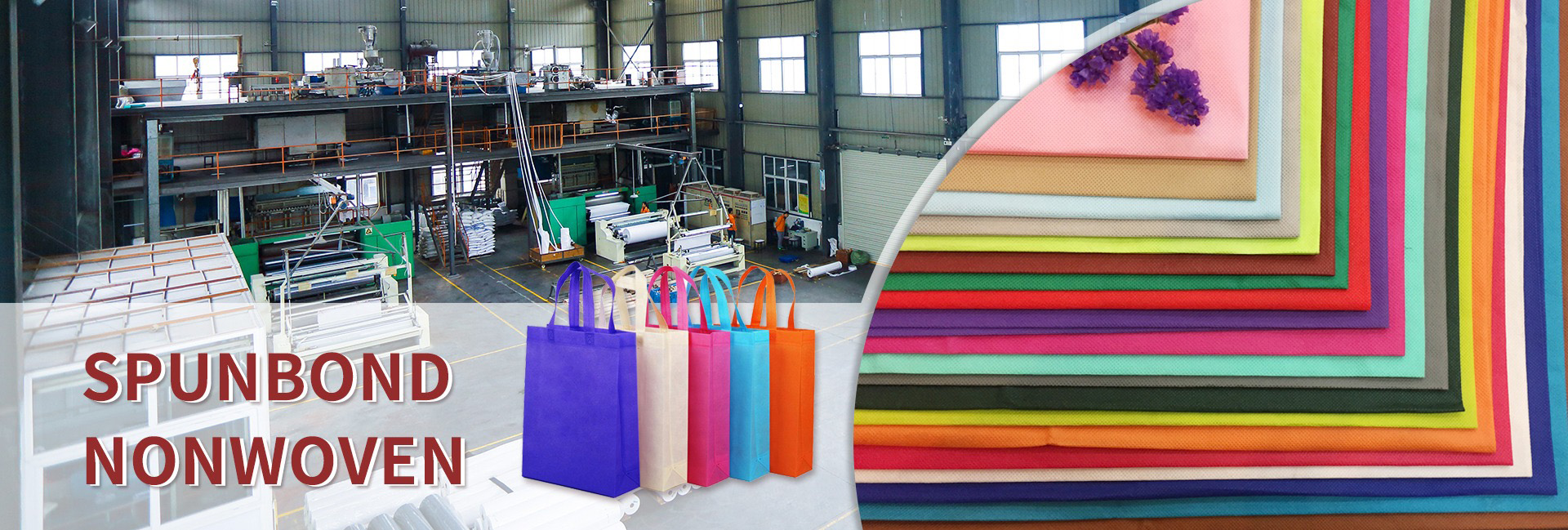
Dongguan Liansheng Non woven Technology Co., Ltd. was established in May 2020. It is a large-scale non-woven fabric production enterprise integrating research and development, production, and sales. It can produce various colors of PP spunbond non-woven fabrics with a width of less than 3.2 meters from 9 grams to 300 grams.
Post time: Jun-05-2026