
A cup of hanging ear coffee in the morning and a cup of bagged tea in the afternoon are almost seen every day in modern life extending rituals. Have you ever been curious: why does the thin layer of “paper” when brewing tea not rot, break, or fall off when soaked in water? Why can coffee powder be trapped and hot water flow smoothly, but I have never seen it mold or deform?
The answer may surprise you – that’s not paper, that’s food grade PP non-woven fabric .
That’s right, it’s our old friend again: polypropylene non-woven fabric. It quietly infiltrated your tea and coffee cups, perfectly playing the role of an ‘invisible filter’ in a way that you couldn’t see through. Today, let’s uncover why this layer of “fake paper” dominates the world of tea bags and hanging ear bags, and why it is more sophisticated than you imagine.
If you really use paper to make tea bags, the first brew will rot
First, let’s do a thought experiment: What happens when you throw a regular piece of paper into hot water? In less than half a minute, it absorbs enough water, becomes soft, and shatters at a touch. The fibers absorb water and expand, causing the paper to lose its strength and turn into a paste with just a stir.
If the tea bag is really made of paper, just as you put the tea bag into the cup, when hot water rushes, the tea bag will rot and the tea leaves will run all over the cup. You also have to pinch your nose to filter the tea leaves. Not to mention that the pulp itself may have a taste, the tea brewed has a “paper flavor”, and the scene is too beautiful to look at.
So, real tea bags and ear hanging bags must meet several “abnormal” requirements:
1. High wet strength : Soak in hot water for ten minutes, no matter how stirred, it won’t break.
2. Odorless and non migratory : Cannot release any odors or chemicals into the tea soup.
3. Appropriate filtration accuracy : Tea powder should not leak out, but flavor substances such as tea polyphenols and caffeine should be unobstructed.
4. Heat sealable : The edges of the tea bag need to be glued together and cannot be sewn (the stitching may leak powder).
5. Safe and non-toxic : Direct contact with food must comply with the strictest food safety standards.
These requirements come together and ordinary paper is directly eliminated. No matter how much wet strength treatment is done on plant fiber paper, it cannot reach the stubborn level of “not rotting underwater” like PP non-woven fabric. So, food grade PP non-woven fabric became the only choice.
Why is PP non-woven fabric “not rotten underwater”?
The core material of PP non-woven fabric is polypropylene, a highly hydrophobic plastic. Do you remember what was said before – PP itself does not absorb water, water droplets will roll away on it. After being made into non-woven fabric, countless tiny pores are formed between the fibers, but the surface of each fiber is still hydrophobic.
This is interesting: hot water can pass through pores, but the fibers themselves will not absorb water and expand, nor will they become soft. Like a sieve, water molecules rush past, but the sieve itself remains motionless. This is the reason why PP non-woven fabric remains as strong as new after soaking in water for an afternoon – it is not “wet strong” by absorbing water, but by being naturally non absorbent.
Moreover, the melting point of polypropylene is as high as 160-170 ℃, and your one hundred degree boiling water is like a “warm bath” for it, without any deformation or release of substances.
Is it necessary to perform hydrophilic treatment during the production process in order to make it suitable for making tea bags? On the contrary, tea bags and ear bags need to be kept hydrophobic so that water can flow smoothly and not be “trapped” by fibers. If PP non-woven fabric becomes too hydrophilic, the tea will seep slowly and the soaking efficiency will decrease. So the PP non-woven fabric used for tea bags is usually untreated or moderately hydrophilic (for wettability). This is a delicate balance.
PP non-woven fabric’s “table qualification certificate”
When it comes to plastics, some people may reflexively worry: “Will plastics release harmful substances when soaked in hot water? Will microplastics be ingested
It’s time to talk about the value of the three words’ food grade ‘here.
Food grade PP non-woven fabric is different from ordinary PP from the raw materials. It must use food contact grade polypropylene , which has undergone strict purification treatment and does not contain any harmful additives (such as heavy metals, plasticizers, fluorescent whitening agents, etc.). The production process should also be carried out in a clean workshop to avoid contamination.
There are strict regulatory controls both domestically and internationally. In China, it needs to comply with the GB 4806 series of national food safety standards; In Europe and America, compliance with FDA or EU Regulation No. 10/2011 is required. The testing items include total migration amount, potassium permanganate consumption, heavy metal residue, decolorization test, etc. Only when all are qualified, can the label “for food contact use” be printed on the packaging.
The seemingly inconspicuous tea bag in your hand has actually gone through a complete “security check” process.
As for concerns about microplastics, current research shows that food grade PP non-woven fabric will not release detectable microplastic particles under normal brewing conditions (below 100 ℃, for a few minutes to ten minutes). Because PP has extremely high heat resistance and chemical stability, the fibers will not degrade or fall off in a short period of time. Friends who are worried about “drinking plastic water” can rest assured that the plastic products you eat and drink every day are much more than tea bags, and the contribution of tea bags is almost negligible.
The “three-dimensional structure” of the ear bag is also supported by PP non-woven fabric
Hanging ear coffee tests materials more than tea bags. Take a closer look at the ear bag: it is a three-dimensional small “cup” with cardboard “ears” on both sides hanging on the rim of the cup. The middle layer of filter material not only needs to hold coffee powder, but also withstand repeated infusions of hot water at over 90 degrees Celsius for 2-3 minutes without breaking or collapsing.
Many ear bags use PP non-woven fabric (although PET non-woven fabric or biodegradable materials are also used, PP is one of the mainstream). It is tougher than ordinary filter paper and will not deform due to the impact of water flow. Moreover, the filtration speed of PP non-woven fabric is adjustable – by controlling the fiber fineness and porosity, the water flow rate can perfectly match the rhythm of hand brewed coffee, without blocking water (causing excessive extraction) or leaking fine powder (affecting taste).
Have you ever encountered some ear bags that drain water very slowly, taking half a day or a puddle? That may be because the non-woven fabric specification was chosen incorrectly or the coffee grinding was too fine. A good ear bag will use customized PP non-woven fabric to balance flow rate and filtration accuracy, making it easy for you to brew good coffee.
What about plastic in tea bags?
After talking about so many benefits, it’s time to talk about some worries. With the popularity of non-woven tea bags, an environmental issue has emerged: tea bags contain plastic.
Traditional tea bags often use PP non-woven fabric, which means it cannot naturally degrade. After you throw it into the trash can, it is either incinerated or buried underground for decades before decomposing. Even worse, some people casually throw tea bags into wet garbage (kitchen waste), and the workers at the processing plant find plastic inside, which they have to struggle to remove.
So now more and more brands are turning to biodegradable tea bags, such as using PLA (polylactic acid) non-woven fabric, or combining plant fibers (hemp, banana, wood pulp) with biodegradable materials. But to be honest, the heat resistance and stability of PLA are currently not as good as PP, and the price is also higher, so PP is still the main force on the market.
As a consumer, you can do two things:
-When buying tea bags, pay attention to the material instructions on the packaging and prioritize selecting tea bags that are “plastic free,” “biodegradable,” or “plant-based.
-If you have PP non-woven tea bags on hand, do not throw wet garbage after use. Instead, dispose of them in other garbage/dry garbage , which can at least be sent for incineration and power generation, rather than polluting the soil.
Tip : After soaking many tea bags in hot water, you can pick them up and dry them, cut them open and pour out the tea leaves. Then, which layer of PP non-woven fabric can be reused? Not very recommended, as it has already been soaked in hot water, the structure may undergo slight changes, and it is prone to bacterial growth. Let’s just throw away the garbage honestly.
In conclusion
A small piece of PP non-woven fabric, from the operating table to the baby’s buttocks, from the orchard to your teacup, is simply a ubiquitous’ hexagonal warrior ‘. It silently makes our lives convenient, hygienic, and efficient in the most inconspicuous scene, using the most low-key way.
Next time you tear open a bag of hanging ears or take out a damp tea bag from a cup, you can take a look at that thin layer of “paper” – it’s not paper, it’s an invisible hero woven from a group of polypropylene fibers. Its existence allows you to easily drink a clean cup of tea or coffee without filtering residue, washing the filter, or even getting your hands wet.
Behind the ultimate convenience, there is always the silent support of materials science. PP non-woven fabric, to you, the little hero who never rots underwater.
Do you usually drink tea or coffee? Have you ever paid attention to the material of tea bags or ear bags? Welcome to the comment section to chat. Let me give you another piece of cold knowledge: Early tea bags were made of silk, can you believe it?
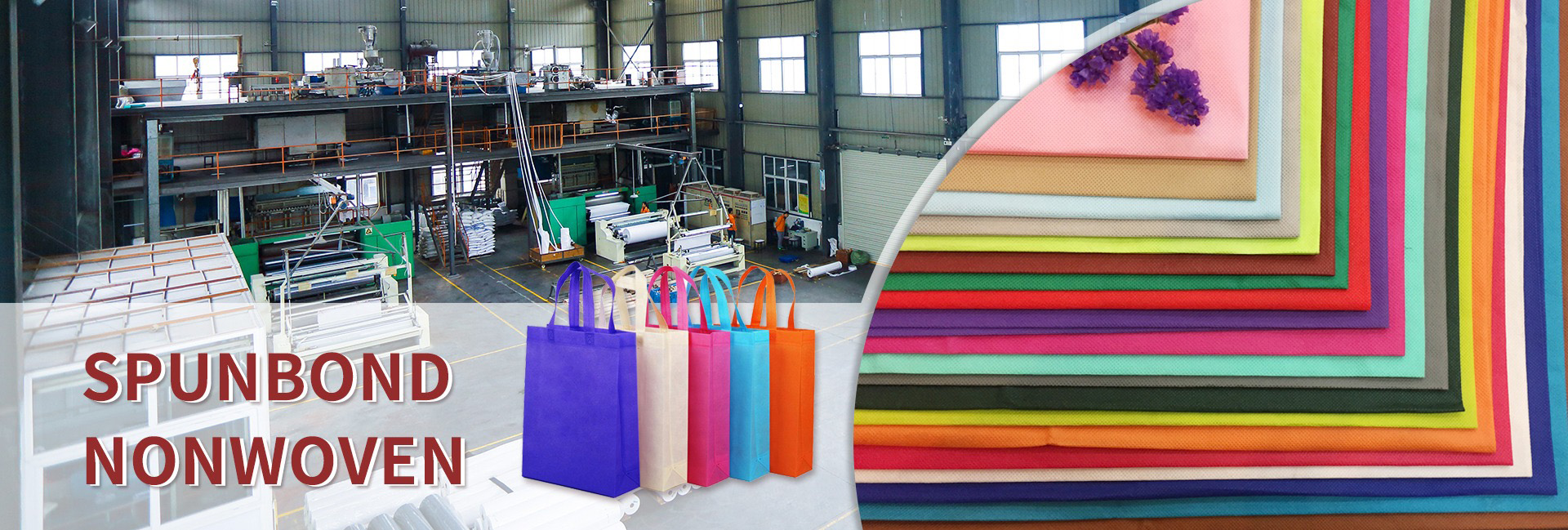
Dongguan Liansheng Non woven Technology Co., Ltd. was established in May 2020. It is a large-scale non-woven fabric production enterprise integrating research and development, production, and sales. It can produce various colors of PP spunbond non-woven fabrics with a width of less than 3.2 meters from 9 grams to 300 grams.
Post time: May-25-2026