
Anti aging spunbonded non-woven fabric: core framework and life cornerstone of waterproof roll
The service life of waterproof coiled material largely depends on the durability of the tire base material, and the anti-aging spunbonded non-woven fabric has become the core engine to extend the service life of outdoor building materials through material innovation and process optimization. This kind of material takes polypropylene (PP) or polyester (PET) filament as the base material, introduces anti-aging modification technology after spunbonded molding, and undertakes three core functions of “structural support, stress transmission, and environmental barrier” in the waterproof coiled material. Its performance directly determines the service cycle of the coiled material in the outdoor environment – high-quality products can extend the service life of the waterproof system from 10-15 years of traditional materials to more than 50 years.
Anti aging core mechanism: blocking the degradation path at the molecular level
The longevity secret of anti-aging spunbonded non-woven fabric comes from precise formula design and process control, and its core mechanism can be summarized as “triple protection system”:
UV blocking protection: By adding 0.2% -0.4% hindered amine light stabilizers (such as bis (2,2,6,6-tetramethyl-4-piperidinyl) sebacate), the UV energy is efficiently absorbed and converted into heat energy for release, avoiding polymer molecular chain breakage. According to the GB/T 19977 standard test, after 720 hours of aging at 65 ℃, its performance degradation rate is only 7.4%, which is much better than the 30% degradation rate of ordinary non-woven fabrics.
Oxidative degradation inhibition: Incorporating 0.8% -1.0% quaternary pentanol ester antioxidants can decompose hydrogen peroxides generated during material aging, prevent free radical chain reactions, and ensure structural stability in high temperature and humid environments.
Interface stability enhancement: The dense mesh structure is formed by hot rolling mesh forming process, combined with surface silane coupling agent treatment, to improve the bonding strength with asphalt adhesive layer (peel strength ≥ 1.5 N/mm), avoiding accelerated aging caused by interlayer peeling.
Key performance advantage: Reshaping the environmental adaptability of waterproofing membranes
As a tire base material, anti-aging spunbonded non-woven fabric shows irreplaceable advantages in mechanical properties, weather resistance, adaptability, etc., and is more competitive than traditional tire base (HDPE film, SBS composite tire):
Performance dimension
breaking strength
Anti aging spunbonded non-woven fabric (PET/PP), warp ≥ 800 N/50mm, weft ≥ 600 N/50mm
HDPE film, longitudinal ≥ 500 N/50mm
SBS composite tire, longitudinal ≥ 400 N/50mm
Low temperature adaptability
Anti aging spunbonded non-woven fabric (PET/PP), bending at -25 ℃ without cracks (98.3% pass rate)
HDPE film, brittle at -20 ℃ (pass rate 82.6%)
SBS composite tire, asphalt hardened at -25 ℃ (pass rate 89.4%)
Chemical corrosion resistance
Anti aging spunbonded non-woven fabric (PET/PP), acid and alkali environment strength retention rate ≥ 91%
HDPE film, excellent in acidic environment (94.7%), slightly poor in alkalinity
SBS composite tire, with significant attenuation in both acidic and alkaline environments (≤ 68.9%)
Vapor permeability
Anti aging spunbonded non-woven fabric (PET/PP), 2000 g/(m ² • 24h) (release moisture from the base)
HDPE film, 5 g/(m ² · 24h) (prone to water accumulation and bulging)
SBS composite tire, moderate (with large fluctuations)
carbon footprint
Anti aging spunbonded non-woven fabric (PET/PP), 1.85 kg CO ₂ eq/㎡ (PET)
HDPE film, 1.62 kg CO ₂ eq/㎡
SBS composite tire, 2.31 kg CO ₂ eq/㎡
(Data source: White Paper on the Application of Self Adhesive Waterproof Membrane Tire Base Materials (2025) by the China Building Waterproofing Association and reports from the National Building Materials Testing Center)
Its unique advantages are also reflected in:
Mechanical balance: The interweaving structure of long filaments achieves a perfect balance between tensile strength and elongation (50% -80%), which can adapt to the settlement deformation of the base layer and reduce the risk of coil cracking;
Scenario adaptability: PP based products are resistant to acid and alkali, while PET based products are resistant to moisture and heat, and can be adapted to different scenarios such as underground engineering and roof waterproofing. For example, Xinhaokai PP spunbond non-woven fabric has achieved dual functions of water and soil conservation and waterproofing for 50 years in the underground engineering of the Hong Kong Zhuhai Macao Bridge;
Construction friendliness: The breathable and impermeable characteristics prevent the accumulation of condensation water, reducing the hollowing rate of the roof system to 2.1%, much lower than the 9.7% of the HDPE membrane system.
Engineering application value: life guarantee from major infrastructure to civil buildings
Anti aging spunbonded non-woven fabric has become the preferred tire base material for high-end waterproof projects, and its application value has been fully verified in major projects:
Infrastructure projects: Projects such as the Beijing Shanghai high-speed railway and the Hong Kong Zhuhai Macao Bridge use polypropylene spunbond non-woven fabric base waterproofing membranes, which can withstand extreme temperature differences of -20 ℃ to 60 ℃ and groundwater erosion. They have been in service for 10 years without aging or damage records, and the fracture strength retention rate still reaches over 92% of the initial value;
Green Building: The ecological park in Xiong’an New Area adopts PET spunbond non-woven fabric composite tire base, combined with copper ion slow-release layer to achieve a 10-year record of no root penetration, while improving the building’s energy efficiency by 15% through steam permeability;
Urban renewal: In the roof reconstruction of the old residential quarters in the Yangtze River Delta, recycled PET blended anti-aging tire base coiled material is used, which not only reduces the cost by 0.9 yuan/m2, but also meets the requirements of 30% recycled fiber for green building materials, and its service life is more than twice longer than that of traditional coiled materials.
Industry development trend: Low carbonization and functional integration
With the improvement of building industrialization and green development requirements, anti-aging spunbonded non-woven fabric base is evolving in two directions:
Low carbonization upgrade: The application of bio based PET (such as PTT), recycled HDPE and other raw materials has reduced the carbon footprint by 28% compared to traditional materials. Wanhua Chemical’s bio based PDO route products have passed pilot verification;
Functional compounding: Integrating anti root puncture, fire retardant, self-healing and other functions into one, such as adding nano silver treated spunbond non-woven fabric, while meeting the triple requirements of waterproof, antibacterial and fireproof, in line with the new building safety standards.
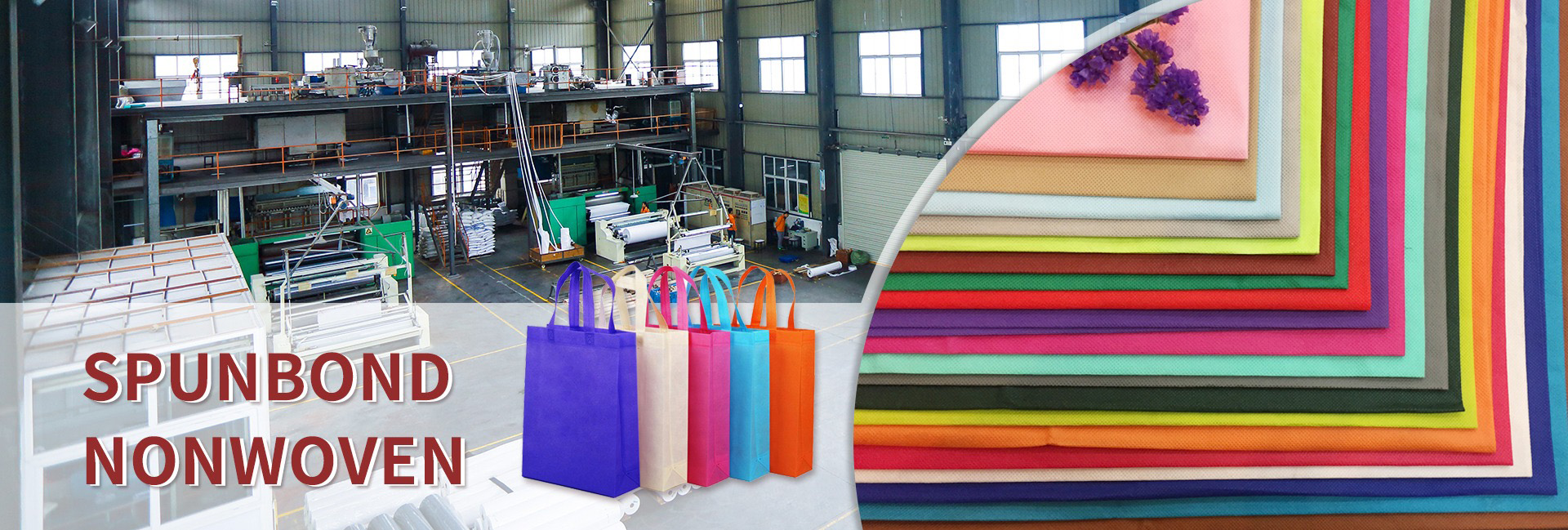
Dongguan Liansheng Non woven Technology Co., Ltd. was established in May 2020. It is a large-scale non-woven fabric production enterprise integrating research and development, production, and sales. It can produce various colors of PP spunbond non-woven fabrics with a width of less than 3.2 meters from 9 grams to 300 grams.
Post time: Feb-24-2026