
When golden corn matures in the fields, its value has already surpassed the dining table – from particles to lactic acid, from resin to fiber, and to ubiquitous non-woven fabrics, corn is undergoing a “transformation” across agriculture and new materials fields through the conversion of PLA (polylactic acid) fibers. This green fiber, which uses renewable biomass as raw material, is breaking the monopoly of traditional petroleum based materials and reshaping the future development pattern of materials with its environmentally friendly and multifunctional characteristics, becoming an important industrial breakthrough under the “dual carbon” strategy.
From the field to the workshop, the “primary transformation” of corn
The birth of PLA fiber began with the precise processing of corn, with the core being the conversion of natural starch into high-purity lactic acid, which is the foundation of the entire “deformation record”. As a crop rich in starch content, corn has become the mainstream raw material for PLA production due to its easy availability and high utilization rate, replacing the traditional reliance on petroleum resources and achieving a green transformation of the material source.
The primary conversion of corn is divided into two key links: first, starch extraction and fermentation. After the corn is crushed and separated out of starch, the starch is converted into L-lactic acid through microbial fermentation. After technical optimization, the fermentation cycle can be shortened to 48 hours, and the utilization rate of raw materials can reach more than 85%, greatly improving the production efficiency; Next is the purification of lactic acid. The fermented sodium lactate is concentrated by electrodialysis to 20% pure lactic acid, which is then reduced by bipolar membrane electrolysis to obtain high-purity lactic acid with a purity of ≥ 99.5%, laying the foundation for subsequent polymerization reactions. Nowadays, the sources of raw materials are gradually expanding, and non grain biomass such as sugarcane bagasse and straw can also be converted, which reduces the dependence on grain resources and promotes the resource utilization of agricultural waste. The cost per ton is reduced by 400 yuan compared to corn based materials, while achieving zero emissions.
Advanced Cultivation of PLA from Lactic Acid to Fiber
High purity lactic acid requires two core processes, polymerization and spinning, to complete the “advancement” from organic compounds to fibers. The technological breakthrough in this process is the key to achieving large-scale application of PLA fibers. At present, a mature process system has been formed in the industry, among which the “continuous polymerization melt direct spinning” (one-step method) process has achieved technological innovation, breaking the limitations of the traditional “two-step method”.
The polymerization reaction is the core step in creating PLA resin: firstly, lactic acid is dehydrated and cyclized to produce lactide, which is purified to above 99.5% using molecular distillation technology to reduce the influence of residual monomers on the polymerization effect; Subsequently, under the action of catalysts such as stannous octanoate, ring opening polymerization was carried out by gradient heating at 120-180 ° C, resulting in PLA resin with a molecular weight exceeding 100000 g/mol. The melt flow rate remained stable at 8-15g/10min (190 ° C/2.16kg), meeting the requirements of spinning processing. Compared with traditional direct polymerization processes, open-loop polymerization effectively solves the defects of low molecular weight and wide distribution of polymers, becoming the current mainstream technological path. The “one-step” process that has achieved industrialization omits intermediate steps such as slicing, cooling, and reheating, ensuring stable fiber quality and reducing processing costs by 40%.
The spinning process determines the morphology and properties of PLA fibers, which are mainly divided into two types: melt spinning and solution spinning. Among them, melt spinning occupies a dominant position in industrial production due to its environmental protection and high efficiency advantages. In melt spinning, PLA slices are dried and melted and extruded at 210-230 ℃. They are cooled and oiled in a spinning box to produce long and short fibers, respectively. The long fibers are wound into POY (pre oriented yarn) and then stretched into DTY (stretch deformed yarn) by hot plate stretching; Short fibers undergo additional processes such as bundling, curling, heat setting, and cutting, and can be packaged for non-woven fabric processing.
Research has shown that when the spinning speed is controlled between 2000-3000m/min, the fiber crystallinity, strength, and other properties are optimal, and the boiling water shrinkage rate is lower. However, solution spinning has limited industrial applications due to difficulties in solvent recovery and high pollution, and is only used in some special scenarios. In addition, the properties of PLA fibers can be further expanded through modification treatment. For example, adding 5wt% nano SiO ₂ can increase the tensile strength by more than 30%, blending with PBS can enhance wear resistance, and electrospinning technology can prepare nano fibers that are suitable for high-end medical scenarios.
Fiber to non-woven fabric, PLA’s “scene landing”
PLA fiber, with its excellent physical and mechanical properties, biocompatibility, and environmental friendliness, has been widely used in the field of non-woven fabrics. Through different processing techniques such as spinning adhesion, melt spraying, water jet, and hot rolling, it is suitable for various scenarios such as medical, health, agriculture, and packaging, achieving the ultimate landing of “deformation” and becoming the core material to replace traditional plastic non-woven fabrics.
In the field of healthcare, the advantages of PLA non-woven fabric are particularly prominent. Its non-toxic, skin friendly, and biocompatible properties make it an ideal raw material for medical masks, surgical gowns, nursing pads, hemostatic dressings, and other products. PLA meltblown non-woven fabric can be used as a filter layer for masks, efficiently intercepting PM2.5 and bacteria, while high-end products such as absorbable sutures and tissue engineering scaffolds can fully absorb PLA within the human body in 56-70 days, reducing infection rates by 37% and meeting the requirements of the European Medical Device Regulation (MDR). Compared to traditional petroleum based non-woven fabrics, PLA medical non-woven fabrics can naturally degrade after use, effectively reducing medical waste pollution and aligning with the concept of green medical development.
PLA non-woven fabric is also widely used in the fields of daily hygiene and home furnishings. The PLA non-woven fabric produced by the spunlace process is soft, breathable, skin friendly and non irritating, and can be used for the surface of makeup removal cotton, wet wipes, facial mask cloth, diapers, and sanitary napkins. Its natural weak acidity (pH 5.5-6.5) is suitable for human skin, and has antibacterial and anti mite effects. The antibacterial rate of 30% PLA blended with 70% viscose exceeds 80%, and the antibacterial rate of 40% PLA blended with 60% bamboo pulp viscose can reach 99%.
PLA non-woven fabric produced by hot rolling and hot air processes has high fluffiness and good elasticity, and can be used for disposable tablecloths, cold proof clothing fillers, sofa cushions, etc. Its oxygen limiting index (LOI value) is 24-26, with excellent flame retardancy and self extinguishing properties. There is no toxic gas release during combustion, and its safety far exceeds that of traditional polyester non-woven fabric.
In the fields of agriculture and environmental protection, the biodegradable properties of PLA non-woven fabric have solved the pollution problem of traditional plastics. The PLA non-woven fabric produced by needle punching technology can be used to make weed control cloth, seedling bags, geotextiles, etc., for slope treatment, farmland coverage and other scenarios. It can degrade in soil within 3-6 months. The 130000 mu demonstration project in Nanle County, Henan Province has verified its effect on promoting crop growth; PLA spunbond non-woven fabric can be used to make fishing nets and marine protective materials, with a degradation rate of 89% after 180 days in 25 ℃ seawater, effectively reducing marine microplastic pollution. In the field of packaging, PLA non-woven fabric is soft and light, not easy to deform, and moisture-proof. It can be used for clothing packaging, food packaging, electronic packaging, replacing traditional packaging materials such as EPS foam, and realizing green packaging throughout the life cycle.
PLA fiber: the core force reshaping future materials
As the core representative of bio based green materials, the “deformation record” of PLA fiber is essentially a green revolution in the materials industry. It not only solves the dual dilemma of resource depletion and environmental pollution of traditional petroleum based materials, but also achieves efficient linkage between agricultural resources and industrial production. Its industrial development has received dual benefits from policies and markets.
From the current industrial situation, the global production capacity of PLA resin is expected to exceed 3 million tons per year by 2025. China ranks first in the world with a production capacity of 1.2 million tons per year, accounting for 40%. Leading enterprises such as Anhui Fengyuan and Jindan Technology have formed scale advantages, while the Yangtze River Delta and Pearl River Delta have formed industrial clusters with a production capacity ratio of over 65%. In terms of cost, the localization of lactide has reduced the cost of PLA fiber to 12000 to 20000 yuan/ton, with a profit margin of over 25%.
The annual output value of 50000 tons of production capacity can reach 1 billion yuan, and each ton of product can reduce 3 tons of carbon emissions. In 2024, the market size of China’s polylactic acid fiber industry has reached 4.511 billion yuan, and it is expected to increase to 6.979 billion yuan by 2030. At the policy level, China’s 14th Five Year Plan for Bioeconomy clearly requires that the PLA fiber production capacity reach 500000 tons by 2025, and the Ministry of Ecology and Environment will include it in the “Green Industry Guidance Catalogue”. Guangxi, Zhejiang and other places will provide subsidies of up to 30% for related projects to safeguard industrial development.
In the future, with the continuous upgrading of technology, PLA fibers will break through towards non grain raw materials, high-end performance, and diversified applications. The maturity of non grain fermentation technology will completely eliminate dependence on grain, and chemical recycling technology (hydrolysis process conversion rate of over 90%) will be commercialized, which can promote the recycling of PLA; FDCA copolymerization modification can increase the hot deformation temperature by 15-20 ℃, expanding its application in high-temperature scenarios; In the high-end medical field, products such as biodegradable vascular stents and 3D printed medical implants will gradually be implemented, and the application potential of emerging fields such as ocean governance and aerospace will continue to be released.
From corn kernels in farmland, to PLA fibers in workshops, to various non-woven fabric products in daily life, this cross industry “transformation” not only reconstructs the production logic of materials, but also outlines the development blueprint of future green materials. PLA fiber, with its core advantages of being renewable, biodegradable, and multifunctional, is breaking the limitations of traditional materials and promoting the transformation of the industry towards low-carbon, circular, and sustainable directions. It has become an important force in safeguarding the ecological environment and helping to achieve the “dual carbon” goal.
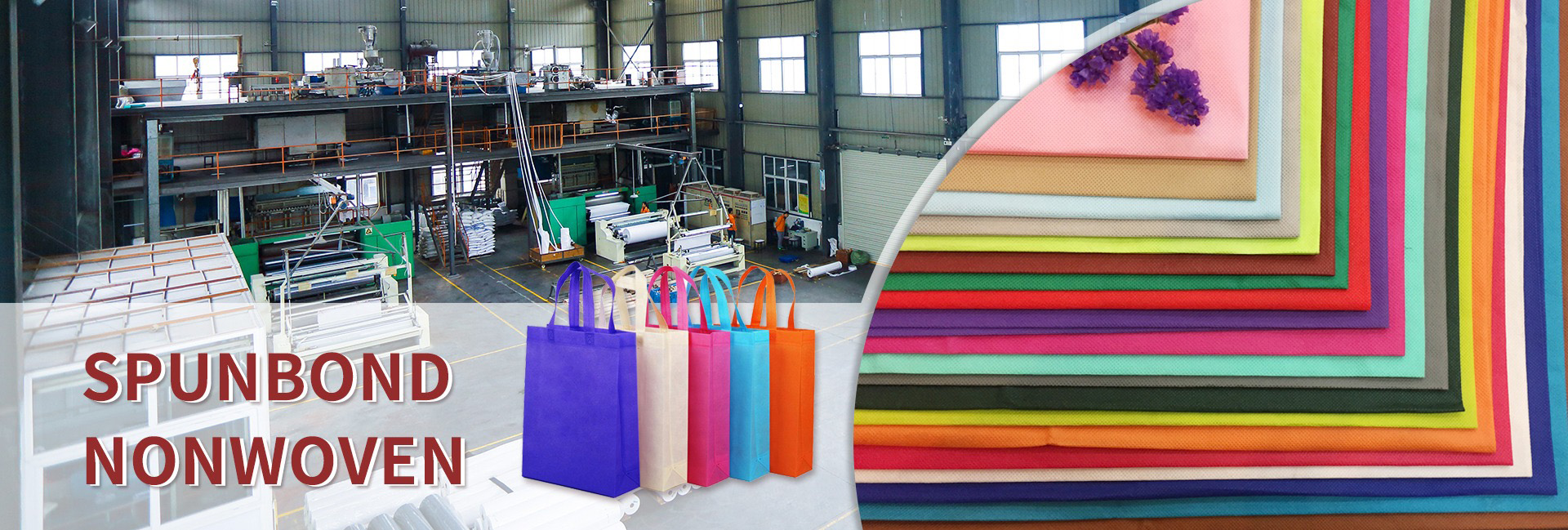
Dongguan Liansheng Non woven Technology Co., Ltd. was established in May 2020. It is a large-scale non-woven fabric production enterprise integrating research and development, production, and sales. It can produce various colors of PP spunbond non-woven fabrics with a width of less than 3.2 meters from 9 grams to 300 grams.
Post time: Feb-15-2026