
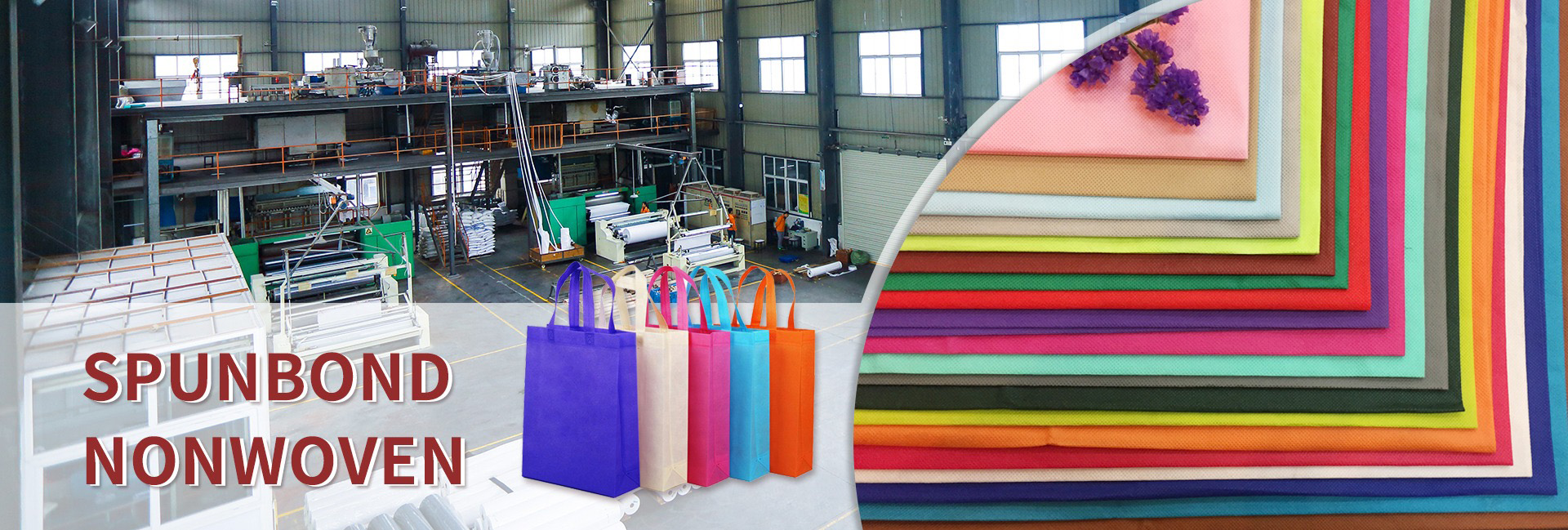
With the global industrial upgrading, iterative consumer demand, and promotion of environmental protection policies, non woven fabric, as a new type of environmentally friendly material, continues to expand its application scenarios and steadily increase its market size. According to the authoritative forecast data of the industry, the global non-woven fabric market size in 2026 will exceed US $64.61 billion, achieving steady growth over the previous year. Among them, high-performance anti-aging non-woven fabrics will become the core engine driving market growth by virtue of its unique advantages, and promote the industry to accelerate the transformation from “scale expansion” to “quality improvement”.
Non woven fabric, also known as non-woven fabric, is made by directly bonding fibers through physical or chemical methods, without the need for spinning and weaving. It has many advantages such as light weight, good breathability, corrosion resistance, and easy degradation. It is widely used in various fields such as medical and health, automotive industry, building materials, agricultural planting, and environmental protection. In recent years, with the continuous breakthrough of technology, the performance of nonwoven products continues to upgrade, especially the rise of high-performance anti-aging category, which effectively solves the pain points of traditional nonwoven fabrics that are prone to aging and have a short service life in outdoor, industrial and other scenarios, becoming a new growth pole of the market.
The market size is steadily increasing and will see a breakthrough in size by 2026
The global non-woven fabric market has maintained a steady growth trend in recent years, especially in the post pandemic era. The continuous release of demand in the medical and health sector, coupled with the upgrading of downstream industries such as automobiles and construction, has driven the continuous expansion of the market size. Previously, data showed that the global non-woven fabric market size had approached 60 billion US dollars by 2025, and it is expected to further grow to 64.61 billion US dollars by 2026, with stable growth rates expected in the coming years.
From a regional perspective, the Asia Pacific region has become the core growth pole of the global non-woven fabric market, with China, as the world’s largest producer and consumer of non-woven fabrics, contributing 51.0% of the global market share. By 2025, the Chinese market size will reach 26.026 billion US dollars, approximately 185.9 billion yuan. China has formed four major industrial clusters in Zhejiang, Jiangsu, Guangdong, and Shandong. Local leading enterprises have a total annual production capacity of over 11.6 million tons, accounting for 53% of the global production share. Their products not only cover the domestic market, but also export to more than 100 countries such as Europe, America, and Southeast Asia, with an export value of 8.96 billion US dollars by 2025.
The North American and European markets have maintained stable growth with mature downstream application systems, mainly focusing on the high-end functional non-woven fabric field. Among them, the non-woven fabric market in the United States contributes nearly 70% of the total market share in North America, with 60% of demand coming from healthcare and hygiene products; Under the promotion of environmental policies, the European market focuses on the research and application of biodegradable and high-performance non-woven fabrics, becoming an important consumer market for high-end products.
High performance anti-aging becomes the core engine, and technological breakthroughs activate market potential
Behind the growth of the global nonwoven market, the rise of high-performance anti-aging products has become a key driving force. Traditional non-woven fabrics are prone to aging phenomena such as brittleness, fracture, and discoloration in outdoor exposure, industrial corrosion, high temperature and humidity environments, which seriously limits their application in outdoor construction, automotive exterior, agricultural coverage and other scenarios. By means of material modification, process optimization and other technical means, high-performance anti-aging non-woven fabrics have significantly improved the weather resistance, UV resistance and service life of products, and effectively widened the application boundary.
From the technical perspective, the core breakthrough of high-performance anti-aging non-woven fabrics mainly focuses on two aspects. First, raw material modification. By adding anti-aging agents (such as hindered phenols) and nano reinforcing particles to core raw materials such as polypropylene (PP) and polyester (PET), the enterprise has extended the outdoor service life of the product to 3-5 years, which is far more than the service life of ordinary non-woven fabrics by about one year, and at the same time, the tensile strength and wear resistance have increased by more than 30%. The second is process innovation, with the widespread application of spunbond meltblown spunbond (SMS) composite technology, combined with physical reinforcement processes such as water jet and needle punching, making the product structure more stable. The longitudinal and transverse tensile strength is 40% higher than that of ordinary spunbond fabric, and the tear resistance is improved by 50%.
The explosion of demand side further promoted the development of high-performance anti-aging non-woven fabrics. In the construction field, anti-aging non-woven fabrics are used for roof waterproofing, subgrade reinforcement, and external wall insulation to replace traditional materials to reduce maintenance costs; In the automotive field, with the increase of the penetration rate of new energy vehicles, anti-aging non-woven fabrics are used for car exterior decoration, sound insulation cotton and other components to meet the weather resistance requirements of long-term use of cars; In the agricultural field, anti-aging grass proof cloth and seedling raising cloth can resist wind and sun and agricultural machinery rolling, with a service life of 5 years, greatly improving agricultural production efficiency. In addition, the demand for industrial filtration, outdoor leisure and other fields is also growing, providing a broad market space for high-performance anti-aging non-woven fabrics.
Multi factor synergy brings high-quality development opportunities to the industry
In addition to the promotion of high-performance anti-aging technology, multiple factors work together to support the non-woven fabric market to achieve high-quality growth. Firstly, the upgrading of downstream industries has driven demand expansion, with high-end medical non-woven fabrics in the medical and health sector, lightweight demands in the automotive industry, and filter material demands in the environmental protection sector all driving the transformation of non-woven products towards high performance and multifunctionality. Among them, the annual compound growth rate of high-end functional non-woven fabrics has reached over 12%.
Secondly, policy support safeguards the development of the industry. Various countries around the world have introduced environmental protection policies to promote the research and application of biodegradable, green and environmentally friendly non-woven fabrics. China has also adopted industrial support policies to encourage enterprises to increase investment in technological innovation, optimize industrial structure, and promote the transformation of the non-woven fabric industry from “mid to low end capacity expansion” to “high-end quality improvement”. At the same time, strict quality certification requirements such as EU CE, US FDA, and Chinese GMP are also driving the industry to eliminate outdated production capacity and improve overall product quality.
Furthermore, the continuous optimization of the industry’s competitive landscape has accelerated technological innovation. The global non-woven fabric market presents a pattern of “decentralized competition, leading by the top”, with international leading companies such as Berry Global from the United States and Freudenberg from Germany dominating the high-end market, occupying a leading position with technological barriers and brand advantages; Chinese domestic enterprises such as Hengli Petrochemical, Dalian Ruiguang, and JinSanfa dominate the mid to low end market with their industrial chain advantages and cost advantages, while gradually entering the high-end field through technological innovation. By 2025, local leading enterprises will occupy a total of 28% of the global market share.
Challenges and opportunities coexist, with vast potential for future growth
Despite the broad prospects of the non-woven fabric market, the industry still faces some challenges in its development. On the one hand, fluctuations in raw material prices have an impact on industry profits. Non woven fabric production mainly relies on synthetic fibers such as polypropylene and polyester, which are greatly affected by oil prices. 52% of production relies on synthetic polymers, making the industry very sensitive to supply fluctuations; On the other hand, homogeneous competition in the industry still exists, with low entry barriers for the mid to low end market, some small and medium-sized enterprises lacking core technologies, and uneven product quality, which restricts the overall upgrading of the industry.
But overall, the opportunities in the industry far outweigh the challenges. With the continuous breakthrough of technology, high-performance anti-aging, biodegradable, multi-functional non-woven fabrics will become the mainstream of the market, especially in new energy vehicles, high-end medical, environmental filtering and other emerging fields, with huge demand potential. At the same time, as the core of global non-woven fabric production, China is expected to continue consolidating its global leading position with a complete industrial chain, large-scale production capacity, and technological innovation vitality. It is expected that the Chinese market size will increase to 45.77 billion US dollars by 2032, and the global market share will further increase to 53.0%.
Looking ahead, with the upgrading of global industry and consumer demand, the non-woven fabric market will continue to maintain a growth trend. The market size of 64.61 billion US dollars in 2026 is just a new starting point for the industry’s development. As the core growth engine, high-performance anti-aging will promote the industry to achieve high-quality development. At the same time, green environmental protection, intelligent production and industrial chain integration will become an important trend of the industry development, which is expected to generate more new market opportunities and promote the non-woven industry to enter a new development stage.
Dongguan Liansheng Non woven Technology Co., Ltd. was established in May 2020. It is a large-scale non-woven fabric production enterprise integrating research and development, production, and sales. It can produce various colors of PP spunbond non-woven fabrics with a width of less than 3.2 meters from 9 grams to 300 grams.
Post time: Apr-26-2026