
Diapers and sanitary pads, as intimate personal hygiene materials that come into long-term contact with the skin, “peace of mind” is always the core bottom line – they should not only avoid irritation, inhibit bacteria and prevent infections, but also balance environmental protection without burden, and meet the needs of comfortable body feeling. For a long time, these products have relied heavily on petroleum based fiber raw materials. Although they can achieve basic usage functions, it is difficult to balance the triple demands of safety, comfort, and environmental protection. The rise of PLA (polylactic acid) corn fiber precisely solves this pain point, promoting a material revolution centered on “peace of mind” for personal hygiene materials. Behind the acceleration of PLA transformation is the multiple resonance of demand upgrading, material adaptation, and industrial transformation.
Core confidence: PLA accurately matches the “peace of mind” essential needs of personal hygiene materials
The “peace of mind” of close fitting sanitary materials is essentially the ultimate pursuit of “no stimulation, strong antibacterial, and high safety”, and PLA fiber originates from the characteristics of natural biomass such as corn, naturally meeting this demand. This is also the core reason why it has become the preferred choice for sanitary material upgrading, different from the “functional compromise” of traditional petroleum based fibers.
Firstly, it is naturally non irritating and suitable for sensitive skin and infant skin. PLA fiber is made from corn starch fermentation, polymerization, and spinning, with no formaldehyde or harmful heavy metal residues throughout the process. It also does not contain chemical additives such as artificial antibacterial agents and softeners. According to authoritative testing, its skin irritation level is “no irritation” and its allergenicity is extremely low. It is particularly crucial that the surface of PLA fibers is weakly acidic (pH 6.0-6.5), which is highly compatible with the weakly acidic environment of human skin. It can maintain the microbial balance on the skin surface and avoid the rough friction stimulation of traditional synthetic materials. It is suitable for the delicate skin of infants and young children and the sensitive private parts of women during menstruation, reducing the probability of problems such as red buttocks and skin itching from the source. This is also the core consideration for choosing PLA as the preferred material for diapers and sanitary napkins.
Secondly, it naturally inhibits bacteria and builds a strong personal protective barrier. Personal hygiene materials that come into long-term contact with sweat and secretions can easily become a breeding ground for harmful bacteria such as Escherichia coli and Staphylococcus aureus. Traditional materials rely heavily on artificial addition of antibacterial agents to achieve antibacterial effects, which poses a risk of antibacterial agent precipitation and skin irritation. The antibacterial properties of PLA fibers stem from their molecular structure – the slow release of lactic acid during fiber degradation can damage the integrity of harmful bacterial cell membranes, inhibit their metabolic reproduction, and achieve long-lasting antibacterial effects without the need for additional chemical antibacterial agents. Experimental data shows that the 18 hour antibacterial rate of PLA fiber and cotton blend material against Staphylococcus aureus can reach over 99%, effectively reducing the risk of bacterial infection during the use of diapers and sanitary napkins, especially suitable for the protection needs of women and infants during menstruation.
Thirdly, it is biodegradable and burden free, balancing peace of mind and environmental protection. Personal hygiene materials are mostly disposable items with huge usage. Traditional petroleum based hygiene materials are difficult to degrade after being discarded, and long-term accumulation forms white pollution, which not only damages the ecological environment but also indirectly affects human health. The sanitary components made of PLA fibers can be completely degraded into carbon dioxide and water in the natural environment for about 180 days, without any toxic residues or microplastic pollution. Under industrial composting conditions, the degradation cycle can be shortened to 90 days, perfectly matching the development trend of “green disposable products”, achieving a dual balance of “personal peace of mind” and “ecological peace of mind”, and solving the dilemma of “safety and environmental protection cannot be achieved simultaneously” in traditional sanitary materials.
Process adaptation: PLA unlocks performance requirements for diverse scenarios of sanitary materials
Diapers and sanitary napkins have highly targeted performance requirements for materials – diapers need to be soft, breathable, and moisture conductive, sanitary napkins need to be dry, snug, and leak proof. PLA fibers, through process optimization and modification, can not only meet these core performance requirements, but also achieve performance upgrades, providing process support for accelerating their PLA transformation.
In the field of diapers, PLA fiber is mainly used for the surface layer, anti leakage barrier edge, and outer layer of the bottom film to meet the diverse process requirements. The surface layer is made of PLA water jet or hot air non-woven fabric, with a fiber fineness controlled between 0.5-2.5dtex. The surface is smooth and free of burrs, with a soft and delicate touch. At the same time, it has excellent moisture conductivity – although PLA fibers are hydrophobic, they can quickly conduct urine to the absorption layer, avoid surface reverse osmosis, keep infant buttocks dry, and reduce the probability of red buttocks. Compared with traditional polypropylene surface layers, the softness and moisture conductivity of PLA surface layers are increased by more than 40%; The anti leakage edge adopts PLA spunbond non-woven fabric with high strength and good hydrophobicity, which can effectively block urine leakage and balance protection and softness; The outer layer of the bottom film is made of PLA spunbond non-woven fabric, which can improve the overall degradability of the diaper, while ensuring breathability and avoiding stuffiness for infants and young children wearing it for a long time.
In the field of sanitary napkins, PLA fiber is mainly used for the surface layer and wing protection, accurately matching the needs of menstrual use. The surface layer is made of PLA hot air or spunbond non-woven fabric, which feels similar to cotton but is smoother, with both dryness and adhesion. It can quickly transmit menstrual blood, avoiding the sticky discomfort caused by menstrual blood accumulation. At the same time, its weak acidic properties can reduce irritation to the private skin, suitable for women with sensitive skin; The wings are made of PLA spunbond non woven fabric, which has high strength and good adhesion. It can achieve stable fixation without stimulating the inner skin of the thighs due to friction, solving the pain points of rough and easily worn legs in traditional sanitary napkin wings. In addition, the application of two-component PLA fibers can reduce the use of chemical adhesives, further enhance the safety and naturalness of sanitary napkins, and meet the development needs of high-end sanitary materials.
At the same time, PLA fibers can be modified by blending with materials such as PBAT and bamboo pulp adhesive to compensate for their high brittleness and insufficient heat resistance, improve the elasticity and toughness of the fibers, and adapt to the processing and use scenarios of diapers and sanitary napkins. The modified PLA fibers have a fracture strength of 3.5-4.2 cN/dtex, which is close to traditional polypropylene fibers. It can meet the mechanical performance requirements of sanitary materials while also balancing softness and comfort, achieving a dual upgrade of “performance and peace of mind”.
Industry driven: policy, market, and technology triple support to accelerate PLA industrialization
The accelerated PLA transformation of diapers and sanitary napkins is not only due to the reassuring advantages and process adaptability of the materials themselves, but also cannot be separated from the triple drive of policy guidance, market demand upgrading, and technological breakthroughs, promoting PLA from an “optional material” to a “mainstream choice”.
At the policy level, the combination of the global “plastic ban” and domestic “dual carbon” policies is driving the green transformation of personal hygiene materials. China’s 14th Five Year Plan for the Development of Bioeconomy clearly lists biobased materials as a key development direction, includes PLA in the green industry guidance catalog, and provides subsidies of up to 30% for PLA sanitary material production projects in many regions; The wet wipes and disposable sanitary materials ban policies introduced by the European Union, the United Kingdom, and other regions have also promoted export-oriented sanitary material enterprises to prioritize the use of PLA materials, avoiding carbon tariffs and environmental barriers, providing policy guarantees for the PLA transformation of personal hygiene materials.
At the market level, consumer upgrading drives the iteration of “peace of mind demand” and has become the core driving force for PLA transformation. Nowadays, consumers’ demand for personal hygiene materials has upgraded from “basic use” to “safety, health, and environmental protection”, especially for parents and women of infants and young children. Their requirements for the natural, non irritating, and antibacterial properties of materials have significantly increased, and they are willing to pay a premium for green and reassuring materials such as PLA. Data shows that the market size of medical grade PLA in China is expected to reach 5 billion yuan by 2025 and increase to 12 billion yuan by 2030. Among them, personal hygiene materials are one of the fastest-growing application areas, and the explosion of market demand directly drives enterprises to accelerate their PLA layout. At the same time, international sanitary material leaders such as Unika and Kao, as well as many well-known domestic enterprises, have launched PLA based diapers and sanitary napkins, leading the industry’s trend towards PLA.
On the technical level, the breakthrough in PLA production and modification technology has solved the pain points of early “high cost and insufficient performance”, laying the foundation for its large-scale application. The maturity of domestic technology for lactide has reduced the cost of PLA fiber from 30000 yuan/ton in the early days to 12000 to 20000 yuan/ton, gradually approaching traditional petroleum based fibers and possessing the economic feasibility of large-scale substitution; The application of the “continuous polymerization melt direct spinning” process has achieved efficient production of PLA fibers, with spinning speeds up to 3000-4000 meters per minute, balancing production efficiency and product quality; The breakthrough in the application of non grain raw materials (straw, sugarcane bagasse) has further reduced the dependence of PLA production on grain resources, while reducing production costs and promoting the large-scale implementation of PLA sanitary materials.
Conclusion: PLA restructures the “peace of mind” new standard for personal hygiene materials
The accelerated PLA transformation of personal hygiene materials is essentially an industrial upgrade centered on “peace of mind”, rather than a simple material substitution. PLA fiber, with its core advantages of natural non irritation, natural antibacterial, and degradability, accurately matches consumers’ high-end demand for intimate hygiene materials. At the same time, performance adaptation is achieved through process optimization. With the triple support of policies, markets, and technology, it gradually breaks the monopoly of traditional petroleum based materials and becomes the mainstream choice for intimate hygiene materials.
In the future, with the continuous breakthroughs in PLA modification technology and the widespread application of non grain raw materials, the cost of PLA fibers will be further reduced, and their performance will continue to be optimized. They will gradually penetrate into more components of diapers and sanitary napkins, achieving full category PLA. This “peace of mind” revolution led by PLA not only reconstructs the material standards of personal hygiene materials, but also promotes the transformation of the hygiene material industry from “high carbon, hidden dangers” to “low-carbon, more secure”, so that every personal hygiene material can balance health protection and ecological responsibility, truly realizing the concept of “originating from nature, accompanied by peace of mind”.
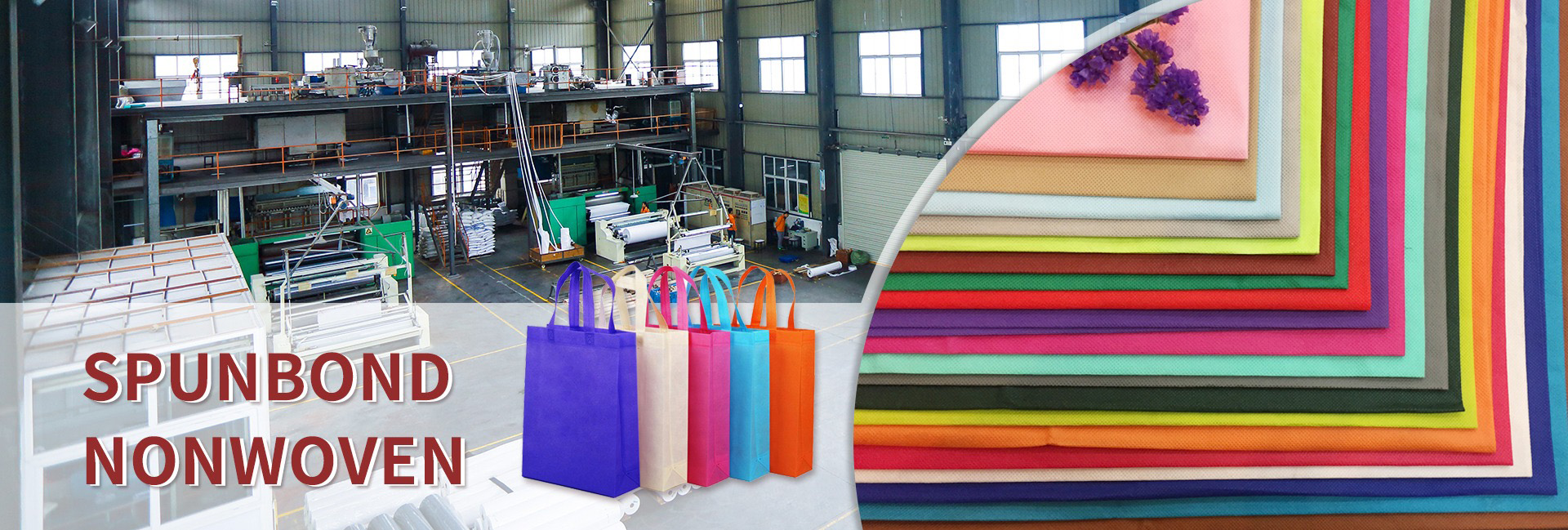
Dongguan Liansheng Non woven Technology Co., Ltd. was established in May 2020. It is a large-scale non-woven fabric production enterprise integrating research and development, production, and sales. It can produce various colors of PP spunbond non-woven fabrics with a width of less than 3.2 meters from 9 grams to 300 grams.
Post time: Feb-06-2026