
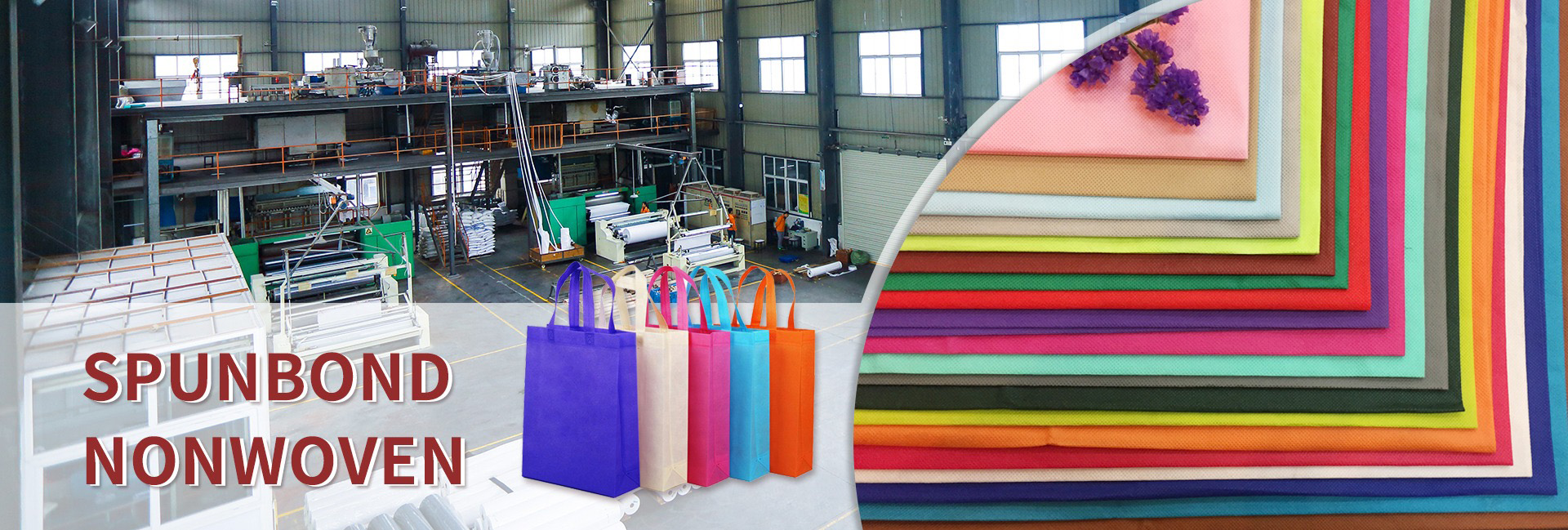
In agricultural production, crop growth and seedling stage are susceptible to multiple threats such as low temperature, weeds, pests and diseases, and water loss. Traditional protective materials (plastic film, straw curtains, ordinary cotton cloth) have pain points such as poor breathability, easy residue, short service life, and insufficient adaptability.
Spunbond non-woven fabric, with its core characteristics of “flexible protection+functional adaptation”, combined with agricultural specific modification technology, can not only build a comprehensive growth protection barrier for crops, but also adapt to the special needs of seedling cultivation. It has become a key material for promoting agricultural quality improvement, efficiency enhancement, and green development, and is widely known as the “protective suit” for agricultural harvest.
Basic support: Material characteristics and modification upgrade of agricultural spunbond non-woven fabric
Agricultural spunbond nonwoven fabric is made from polypropylene as the core raw material, which is spun into a mesh by melt spinning and hot-rolled bonded. It follows the industry standard GB/T 19631-2015 “Agricultural nonwoven fabric” and its basic characteristics are naturally adapted to the needs of agricultural scenes.
The weight of conventional agricultural spunbond nonwoven fabric is controlled at 15-60g/㎡, with a longitudinal breaking strength of ≥ 150N/5cm and a transverse breaking strength of ≥ 120N/5cm. It has excellent flexibility and tear resistance, and can withstand field wind pulling, mechanical laying friction, and crop growth compression. It can be reused for 3-5 seasons and has a service life far exceeding that of straw curtains and ordinary cotton fabrics.
In response to the personalized needs of agricultural scenarios, specialized spunbond non-woven fabrics are further enhanced in protective efficacy through functional modification. UV resistant modification with the addition of 2% -3% UV absorbers can resist strong outdoor UV radiation, extending the field service life to 12-18 months and avoiding material aging and damage.
Hydrophilic modification enhances fiber moisture absorption through plasma treatment, allowing for rapid permeation and diffusion of water, and adapting to the water retention requirements of seedling base fabric.
Degradable products use biodegradable polypropylene raw materials, which naturally degrade into harmless substances in the soil after use, with no environmental residues, in line with the trend of green agriculture development. In addition, some high-end products achieve the integration of “insulation+pest control” through composite technology, providing multiple protections for crops.
Agricultural coverage: full cycle protection, helping crops grow steadily
In agricultural coverage scenarios such as greenhouse insulation, outdoor shading, and crop cold prevention, spunbond non-woven fabric has the advantages of “breathable and non stuffy, insulation and moisture retention, and pest and seedling protection”, which is significantly superior to traditional plastic film and straw curtains, and is suitable for the growth cycle needs of various crops such as vegetables, fruit trees, and traditional Chinese medicinal materials.
The core advantage lies in the precise control of the balance between insulation, moisturization, and breathability. Although plastic film has a significant insulation effect, its breathability is extremely poor, which can easily lead to high temperature and humidity inside the greenhouse, causing crop diseases such as tomato gray mold and cucumber downy mildew; The fiber pore structure of spunbond non-woven fabric can achieve air circulation, with a breathability of 800-1500mm/s. It can maintain the temperature inside the shed 3-5 ℃ higher than the outside during winter coverage, while controlling the humidity within a suitable range of 60% -80%, which not only resists low-temperature freezing damage but also avoids greenhouse diseases. According to actual measurements at a vegetable planting base, cucumber greenhouses covered with 30g/㎡ spunbond non-woven fabric have reduced disease incidence by over 40% and increased fruit setting rate by 15% -20%.
Simultaneously possessing the ability to adapt to grass, insect, and disaster prevention. When covered outdoors, spunbond non-woven fabric can block direct sunlight from the soil surface, inhibit weed photosynthesis, reduce weed growth, and reduce agricultural non-point source pollution without the need for extensive herbicide spraying; Paired with anti insect coating or composite anti insect net structure, it can effectively block the invasion of pests such as aphids and planthoppers, reducing pesticide use by more than 30%.
In extreme weather scenarios, summer can be used as a sunshade cloth to reduce surface temperature by 5-8 ℃ and avoid crop burns; The rainy season can prevent direct erosion of soil by rainwater, reduce soil erosion and compaction, and protect crop roots; When a cold wave arrives, it can be stacked in multiple layers to double the insulation effect and provide reliable protection for seedlings and fruit tree flower buds.
Seedling base fabric: precise adaptation, improving seedling survival rate and efficiency
During the seedling stage, there are extremely high requirements for the substrate’s water retention, breathability, seedling fixation, and cleanliness. Using spunbond non-woven fabric as the substrate for seedling cultivation (hole tray seedling lining fabric, floating seedling cultivation fabric, cutting seedling substrate fabric) can solve the problems of uneven water retention, root entanglement, and easy spread of diseases in traditional seedling substrates (peat soil, coconut coir bare use), and promote the upgrading of seedling cultivation towards standardization and mechanization.
Strong synergy in water retention and ventilation, optimizing the root growth environment. The fiber pores of spunbond non-woven fabric can store an appropriate amount of water while ensuring air circulation, stabilizing the moisture content of the seedling substrate at 20% -30%, avoiding water accumulation, root rot, and drought and water shortage, and providing “dry and wet suitable” growth conditions for crop roots.
Compared with bare peat soil, using spunbond non-woven fabric as seedling base cloth can increase the root development of vegetable seedlings by 25%, reduce root rot rate by more than 60%, and increase seedling survival rate from 70% -80% to over 95%. In addition, hydrophilic modified spunbond base fabric can quickly absorb irrigation water and spread it evenly, suitable for mechanized spray seedling cultivation, reducing water waste and labor costs.
Solidify seedlings, protect roots, and adapt to transplantation to improve seedling efficiency. Spunbond non-woven fabric has a certain tensile strength and can tightly adhere to seedling trays or wrap around seedling substrates. It can fix the root system of seedlings during the seedling process, avoid entanglement and knotting, and protect the root system from mechanical damage; When transplanting, it can be directly planted with cloth, and the non-woven fabric gradually degrades in the soil (degradable product) or is later recycled without additional peeling, reducing transplanting time and lowering seedling mortality rate.
In large-scale seedling cultivation scenarios such as rice, tobacco, and vegetables, spunbond seedling base fabric can be adapted to automated seedling production lines, greatly improving seedling efficiency, reducing single acre seedling cultivation time by 40% -50%, and avoiding cross transmission of pathogens in seedling substrates, reducing the occurrence of seedling diseases.
Summary of Application Advantages and Development Trends
Compared to traditional agricultural protective and seedling materials, the core advantage of spunbond non-woven fabric can be summarized as “three advantages and one adaptation”:
Firstly, it has excellent performance, taking into account multiple functions such as insulation, moisture retention, breathability, and pest prevention, providing more comprehensive protection;
Secondly, it has excellent durability, strong weather resistance and tear resistance, can be reused, and has a lower overall cost;
Thirdly, it is environmentally friendly and biodegradable products have no environmental residues, which is in line with green agriculture policies;
The fourth is excellent adaptability, which can customize the weight and function according to crop types and growth stages, and adapt to various scenarios such as greenhouses, open fields, and large-scale seedling cultivation.
In the future, agricultural spunbond nonwoven fabrics will be upgraded towards functional integration, customization, and high efficiency. Develop an integrated product of “insulation+pest control+weed control+degradation” through multiple composite technologies; Customize products with exclusive weight and functionality tailored to the growth characteristics of different crops, such as tropical fruits and cold resistant vegetables; Based on the trend of agricultural mechanization, optimize material toughness and dimensional stability, and adapt to automated laying and transplanting equipment. With the continuous promotion of green agriculture and large-scale planting, spunbond non-woven fabric will further replace traditional materials and become an indispensable “harvest guarantee” in agricultural production.
Conclusion
Spunbond non-woven fabric, with its flexible protective properties, has become a “protective suit” for agricultural harvest. It not only solves the pain points of traditional agricultural materials such as single function, poor adaptability, and environmental pollution, but also provides comprehensive protection for crop growth and seedling cultivation through precise functional modification and scene adaptation.
Against the backdrop of the transformation of agriculture towards high quality, greenness, and scale, spunbond nonwoven fabrics will continue to deepen their cultivation in agricultural scenes through technological innovation. With better performance and wider adaptability, they will help improve the quality and efficiency of agriculture, and safeguard every season’s harvest.
Dongguan Liansheng Non woven Technology Co., Ltd. was established in May 2020. It is a large-scale non-woven fabric production enterprise integrating research and development, production, and sales. It can produce various colors of PP spunbond non-woven fabrics with a width of less than 3.2 meters from 9 grams to 300 grams.
Post time: Jan-28-2026