
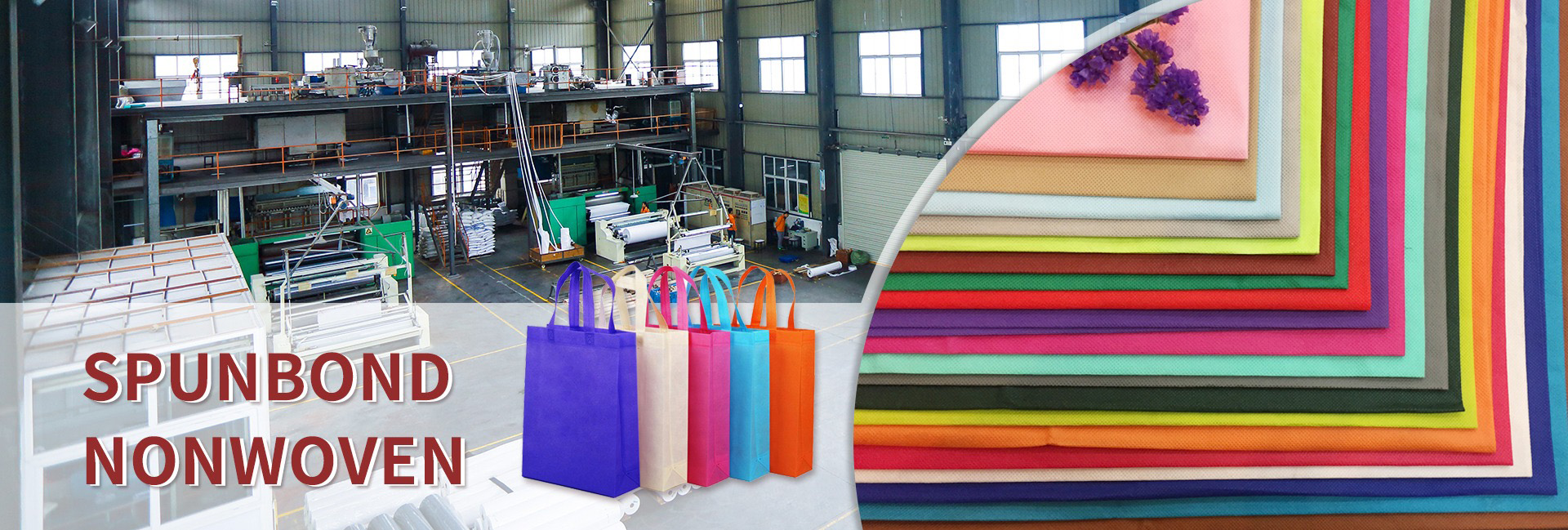
In the spunbond non-woven fabric production line, there is a seemingly inconspicuous and small component that controls the “appearance” and quality of the finished fabric – it is the mold head. Many people only focus on the production capacity of the production line and the quality of raw materials, but overlook this “little giant” hidden in the core of the equipment. Little do they know, it is the key to determining the uniformity of the fabric, fiber fineness, and even product qualification rate, and is known as the “heart” of the production line in the industry.
Walking into any non-woven fabric factory, you will find that the entire production line runs in an orderly manner around the mold head, from raw material melting and drawing to web forming and solidification. Even a small deviation in the mold head of a large-scale production line with a daily output of 100 tons can lead to the scrapping of the entire roll of non-woven fabric; On the contrary, a precise and stable die can make the fabric surface smooth and uniform in thickness, greatly enhancing product competitiveness. Today, we will unveil the mysterious veil of the mold head and see why this “small component” has become the “core lifeline” of the production line.
What is a spunbond die?
Many people’s understanding of the mold head is limited to the “thread outlet”, but in fact, this is only its most basic function. The die head of spunbond nonwoven fabric, also known as the spinning die head, plays a core role in uniformly and stably extruding the melted and plasticized polypropylene (PP) and other raw materials through precise channels and spinning holes, laying the foundation for subsequent stretching into silk and mesh forming.
From a structural perspective, the die head is mainly composed of three parts: the flow channel, the spinneret, and the heating system. The overall volume is not large, but it combines extremely high processing accuracy – especially the spinneret, which is covered with thousands or even tens of thousands of micrometer sized small holes, with a diameter of only 0.2-0.3 millimeters, comparable to one-third of a human hair. The size, spacing, and smoothness of each small hole need to be strictly controlled and not taken lightly.
Unlike other components on the production line that are rough, the mold head belongs to the category of “precision instruments”, requiring machining accuracy to reach the micrometer level. Even a deviation of 0.01 millimeters may affect the thickness and distribution of subsequent fibers. It is like the “central nervous system” of a production line, undertaking the upstream melt conveying and leading the downstream fiber forming. It is a key hub connecting raw materials and finished products, and also the first “checkpoint” that determines the uniformity of the fabric surface.
It is worth mentioning that the material of the mold head is also highly refined, usually using high-performance stainless steel such as SUS630 and SUS431. After special treatment, it has the characteristics of high temperature resistance, corrosion resistance, and wear resistance, and can adapt to high-temperature melt environments of 180-220 ℃. Long term operation will not deform or wear, ensuring the stability and consistency of wire output.
Why is it said that the mold head determines the uniformity of the fabric surface?
The uniformity of the surface of spunbond non-woven fabric directly affects the feel, strength, and breathability of the product. Whether it is medical protective fabric, baby diaper surface, or agricultural weed proof fabric, there are strict requirements for uniformity – the thickness deviation cannot exceed ± 3%, the fiber distribution should be uniform, and defects such as “cloud spots”, “thick strips”, and “holes” should not appear. And all of this is inseparable from the precise control of the mold head, whose core role is mainly reflected in three aspects.
Firstly, the molten material should be evenly distributed to avoid “local thickening”. The PP melt melted by the screw extruder needs to be evenly distributed through the flow channel of the die head to ensure that the melt can be uniformly and equally delivered to each nozzle. The flow channel design of high-quality die heads has been specially optimized to effectively avoid the retention and accumulation of molten material in the flow channel, ensuring that the flow rate and pressure of molten material in each nozzle are completely consistent. On the contrary, if the flow channel design is unreasonable and the melt distribution is uneven, some spray holes will have more threads and some will have less threads, resulting in a situation where the fabric surface is “thick and thin”, seriously affecting product quality.
Secondly, the nozzle holes are precise to ensure consistent fiber thickness. The spinneret is the core component of the mold head, and each spinneret hole on it needs to be laser drilled and precision polished to ensure uniform aperture and smooth hole walls. The roughness should be controlled within Ra ≤ 0.1 μ m to prevent fiber adhesion. Only with precise nozzle holes can the extruded melt flow be consistent in thickness. After subsequent airflow stretching, the fiber diameter formed can be kept uniform (usually between 1.8-2.5 denier), and the fabric surface can be smooth and flat. If there are burrs or deviations in the diameter of the spray nozzle, problems such as “coarse threads”, “broken threads”, and “dripping” may occur, causing stiff threads, holes, and even rotten edges on the fabric surface, directly leading to product scrap.
Thirdly, the temperature is stable to prevent the melt from “clumping” and “degrading”. The die head is equipped with an independent heating system that can accurately control the overall temperature of the die head, ensuring that the melt remains in a stable molten state during the extrusion process, with temperature fluctuations controlled within ± 1 ℃. If the temperature is too high, the melt is prone to degradation, leading to a decrease in fiber strength and yellowing; If the temperature is too low and the melt flow is poor, it is easy to agglomerate and block at the nozzle, which affects the continuity of the wire output and leads to “broken wire gaps” on the fabric surface, damaging the uniformity.
According to data, the uniformity of the fabric surface is usually represented by the coefficient of variation (CV) value. High quality molds can control the CV value within 2.2%, while poor quality molds or improperly maintained molds can cause the CV value to soar above 5%. The fabric surface will show obvious cloud spots and thickness differences, which cannot meet the needs of high-end products.
The “criticality” of the mold head: one pull can move the whole body, affecting the entire production line
If the spunbond production line is a “living organism”, then the mold head is the “heart” of this living organism – once the heart has a problem, the entire living organism will be paralyzed; Once the mold head malfunctions, the entire production line will be affected and even forced to shut down, and its criticality far exceeds many people’s imagination.
Firstly, the mold head directly determines the product qualification rate. In the production of spunbond non-woven fabrics, the most common reason for non conformance is the lack of uniformity of the fabric surface, and over 80% of these non-conforming products are related to the mold head. For example, if the nozzle is blocked, it can cause holes in the fabric surface; Wear of the flow channel can lead to uneven distribution of the melt, resulting in thick and thin strips; Inaccurate temperature control can result in uneven fiber thickness, affecting the feel and strength of the product. These issues can result in product degradation at the slightest level, or the entire roll being scrapped at the heaviest, causing significant economic losses to the enterprise.
Secondly, the mold head affects the efficiency of the production line. A high-quality mold head that can achieve 24-hour continuous and stable operation without frequent downtime for cleaning and maintenance; However, molds with poor quality or improper maintenance are prone to problems such as material blockage, leakage, and wire breakage, requiring frequent shutdowns to clean the nozzle holes and adjust the temperature, seriously affecting the continuity of the production line and reducing production efficiency. For a large-scale production line with a daily output of 100 tons, every hour of shutdown will result in the loss of several tons of production capacity, and the indirect losses are incalculable.
Furthermore, the mold head determines the high-end potential of the product. Mid to low end non-woven fabrics have relatively low requirements for mold heads, while high-end medical non-woven fabrics, precision filtration non-woven fabrics, and other products have extremely high requirements for fabric uniformity and fiber fineness. Only with high-precision and high stability mold heads can products that meet standards be produced. For example, the outer layer of spunbond fabric for medical protective masks requires a uniform surface, good breathability, and no impurities or broken fibers. This requires the die head to achieve extremely high standards of wire spraying accuracy and temperature control, which ordinary die heads cannot meet.
In addition, the state of the mold head will also affect the stability of subsequent processes. If the wire output from the die is uneven, there will be deviation in the fiber mesh laying. During subsequent hot rolling and solidification, uneven thickness areas will have problems such as weak adhesion, fuzzing, and damage, further affecting the quality of the finished product and forming a “chain reaction”.
How to make the mold head “long-lasting and efficient”?
The precision of the mold head determines its need for meticulous daily maintenance, otherwise even the best mold head will gradually wear and clog, affecting its effectiveness and lifespan. Based on actual production, there are three key points in the daily maintenance of the mold head, and simple operation is crucial.
Firstly, regularly clean to avoid material blockage and carbon buildup. The mold head works in a high temperature and high pressure environment for a long time, and the melt is prone to residue in the nozzle and flow channel, forming carbon deposits and coke, blocking the nozzle and affecting the uniformity of wire output. In daily production, it is necessary to use a dedicated copper scraper or wooden stick to gently scrape off the residual material at the mold head mouth. It is strictly prohibited to use steel tools to prevent scratching the surface of the mold cavity; Stop the machine every 3 months, dismantle the mold head, clean the flow channel and spinneret with a special cleaning agent, thoroughly remove carbon deposits, ensure smooth flow channel and smooth spinneret holes.
Secondly, strictly control the temperature to avoid excessive temperature differences. The heating system of the mold head needs to be regularly inspected to ensure uniform temperature in all areas, without overheating or uneven heating, and temperature fluctuations need to be controlled within the process requirements. The process of heating and cooling should be carried out gradually to avoid cracking of the mold head due to excessive temperature difference, which may affect the service life. At the same time, the newly installed mold head needs to undergo constant temperature treatment to ensure that the temperature reaches the set standard before extrusion production can proceed.
Thirdly, conduct regular inspections and replace worn parts in a timely manner. Regularly inspect the seals and heating elements of the mold head. If aging seals or damaged heating elements are found, they should be replaced in a timely manner to avoid problems such as material leakage and temperature control; Check the wear of the spinneret. If burrs or wear are found in the spinneret holes, they should be polished in a timely manner. If severe, replace the spinneret to ensure the accuracy of the wire output.
In addition, the quality of raw materials can also affect the service life of the mold head. It is necessary to strictly control the purity of the raw materials, avoid impurities and moisture from entering the raw materials, and prevent impurities from blocking the spray holes and wearing out the flow channels.
Small mold head, big effect, supports non-woven fabric quality ceiling
Many people tend to focus on production capacity and equipment scale when paying attention to spunbond non-woven fabric production lines, but overlook the core role of the mold head as a “small component”. In fact, although the mold head is not large in size, it controls the “lifeline” of fabric uniformity, determines product quality, pass rate, and production line efficiency, and is truly the “heart” of the production line.
From melt distribution to spinning, from temperature control to fiber uniformity, every detail of the mold head affects the final product effect. Its precision reflects the technological level of spunbond non-woven fabric production; Its stability determines the production efficiency of the enterprise. For non-woven fabric production enterprises, emphasizing the selection, use, and maintenance of molds means valuing product quality and enhancing core competitiveness.
The next time you see a flat and even spunbond non-woven fabric, you may want to think more about it – behind this lightweight and soft fabric, there are small molds silently “exerting force”, using precision technology to support the ceiling of non-woven fabric quality and promote the high-quality development of the spunbond non-woven fabric industry.
Dongguan Liansheng Non woven Technology Co., Ltd. was established in May 2020. It is a large-scale non-woven fabric production enterprise integrating research and development, production, and sales. It can produce various colors of PP spunbond non-woven fabrics with a width of less than 3.2 meters from 9 grams to 300 grams.
Post time: May-14-2026