
In the industrial logistics scene, the requirements for packaging materials in container transportation and bulk cargo turnover are becoming increasingly stringent. They need to resist external impacts such as compression, friction, and temperature and humidity changes, while also ensuring the internal needs of goods such as cleanliness, leak prevention, and anti-static. Traditional woven fabrics have strong rigidity and are prone to breakage, while ordinary non-woven fabrics have insufficient strength.
However, high-strength spunbond fabrics, with their core characteristics of “high strength+flexible adaptation” and functional modification processes, have become the “soft armor” of industrial packaging. They have been widely applied in the fields of container lining and flexible bulk bags, completely revolutionizing the protective boundaries and efficiency limits of traditional packaging.
Material characteristics and process upgrade of high-strength spunbond fabric
The “armor level” protective ability of high-strength spunbond fabric is derived from the scientific selection of raw materials such as polypropylene and polyester, as well as technological breakthroughs in spunbond processes, forming a core advantage that distinguishes it from traditional packaging materials. Its essence is a non-woven fabric made by melt spinning into a web and hot rolling bonding, following the FZ/T 64033-2014 industry standard.
After optimization, the base fabric weight can reach 80-150g/㎡, with a longitudinal breaking strength of ≥ 60kN/m and a transverse breaking strength of ≥ 50kN/m, and a stable breaking elongation of 20% -30%. Its tear and wear resistance far exceeds that of ordinary spunbond fabrics, and it can withstand more than 1000 friction times without damage, while maintaining excellent flexibility and tightly fitting the contours of goods and container structures.
The functional modification process further enhances its scene adaptation capability. By using plasma surface treatment to enhance interface adhesion and coating technology to endow exclusive functions – polyurethane coating can enhance waterproof and wear-resistant properties, polyethylene coating strengthens moisture-proof and barrier properties, acrylic coating achieves flame retardant and antibacterial effects, and inorganic silica sol coating enhances heat resistance and hydrophobicity.
The high-end product adopts a three-layer composite structure of “spunbond+meltblown+spunbond” (SMS), following the FZ/T 64034-2014 standard, with a static water pressure of ≥ 250mmH ₂ O, forming a precise balance between breathability and strength. It can not only block moisture intrusion, but also adapt to the breathability needs of powder goods, providing customized protection solutions for two pack scenarios.
Full dimensional protection, suitable for multi category cargo turnover
Container transportation faces multiple pain points such as high humidity in sea transportation, bumpy friction on railways and highways, and electrostatic adhesion of goods. High strength spunbond fabric has become the preferred material for container lining through composite structure design and functional optimization, and is widely used in bulk transportation in industries such as chemical, food, and agriculture. Its core value lies in building a dual barrier of “physical barrier+functional protection”, while adapting to automated filling processes to improve logistics efficiency.
In the transportation of chemical raw materials, high-strength spunbond fabric lining adopts a composite structure of “high-strength spunbond base fabric+PE coating+anti-static layer” for corrosive or easily contaminated goods such as PTA powder, PP/PE resin, carbon black, etc. The base fabric is chemically modified and treated with 5% ethylene vinyl acetate copolymer to enhance its acid and alkali resistance.
After soaking in alkaline solution for 72 hours at 40 ℃, the strength retention rate is ≥ 90%; The water vapor transmission rate of the inner PE coating is ≤ 10g/(㎡· 24h) to prevent material agglomeration caused by moisture; Embedding conductive wires to form an anti-static system, with surface resistance controlled between 10 ⁶ -10 ¹¹ Ω, to avoid danger caused by static sparks. According to actual tests conducted by a chemical enterprise, the use of this lining for transporting PVC resin resulted in a moisture content increase of ≤ 1% after 45 days of ocean shipping, with no residual pollution.
The application in the fields of food and agriculture focuses on cleanliness and moisture resistance. For goods such as wheat, coffee beans, cocoa beans, fish meal, etc., the high-strength spunbond fabric lining is made of food grade materials. The base fabric is sterilized with ethylene oxide, and the total bacterial count is ≤ 100cfu/g, which meets the GB 4806.7 hygiene standard. A filter with a pore size of ≤ 0.5mm is installed at the feed inlet to prevent foreign matter from entering.
The zipper design is suitable for small batch packaging, and the drum bag filling process can be combined with a hydraulic lifting platform and dust removal system to achieve automated feeding and sealing, greatly reducing labor costs and dust pollution. Compared to traditional burlap bag liners, the loading and unloading efficiency of high-strength spunbond fabric liners has been increased by more than three times, with more than five repeated uses, and the packaging cost per ton of goods has been reduced by 30% -40%.
Heavy-duty adaptation, empowering efficient turnover of bulk goods
As the core carrier of bulk cargo, flexible bulk bags (container bags) need to withstand a loading weight of 0.5-2 tons and adapt to complex scenarios such as lifting, stacking, and multimodal transportation. High strength spunbond fabric, with its high strength and structural plasticity, has become the core material of the bag base fabric, promoting the upgrading of container bags towards lightweight and multifunctional.
Heavy load protection capability is its core advantage. High strength spunbond base fabric woven in plain or diagonal weave, with a warp and weft density of 10 × 10 strands/10cm in plain weave structure, suitable for granular goods; The density of the diagonal structure is 12 × 12 pieces/10cm, and its impact resistance is 20% higher than that of the plain weave. It is suitable for powdered goods such as cement. A sling woven with polypropylene filament, with a single breakage force of ≥ 10kN. The seam is sewn with edge wrapping technology, with a needle spacing of 3-4mm and ≥ 25 needles per 10cm.
The seam strength is ≥ 60% of the base fabric strength, with a safety factor of 6:1. It can pass the top lifting test at 1.2 times the rated load and the drop test at a height of 1.2m without damage or leakage. A certain mining enterprise uses 150g/㎡ high-strength spunbond cloth container bags to transport iron ore powder, with each bag loaded with 1.5 tons and stacked in 4 layers without obvious deformation. The performance is stable in the dynamic load-bearing test of railway transportation.
Customization of functions expands the boundaries of applications. Anti static container bags are embedded with a conductive wire every 2cm in the base fabric, with a grounding resistance of ≤ 10 Ω and a discharge energy of ≤ 0.1mJ, suitable for the transportation of flammable and explosive powders such as sulfur; The moisture-proof container bag is lined with high-strength spunbond fabric composite aluminum-plastic film, with a water vapor transmission rate of ≤ 5g/(㎡· 24h) and a relative humidity of 90%. After 30 days of storage in an environment with a moisture content increase of ≤ 1%, it is suitable for moisture sensitive goods such as soybeans and pharmaceutical raw materials.
In addition, the conical bottom design can ensure that the residual discharge amount is ≤ 0.3%, the drawer bottom structure discharge speed is ≥ 0.5 tons/minute, and the breathable base cloth can solve the problem of compaction and agglomeration of pre mixed mortar and other powders, with the agglomeration rate controlled within 5%. These characteristics make high-strength spunbond fabric container bags widely used in industries such as mining, chemical, and construction, with loading and unloading efficiency 10-15 times higher than traditional packaging.
Application points and development trends: Building a strong protection loop, iterative upgrading
Efficient utilization of the “soft armor” effect of high-strength spunbond fabric requires adherence to scientific adaptation principles. In terms of material selection, polyester based high-strength spunbond fabric is preferred for heavy-duty scenarios, while polypropylene material is emphasized for chemical resistant scenarios; Functional matching should match the characteristics of the goods, with reinforced coating protection for corrosive goods and anti-static design for flammable and explosive goods.
During use, the filling amount should be controlled within 90% -100% of the rated load. Granular goods should be evenly distributed to avoid center of gravity deviation, while powdered goods should be filled through vibration to reduce the void ratio to ≤ 15%, to prevent lifting imbalance and bag damage.
In the future, high-strength spunbond fabrics will be upgraded in three directions in the industrial packaging field:
first, environmental protection, promoting recyclable polypropylene substrates and biodegradable coatings to meet the needs of circular economy and reduce environmental impact;
The second is intelligence, integrating humidity and pressure sensing modules to monitor the internal environment of the packaging in real time and warn of the risk of goods deterioration and bag damage;
The third is high-performance, which improves the aging resistance through nanocomposite modification (such as adding 2% montmorillonite), extending the outdoor storage life to 12 months, while further optimizing the balance between strength and lightweight, and reducing logistics energy consumption.
Conclusion
High strength spunbond fabric, with its core characteristic of “softness and strength”, has become the “soft armor” in the industrial packaging field. It not only solves the pain point of traditional packaging materials that are difficult to balance strength and flexibility, but also precisely adapts to the diverse needs of container liners and flexible bulk bags through functional modification and structural optimization. Under the trend of pursuing efficiency, safety, and green in the logistics industry, high-strength spunbond fabric will continue to promote the transformation of industrial packaging towards lightweight, customized, and intelligent through process innovation and scene cultivation, providing more reliable protective support for the turnover of bulk goods.
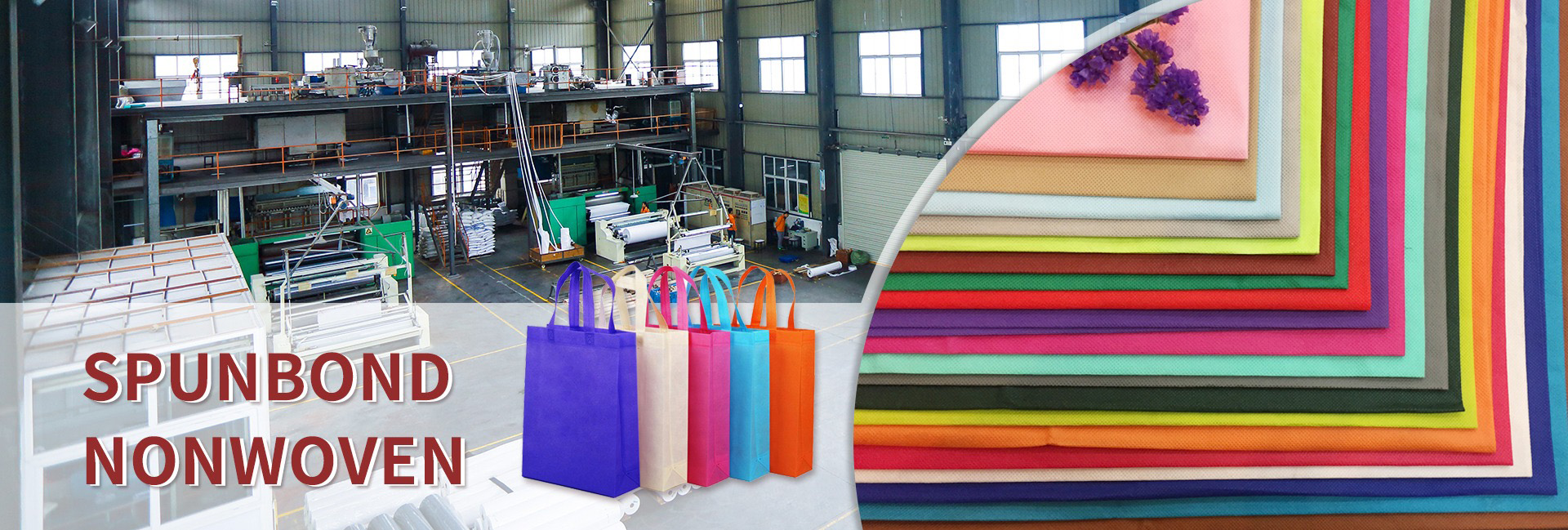
Dongguan Liansheng Non woven Technology Co., Ltd. was established in May 2020. It is a large-scale non-woven fabric production enterprise integrating research and development, production, and sales. It can produce various colors of PP spunbond non-woven fabrics with a width of less than 3.2 meters from 9 grams to 300 grams.
Post time: Jan-25-2026