
In the outdoor scene, non-woven fabrics have to face multiple tests such as ultraviolet exposure, high temperature sudden change, wind and rain erosion, and ordinary non-woven fabrics often have problems such as brittleness, pulverization, and strength sudden drop after several months of use. However, anti-aging non-woven fabrics can achieve “ultra long standby” for 3-5 years or more, and become the preferred material in outdoor geotechnical, sun protection, agricultural coverage and other fields. Many people wonder why anti-aging products can “carry” outdoor tests, which are also non-woven fabrics? The answer is simple: from raw material selection to finished product molding, every link has been “anti-aging armed“, and a full chain protection system has been built to resist aging erosion from the root, so as to play a long-term and stable role in outdoor environments.
The “super long standby” of anti-aging non-woven fabrics is not a single technological breakthrough, but a collaborative effort of raw material modification, process optimization, and finished product post-treatment, forming a whole process anti-aging closed-loop of “building the foundation of raw materials, strengthening the protection of processes, and locking the performance of finished products”. Each step is precisely targeted at the core pain points of outdoor aging, so that materials have strong anti-aging ability from inside to outside.
Raw material modification – creating “anti-aging genes” from the source
Raw materials are the basis of anti-aging of non-woven fabrics. The “armed” anti-aging non-woven fabrics should start from selecting appropriate base materials and adding anti-aging additives to improve the weathering resistance of materials at the root and avoid the rapid aging caused by “congenital deficiencies”.
In terms of substrate selection, priority should be given to using high molecular weight materials with excellent weather resistance, and traditional aging prone polypropylene (PP) and polyester (PET) substrates should be abandoned. At present, the mainstream anti-aging base materials are mostly modified PP, modified PET, or high-performance polyamide (PA), polyimide (PI) materials. Among them, modified PP introduces ethylene octene copolymer units to disrupt the regularity of the molecular chain, reduce the attack sites of ultraviolet and oxygen, and improve its light aging resistance by more than 50% compared to ordinary PP; Modified PET improves its crystallinity, heat resistance, and UV resistance by adding nucleating agents. It can work stably for a long time in a high temperature environment of 80 ℃, avoiding high-temperature softening and deformation.
The scientific addition of anti-aging agents is the core of raw material modification. Different from the protection mode of ordinary non-woven fabrics for “remedial after the event”, anti-aging non-woven fabrics are blended with composite anti-aging additives at the raw material stage to form a “congenital anti-aging barrier”. The commonly used additive systems include ultraviolet absorbers, light stabilizers, and antioxidants, which work together and perform their respective functions. Ultraviolet absorbers (such as benzotriazoles and salicylates) accurately absorb ultraviolet radiation in the 280-400nm wavelength range, convert it into harmless heat energy, and release it to avoid direct damage to molecular chains by ultraviolet radiation; Light stabilizers (such as hindered amine HALS) capture free radicals, block the photooxidation chain reaction, and delay the aging rate of materials; Antioxidants (such as phenols and phosphites) inhibit thermal oxidative aging, prevent molecular chain breakage in high-temperature environments, and maintain stable mechanical properties of materials.
It is worth noting that adding more additives is not necessarily better, but rather through precise proportioning to ensure even dispersion. Through anti-aging master batch technology, researchers make master batch with particle size of 2-5 microns from additives and carrier resin. Molecular dispersion is achieved when raw materials are mixed, which not only avoids uneven protection caused by additive agglomeration, but also ensures the full integration of additives and substrate, so that each fiber has anti-aging ability. Practice has proven that when the dosage of composite anti-aging agents is controlled at 2% -5%, the anti-aging effect is optimal, which can significantly improve weather resistance without affecting the softness and breathability of the material.
Production process – full process protection to avoid “damage after tomorrow”
Even if the raw material has excellent anti-aging potential, if the production process is improper, it will also lead to “acquired damage” of the material, reducing anti-aging performance. The production process of anti-aging non-woven fabric, from spinning, netting to compounding and shaping, has been optimized, and the anti-aging performance has been “escorted” throughout the process to avoid potential aging problems in the production process.
The spinning process focuses on optimizing temperature and shear force control. In the traditional spinning process, high-temperature melting and screw shearing can cause molecular chain breakage, forming free radicals and burying aging hazards. In the production of anti-aging non-woven fabrics, low-temperature spinning technology is adopted to control the melting temperature below the thermal decomposition temperature of the substrate, and adjust the screw speed to reduce the damage of molecular chains caused by mechanical shearing; In addition, efficient spinning components are used to improve the uniformity of fiber forming, reduce weak spots in fibers, and avoid local aging problems. For example, when spinning modified PP, the melting temperature is controlled at 200-220 ℃, which is 10-15 ℃ lower than the traditional spinning temperature, effectively reducing molecular chain breakage and improving the fiber’s anti-aging ability.
The net forming and composite process adopts a gentle and efficient process to avoid damage to the material caused by high temperature and chemical reagents. Anti aging nonwoven fabrics often use water pricking or ultrasonic composite process to replace the traditional hot rolling and glue bonding process: water pricking entangles the fibers through high-pressure water flow, without high temperature heating, to avoid the loss of additives and molecular chain aging caused by high temperature; Ultrasonic composite achieves fiber bonding through high-frequency vibration without the addition of chemical adhesives, which is environmentally friendly and can avoid delamination and failure caused by adhesive aging. Meanwhile, during the composite process, reinforcement layers (such as mesh cloth) can be added as needed to enhance the mechanical properties of the material and reduce aging caused by outdoor external friction and tension.
The shaping process adopts low-temperature heat shaping technology to further lock in the material structure and anti-aging performance. By precisely controlling the shaping temperature and time, fiber molecules can form a more stable bond with anti-aging agents, avoiding the occurrence of agent detachment and performance degradation during subsequent use; At the same time, surface modification can be carried out during the shaping process to form a dense protective film on the material surface, enhancing its waterproof and anti fouling capabilities, and reducing the aging effect of wind and rain erosion on the material.
Post processing of finished products – strengthening protection and extending standby time
After the finished product is formed, it is not directly put into use, but undergoes a series of post-treatment processes to further strengthen anti-aging protection, upgrade the material’s “ultra long standby” ability, and adapt to more complex outdoor scenes.
Surface coating treatment is one of the most commonly used post-processing methods. By spraying a layer of anti UV and waterproof coating on the surface of the finished product, a “secondary protective barrier” is formed. The coating materials are mostly environmentally friendly polyurethane (PU) and polyvinyl fluoride (PVDF), which can not only further improve the UV shielding efficiency, but also enhance the waterproof and wear-resistant properties of the materials, avoiding aging caused by rainwater immersion and wind and sand friction. For example, after PVDF coating is sprayed, the UV shielding efficiency of non-woven fabrics can be improved to more than 99.9%, and the waterproof grade can reach IP65, which can work stably in rainstorm, sandstorm and other harsh environments for a long time.
Irradiation crosslinking treatment is used for high-end anti-aging non-woven fabrics. Through electron beam irradiation, the cross-linking structure is formed between fiber molecules to build a more stable molecular network and improve the heat resistance, UV resistance and aging resistance of materials. After irradiation crosslinking treatment, the thermal decomposition temperature of non-woven fabric is increased by 30-50 ℃, and the tensile strength is increased by more than 40%. It can maintain its structural integrity even after short-term exposure to high temperature environments of 250 ℃, and its outdoor service life can be extended to more than 5 years. It is suitable for harsh scenarios such as aerospace and high-end industrial protection.
In addition, the finished product will undergo strict aging testing to select qualified products. Testing simulates the real outdoor environment, ensuring that the product can maintain excellent performance under conditions such as exposure to sunlight, high temperature, and high humidity through UV aging testing, thermal oxygen aging testing, and humid heat aging testing. Only products with UPF value ≥ 50 and strength retention rate after aging ≥ 70% can be put into the market through testing to ensure that each batch of anti-aging non-woven fabrics has the ability of “super long standby”.
Outdoor “standby” for 3-5 years, performance remains stable
The whole process of “anti-aging arms” has fully verified the outdoor durability of anti-aging non-woven fabrics. Taking the common outdoor geotextile anti-aging non-woven fabric as an example, after being exposed to the sun for 3000 hours (equivalent to three years of outdoor use), the product has a tensile strength retention rate of more than 85%, a tear strength retention rate of more than 80%, no brittleness and pulverization, a UPF value of 50+, and a UV shielding efficiency of more than 99%; After 5000 hours of exposure to sunlight (equivalent to 5 years of outdoor use), the basic performance can still be maintained, with a strength retention rate of over 75%, far better than ordinary non-woven fabrics (with a strength decrease of over 70% after 1000 hours of exposure).
In practical application, anti-aging non-woven fabric also performs well. The anti-aging non-woven fabric used for expressway geotextiles can still maintain its structural integrity and effectively prevent water and soil loss after five years of outdoor use; Products used for agricultural sunshade nets, after 3 years of use, have no obvious fading or brittleness, and can still effectively block ultraviolet rays, protecting crop growth; The anti-aging non-woven fabric used for outdoor billboards is still bright after long-term exposure, without cracking and falling off, and its service life is more than 3 times longer than that of ordinary non-woven fabric.
Full link protection is the core password for “ultra long standby”
The anti-aging non-woven fabric can be “super long standby” in the outdoor, the core is that it is not limited to the protection of a single link, but from raw materials, production to finished products, realizing the whole process of “anti-aging arms”: raw materials are modified to build the anti-aging foundation, so that each fiber has the inherent anti-aging ability; Optimizing production processes to avoid damage and ensure that anti-aging performance is not compromised; Post processing of finished products strengthens protection and further extends service life. The three parties work together to build a full chain, no dead corners anti-aging system, accurately resisting the erosion of outdoor aging factors such as ultraviolet radiation, high temperature, wind and rain.
With the continuous upgrading of outdoor scene demand, the technology of anti-aging non-woven fabrics is also constantly iterative, and will develop in the direction of more efficient, more environmentally friendly, and multi-functional in the future – use green anti-aging additives instead of traditional chemical additives, in line with the dual carbon goal; Integrating antibacterial, flame-retardant and other functions to adapt to more complex scenarios; Optimize the whole process, further reduce the production cost, and let anti-aging non-woven fabrics enter more fields.
Every ‘armament’ from raw materials to finished products is the ultimate pursuit of ‘durability’. It is this full link anti-aging protection that enables anti-aging non-woven fabrics to break the limitations of ordinary non-woven fabrics that are “easy to age and short in life”, become “reliable partners” in outdoor scenes, and interpret the core password of “ultra long standby” with technical strength.
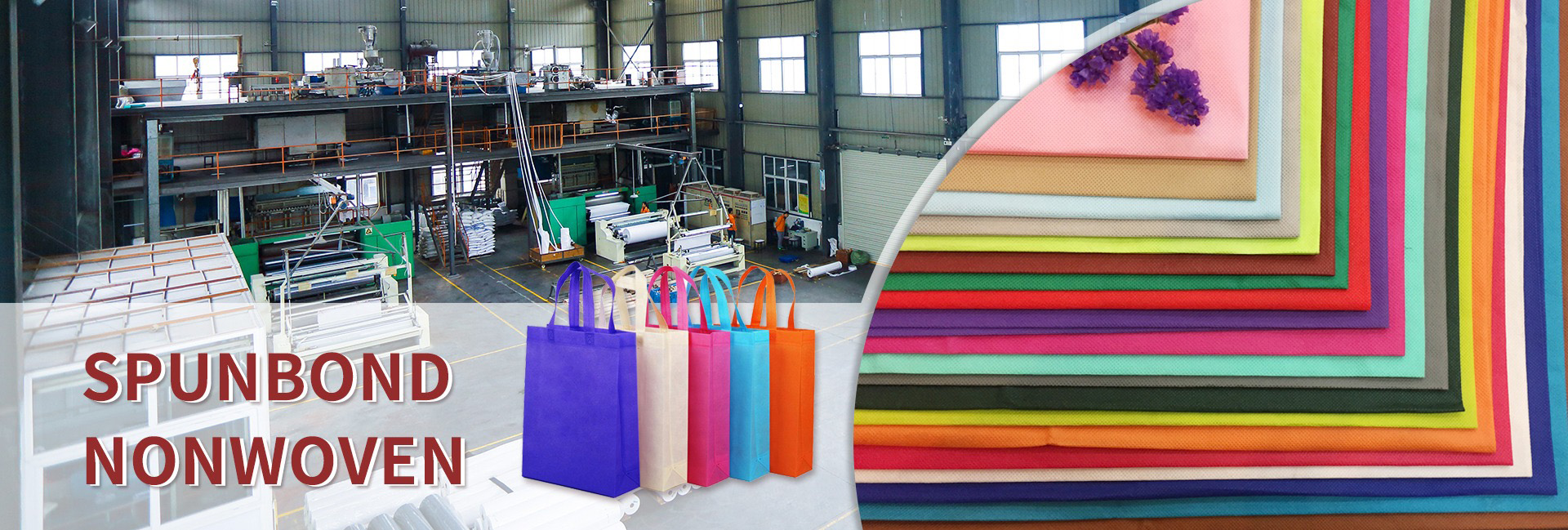
Dongguan Liansheng Non woven Technology Co., Ltd. was established in May 2020. It is a large-scale non-woven fabric production enterprise integrating research and development, production, and sales. It can produce various colors of PP spunbond non-woven fabrics with a width of less than 3.2 meters from 9 grams to 300 grams.
Post time: Apr-11-2026