
The core of selecting anti slip non-woven fabric is to match the anti slip needs of the usage scenario. However, due to the cognitive bias of “anti slip performance”, most people are prone to the misconception of “only looking at the surface and ignoring the essence”, resulting in products that either do not achieve the expected anti slip effect or have a short service life and safety hazards (such as skin irritation, detachment, displacement, etc.).
Especially in critical scenarios such as healthcare and home care for the elderly/children, incorrect selection may directly lead to safety risks. This article will break down the three most common performance misconceptions when choosing, and help you establish a scientific judgment logic.
The stronger the stickiness, the better the anti slip effect
Misconceptions manifested
Many people equate “stickiness” with “slip resistance” and prioritize choosing non slip non-woven fabrics that have strong stickiness to the touch and can even “stick” to the hand when purchasing. They believe that the more stickiness there is, the more reliable the anti slip effect will be.
Reason for error
Firstly, the core function of anti slip non-woven fabric is “anti slip”, which relies on the friction coefficient between the coating and the contact surface, rather than simply “adhesive adsorption”. The viscosity of high-quality anti slip non-woven fabric is a “gentle and stable adhesive force” rather than a strong adhesive “stickiness”.
Secondly, excessive stickiness often stems from high levels of low-quality adhesive (such as industrial grade hot melt glue), which may not only contain irritating ingredients that can cause skin allergies (especially in medical and children’s settings), but may also leave adhesive stains when removed, damaging the contact surface (such as furniture and skin).
More importantly, when strong adhesive products are used for a long time or in environments such as water and sweat, their stickiness will rapidly decrease, leading to a sudden drop in anti slip effect.
Correct judgment method
1. Test friction sensation: Place the anti slip non-woven fabric sample on the contact surface of the corresponding usage scenario (such as tiles, fabric, skin), gently push it, and feel whether there is a clear “blocking feeling” instead of a “sticking feeling”; If it is not easy to shift when pushed and there are no residual glue marks after releasing, it is qualified.
2. Pay attention to the type of backing adhesive: prioritize products labeled as “medical grade water-based adhesive” or “food grade anti slip coating”. These types of backing adhesives have mild and stable adhesion and are suitable for most scenarios; Avoid choosing products without labels and with severe adhesive residue after touching.
3. View scenario adaptation instructions: Different scenarios have different requirements for stickiness (such as low sensitivity and mild temperature in medical scenarios, and slightly stronger in industrial fixed scenarios). Choose according to your needs, rather than blindly pursuing strong stickiness.
The thicker the thickness, the better the anti slip and durability
Misconceptions manifested
When choosing, one tends to choose thicker non slip non-woven fabrics, believing that “thicker is more sturdy”, which can improve the anti slip effect and extend the service life.
Reason for error
The anti slip effect of non slip non-woven fabric is not directly related to its thickness, but depends on the anti slip structure design of the coating (such as micro nano rough texture, cross-linking degree) and the adhesion of the substrate. Excessive thickness of non-woven fabric has obvious drawbacks:
Firstly, poor adhesion, unable to tightly adhere to the concave and convex textures of the contact surface, resulting in a decrease in friction coefficient and poor anti slip effect (such as wet and slippery floors in bathrooms, where thick non-woven fabric is prone to water accumulation and increases the risk of sliding);
Secondly, it lacks flexibility and is difficult to adapt to curved contact surfaces (such as human limbs and furniture corners), which limits its application scenarios;
Thirdly, the cost is higher, and the breathability of thick non-woven fabrics is often poor, which can easily breed bacteria after long-term use (such as in medical dressings and children’s crawling mats).
In addition, durability depends on the fiber material and coating process, rather than thickness – high-quality thin non-woven fabrics (such as 20-50 μ m coating thickness) have much better durability than inferior thick fabrics through reasonable cross-linking processes.
Correct judgment method
1. Prioritize coating technology: Choose products labeled as “micro nano anti slip coating” or “cross-linked reinforced coating”, which can ensure stable anti slip effect even if the thickness is thin;
2. Choose thickness based on the scene: For flat hard scenes (such as kitchen countertops), choose medium thickness (30-50 μ m), for curved or breathable scenes (such as medical dressings, seat cushions), choose thin thickness (20-30 μ m), and for humid scenes (such as bathrooms), choose thin and breathable hydrophobic products;
3. Durability testing: Rub the surface of the sample repeatedly with your fingers. If the coating is not easily peeled off and there is no pilling phenomenon, it indicates good durability, rather than simply looking at thickness.
The better the waterproof performance, the more stable the anti slip effect
Misconceptions manifested
When purchasing in humid environments such as bathrooms and kitchens, blindly pursuing “completely waterproof” anti slip non-woven fabrics, believing that the stronger the waterproofing, the more stable the anti slip effect in humid environments.
Reason for error
Waterproof solves the problem of “preventing liquid penetration”, while the anti slip effect in humid environments depends on the wet friction coefficient and “drainage/water absorption capacity”, which are not necessarily related. Partially ‘completely waterproof’ non slip non-woven fabric, with a surface that is too smooth, experiences a sharp decrease in friction coefficient when wet, making it easier to slide;
At the same time, completely waterproof materials cannot absorb water stains on the contact surface (such as sweat on the soles of the feet or standing water on the ground). Water stains will form a “water film” between the non-woven fabric and the contact surface, further reducing the anti slip stability.
In addition, excessive pursuit of waterproofness may lead to poor breathability of the product, and long-term use may cause skin stuffiness and allergies (such as in intimate medical dressing scenarios).
Correct judgment method
1. Focus on the parameter of “wet friction coefficient”: select products labeled with “wet friction coefficient ≥ 0.6″ (recommended safety value by national standards), which is the core indicator for anti-skid in humid environments;
2. Prioritize the “hydrophobic+absorbent composite structure”: the surface is hydrophobic and impermeable, and the bottom layer absorbs water to quickly drain water stains, balancing waterproof and anti slip needs (such as anti slip floor mats in bathrooms);
3. Test the wet anti-skid effect: After soaking the sample, place it on the surface of the wet tile and push it. If there is still a stable blocking feeling and no obvious water film residue, it is qualified; Avoid choosing “waterproof” products with smooth surfaces and completely non absorbent properties.
The core logic of purchasing – prioritizing scene adaptation
The key to avoiding the above misconceptions is to abandon the “single indicator theory” and establish the core logic of “scenario adaptation”:
First, clarify the usage scenario (such as medical/home/industrial), environmental conditions (dry/humid/oily), and contact objects (skin/hard surface/fabric), and then focus on core parameters such as friction coefficient, adhesive type, coating process, etc., rather than blindly pursuing strong adhesion, thick thickness, and good waterproofing.
When necessary, check the product’s testing report (such as biocompatibility report, friction coefficient testing report) to select truly safe and reliable anti slip non-woven fabric.
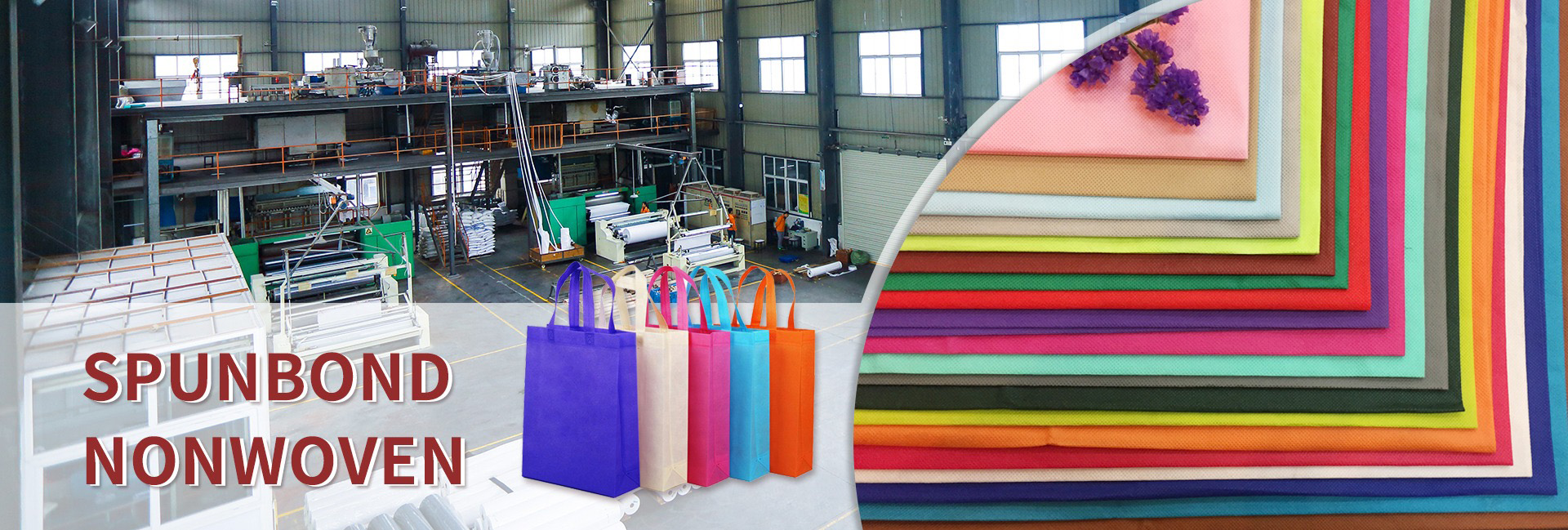
Dongguan Liansheng Non woven Technology Co., Ltd. was established in May 2020. It is a large-scale non-woven fabric production enterprise integrating research and development, production, and sales. It can produce various colors of PP spunbond non-woven fabrics with a width of less than 3.2 meters from 9 grams to 300 grams.
Post time: Jan-06-2026