
With the continuous development of infrastructure construction in our country, geotechnical materials have become the “invisible cornerstone” of infrastructure projects, and the market size continues to expand, forming a trillion level industrial track. For a long time, traditional geotechnical materials have faced pain points such as poor weather resistance, short service life, and high maintenance costs, making it difficult to meet the stringent requirements of major projects such as airports, high-speed railways, and cross sea tunnels.
Today, the anti-aging polypropylene short fiber has been successfully broken through the technical bottleneck by virtue of its excellent weather resistance, mechanical properties and environmental protection advantages. It has been widely used in various major infrastructure scenarios, injecting new vitality into the trillion geotechnical market, and promoting the industry’s transformation to high quality, long life and green.
Geotechnical materials are essential core materials in infrastructure projects, widely used in various aspects such as roadbed reinforcement, slope protection, anti-seepage and crack prevention, drainage and filtration, directly determining the stability and service life of the project. Data shows that the market size of China’s geotechnical materials has maintained a growth rate of over 8% for several consecutive years. By 2025, the market size will exceed 1.2 trillion yuan, with high-performance geotechnical fibers accounting for less than 30%. There is huge room for market upgrading. As a new geotechnical material, anti-aging polypropylene short fiber has completely solved the problem of light aging resistance and corrosion resistance of traditional polypropylene fiber after technical upgrading, and has become the preferred material for major projects. Its application scenarios have covered core fields such as airports, high-speed railways, cross sea tunnels, and demonstrated strong market competitiveness.
Anti-aging polypropylene short fiber, breaking the pain points of traditional geotechnical materials
Although traditional polypropylene short fibers have the advantages of lightweight, high strength, and low cost, they are easily affected by UV exposure, acid and alkali erosion, and high and low temperature fluctuations in complex outdoor environments, resulting in problems such as brittleness, fracture, and degradation, leading to the failure of geotechnical structures, significantly shortening the service life of engineering, and increasing maintenance costs in the later stage. The anti-aging polypropylene short fiber has achieved all-round performance upgrading through material formula innovation and production process optimization, and has become a “performance benchmark” in the field of geotechnical materials.
The core technology breakthrough focuses on anti-aging modification and production process. In terms of material formula, the R&D team has built a synergistic light aging system of “UV absorption – UV reflection – free radical capture”, added special anti-aging master batch, nano reinforcement particles and efficient flame retardant modifier to polypropylene raw materials, making a qualitative leap in the weathering resistance of fibers – through accelerated aging test verification, its UV aging strength retention rate has increased by more than 22.5%, and its service life in outdoor harsh environments can reach more than 50 years, which is three times longer than traditional polypropylene fibers, completely solving the industry pain point of “aging and failure prone”. At the same time, by optimizing the surface structure of the fibers, the compatibility between the modifier and the polypropylene matrix was enhanced, resulting in more uniform fiber dispersion and further improvement of mechanical properties.
In terms of production technology, the integrated linkage process of “spinning cooling stretching shaping curling” is adopted to develop high-capacity flexible production equipment, which not only increases the single line production capacity by 25%, but also achieves precise control of fiber properties – the fiber diameter is stable in the range of 18-22 μ m, the tensile strength is above 650MPa, the elongation at break is increased by 12.3%, and the dry heat shrinkage rate is significantly reduced by 36.5%, meeting the core requirements of high strength, high toughness, and low shrinkage. In addition, the fiber also has excellent acid and alkali resistance, corrosion resistance, and almost no hydrolysis in the pH range of 3-11. It is suitable for complex working conditions such as high corrosion along the coast and strong ultraviolet radiation in the northwest. At the same time, its density is only 0.90-0.91g/cm ³, and the unit area mass is lower under the same strength, which can significantly reduce transportation and construction loads.
It is worth mentioning that the anti-aging polypropylene staple fiber has also realized the green environmental protection upgrade, using recyclable and recyclable raw materials, zero waste water discharge in the production process, and it can enter the special regeneration system after the service life expires. The purity of propylene monomer obtained from cracking is 99.2%, and the energy consumption for re polymerization into new material is only 37% of the original raw material, which conforms to the concept of green development of China’s infrastructure, and becomes a new geotechnical material with both performance and environmental protection. This technology has won the first prize of the Science and Technology Progress Award of the China Textile Industry Federation. Among them, the light aging resistance and high elongation low shrinkage synergistic optimization technology have reached the international leading level, realizing the independent controllability and “curve overtaking” of high-end polypropylene short fiber preparation technology.
Three core infrastructure areas, building a solid “invisible defense line” for the project
At present, anti-aging polypropylene short fiber has been successfully used in major infrastructure projects such as airports, high-speed railways, cross sea tunnels, etc. With its excellent performance, it protects the stability of projects and becomes the “invisible guardian” of infrastructure projects. Its application value has been fully verified in various complex working conditions.
Airport engineering: safeguarding runway safety and enhancing durability
As the core of aviation infrastructure, airport runways have extremely high requirements for the weather resistance, crack resistance, and wear resistance of geotechnical materials. They need to withstand the huge loads of aircraft takeoff and landing for a long time, while also resisting harsh environments such as outdoor exposure, rain and snow erosion. Traditional geotechnical materials used for airport runways are prone to problems such as cracking, aging, and damage, which affect the service life and flight safety of the runway.
Anti aging polypropylene short fiber is widely used in airport runway base reinforcement, surface crack resistance and anti-seepage treatment by compounding with concrete, asphalt and other materials, effectively improving the crack resistance and durability of runway. Adding this fiber to runway concrete can increase its compressive strength, splitting tensile strength, and flexural strength by 7.51%, 11.45%, and 26.95%, respectively, while reducing strain amplitude by about 45.45%.
This significantly reduces the occurrence and propagation of runway cracks, while improving the wear resistance and impact resistance of the runway, avoiding damage caused by material aging. At present, the fiber has been applied in 23 new/expanded airport projects in China, including high-altitude airports, coastal high corrosion environment airports and other special scenarios. In a high-altitude airport project at an altitude of 4500 meters, the temperature resistance range of the fiber was expanded to -40 ℃ to 80 ℃ by adjusting the raw material formula, perfectly adapting to the working conditions of large day night temperature difference and strong ultraviolet radiation in the plateau. After using the fiber in a runway reinforcement project of a tens of millions level airport, the crack incidence rate was reduced by 72%.
High speed railway project: Strengthen the roadbed slope to ensure smooth driving
The high-speed railway project has strict requirements for the stability and anti settlement ability of the roadbed, especially in complex geological areas such as soft soil, hills, and coastal areas, where the roadbed is prone to settlement, landslides, and other problems, seriously affecting driving safety. With excellent reinforcement performance, anti-aging polypropylene short fiber has become the core material for high-speed railway subgrade and slope protection, effectively solving the problem of subgrade reinforcement under complex geological conditions.
In the construction of high-speed railway subgrade, the anti-aging polypropylene short fiber is mixed into the subgrade filler, which can effectively enhance the cohesion and shear strength of the filler, reduce the settlement and deformation of the subgrade, and improve the stability of the subgrade. At the same time, its excellent weather resistance and corrosion resistance can resist rain wash, ultraviolet exposure and soil acid and alkali erosion, and ensure long-term stability of the subgrade. In slope protection, the geotextile made of this fiber can be used for slope greening, soil stabilization and erosion prevention.
Its three-dimensional pore network structure combines high permeability and precise filtration function, which can prevent soil erosion and promote vegetation growth, achieving a dual effect of engineering protection and ecological environmental protection. At present, the fiber has been applied to the roadbed reinforcement and slope protection projects of multiple major high-speed railway projects such as the Beijing Shanghai high-speed railway and the Shanghai Kunming high-speed railway. Through practical verification, it can control the settlement of high-speed railway foundations within the standard range, greatly improve the stability and safety of high-speed railway operation, extend the service life of the roadbed, and reduce maintenance costs in the later stage.
Cross sea tunnel: anti-seepage, corrosion-resistant, and resistant to complex marine environments
Cross sea tunnels are located in a complex marine environment characterized by high temperature, high humidity, and high salt spray. Geotechnical materials need to possess excellent impermeability, corrosion resistance, and weather resistance to resist seawater erosion, tidal impact, and UV exposure, ensuring the safety of tunnel structures. Traditional geotechnical materials are prone to corrosion and aging in the marine environment, which is difficult to meet the long-term service requirements. The emergence of anti-aging polypropylene short fiber perfectly adapts to the harsh use requirements of cross sea tunnels.
In the construction of cross sea tunnels, geotextiles and anti-seepage membranes made of anti-aging polypropylene short fibers are widely used in tunnel lining, anti-seepage layer and drainage system. Their excellent anti-corrosion performance can effectively resist seawater salt spray erosion and avoid material aging and damage; At the same time, its good impermeability can prevent seawater from penetrating into the interior of the tunnel, protecting the safety of the tunnel structure and equipment. In addition, the fiber can also be used for the reinforcement and modification of tunnel lining concrete.
Adding 12mm anti-aging polypropylene short fiber to the concrete can effectively control the generation and expansion of lining cracks, improve the toughness and impermeability of the lining structure. After the fiber is applied to a test section of a cross sea tunnel, the strength safety factor of the lining structure is improved, and there are no problems such as water seepage and cracking during operation. At present, the fiber has been applied in major projects such as the Jiaozhou Bay Cross Sea Tunnel in Qingdao and the Hong Kong Zhuhai Macao Bridge Subsea Tunnel, providing strong guarantees for the long-term safe operation of cross sea tunnels.
New materials lead the high-quality development of the geotechnical industry
Our country’s geotechnical materials market is currently undergoing a transition from “scale expansion” to “quality improvement”. With the continuous promotion of major infrastructure projects and the increasing emphasis on green infrastructure and ecological construction policies, the demand for high-performance, long-life, and environmentally friendly geotechnical new materials will continue to be released. As a new material to break the technical bottleneck, anti-aging polypropylene short fiber not only solves the pain points of traditional geotechnical materials, but also meets the high-quality and green needs of modern infrastructure, with broad market prospects.
From the perspective of market size, the market penetration rate of anti-aging polypropylene staple fiber in China is still low. With its wide application in major projects such as airports, high-speed railways, cross sea tunnels, and the continuous iterative upgrading of technology, it is expected that the market size will maintain a growth rate of more than 15% in the next five years, and the market size will exceed 50 billion yuan in 2030, becoming the core growth pole of the trillion geotechnical market. At the same time, the localization breakthrough of this material has broken the technological monopoly of foreign high-end geotextile fibers. Currently, a large capacity production line with an annual output of 150000 tons has been built in China, ranking first in the country in the past three years. This not only reduces the cost of engineering materials, but also enhances the international competitiveness of China’s geotextile industry.
Industry insiders said that the application of anti-aging polypropylene short fiber not only promoted the technical upgrading of the geotechnical material industry, but also provided a strong guarantee for the safety and durability of major infrastructure projects, helping China’s infrastructure projects to develop towards “high-quality, long-life, green”. In the future, with the further optimization of technology, the anti-aging polypropylene staple fiber will also be expanded to water conservancy projects, mine repair, environmental protection projects and other fields, and continue to tap the growth potential of the trillion geotechnical market, injecting new impetus into the high-quality development of China’s infrastructure construction.
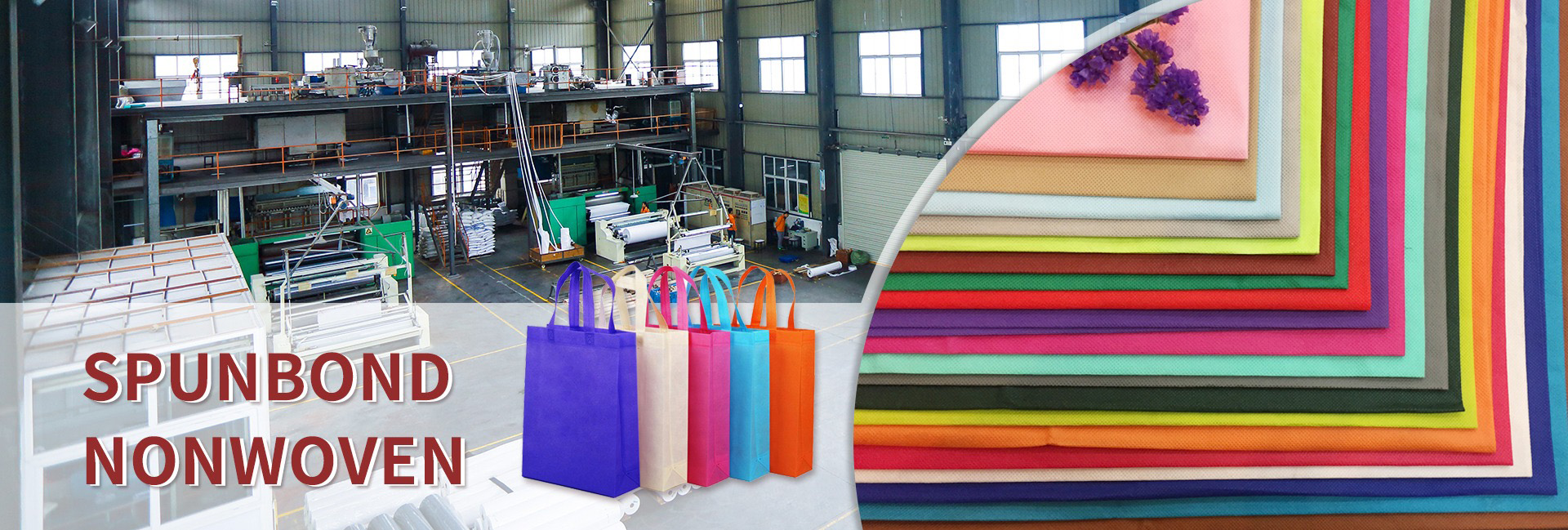
Dongguan Liansheng Non woven Technology Co., Ltd. was established in May 2020. It is a large-scale non-woven fabric production enterprise integrating research and development, production, and sales. It can produce various colors of PP spunbond non-woven fabrics with a width of less than 3.2 meters from 9 grams to 300 grams.
Post time: May-04-2026