
The fire resistance of non-woven fabric directly determines its application value in high-risk scenarios such as fire protection, public facilities, and industrial protection. The core logic to improve this performance is to optimize the process to make the material have the core capabilities of “flame suppression, flame retardancy, and fire isolation”.
At present, the mature and mainstream core process paths in the industry are mainly divided into two categories: one is the “flame retardant modification process”, which introduces flame retardant components into the non-woven fabric production process to chemically suppress combustion reactions; The second is “fiber structure optimization and composite technology”, which involves adjusting fiber morphology and constructing multi-layer structures to physically block flame and heat transfer. Each of the two processes has its own emphasis and can be used separately or in combination according to the requirements of the application scenario. The following is a detailed analysis.
Flame retardant modification process – chemical empowerment, suppressing combustion from the root
The flame retardant modification process is the most fundamental and widely used way to improve the fire resistance of non-woven fabrics. Its core principle is to deeply integrate flame retardants with non-woven fiber substrates, making the material itself have flame retardant properties and cutting off the cycle of the three elements of combustion from a chemical level. According to the different timing of adding flame retardants, this process can be further divided into two specific implementation methods: “pre spinning modification” and “post finishing modification”.
1. Pre spinning modification: Incorporating raw materials at the end for longer flame retardancy
Pre spinning modification, also known as “original solution modification”, is the process of thoroughly mixing flame retardants (such as phosphorus nitrogen halogen-free flame retardants, metal hydroxide flame retardants, etc.) with polymer chips such as polypropylene and polyester during the raw material stage before the formation of non-woven fabric fibers. After melt spinning, flame retardant fibers are directly made, and then processed into non-woven fabric through processes such as needle punching and hot air.
The core advantage of this process lies in the deep integration of flame retardant components with fibers: flame retardants are evenly dispersed inside the fibers rather than attached to the surface, thus possessing excellent durability. After multiple washes, frictions, or long-term use, the flame retardant performance will not significantly deteriorate.
Meanwhile, the pre spinning modification process can be mass-produced on a large scale, suitable for the production of conventional fire-resistant non-woven fabrics, with relatively stable cost control. However, it requires high compatibility with flame retardants, ensuring that the melting temperature and dispersibility of the flame retardant match the polymer substrate, otherwise it may affect the quality of fiber forming. At present, this process is widely used in fire-resistant non-woven fabric products that require long-term use, such as inner layer materials for firefighting suits and non-woven fabrics for industrial protection.
2. Post finishing and modification: Empowering the finished product to adapt to diverse scenarios
Post finishing modification is the process of uniformly covering the surface of non-woven fabric or penetrating into the fiber gaps with a flame retardant solution through impregnation, spraying, and dyeing after the non-woven fabric is formed. After drying and curing, the flame retardant performance is empowered. According to the different types of flame retardants, they can be divided into water-based flame retardant finishing, solvent based flame retardant finishing, etc. Among them, water-based flame retardant finishing has become the mainstream choice due to its good environmental friendliness and safe operation.
The core advantage of this process is “strong flexibility and wide adaptability”: it can be modified for already formed ordinary non-woven fabrics without adjusting the spinning process, and can quickly respond to the needs of different flame retardant levels, especially suitable for small batch and customized production of fireproof non-woven fabrics. At the same time, post finishing modification can be combined with flame retardants of different functions according to the needs of the scene, achieving composite functions such as “flame retardant+waterproof” and “flame retardant+antibacterial”. However, it should be noted that the flame retardant of this process mainly adheres to the surface of the fibers, and may peel off after long-term use or washing, resulting in a decrease in flame retardant performance. Therefore, it is more suitable for disposable fireproof products or short-term use scenarios, such as fireproof isolation cloth for construction, disposable fireproof protective masks, etc.
Fiber Structure Optimization and Composite Process – Physical Barrier, Building a Strong Fire Barrier Line
The core logic of fiber structure optimization and composite technology is to “not rely on chemical flame retardants, but to form a physical fire barrier by adjusting the fiber morphology and pore structure of non-woven fabrics or constructing multi-layer composite systems”, blocking heat transfer and oxygen permeation, thereby achieving fire prevention effect. This process has been continuously applied in high-end fire prevention scenarios in recent years due to its excellent environmental friendliness and no risk of toxic gas release. It is mainly divided into two implementation methods: “single component fiber structure optimization” and “multi-component multi-layer composite”.
1. Single component fiber structure optimization: improving barrier properties through fiber morphology
This process improves the density and thermal insulation of non-woven fabrics by adjusting spinning parameters, changing fiber cross-sectional morphology, or optimizing the mesh forming process.
For example, using “ultrafine fiber spinning technology” to prepare nanoscale ultrafine fibers, and then using hot air bonding technology to make non-woven fabrics – ultrafine fibers have a larger specific surface area, more tightly interwoven fibers, and smaller and evenly distributed pores in the formed non-woven fabric, which can effectively block flame penetration and heat transfer; At the same time, some high-temperature resistant fibers (such as aramid fibers and basalt fibers) can further enhance the material’s high-temperature resistance by optimizing the mesh density, and can even withstand temperatures above 1000 ℃.
The advantage of this process is that it is environmentally friendly, residue free, and has excellent high temperature resistance. It does not require the addition of chemical flame retardants, avoiding the release of toxic gases during combustion.
It is suitable for scenarios with extremely high environmental and safety requirements, such as fireproof isolation materials in medical clean areas and fireproof non-woven fabrics in aerospace interiors. However, due to the cost of fiber raw materials and the difficulty of spinning processes, its production cost is relatively high, and large-scale production is difficult.
2. Multi component and multi-layer composite: synergistically increasing efficiency and enhancing comprehensive fire prevention capabilities
This process involves combining fiber layers or material layers with different functions through methods such as hot rolling, needle punching, and adhesive bonding to form a “functionally complementary” multi-layer structure, achieving a comprehensive protective effect of “flame retardant+thermal insulation+wear resistance”.
Common composite structures include “high-temperature resistant fiber surface layer+insulation fiber middle layer+dense barrier bottom layer”: the surface layer is made of high-temperature resistant fibers such as aramid and basalt, which directly resist flame baking; The middle layer uses hollow fibers or fluffy fibers to block heat transfer using the principle of air insulation; The bottom layer is made of dense non-woven fabric to further block the penetration of oxygen and flammable gases.
The core advantage of this process is “customizable performance”, which can flexibly match different components of fiber layers according to the fire prevention needs of different scenarios, achieving different levels of fire prevention and insulation effects. For example, composite fireproof non-woven fabric used for welding blankets can enhance the surface wear resistance and flame retardant properties; The composite non-woven fabric used for firefighting uniforms focuses on improving thermal insulation performance and wearing comfort.
In addition, multi-layer composite structures have stronger stability and longer service life, making them suitable for long-term use scenarios such as high-end industrial protection and public facility fire prevention. However, the production process of this technology is relatively complex, and the process control requirements for composite links are high. It is necessary to ensure that each layer is tightly bonded to avoid layering affecting the fire prevention effect.
Comparison and Collaborative Application of Two Processes
The core advantages of flame retardant modification technology are low cost, scalable mass production, and suitability for conventional fire prevention scenarios; Fiber structure optimization and composite technology have the advantages of environmental protection, high temperature resistance, and stable performance, suitable for high-end and high safety requirements scenarios.
In practical applications, two processes are often used in conjunction: for example, using “pre spinning modified flame-retardant fibers” to prepare the surface layer, combined with “ultra-fine fiber insulation layer” to form a composite non-woven fabric, which not only ensures long-lasting flame-retardant performance but also improves insulation effect, perfectly adapting to core fire prevention scenarios such as fire protection and transportation hubs.
In the future, with the tightening of environmental regulations and the increasing demand for high-end fire prevention, the technological upgrading and cost reduction of fiber structure optimization and composite processes will become the industry development trend, and the collaborative innovation of the two processes will further expand the application boundaries of fire-resistant non-woven fabrics.
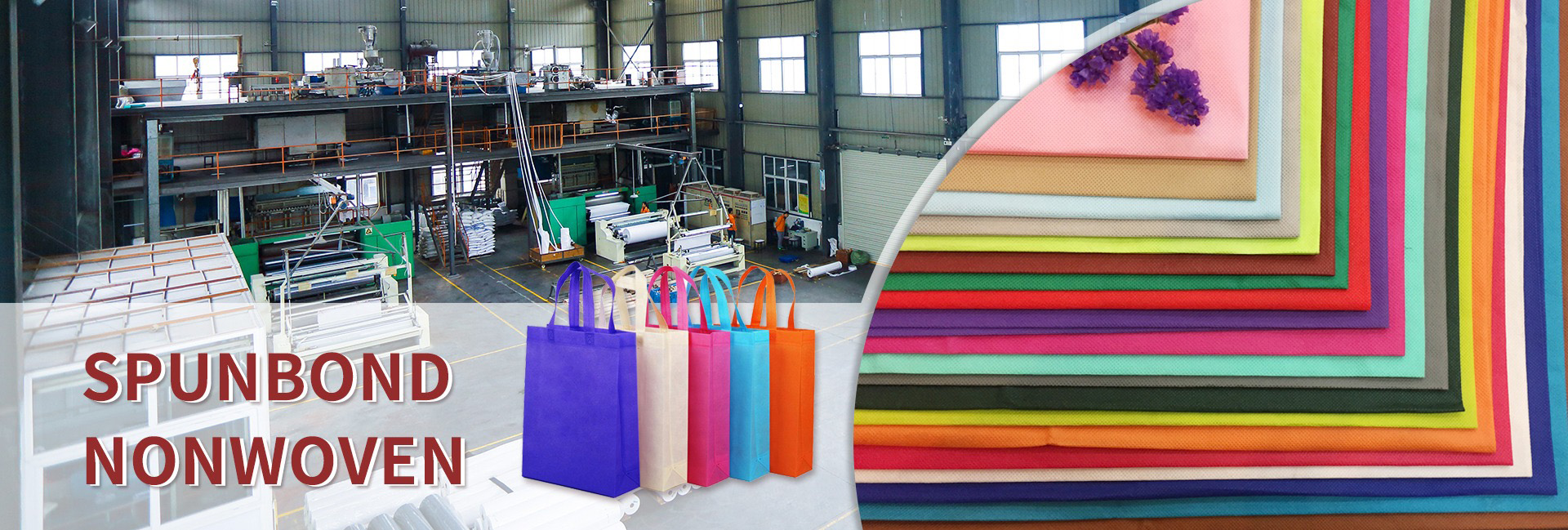
Dongguan Liansheng Non woven Technology Co., Ltd. was established in May 2020. It is a large-scale non-woven fabric production enterprise integrating research and development, production, and sales. It can produce various colors of PP spunbond non-woven fabrics with a width of less than 3.2 meters from 9 grams to 300 grams.
Post time: Dec-25-2025