
Fire safety is the bottom line guarantee for the operation of public facilities. With the acceleration of the new urbanization process in China and the vigorous upgrading and renovation of public facilities, coupled with the continuous tightening of national and local fire regulations, the market for fireproof materials is facing structural growth opportunities.
Among them, fireproof non-woven fabric has become one of the core materials for fire protection in public facilities due to its excellent flame retardant performance, lightweight characteristics, and diverse adaptability, and the market demand is showing an explosive growth trend.
The tightening of regulations strengthens the safety bottom line, forcing the upgrading and iteration of fireproof materials
The continuous improvement and strict implementation of fire safety regulations are one of the core driving forces for the growth of demand for fire-resistant non-woven fabrics. At the national level, the Fire Protection Law of the People’s Republic of China clearly stipulates that the fire protection design and construction of construction projects must comply with national engineering construction fire protection technical standards, implement a fire protection design review and acceptance system, and strictly inform and promise management of fire safety inspections in public gathering places. Without permission, they cannot be put into use.
At the technical standard level, the “General Code for Building Fire Protection” GB55037-2022 provides detailed requirements for the setting of safety exits, evacuation staircase forms, and refuge room configurations in public buildings, indirectly improving the performance requirements for materials such as fire separation and fire wrapping.
At the same time, the upgrading of environmental and safety regulations worldwide, such as the continuous updating of the EU REACH regulation, has accelerated the elimination of halogenated and toxic flame retardant materials, opening up a larger market space for environmentally friendly fire-resistant non-woven fabrics.
Under regulatory constraints, the construction and operation of public facilities have become increasingly cautious in the selection of fire-resistant materials. Fire resistant non-woven fabrics with B-level or higher flame retardant rating, low smoke and non-toxic properties, and compliance with environmental standards have become the preferred alternative to traditional and inefficient fire-resistant materials, and demand has been rapidly released.
Upgrading public facilities and expanding the application scenarios of fire-resistant non-woven fabrics
The wave of upgrading domestic public facilities covers multiple fields such as transportation hubs, cultural and sports venues, medical and educational institutions, and the renovation of old residential areas. Each scenario presents a rigid demand for fire-resistant non-woven fabrics, forming a diversified growth engine.
In the field of transportation hubs, airports, high-speed railway stations, subways and other places have high pedestrian flow and enclosed spaces, and there is an urgent demand for materials with both fire resistance and sound absorption properties. The sound-absorbing body composed of fire-resistant and sound-absorbing non-woven fabric and perforated board composite is widely used in the ceiling and wall decoration of these places due to its light weight, excellent fire resistance, and beautiful appearance.
It can meet the flame retardant requirements specified in GB 8624-2017 and improve the acoustic environment. At the same time, the interior materials of high-speed trains, aerospace and other transportation vehicles also use a large amount of fire-resistant non-woven fabrics as flame retardant protective layers due to the improvement of safety standards.
In the fields of cultural, sports, and medical education facilities, fire-resistant non-woven fabric is required as the core protective material for fire compartments, evacuation routes, and pipe gap sealing in public buildings such as theaters, sports halls, hospitals, and schools. For example, areas such as hospital shelters, clean operating rooms, school teaching buildings, and dormitories have extremely high requirements for flame retardancy and environmental friendliness of fire-resistant materials. Fireproof non-woven fabrics have become an ideal choice due to their characteristics of not melting droplets and not releasing harmful gases.
In addition, the renovation of old public facilities is another major demand growth point. In the upgrading of fire protection systems in old residential areas and venues, fireproof non-woven fabrics are used to replace old fireproof materials, add fireproof partitions, etc., further expanding the market demand scale.
Resonance between product advantages and industrial upgrading, consolidating the foundation of demand growth
The performance advantages of fire-resistant non-woven fabric enable it to accurately match the diversified needs of public facility upgrades and stricter regulations. Compared to traditional fire-resistant materials, fire-resistant non-woven fabrics have significant advantages:
firstly, they have excellent flame retardancy. Some high-end products can withstand an instant high temperature of 1400 ℃, and do not produce toxic or harmful gases during combustion, meeting the dual requirements of environmental protection and safety;
Secondly, it has strong adaptability and can be processed into various forms such as fire-resistant blankets, fire-resistant wrapping materials, sound-absorbing materials, etc. according to different scene requirements. It is applied in multiple aspects such as fire-resistant sealing, thermal insulation, and personal protection;
The third is lightweight and easy to construct, which can reduce the difficulty and cost of public facility renovation and improve construction efficiency.
At the same time, the domestic fireproof non-woven fabric industry is accelerating its upgrading. In the past three years, the annual growth rate of patent applications in the global flame retardant non-woven fabric field has exceeded 12%, with China accounting for over 40% of the global total. Technological innovation focuses on bio based flame retardants, biodegradable composite materials, and other directions, further enhancing the performance and competitiveness of products. The benign resonance between industrial upgrading and market demand provides a solid supply guarantee for demand growth.
Market outlook: Continuous increase in demand and broad growth potential
Against the backdrop of continuous upgrading of public facilities and increasingly strict fire regulations, the demand for fire-resistant nonwoven fabrics in the market will continue to grow rapidly. According to industry report data, the global flame retardant non-woven fabric market has exceeded billions of dollars in 2024, and is expected to achieve an average annual compound growth rate of about 8% by 2030. The Asia Pacific region accounts for more than 50% of the global consumption share, and the Chinese market is the core growth engine.
In the future, with the integration and development of emerging fields such as new energy and energy storage with public facilities, the application scenarios of fireproof non-woven fabrics will be further expanded, such as fireproof insulation of energy storage systems and fireproof protection of new energy vehicle charging piles, injecting new impetus into market demand growth. It can be foreseen that under the multiple favorable factors of policy driving, infrastructure support, and technological upgrading, the fireproof non-woven fabric industry will usher in long-term development opportunities.
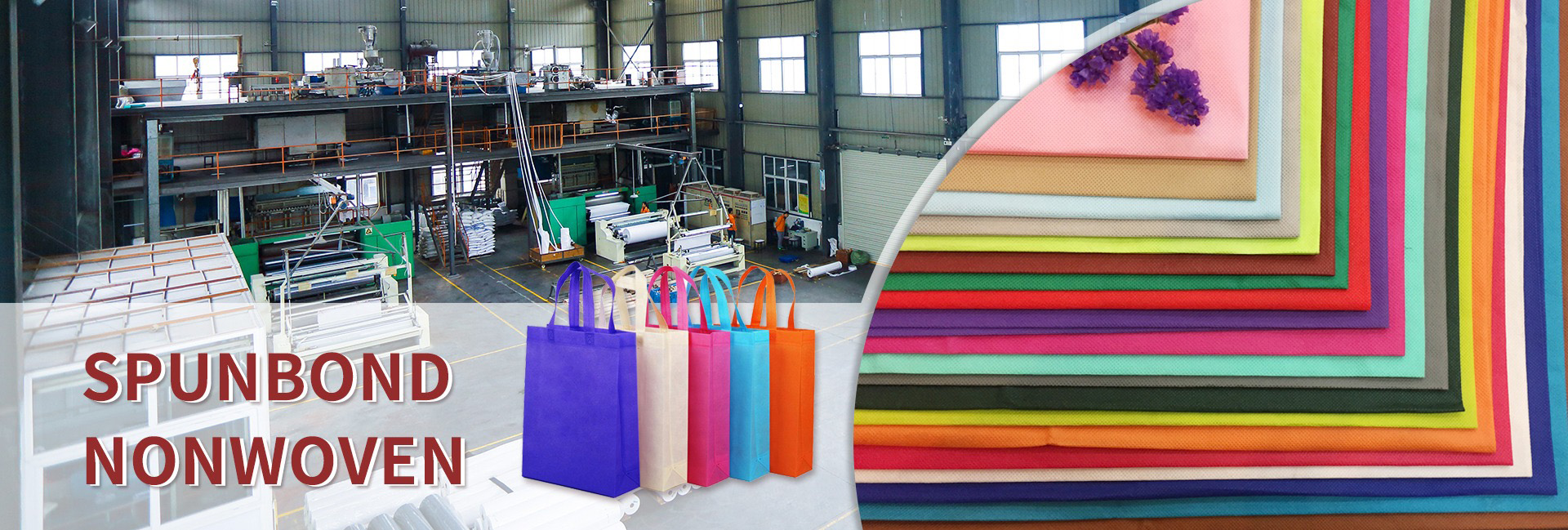
Dongguan Liansheng Non woven Technology Co., Ltd. was established in May 2020. It is a large-scale non-woven fabric production enterprise integrating research and development, production, and sales. It can produce various colors of PP spunbond non-woven fabrics with a width of less than 3.2 meters from 9 grams to 300 grams.
Post time: Dec-26-2025