
People who have planted orchards have probably had the same nightmare – after a summer rain, you stand on the ground and see, my goodness, weeds are even more rampant than fruit trees. The grass grows densely, making it difficult for people to crawl in, not to mention fertilizing, fertilizing, and picking fruits. So you gritted your teeth, picked up your hoe, and under the scorching sun above your head, bent down and started digging one by one. After washing it once, within half a month, the grass sprouted again. I fucked three times in a summer, my waist was almost broken, and my wages kept flowing out.
The old fruit farmer once calculated that manually weeding one acre of land requires at least two or three workers. Based on the current daily wage of 150 yuan, weeding alone costs thousands of yuan per year. Planting tens of acres, throwing tens of thousands of yuan into the ground, not even a splash of water can be heard.
Until one day, someone laid a layer of black “cloth” - PP grass proof cloth – on the ground, and the world suddenly fell silent. The weeds are pressed down obediently, the orchard is as clean as a park, and the fruits are actually bigger and sweeter. What kind of magic did this layer of cloth cast? Today we’re going to dig it up.
Artificial weeding is tiring, expensive, and not pleasing to the eye
First, let’s talk about the pain points and poke at the heart wrenching history of the old fruit farmer.
The weeds in the orchard are like wildfires that can’t burn them all, but spring breeze brings them back to life. They compete with fruit trees for water, fertilizer, and sunlight. Studies have shown that in orchards overgrown with weeds, the surface soil moisture and nitrogen are absorbed by the grass, causing the fruit trees to go hungry. And there are too many weeds, poor ventilation and light transmission, and a pile of pests and diseases. You have to apply more medicine, and the cost is getting higher and higher.
What about manual weeding? Seemingly permanent, but in reality, it only treats the symptoms and not the root cause. The weeded grass roots are still in the soil, but they grow back in the next rain. Worse still, with each hoe, the surface of the soil is stirred up, leading to increased water evaporation and potential soil erosion. Working in high temperatures of 30-40 degrees Celsius in summer poses a higher risk of heatstroke than working on grass. Hiring someone? Nowadays, rural labor is becoming increasingly scarce, and even two hundred yuan a day may not necessarily be enough to hire people. The most crucial thing is that the efficiency of manual weeding is too low – a person who works hard all day can only hoe half an acre of land.
So the fruit farmers toiled tirelessly for half their lives weeding, only to discover in the end: money was not saved, people were not relaxed, and the soil in the orchard was getting worse and worse .
Then what should we do? The answer is to lay PP weed proof cloth to make the weeds feel ashamed.
How does PP weed proof cloth make weeds stand aside?
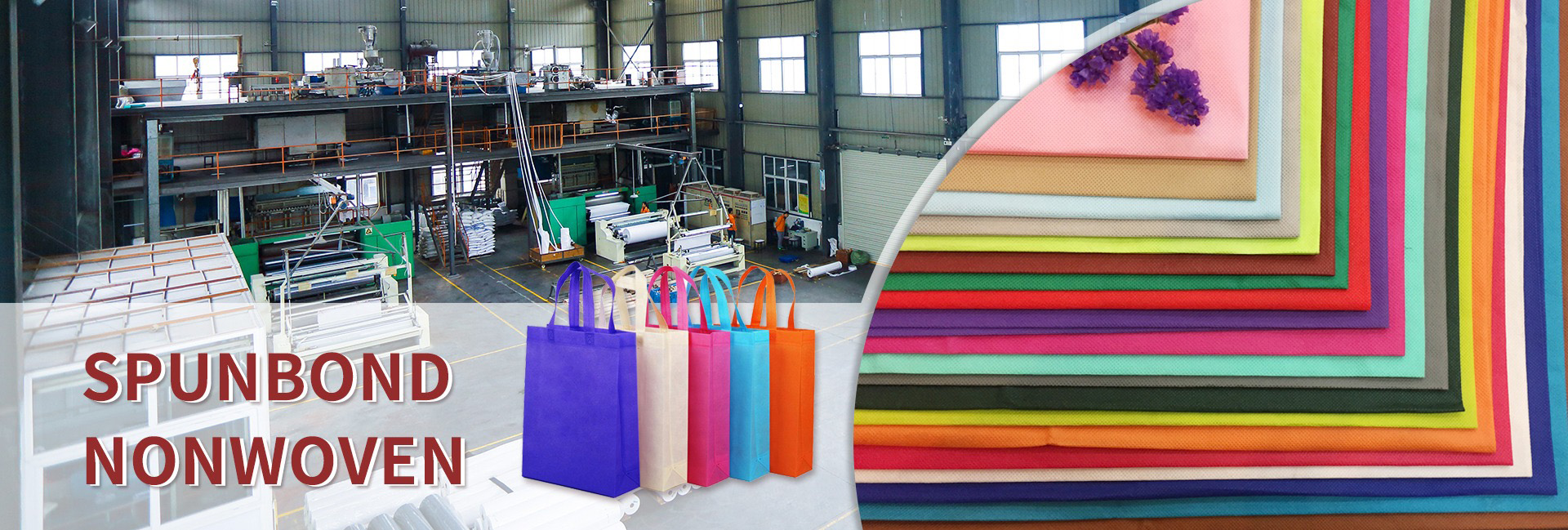
PP grass proof fabric, also known as polypropylene spunbond non-woven fabric, is generally black or dark in color. It’s not a fresh black technology, but when used for weed prevention in orchards, it’s called dimensionality reduction strike.
Its principle is simple and crude: physically isolating light .
Do weeds want to sprout? We need light. Do you want to grow taller through photosynthesis? We also need light. PP grass proof cloth is laid on the ground, tightly covering the soil surface with almost zero light transmittance. No matter how long the grass seeds are held in the darkness, they cannot emerge. Even if a few “stubborn elements” emerge from the cracks, they will grow weak and yellow seedlings due to the lack of light, which will fall off with a gentle tug.
Someone asked: Can’t ordinary black plastic film work? Why do we have to use PP non-woven fabric?
The difference is significant. Plastic film is impermeable and not breathable. In summer, when the sun shines, the temperature under the film can soar to 60-70 degrees Celsius, causing the roots of fruit trees to be “steamed” and damaged. Moreover, the plastic film will age and shatter soon, leaving fragments in the ground that turn into white pollution. And PP grass proof fabric is porous and breathable – water, fertilizer, and air can smoothly penetrate the fabric and infiltrate the soil, but light cannot pass through. This not only suppresses weeds, but also does not affect the respiration and absorption of water and nutrients by fruit trees. Its lifespan is generally 3-5 years, and it can be recycled after use, which is much more environmentally friendly than plastic film.
Laying it out is not complicated: first clean up the weeds on the ground, then spread out the grass proof cloth and flatten it, compact the edges with soil or ground nails, and leave a hole at the root of the fruit tree. Once laid, it will be managed for several years. From now on, you no longer have to bend down and weed under the scorching sun. At most, you can take a walk occasionally to see if there is any grass coming out of the hole and easily pull it out.
The three rounds of manual weeding saved were real gold and silver.
How do I calculate this account if I save 3 layers of labor?
Let’s calculate an economic account, taking a common orchard as an example. If you don’t know, you’ll be surprised.
Assuming you have planted 20 acres of fruit trees, under traditional methods:
-Weeding is done three times a year (once in spring, summer, and autumn), and the labor cost per acre is calculated at 200 yuan per time (hiring people and managing food is already considered low).
-The total cost of weeding in one year: 20 acres x 200 yuan x 3 times= 12000 yuan .
If using PP grass proof cloth:
-Procurement cost: High quality grass proof fabric costs approximately 1.5-2 yuan per square meter, with an area of about 667 square meters per acre. Taking the middle price of 1.8 yuan, the material cost per acre is about 1200 yuan.
-A one-time investment of 20 acres: 20 × 1200= 24000 yuan .
-Laying labor cost (first time): 3000 yuan for self laying or hiring someone to lay.
-The total initial investment is about 27000 yuan. This piece of cloth can last for 3 years (conservatively estimated, good ones can last for 4-5 years), with an average annual cost of about 9000 yuan.
Compare it:
-The annual expenditure for manual weeding is 12000 yuan.
-Anti grass cloth costs 9000 yuan per year, which can directly save 3000 yuan per year. With 20 acres, nearly 10000 yuan can be saved in three years. And in the future, continuing planting or changing the fabric will result in lower costs. The most important thing is that you save 60 working days (20 acres x 3 times) every year, which can free up time for fertilization, pruning, sales, or simply take a few more days off.
This doesn’t even take into account the other benefits brought by weed proof cloth, such as reducing water evaporation, preventing soil compaction, reducing fertilizer loss, and even making fruits sweeter.
Why are fruits sweeter? This layer of cloth not only prevents grass, but also
Many people think that anti grass cloth is just a “lazy tool”, just for the sake of convenience. But in reality, its improvement in fruit quality may be more valuable than weed prevention itself.
Firstly, maintain water and heat to ensure that fruit trees are fully fed and drunk without any disturbance. After covering with grass proof cloth, the evaporation of soil moisture is reduced by more than 70%. During high temperatures in summer, the temperature of the soil under the film is 3-5 ℃ lower than that in bare land, making the root growth environment more comfortable. When the water is stable, nutrient absorption becomes smoother. Especially during the period of fruit enlargement, if it dries and wets suddenly, it is easy for the fruit to crack or accumulate insufficient sugar. Grass proof cloth helps to lock in moisture in the soil, allowing fruits to naturally grow evenly and have a high sugar content.
Secondly, reduce fertilizer loss and be frugal without wasting. Traditional fertilization and watering result in some nutrients being taken away by weeds and some running away with surface runoff. With weed proof cloth, weeds disappear, and rainwater and irrigation water directly penetrate into the soil through the cloth. Nitrogen, phosphorus, and potassium are steadily absorbed by the roots. Experiments have shown that orchards covered with grass repellent cloth can increase fertilizer utilization by 20% -30%. The same amount of fat makes the fruit fuller, can it not be sweet?
Thirdly, improve the microenvironment of the orchard, reduce pests and diseases, and minimize the use of pesticides. The grass proof cloth is neatly laid out, and there are no damp and dark corners overgrown with weeds on the ground. Many pests (such as snails, ants, and spider mites) have no place to hide. Ventilation and light transmission have improved, and fruit diseases have also decreased. Less pesticides are used, resulting in cleaner fruit surfaces and a more natural flavor.
Actual planting cases also confirm this point. After using weed proof cloth in citrus orchards in Guangxi, not only did manual weeding decrease from four times a year to almost zero, but the average soluble solids (sugar index) of fruits increased by 1-2 degrees. After planting in vineyards in Zhejiang, the fruit cracking rate decreased by more than 30% due to balanced soil moisture, resulting in larger and more uniform fruit grains. The feedback from the fruit farmers is surprisingly consistent: When this cloth is laid on, the fruit trees feel “happy” and the fruits grown have a soul .
Conclusion
To be honest, farming is essentially a competition with nature. Weeds are the ‘indigenous inhabitants’ of nature, and if you want to drive them away, you can either use violence (manual hoes, herbicides) or wisdom. PP weed proof cloth belongs to the latter – it does not harm the soil, does not pollute the environment, but tells weeds in a gentle way, “There is no light here, let’s grow in a different place
For fruit farmers, the saved energy and costs are tangible, and the premium brought by quality improvement is even more appealing. Nowadays, more and more orchards, family gardens, and even balcony planting are using this layer of cloth. Cheap, durable, worry free, and can make the fruit taste better – it’s really a loss not to give it a try.
Have you ever used weed proof cloth? Or are you still worried about weeding? Welcome to the comment section to chat about your “history of weeding with blood and tears”. Those with the highest likes will receive a roll of grass proof fabric sample as a gift.
Dongguan Liansheng Non woven Technology Co., Ltd. was established in May 2020. It is a large-scale non-woven fabric production enterprise integrating research and development, production, and sales. It can produce various colors of PP spunbond non-woven fabrics with a width of less than 3.2 meters from 9 grams to 300 grams.
Post time: May-30-2026